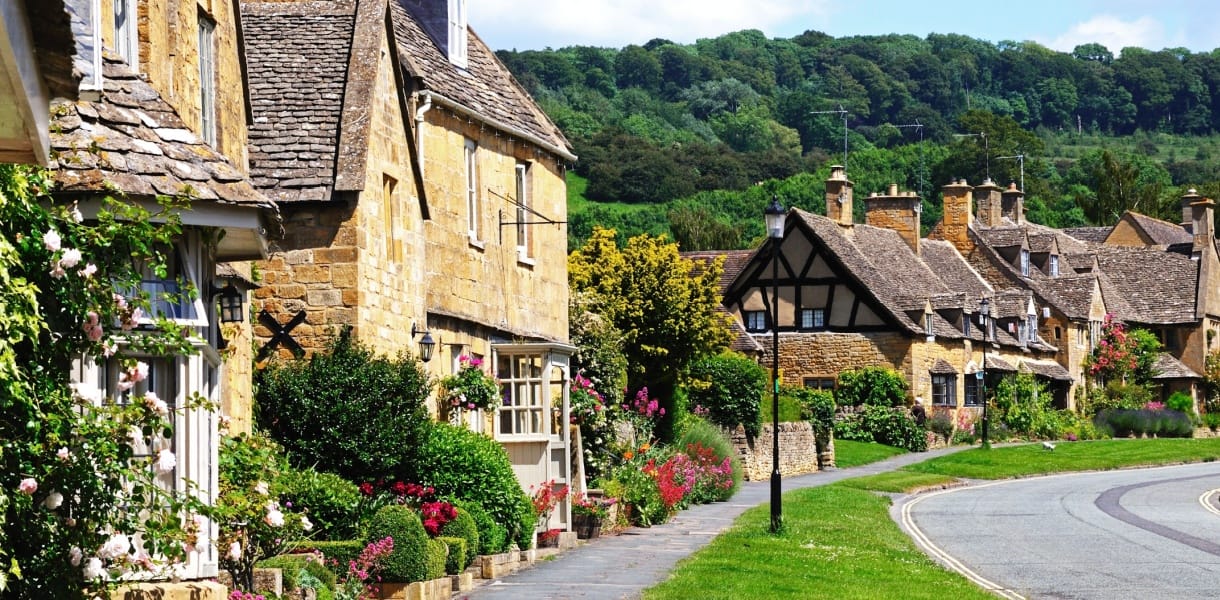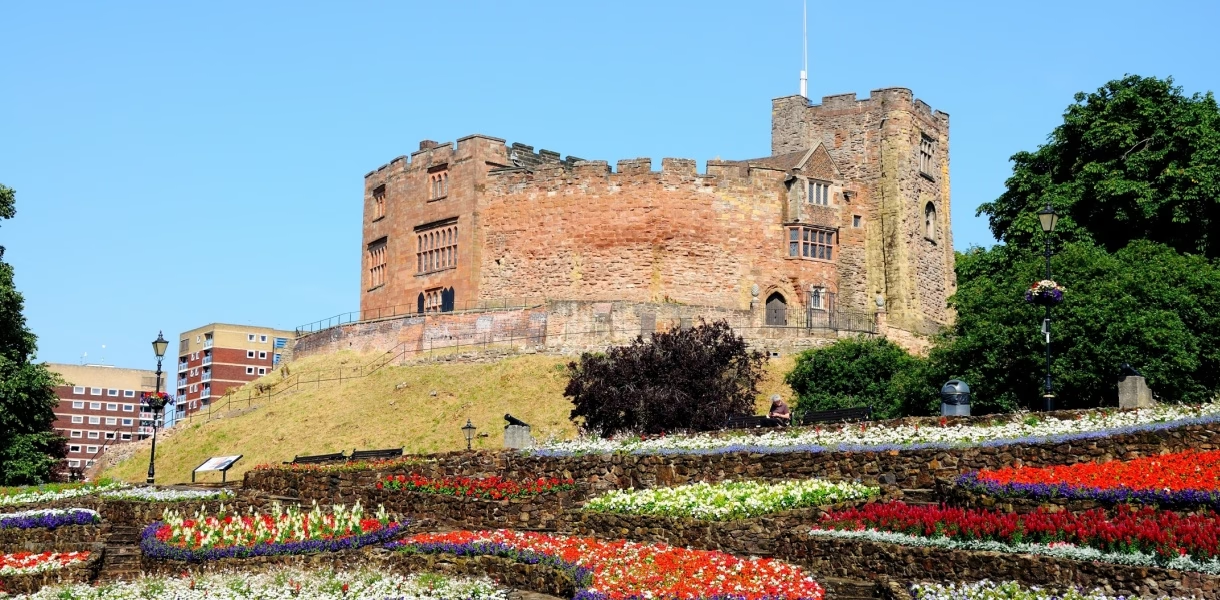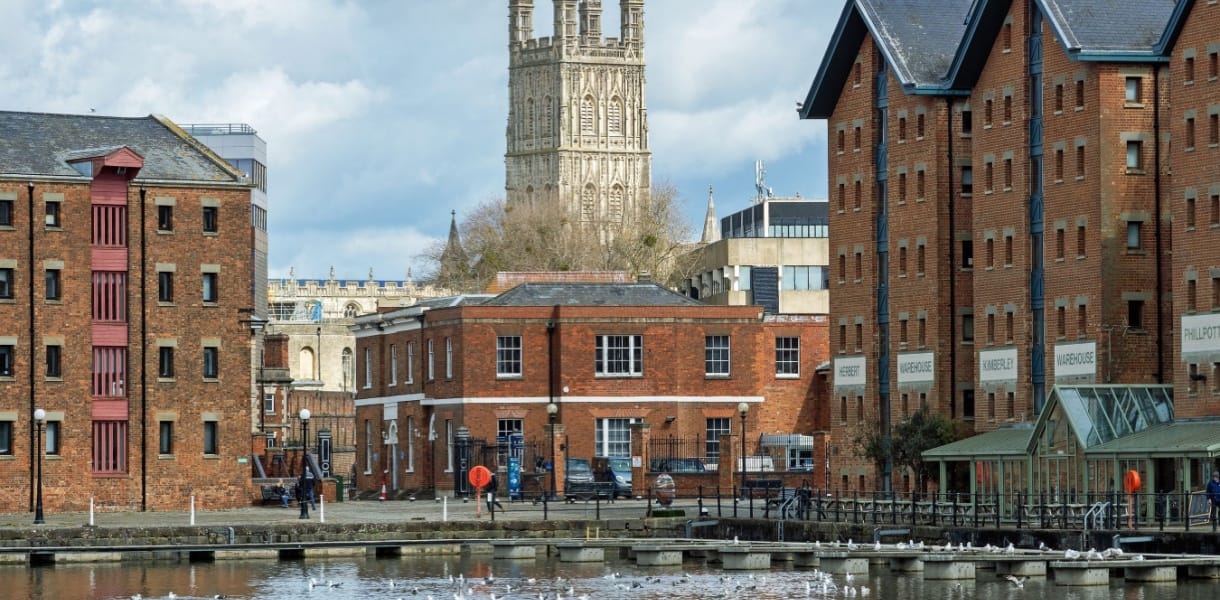
Tucked along the border with Wales, Shropshire is one of those counties that people often forget about, which suits the locals just fine. It is full of hills, castles, market towns and scenery that looks as though it has been sitting there undisturbed for centuries. Everything seems slightly calmer here. The roads are quieter, the villages older, and the landscape wonderfully unbothered by modern fuss.
Shropshire does not cry for attention. It simply sits there being quietly lovely while everyone else rushes past.
Rolling hills, sheep and castles that forgot to fall down
The Shropshire Hills spread across much of the county like an extremely comfortable blanket. Walkers climb The Wrekin (which is technically a hill but feels like a small mountain after lunch) and gaze across the patchwork of fields and woods that stretch into Wales. Nearby, the Long Mynd offers wide open moorland, hidden valleys and the sort of views that make you wonder why you ever bother with cities.
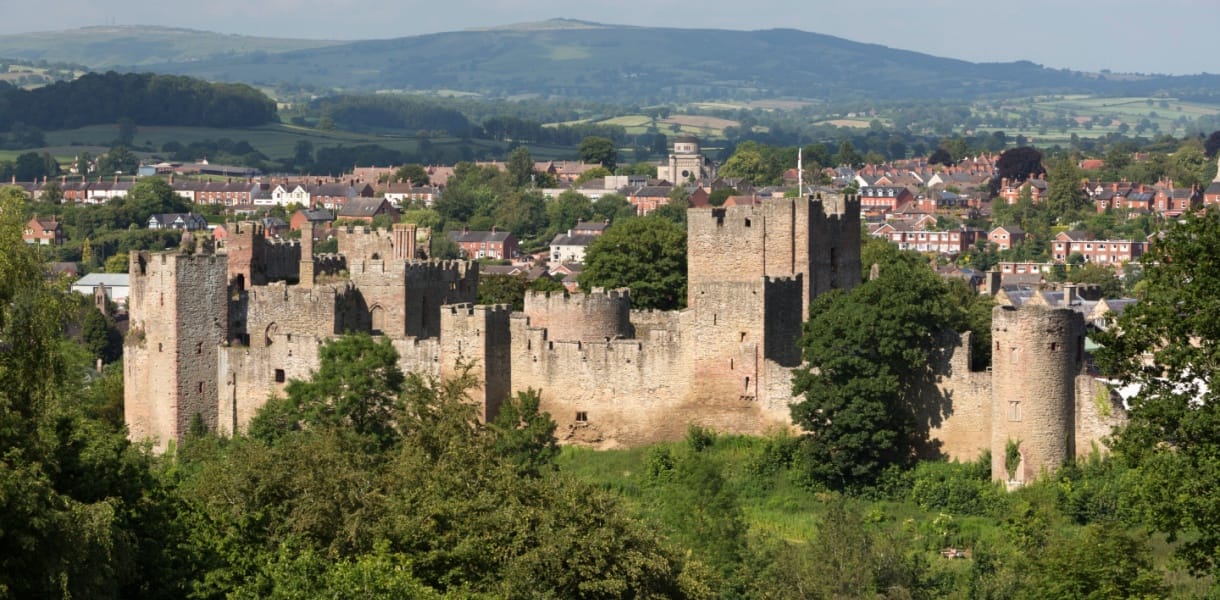
The landscape is generously supplied with castles. Ludlow Castle, sitting high above the River Teme, is one of the finest ruined castles in England, while Stokesay Castle, confusingly called a castle but technically a fortified manor house, remains perfectly preserved, as if history simply forgot to knock it about.
Market towns that still mean it
Shropshire’s market towns are the real heart of the county. Ludlow, in particular, is often described as England’s most perfect market town, and not entirely without reason. It combines handsome Georgian streets, medieval walls, a ruined castle and an almost unhealthy enthusiasm for very good food. The annual food festival fills the streets with local produce, ambitious cheeses and visitors who definitely should have brought a larger shopping bag.
Shrewsbury, the county town, is equally charming, with its half-timbered buildings, crooked streets and a loop of the River Severn that seems designed to confuse satnavs. This is the birthplace of Charles Darwin, who presumably developed his interest in nature by observing an unusually high number of pigeons.
Iron bridges, industrial revolutions and Victorian enthusiasm
Shropshire was also where the Industrial Revolution decided to get started. The Iron Bridge at Ironbridge (where they like to keep names simple) was the world’s first cast-iron bridge and remains standing today, looking suitably pleased with itself. The surrounding gorge is now a UNESCO World Heritage Site, with museums dedicated to everything from pottery to Victorian village life.
Walking around Ironbridge, it is hard not to feel mildly impressed by how much history fits into one small valley.
Quiet rivers, deep lanes and the slightly ancient feel
The River Severn winds its way through much of the county, offering lazy canoe trips, riverside pubs and the occasional duck determined to get in your way. Elsewhere, ancient hedgerows and sunken lanes lead you into villages where the church has been standing since long before anyone thought to count how old it was.
Everywhere you go, there is a sense that time moves just a little more slowly here, not in a neglected way, but in a contented, comfortable sort of rhythm.
Where England lets you catch your breath
Shropshire is not dramatic. It does not offer grand stately homes or famous landmarks that attract crowds of coach parties. Instead, it offers hills to walk, market squares to browse, castles to climb, and pubs to sit in while you quietly decide that this may be one of the nicest places you have ever stumbled into.
10 of the best reasons to visit Shropshire
Shropshire is one of those places that England seems to have misplaced behind the sofa. It sits quietly on the border with Wales, green and rolling, almost smug in the knowledge that it has more castles than you could ever visit, more walks than your legs can handle, and more character than you would think possible in a county with no cities at all. It is the sort of place that makes you wonder why everyone is not already here.
So here are ten very good reasons to make Shropshire your next escape.
1. The hills that forgot to be modest
The Shropshire Hills are officially an Area of Outstanding Natural Beauty, which is a bureaucratic way of saying they are very nice indeed. They rise and fold like a quilt left rumpled on the bed, with the Long Mynd and Stiperstones offering views that stretch into Wales on one side and across half of England on the other.
2. Castles on every corner
If you like your history in stone form, Shropshire is your happy place. Ludlow Castle dominates its handsome market town, Stokesay Castle is a perfect medieval manor frozen in time, and Clun Castle leans romantically into the sky as if it has given up holding itself together. Even Shrewsbury has castle walls hiding in plain sight.
3. Shrewsbury’s crooked charm
Shrewsbury is a county town with a flair for the dramatic. Its half-timbered houses look like they are competing to see who can lean furthest without falling over, and its alleyways, or “shuts”, twist into hidden courtyards. It is a place that has somehow kept its medieval street plan while still remembering to sell you a good coffee.
4. Ludlow’s appetite for life
Foodies speak of Ludlow in hushed tones. Once hailed as the best food town in Britain, it still holds its own with farmers’ markets, cosy pubs, and restaurants that treat local produce with the reverence of fine art. The annual Ludlow Food Festival fills the castle with stalls, smells, and satisfied faces.
5. The Iron Bridge that changed everything
At Ironbridge Gorge you can stand on the world’s first iron bridge and contemplate the fact that the Industrial Revolution effectively clocked in for its first day’s work here. Today the gorge is dotted with excellent museums that bring to life the smoky, clanging world of 18th century industry without the soot in your hair.
6. Walking where it still feels wild
You do not need to be a serious hiker to enjoy Shropshire, though it certainly rewards those who are. There are gentle riverside ambles, canal towpaths, and long-distance trails like Offa’s Dyke that let you stride along the Welsh border like a medieval tax collector.
7. Villages with personality
Much Wenlock, the birthplace of the modern Olympic Games, is as pretty as its name suggests. Church Stretton hides snug in the hills with the air of a mountain resort that has somehow wandered into England. Clun is so quiet that poet A E Housman declared the locals must be very wise.
8. A railway for the dreamers
The Severn Valley Railway offers the chance to ride a steam train through rolling countryside, complete with soot smuts, station tea rooms, and volunteer guards who seem to have wandered straight out of a 1950s postcard. It is nostalgia you can actually climb aboard.
9. Gardens for every mood
Whether it is the grand landscaped terraces of Powis Castle just across the Welsh border, the secret corners of Hodnet Hall Gardens, or the riverside sweep of The Quarry in Shrewsbury, Shropshire seems to have taken its gardening cues from a particularly indulgent fairytale.
10. The quiet that makes you stay
Shropshire is not a county of crowds. It is not a place of fast roads, neon signs, or big ticket attractions. Its gift is peace. You come here, breathe in the clean air, listen to the sheep on the hillsides and the bell towers in the market towns, and find yourself rather reluctant to leave.