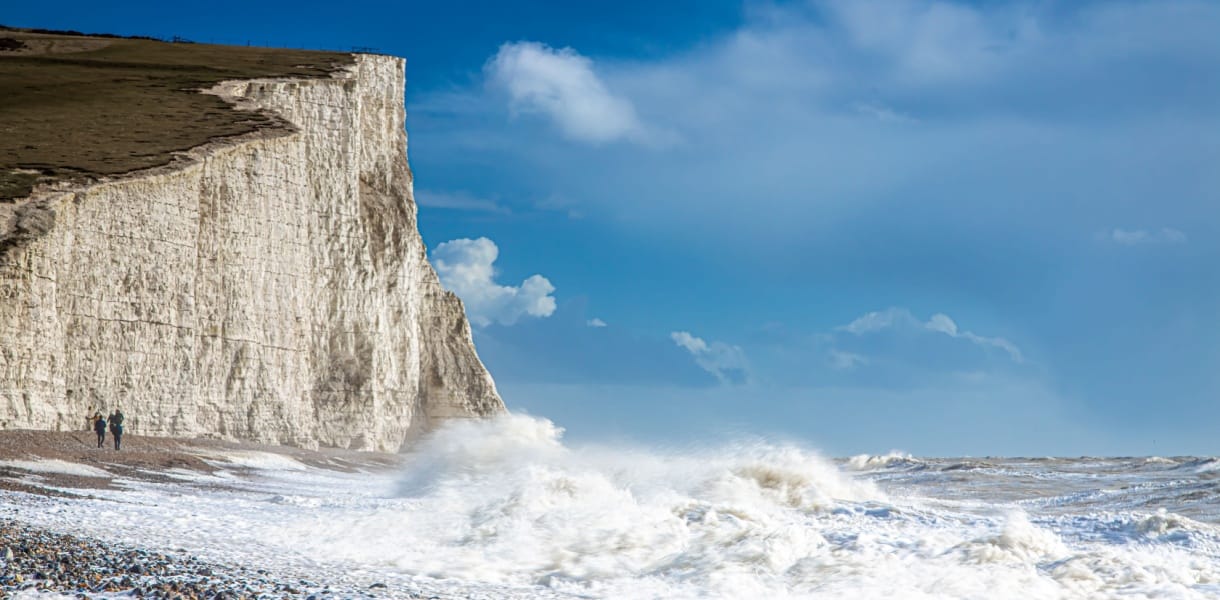
East Sussex sits along the south coast where England, not normally known for its bold gestures, suddenly decides to get a little more theatrical. Here you get white cliffs that plunge into the sea, ancient castles perched on hills, winding medieval streets, and seaside towns that seem perfectly content doing their own thing, whether that involves Victorian piers or slightly eccentric residents.
East Sussex is a county of contrasts, part postcard-perfect, part delightfully odd, and all the more charming for it.
Cliffs, beaches and a coastline that shows off
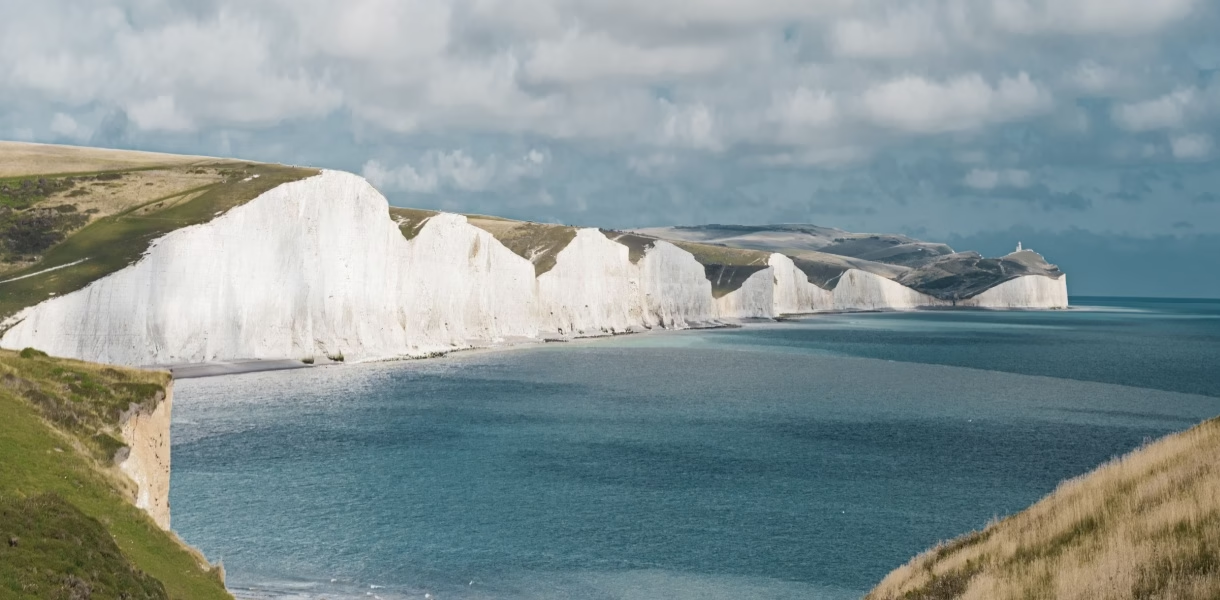
The chalk cliffs of the Seven Sisters and Beachy Head are some of the most famous sights in England. Their bright white faces tumble into the sea with impressive verticality, while walking paths along the cliff tops offer long, blustery views across the Channel. On clear days, you can spot France and possibly wonder why anyone thought invading either country was ever a good idea.
The beaches along the coast range from shingle to sand, with Eastbourne offering wide promenades, deckchairs and the kind of orderly seafront that practically demands a stroll after lunch.
Castles, battles and rather a lot of history
Inland, East Sussex wears its medieval history proudly. Bodiam Castle remains one of the most photogenic in the country – all turrets, moats and reflections – looking for all the world like a film set that forgot to pack up.
Further east, you find Battle, where the famous 1066 clash between William the Conqueror and Harold played out, permanently altering England’s history and giving schoolchildren something to memorise ever since. The battlefield and its abbey remain open for visitors who enjoy a bit of historical pondering.
Brighton, piers and politely bohemian chaos
Brighton is East Sussex’s seaside star, known for its pebble beach, iconic pier, and a general air of cheerful eccentricity. The Royal Pavilion, an extravagant palace built by George IV, looks like someone gave an English king free rein with an Indian architect and a very large budget.
Brighton’s Lanes are a tangle of narrow streets filled with jewellery shops, independent cafés and small galleries, while its thriving arts scene, festivals and nightlife keep the city lively year-round. It is England’s seaside at its most gloriously unconventional.
Rye, Hastings and the smuggler’s coast
Further along the coast, Hastings offers a mixture of fishing heritage, narrow old streets and a rather steep funicular railway. The old town still has its black timber fishing huts, while the ruins of Hastings Castle sit high above the town, gazing out to sea with suitable gravitas.
Rye, meanwhile, feels like it has barely changed since smugglers and merchants made their fortunes here. Its cobbled streets, timber-framed houses and medieval church tower make it one of the prettiest small towns in England – not to mention a very satisfying place to get slightly lost.
Downs, woods and quiet country lanes
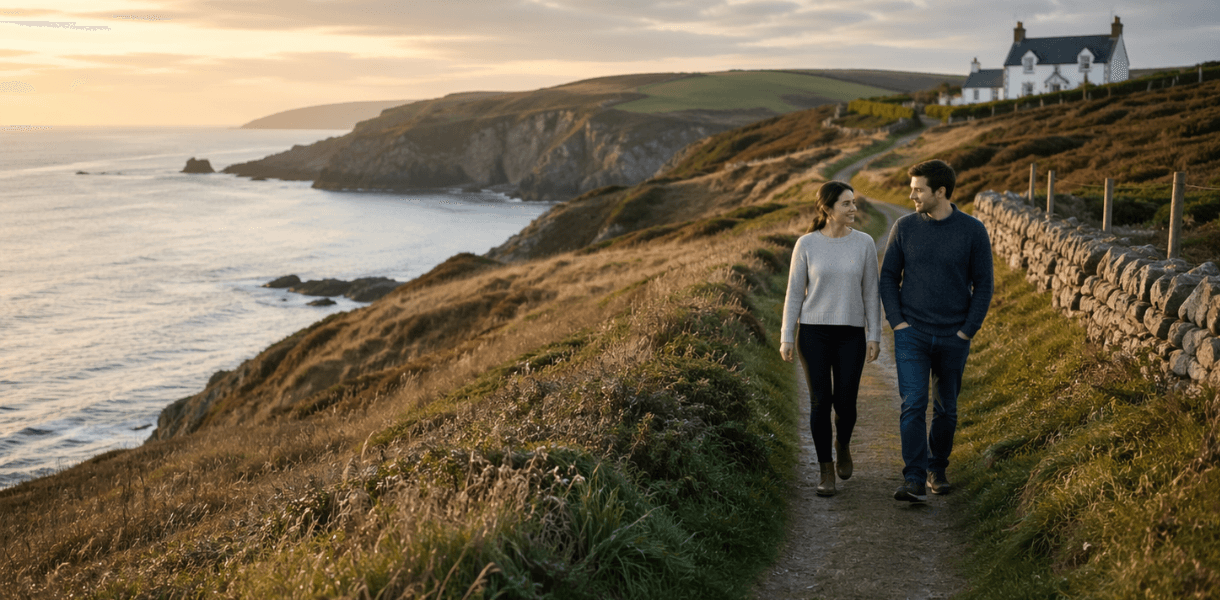
Away from the coast, East Sussex rolls gently into the South Downs, offering miles of footpaths, quiet villages and the sort of countryside where walking boots feel entirely at home. Villages like Alfriston, Firle and Ditchling offer flint cottages, ancient pubs and views that go on for miles.
The Ashdown Forest, once part of a Norman hunting ground, provides more open heathland, and was immortalised as the setting for Winnie-the-Pooh’s Hundred Acre Wood, adding a quietly nostalgic touch for many visitors.
Where England lets its hair down a little
East Sussex is a county where history sits comfortably beside the slightly eccentric. It offers dramatic cliffs, ancient towns, bohemian beaches and quiet lanes where life ticks along at an unhurried pace. After a few days here, you may find yourself equally tempted by cream teas, castle tours and a faint desire to move in permanently.
Ten splendid reasons to visit East Sussex
If you ever needed proof that England can do drama and charm in equal measure, East Sussex is your answer. This is a county where chalk cliffs topple spectacularly into the sea, sleepy villages turn out to be anything but, and history pops up in such abundance you start to wonder if it might be breeding in the hedgerows. From smugglers’ coves to the country’s most eccentric seaside pleasure palace, here are ten reasons why East Sussex deserves a place on your travel list.
1. The towering cliffs of Beachy Head
Towering above the Channel at nearly 500 feet, Beachy Head is as vertiginous as England gets. The chalk cliffs seem to glow in the sun, and on a windy day you could almost swear you’re about to be blown to France. Best enjoyed with sensible footwear and a healthy respect for gravity.
2. The candy-striped lighthouse
Just below Beachy Head stands the red-and-white striped Belle Tout Lighthouse, the county’s most photogenic maritime guardian. Once moved back from the cliff edge by engineers with nerves of steel, it now doubles as one of the quirkiest B&Bs in Britain.
3. The seaside oddity of Brighton
Strictly speaking, Brighton shares billing with West Sussex, but East Sussex is where the real eccentricity begins. The Royal Pavilion, an Indian-inspired fantasy palace plonked on the seafront, remains a gloriously bonkers legacy of George IV’s taste for all things extravagant. Inside, dragons leer from ceilings while chandeliers look fit for a Bollywood musical.
4. The cobbled perfection of Rye
Rye is the sort of town you think only exists in historical dramas. Cobbled streets like Mermaid Street slope past crooked timber-framed houses, and the pubs have names that practically insist you duck inside. Smugglers once used Rye as a base, and you can see why – the place oozes atmosphere.
5. Hastings and its battle that wasn’t here
The Battle of Hastings was, inconveniently, fought up the road at Battle. But Hastings makes up for the historical sleight with a lively fishing fleet, Britain’s steepest funicular railway, and a modern art gallery that proves seaside towns can do culture as well as cockles.
6. Battle Abbey and 1066 country
For the full arrow-in-the-eye experience, head to Battle Abbey. The ruins sit where Harold fell (or didn’t, depending on which historian you back), and the visitor trail gives a surprisingly gripping account of that most decisive of dust-ups. It’s the closest you’ll get to time travel without developing a working flux capacitor.
7. The charms of Lewes
Lewes is East Sussex’s resident rebel. With its imposing Norman castle, independent shops and a fondness for blowing things up on Bonfire Night, it feels like the county town never really got over the Reformation. A wander along its steep lanes brings independent bookshops, crooked pubs and more cheese counters than you thought possible.
8. Glyndebourne’s opera in a field
Few places can make opera in a tent in the middle of the countryside feel glamorous, but Glyndebourne manages it. Picnicking on manicured lawns in evening dress while trills of Verdi drift across the Downs is one of those ‘only in England’ experiences.
9. The South Downs way
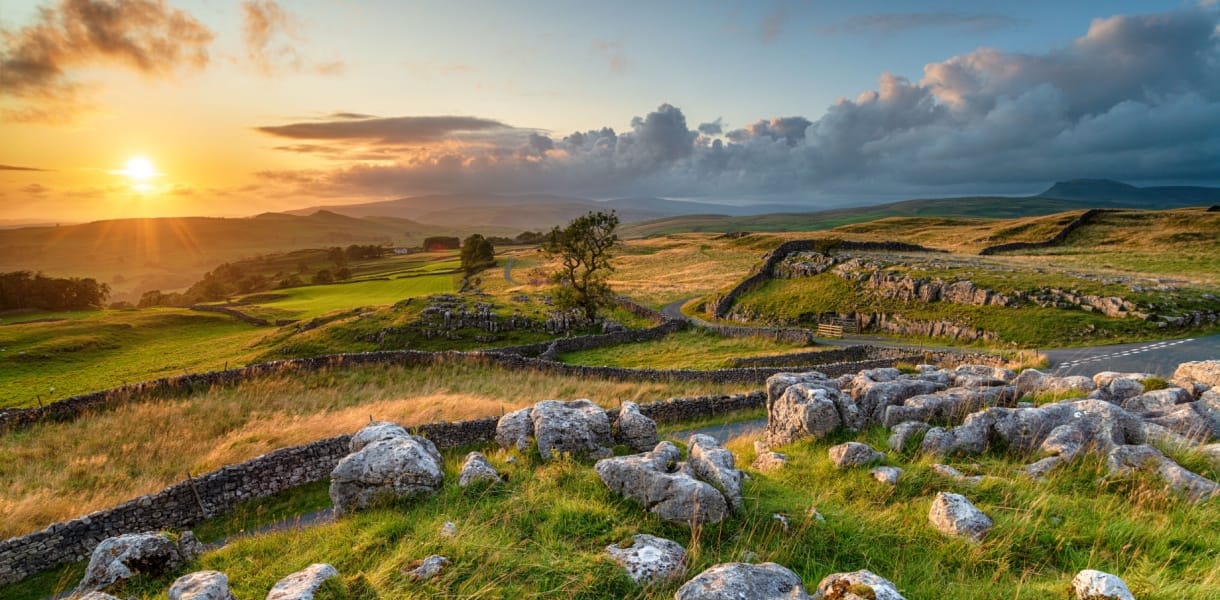
Rolling chalk hills, skylarks and the occasional sheep — the South Downs Way is East Sussex’s walking jackpot. Stretching across the county, the route offers up sweeping views towards the Channel and inland towards a patchwork of farmland that looks like it has been quilted by giants.
10. Quirky seaside towns galore
Beyond Brighton and Hastings, East Sussex has a string of eccentric coastal outposts worth a detour. Bexhill boasts modernist architecture in the De La Warr Pavilion, Eastbourne has genteel pierside charm, and Camber Sands provides vast golden beaches where even the most cynical Londoner can be coaxed into flying a kite.