County Durham sits quietly in England’s northeast, somewhere close to the wilds of Northumberland and the bustle of Tyne and Wear. It is a county of soaring cathedrals, tough coalfields, green hills and handsome market towns, where history looms large but never feels like it’s putting on a show.
Here, grand bishops once ruled like princes, coal miners once powered the country, and the people have developed a cheerful, no-nonsense warmth that makes visitors feel entirely at home.
Durham, cathedrals and castles that belong in storybooks
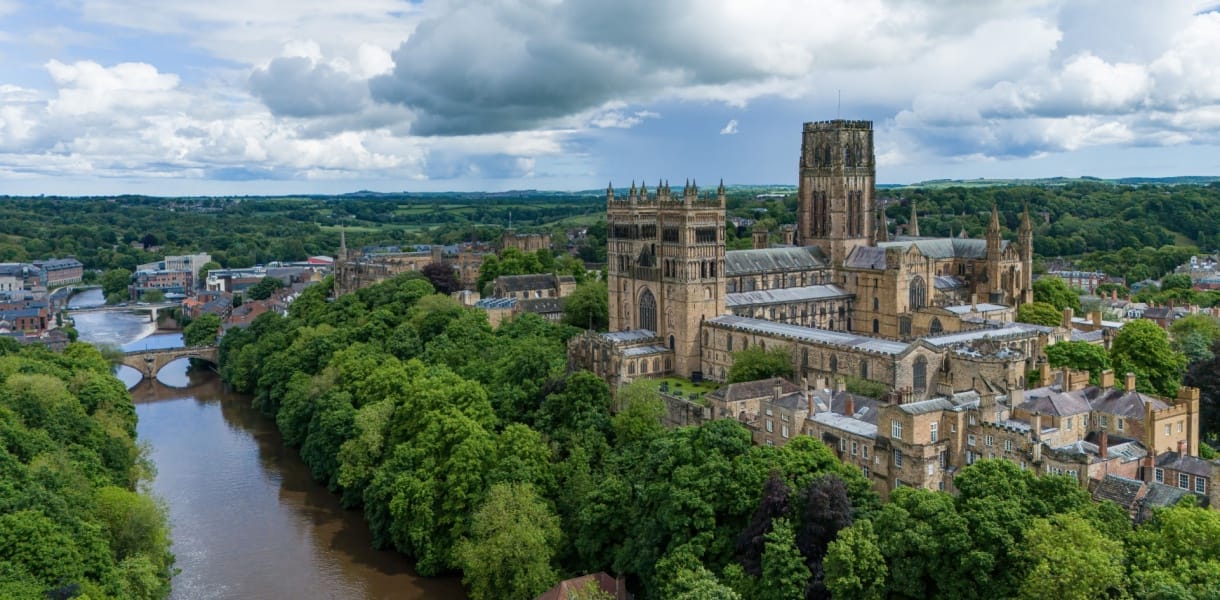
The city of Durham is County Durham’s crown jewel. Its cathedral sits high above a loop of the River Wear, dominating the skyline with its towers and massive Norman stonework. Step inside and you are standing in one of Europe’s great medieval buildings – a masterpiece of Romanesque architecture that somehow remains deeply peaceful even when full of awe-struck visitors.
Next door, Durham Castle completes the picture, now part of the university but still very much a fortress at heart. Together, they form one of England’s most breathtaking townscapes, one that inspired everyone from medieval pilgrims to modern filmmakers.
Mining towns, proud roots and a hard-earned identity
Beyond the university quads and ancient stones, County Durham’s history is also written in coal dust. The Durham coalfield once powered much of Britain, and its pit villages remain fiercely proud of that legacy. The Living Museum of The North at Beamish tells the story vividly, with recreated streets, working trams, and trips down into the old mine shafts that bring home just how tough this life was.
Though the mines have long since closed, the sense of community endures, and the county’s working-class roots remain a central part of its character.
Beamish, open-air nostalgia done properly
Beamish deserves its own mention — it is one of Britain’s finest open-air museums, where entire streets, shops and homes from different eras have been lovingly reconstructed. You can ride a tram, buy sweets from an Edwardian shop, watch blacksmiths at work, and see history brought to life by people who really do know how to stoke a proper coal fire.
It is educational, yes, but also oddly cheerful — a nostalgic walk through everyday history done with great care and no small amount of humour.
Barnard Castle, dales and dramatic countryside
Venture west and the county grows wilder as it rises into the North Pennines. Barnard Castle — both the town and the castle itself — offer history, riverside views and a fine starting point for exploring Teesdale and the surrounding hills.
High Force waterfall, one of England’s most impressive, sends the River Tees plunging over a sheer cliff into a deep pool below. It’s exactly the sort of landscape you expect to find on a jigsaw puzzle or calendar marked “scenic Britain.”
Bishop Auckland and the prince-bishops’ legacy
County Durham’s history has always mixed the sacred with the powerful. The Prince-Bishops of Durham once held extraordinary authority here — spiritual leaders with near-royal powers. Bishop Auckland’s Auckland Castle was their seat, and today it’s been beautifully restored, complete with a remarkable art collection and panoramic deer park.
The annual open-air Kynren show, just outside town, tells the story of Britain through epic performances involving hundreds of local volunteers — a distinctly County Durham combination of history, drama and quiet local pride.
Where England’s north stands tall and steady
County Durham isn’t flashy. It offers cathedrals that soar, hills that stretch, and towns that have stood firm through good times and bad. What it lacks in dazzle, it makes up for in depth — the kind of place where visitors leave feeling oddly grounded and quietly impressed. And usually rather well-fed.