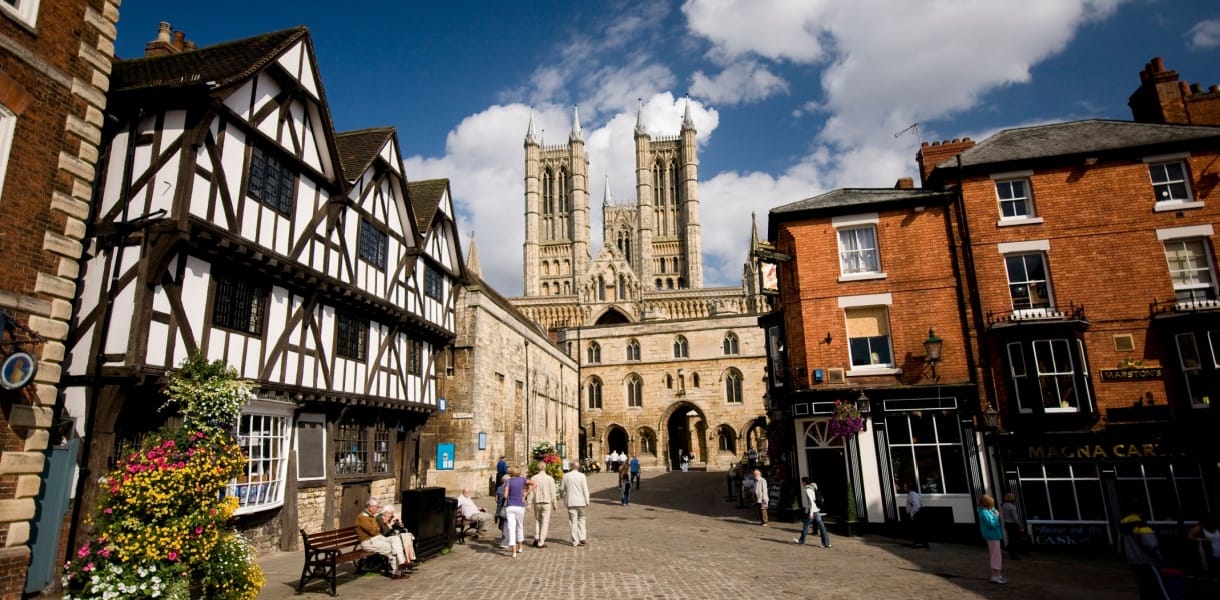
There are some places where history whispers. In Lincoln, it bellows from every cobbled street, turreted wall and medieval nook. Perched on a steep hill that has been making calves ache since Roman times, Lincoln is a city of layers, each more intriguing than the last. From ancient fortresses to contemporary street art, it’s a place that wears its age with flair.
A hill worth fighting over
The Romans, ever the practical folk, spotted Lincoln’s potential around AD 60. Back then it was Lindum Colonia, a military fortress turned civilian settlement. They liked their views and the strategic advantage of a hilltop location, so they built roads, baths and walls with all the confidence of an empire on the rise. Some of those walls are still here, quietly crumbling behind pubs and car parks, though the impressive Newport Arch is not just a relic. It is still used by traffic today, making it the oldest Roman arch in the country that people still drive under. That is, unless the driver of your delivery van missed their turning.
Lincoln’s Roman past is woven into the street plan. Walk uphill along Steep Hill (aptly named, bring good shoes and maybe a snack) and you’re tracing ancient footsteps. Below your feet lies a Roman forum and basilica. Above your head is the scent of fudge wafting from tiny shops in timber-framed houses that lean affectionately on each other.
The medieval masterpiece
If Lincoln had a soundtrack, the cathedral would provide the bass notes. Towering over the city like a grand old uncle with a dramatic flair, Lincoln Cathedral was once the tallest building in the world. For two centuries, it nudged the sky with a central spire that has long since disappeared, but the grandeur remains. Walk inside and you’ll find stone ribs arching overhead like gothic wings, and a choir screen that looks like something a particularly ambitious angel might design.
There are gargoyles that grin like mischievous children and stained glass windows that catch the light in a way that seems mildly miraculous. The cathedral is not just a building but a performance. Every corner has a flourish, from the tiny carving of the Lincoln Imp (a naughty little creature turned to stone by an angel) to the soaring Chapter House where Magna Carta was once read aloud to an unimpressed public.
Just across the green sits Lincoln Castle, another showstopper in a city that doesn’t do things by halves. Built by William the Conqueror in the 11th century, the castle has been a fortress, a prison and, for a while, a very draughty archive. You can still see one of only four surviving originals of Magna Carta here, tucked away in a darkened vault with all the reverence of a medieval relic that shaped democracy.
From Roman stronghold to modern charm
But Lincoln isn’t just about looking backwards. It has found ways to blend its ancient DNA with a very 21st-century vibe. Downhill, where the terrain levels out and the shopping begins, is a city that feels young and buzzy. The University of Lincoln brings students, creativity and a well-tended crop of indie cafés. The Brayford Waterfront is now a lively stretch of bars, restaurants and floating gin palaces, though you can still spot the odd heron giving it all a slightly rural twist.
Head to the Collection, the city’s museum of art and archaeology, and you’ll see how Lincoln embraces both its classical roots and contemporary tastes. Next door, the Usher Gallery delivers a gentle surprise with fine art, sculpture and the odd unexpected treasure.
Lincoln’s quirky side continues in places like the Museum of Lincolnshire Life, which offers everything from vintage fire engines to an entire recreated Victorian street. Or visit Ellis Mill, a working windmill powered the old-fashioned way, which makes you feel like you’ve wandered into a Brontë novel. Just with more cake.
The joy of wandering
Lincoln is best explored on foot and ideally without too much of a plan. Turn a corner and you might find a medieval gateway, a crooked tea room, or a blue plaque marking the birthplace of someone who once invented a type of screw. There’s a delightful randomness to the place that rewards slow wandering and curious glances.
On a warm day, the Arboretum provides leafy respite just beyond the city centre. Designed by Edward Milner, a protégé of Joseph Paxton, it’s a Victorian park with fountains, ponds, a cafe, and a short stroll away form riverside pubs.
Lincolnshire Christmas markets are legendary, drawing crowds from across the country who come to sip mulled wine beside a Norman castle wall and complain about how cold their toes are. In summer, the Lincolnshire Show offers a lively parade of cows, tractors and cakes large enough to shelter behind.
Lincoln in a nutshell
For a small city, Lincoln punches above its weight. It is ancient without being fossilised, beautiful without being showy, and charming without trying too hard. It’s a place that reminds you how much has happened here, how much still does, and how very enjoyable it is to spend a day getting gloriously lost among the ruins, towers and tea shops.
Let Lincoln surprise you. It’s old in the best possible way, and lively in all the ways that matter.
Lincoln quick guide
Getting here
- By train: Direct trains from London Kings Cross (2 hours), Nottingham, Sheffield and Leeds
- By car: Accessible via the A46, A15 and A1; parking available in several city centre car parks
- By coach: National Express coaches stop at Lincoln Bus Station
Where to stay
- The White Hart Hotel near the cathedral offers traditional charm in the heart of uphill Lincoln
- The Tower Hotel provides modern comfort in the historic Bailgate area
- Budget options include Premier Inn and Travelodge in the city centre
Where to eat
- Olé Olé for vibrant Spanish tapas
- Stokes High Bridge Café for tea and toasted teacakes in a medieval building over the river in downhill Lincoln.
- The Jews House Restaurant for fine dining in one of the oldest houses in the UK
What to do
- Climb the tower at Lincoln Cathedral for panoramic views
- Walk the castle walls and see Magna Carta
- Browse the boutique shops and galleries on Steep Hill
- Relax by the Brayford Waterfront with a drink and some people-watching
Nearby gems
- Doddington Hall and Gardens for a grand Elizabethan escape just outside the city
- Whisby Nature Park for peaceful walks around lakes and wildlife
- Tattershall Castle, a striking red-brick tower with rooftop views over the fens
Best time to visit
- Spring and early summer for blue skies and garden colour
- December for a magical Christmas experience
- Avoid midwinter if you’re not fond of icy cobbles and steep hills