The Isle of Bute has long been the quiet achiever of Scottish islands. Sitting neatly in the Firth of Clyde, it is close enough to Glasgow for an easy day out yet distant enough to feel like you have crossed into another world. In autumn, the island puts on one of its best shows. The trees burn with colour, the air carries the tang of salt and woodsmoke, and the hills to the north glow in softer light. It is the kind of place where summer’s busyness fades, leaving space for slow wandering and the pleasure of noticing small things.
First impressions
Approaching Bute by ferry feels like being ushered into a secret. The crossing from Wemyss Bay is short but cinematic. The water is calm more often than not, the shoreline villages slip by, and Rothesay suddenly appears like a Victorian postcard. Even before stepping ashore you sense Bute’s dual personality. On one side it is genteel and deckchaired, a remnant of its heyday as a Glasgow holiday escape. On the other it is rugged and windswept, with the Highland Boundary Fault cutting the island into two contrasting halves. Autumn sharpens the edges and adds a crispness to both versions.
Rothesay and its story
Rothesay is the island’s hub, and in autumn it feels less like a resort and more like a living town. The grand promenade and gardens remain, but you see them framed by falling leaves and quieter streets. Rothesay Castle, squat and circular, has been sitting here since the 13th century. Its moats fill with russet reflections this time of year, making it look oddly painterly. The Victorian toilets, improbably famous, are still gleaming with mosaic tiles and polished brass, a reminder that the town once thought nothing too grand for visitors arriving by steamer.
Mount Stuart in autumn dress
If there is a single building that justifies a visit it is Mount Stuart. This neo-Gothic mansion is not so much a house as a declaration of what can be done with money, imagination and a fondness for Italian marble. The interiors are as flamboyant as you will find anywhere in Britain. What makes autumn special is not only the glowing wood panelling inside but also the gardens outside. Trees burst into shades of ochre and crimson, and the estate’s woodland trails crunch underfoot. It is possible to spend hours wandering, breathing in the damp earthy scents and imagining you are in some stately version of a fairytale.
The call of the coast
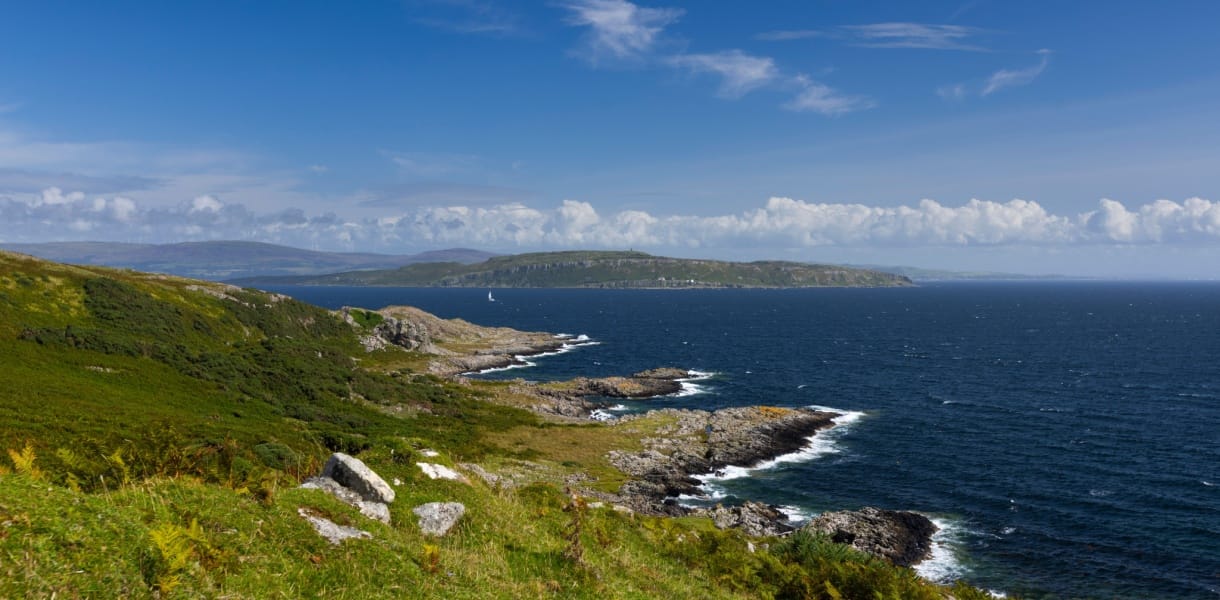
For many, Bute is about the coast. Autumn beach walks here have a very different character to summer. Scalpsie Bay, known for its resident seal colony, feels even more atmospheric in soft grey light, the seals loafing on rocks while waves fold in gently. Ettrick Bay stretches for a mile and a half and becomes a fine place to let thoughts stretch with it. The cafés may shut earlier than in July, but the emptiness of the sand is a treat. Kilchattan Bay at the southern tip is framed by hills turning copper, and the start of the West Island Way footpath leads out from here with a sense of adventure.
Walking the West Island Way
The West Island Way is forty-eight kilometres of marked trail, and in autumn it is at its best. The midges are gone, the heat is softened, and the views have an extra clarity. From Kilchattan Bay the path winds north through moorland, farmland and along rocky coasts, eventually reaching Port Bannatyne. The northern sections show off the island’s rougher character, with the Highland landscape edging in. Even walking just a portion offers a satisfying glimpse of how varied Bute is. Pack a flask, wear decent boots, and let the season set the pace.
St Blane’s Chapel and the quiet south
Hidden in the south of the island is St Blane’s Chapel, a monastery site dating back to the sixth century. What remains is mostly stone outlines and a sense of peace. In autumn the site feels especially poignant. The surrounding woods are bright with turning leaves and the air carries that particular stillness you only get at the tail end of the year. It is easy to imagine monks looking out over the same sea, watching the same seasonal rhythms. There is not much to do here other than stand and take it in, which is precisely the point.
Villages of character
Outside Rothesay, the island’s villages take on a gentle pace once summer ends. Port Bannatyne, with its marina and handful of pubs, is a good base for walkers. Kilchattan Bay offers pretty cottages and sweeping views. Ascog, slightly inland, is known for its fernery and gardens that remain attractive even as autumn trims them back. These are places where you can linger without agenda, watching the rhythms of local life continue as the tourist tide ebbs.
Food, drink and local warmth
Autumn evenings on Bute invite hearty meals. Rothesay has pubs and restaurants that serve local seafood, venison and comforting bowls of cullen skink. The island has a growing reputation for small producers, from Bute Brew Co to farm shops selling preserves and cheeses. There is nothing better than walking windswept beaches then ducking into a warm café with fogged windows. The food scene is modest but heartfelt, and autumn is the season to savour it slowly.
Why autumn is the right season
Many Scottish islands are wonderful in summer, but Bute has something different in autumn. Its accessibility means you do not need a long holiday to enjoy it. The landscapes hold colour and drama, the crowds are thinner, and the sense of authenticity is stronger. You can explore at leisure, often finding yourself alone with seals, chapels or long views across the Clyde. For photographers, it is a gift. For walkers, it is kind. For those seeking quiet, it is near perfect.
Isle of Bute quick guide
Getting here
- Train from Glasgow Central to Wemyss Bay, then a 35 minute ferry with CalMac to Rothesay
- Driving from Glasgow takes about 90 minutes to Wemyss Bay ferry terminal, with car ferries running regularly
- Alternative route via Colintraive to Rhubodach, a five minute hop from the Cowal peninsula
- Total journey from Glasgow is usually under two hours door to door
Where to stay
- The Glenburn Hotel, Rothesay’s grande dame with sweeping sea views
- The Victoria Hotel, a small waterfront hotel with friendly service
- Cannon House Hotel, a welcoming B&B close to the ferry
- Self catering cottages at Kilchattan Bay or Port Bannatyne for quieter stays
- Wild camping spots are available along the West Island Way for walkers
Where to eat
- Musicker Café, known for its coffee, cakes and local music sessions
- Kingarth Hotel near Kilchattan Bay, a cosy 18th century coaching inn with hearty meals
- Ettrick Bay Tearoom, right on the beach and famous for home baking
- Pick up craft beers from Bute Brew Co, smoked fish and cheese from Bute Yard Market
What to do
- Explore Mount Stuart House and its gardens in autumn colour
- Visit Rothesay Castle once a bulwark against invading Viking forces and with a long and close connection to the Stewart dynasty
- Spot seals at Scalpsie Bay
- Walk part of the West Island Way
- Discover the tranquillity of St Blane’s Chapel
- Stroll Rothesay’s promenade and pop into the magnificent Victorian Toilets
Nearby gems
- Cowal peninsula, with Argyll Forest Park and Loch Eck trails
- Tarbert, a pretty fishing town with harbour cafés
- Loch Fyne, for seafood and scenic drives
Best time to visit
- Autumn for fiery colours, quiet beaches and mild walking weather
- Summer for festivals and lively Rothesay evenings
- Spring for bluebells, wildflowers and lighter crowds