There are capital cities that feel like they are performing for you and there are others that simply invite you in for a chat and a pint. Cardiff belongs firmly to the latter. It does not strut or shout but it is endlessly good company, with a habit of surprising you when you least expect it. This is a city where medieval walls rub shoulders with gleaming glass towers, where rugby is a near-sacred practice, and where the locals will happily tell you a story about their favourite corner of town before you have even asked.
Tucked into the curve of the Bristol Channel, Cardiff is small enough to explore on foot yet large enough to keep you busy for a weekend and then some. You can spend the morning wandering castle battlements, the afternoon strolling along a Victorian dock, and the evening discovering why the Welsh take their singing so seriously. It is a place that does not need grandeur to impress because it has warmth, character and just the right amount of eccentricity.
First impressions
Arrive by train and Cardiff Castle will be the first thing to greet you. Its clock tower peers over the city centre as if it has been keeping watch since time began. The castle itself is a glorious muddle of Roman walls, Norman keep, and nineteenth century fantasy interiors. One moment you are imagining knights clanking through the gates and the next you are standing in a room decorated with golden stars on a cobalt ceiling that would not look out of place in a fairy tale. It is extravagant, eccentric, and utterly captivating.
Step outside the gates and you are in the heart of a modern shopping city with Victorian arcades tucked between department stores and independent cafés hidden where you least expect them. The juxtaposition is pure Cardiff. History is never tidied away. It sits happily alongside the everyday bustle of student bars, office workers, and buskers performing everything from Tom Jones to the latest indie tunes.
A city built for wandering
Cardiff’s scale is part of its charm. You can walk from the castle through the main streets, down past the university buildings and be at the waterfront in less than half an hour. The walk itself is a kind of time travel. The arcades, with their glass roofs and ornate ironwork, are like stepping back to the Victorian era when Cardiff’s coal wealth was at its peak. Inside you will find second-hand bookshops, craft boutiques, tiny record stores, and cafés that make a simple cup of tea feel like an event.
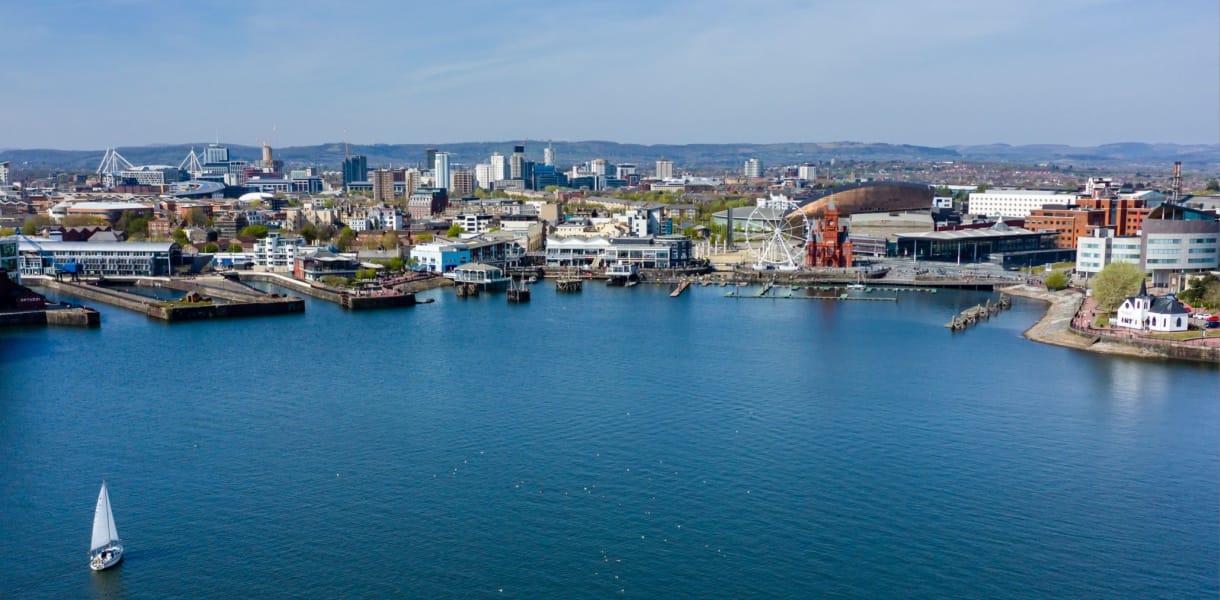
As you move south the streets open into broad boulevards and eventually you find yourself at Cardiff Bay. A century ago this was one of the busiest ports in the world, shipping Welsh coal to every corner of the globe. Today it has been transformed into a waterfront for strolling, dining, and generally enjoying the good life. The old red brick Pierhead Building still stands proud, a reminder of the city’s industrial power, while the gleaming Wales Millennium Centre with its vast bronze frontage tells you Cardiff is not afraid of the future either.
Cardiff Castle – the city’s showpiece
It is worth lingering on the castle because it is more than just a backdrop. The Romans built the first fort here nearly two thousand years ago. The Normans added a keep after 1066. Then in the nineteenth century the Marquess of Bute, one of the richest men in the world thanks to coal, decided he wanted a home that would outdo every palace on the continent. He hired architect William Burges who let his imagination run riot. The result is a fantasy of towers, carved animals, gilt ceilings, and rooms themed around astrological signs and mythical tales.
Visiting feels like opening a series of storybooks, each page more elaborate than the last. Children tend to love the animal wall with its carved stone creatures peering down at passers-by. Adults marvel at the sheer audacity of it all. And everyone enjoys climbing the Norman keep for the panoramic views over the city, with the stadium on one side and the hills of the Valleys on the other.
The lure of Cardiff Bay
A weekend in Cardiff would not be complete without time at the Bay. This is where locals come to unwind, whether that means cycling along the barrage, taking a boat ride across the water, or simply enjoying a long lunch with a view. The scale of redevelopment here is striking. What was once a tangle of docks has become a broad expanse of water edged by footpaths, theatres, restaurants, and the Senedd, home to the Welsh Parliament.
The Senedd is open to visitors and makes an excellent stop if you want to understand modern Wales. The building itself is a showcase of sustainable design with sweeping wooden beams and views across the water. Close by stands the Norwegian Church, once a place of worship for sailors and now an arts centre with a café. Roald Dahl was baptised here, and the plaza outside bears his name. It feels fitting for a city that blends stories and history so effortlessly.
Sport, song, and celebration
If there is one thing you will quickly learn about Cardiff it is that rugby matters. The Principality Stadium dominates the city centre like a giant steel cradle, and on match days the atmosphere is electric. Even if you do not have a ticket, just being in the city when Wales are playing is an event. Streets fill with red shirts, songs erupt in pubs, and strangers suddenly become comrades.
Music is almost as important. Cardiff has a proud tradition of choirs, opera, and pop. You might stumble upon a student group harmonising outside a café or hear the swell of voices from a rehearsal at St David’s Hall. The Millennium Centre stages world-class productions, while smaller venues like Clwb Ifor Bach keep the indie scene thriving. This is a city that can make a Friday night out feel like a festival.
Food and drink
Cardiff’s food scene has been quietly blossoming over the last decade. The central market remains a must, with stalls selling laverbread, cockles, and other Welsh staples alongside international treats. Around the city centre you will find everything from traditional pubs serving hearty stews to trendy eateries offering small plates and craft cocktails.
Cardiff Bay is particularly good for seafood, while the city centre has no shortage of pubs where you can try local ales. The Tiny Rebel Brewery, though based in Newport, has a popular bar here and is a good place to sample inventive beers in a lively atmosphere. For a more traditional experience try a Brains pub, the brewery being as much a part of the city’s identity as rugby and song.
Beyond the city centre
Part of Cardiff’s appeal is that you can escape into green spaces without really leaving. Bute Park, right behind the castle, is vast enough to feel like countryside with wooded trails, riverside walks, and open lawns for picnics. You can rent bikes and follow the Taff Trail, a long-distance path that links the Bay with the Brecon Beacons. Even a short ride will give you a taste of South Wales scenery.
A little further afield is St Fagans National Museum of History. It is an open-air museum where historic buildings from across Wales have been relocated and reconstructed. You can wander through centuries of Welsh life, from medieval farmhouses to a recreated miners’ institute, all set in parkland that is as pretty as any country estate. It is free to enter and makes for a fascinating half-day trip.
The weekend rhythm
So what does a weekend in Cardiff actually look like? Day one could begin at the castle, with a wander through the arcades afterwards and lunch in the market. The afternoon might take you to Cardiff Bay, exploring the Senedd, the Pierhead, and the waterfront cafés before an evening show at the Millennium Centre.
Day two could start with a stroll through Bute Park and along the Taff. From there you might cycle a stretch of the trail or head out to St Fagans. Return in time for a hearty dinner, a pint in a local pub, and perhaps some live music. Along the way you will have discovered that Cardiff does not simply fill a weekend. It creates a mood, a sense of belonging, that lingers long after you have left.
Why Cardiff makes a perfect escape
What sets Cardiff apart is not a single attraction but the way everything fits together. It is compact without being cramped, lively without being overwhelming, and historic without being frozen in time. You can cover the main sights in two days yet still feel there is more to come back for. The people are welcoming, the food satisfying, and the rhythm of the city just right for a weekend break.
It is also a place that manages to be both national capital and friendly neighbour. Wales as a whole has an identity that is proud and distinct, and Cardiff embodies that. You sense it in the language heard on the streets, the red dragon flying from lampposts, and the pride taken in everything from rugby to rarebit. For new visitors it offers a gateway into Wales. For returning ones it feels like catching up with an old friend.
Cardiff weekend info
Getting here
- By train from London Paddington in just under two hours. Direct links also run from Bristol, Manchester, and Birmingham.
- By car via the M4, with good park-and-ride options on the outskirts.
- Cardiff Airport offers flights from several UK and European cities.
Where to stay
- Boutique hotels in converted Victorian buildings around the city centre.
- International chains close to Cardiff Central station.
- Stylish apartments overlooking Cardiff Bay.
Where to eat
- Cardiff Central Market for traditional Welsh produce.
- Seafood restaurants around the Bay.
- Lively gastropubs and craft beer bars in the city centre.
What to do
- Tour Cardiff Castle and climb the Norman keep.
- Explore the Victorian arcades and independent shops.
- Stroll around Cardiff Bay and visit the Senedd.
- Enjoy a show at the Millennium Centre.
- Discover Welsh history at St Fagans.
Nearby gems
- The Brecon Beacons for hiking and scenery.
- Caerphilly Castle, one of the great medieval fortresses of Europe.
- Penarth, a charming seaside town just down the coast.
Best time to visit
- Spring and summer for festivals and waterfront life.
- Autumn for rugby internationals and colourful parks.
- Winter for Christmas markets and cosy pubs.