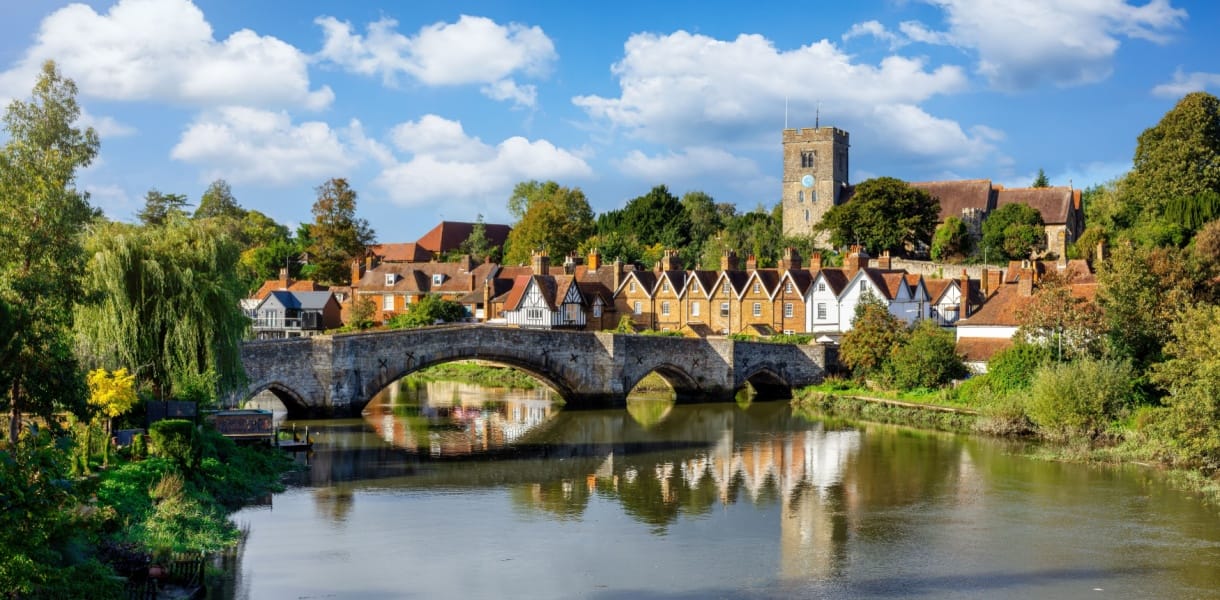
If England had a back garden, it would probably look like Kent. Rolling orchards, neat hedgerows, oast houses with their jaunty cowls, and villages that appear to have been constructed by set designers who got carried away with the concept of “quaint.” It is a county that has been feeding, defending and delighting Britain for centuries, and it carries itself with a mixture of quiet confidence and gentle eccentricity. You can stand on the cliffs at Dover and feel the whole of Europe staring back at you, or tuck yourself into a sleepy corner where nothing seems to have happened since the year 1450.
Kent’s fame as the Garden of England is no idle boast. Apples, cherries, hops and strawberries all thrive here. In summer the air is scented with blossom and beer ingredients. But to dismiss Kent as just orchards and greenery is to miss its sharper edges. This is a county of big history and bigger scenery. It was here that the Romans landed, here that Henry VIII tested his ambitions, here that the Battle of Britain raged in the skies. Kent is not shy about its past, but it is equally happy to show off its modern pleasures, from buzzy seaside towns to vineyard tours that look suspiciously like a French holiday.
Canterbury history with a chorus of tourists
If Kent has a capital of the imagination it is Canterbury. The city’s great cathedral has been drawing pilgrims since Thomas Becket was hacked to pieces in 1170, and the place still hums with a sense of theatre. You cannot walk the cobbled lanes without imagining Chaucer’s characters jostling for beer and beds. The cathedral dominates everything, a looming masterpiece of stone and stained glass, but there is more to Canterbury than solemn arches.
The town is alive with students from the university, musicians busking by the river, and boats gliding along the Stour. Cafes spill into the lanes, pubs claim to be the oldest in England with varying degrees of truth, and bookshops manage to thrive in a way that feels reassuringly old fashioned. If you want a place where the past and the present chatter away in the same accent, Canterbury is it.
Dover, chalk, tunnels and white knuckles
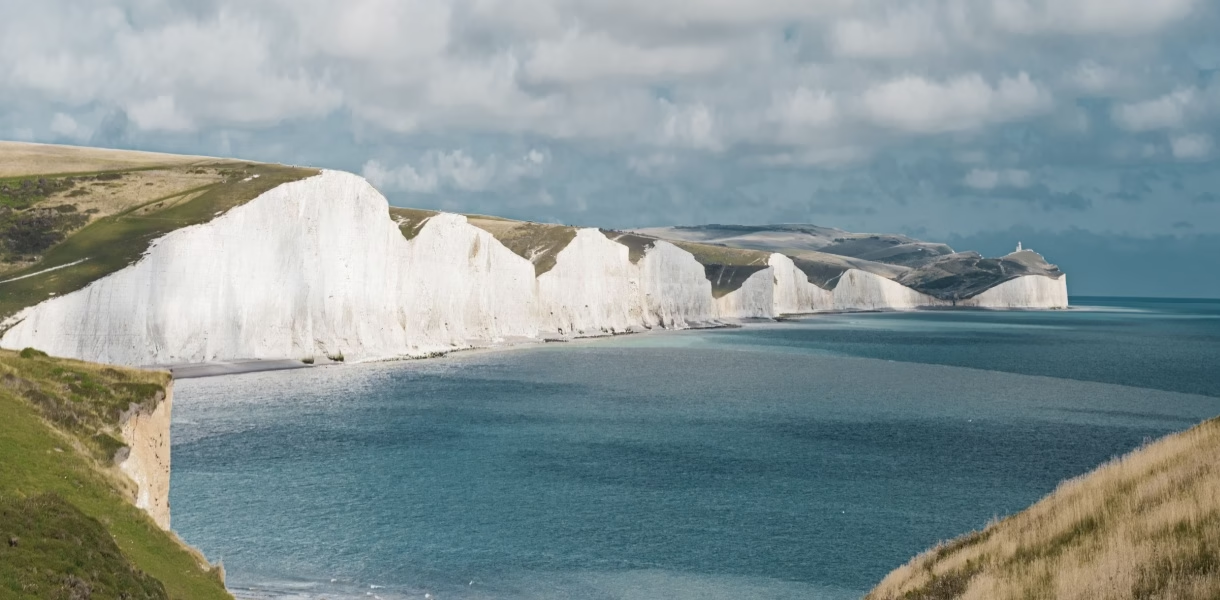
Dover is a name that conjures up ferries, cliffs and wartime spirit. Stand on the edge of the chalk and you see why Shakespeare had Edgar trick poor Gloucester into thinking he was tumbling off a cliff here. The White Cliffs are every bit as dazzling as you hope, especially when the sun catches the sea and the horizon looks painted in watercolour.
But Dover is not just a postcard backdrop. Beneath the castle lies a honeycomb of tunnels used for wartime operations, still echoing with the urgency of 1940. The castle itself, sprawling and immodest, has guarded this stretch of coast for nearly a thousand years. Down below the port still hums with ferries and lorries, while up above the gulls carry on as though none of this matters. It is a town that feels caught between worlds, and that is exactly its charm.
The Kent coast, faded grandeur and fresh paint
Follow the shoreline east and you come to Margate, Ramsgate and Broadstairs, the trio that once defined seaside fun for Londoners with sand in their sandwiches. Each has reinvented itself with varying degrees of flair.
Margate has gone all-in on the arts, with the Turner Contemporary gallery looming like a great white cube by the sea. The town’s Dreamland amusement park has been revived, offering rollercoasters and neon in a haze of nostalgia. Margate feels both rough and stylish, the kind of place where hipsters eat fish and chips with artisanal vinegar.
Broadstairs is the pretty one, its bays scalloped into the coast, its streets full of pastel houses and Dickensian associations. Charles Dickens spent his holidays here and you can see why. It is a seaside town that still remembers how to charm.
Ramsgate meanwhile has a working harbour, a reminder that this coast was built on fishing and ferries as much as deckchairs. Cafes line the waterfront, yachts clink in the marina, and you sense a town slowly polishing itself back into prominence.
Further round, Whitstable has cornered the market in oysters and seafood chic. People come for the shellfish, stay for the sunsets, and then start browsing the estate agents. Whitstable has that effect.
The Weald, oast houses and apple orchards
Head inland and the countryside changes into a patchwork of farms, woods and ridges. The Weald of Kent is where you find the oast houses that once dried hops for the county’s beer. Many have been converted into homes, which makes for slightly surreal skylines of pointy capped towers dotted across the fields. The lanes here twist through apple orchards and sleepy hamlets where the local pub seems to have been designed purely for the purpose of slow Sunday lunches.
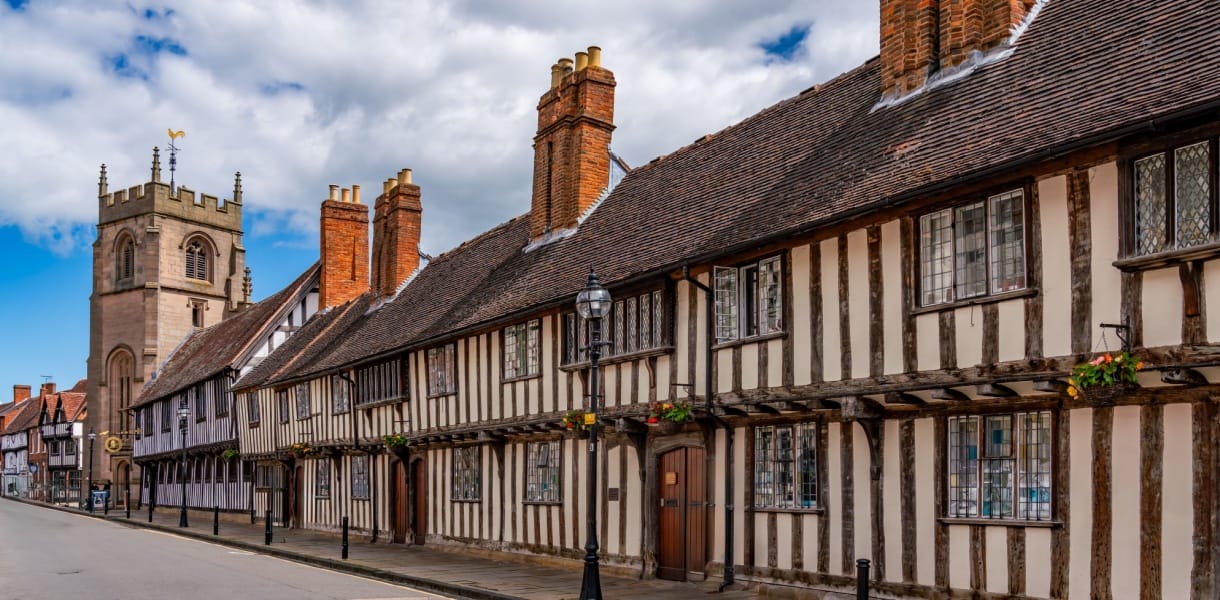
Cranbrook and Tenterden are the market towns of the area, with enough timber-framed houses to satisfy anyone with a taste for black beams. It is a part of Kent that feels profoundly English, like a countryside calendar that has accidentally come to life.
Castles and grand houses
Kent has a knack for castles. Leeds Castle, confusingly nowhere near Leeds, is often called the loveliest castle in the world. Sitting on an island in a lake, it looks like something dreamed up for a fairytale film. Inside you find a hotchpotch of medieval chambers and later refurbishments, each owner adding a bit more grandeur.
Hever Castle has its own drama, being the childhood home of Anne Boleyn. Walk the moats and gardens and you can imagine the Tudors plotting away. Dover Castle, Rochester Castle, Walmer Castle – the county has more fortifications than seems strictly necessary. And then there are the grand houses like Knole, where deer still wander in the park, and Chartwell, where Winston Churchill painted landscapes and kept goldfish. Kent does heritage with a kind of casual abundance that other counties might find irritating.
Vineyards and modern tastes
One of the more surprising turns in Kent’s story is its transformation into wine country. The chalky soils that make Champagne sparkle have their cousins here, and vineyards have spread across the downs. Wineries such as Chapel Down and Gusbourne offer tours and tastings, and the results are winning awards. It is entirely possible to sip a glass of Kentish fizz while looking out over the orchards and feel momentarily smug.
Food has followed suit. Farmers’ markets are everywhere, restaurants pride themselves on local produce, and the county seems intent on proving that you do not need to go to France for a proper feast.
The downs and the countryside
The North Downs stretch like a green backbone across the county, offering walking routes, chalk hills and sudden views of open country. The Pilgrims’ Way winds along them, echoing the footsteps of medieval travellers bound for Canterbury. In spring the slopes are dusted with wildflowers, in autumn they glow with mellow light. The High Weald to the south is all woodland and valleys, a gentler landscape that invites pottering rather than conquering.
Kent’s countryside is rarely dramatic in the Scottish sense, but it has a way of creeping under your skin. You find yourself pausing by a hedge to listen to birdsong, or wandering down a footpath just to see where it leads, and before you know it you are lost in its small-scale loveliness.
A county of entrances and exits
Kent has always been a county of thresholds. People arrive here from the continent, often in great numbers and often in a hurry. Armies have landed, pilgrims have trudged, holidaymakers have spilled out of trains. It has been both gateway and guardhouse. That history of coming and going gives Kent a slightly restless energy. Yet for all the movement, it remains stubbornly itself, a county that does not need to shout to make its point.
Visiting Kent is like opening a book you thought you knew only to find half the chapters are missing and the ending has changed. It is England condensed into one county, with scenery that soothes, history that excites, and a constant sense that around the next bend there will be something else to surprise you.
Top 10 reasons to visit Kent
1. Canterbury and its cathedral
You cannot talk about Kent without bowing in the direction of Canterbury. The cathedral towers above the city like a stone giant and has been pulling in pilgrims since Thomas Becket’s unfortunate end. Add cobbled lanes, river punts, and pubs claiming dubious antiquity, and you have a city that mixes grandeur with gentle chaos.
2. The White Cliffs of Dover
Stand on the edge and you will understand why poets get misty-eyed. The chalk cliffs blaze against the sea, gulls shriek overhead, and ferries nose off to France. Beneath the castle and its tunnels still whisper wartime secrets, making Dover both postcard and powerhouse.
3. Seaside reinventions
Margate has turned arty with the Turner Contemporary and a revived Dreamland amusement park. Broadstairs charms with its bays and Dickens links. Whitstable does oysters with a flourish. Each coastal town has shaken off the sand and reinvented itself with surprising flair.
4. Castles that look too good to be true
Leeds Castle sits on an island like it has been rehearsing for a fairytale all its life. Hever Castle brings Tudor drama with Anne Boleyn’s story. Rochester and Dover keep their Norman muscles flexed. Kent seems to scatter castles about the landscape just to keep visitors on their toes.
5. The Garden of England
Orchards heavy with apples, hop gardens with their jaunty oast houses, and strawberries that make supermarket fruit seem a crime. Kent’s nickname as the Garden of England is not marketing fluff. This is a county where eating is part of the sightseeing.
6. Vineyards that rival Champagne
It turns out Kent’s chalky soils have been quietly conspiring to make award-winning sparkling wines. Vineyards such as Chapel Down and Gusbourne offer tours and tastings, proving you do not need to cross the Channel for a glass of fizz.
7. The North Downs and Pilgrims’ Way
Walk the chalk ridges, follow in medieval footsteps, and admire views that stretch across half the county. The North Downs offer wildflowers, woods, and a sense that you are wandering through a living history book with better scenery.
8. Market towns and timber frames
Tenterden, Cranbrook and others serve up black-beamed houses, quirky shops and market squares that look like someone pressed pause in the 1600s. Add in pubs with roaring fires and you have English charm at its most unapologetic.
9. A feast of local flavours
From Whitstable oysters to Kentish ale, from cherries in summer to hearty Sunday roasts in half-timbered inns, the county knows how to feed people well. Farmers’ markets pop up everywhere, and restaurants revel in the freshness of local produce.
10. Gateway to history and Europe
Armies, pilgrims and tourists have all arrived here first. Kent has been the welcome mat and the guard dog of England. Today it is still a county of thresholds, with Eurostar zipping beneath and ferries gliding across, but it remains stubbornly Kentish in spirit.