Bristol is one of those cities that cannot decide what it wants to be, so it simply becomes everything at once. Medieval port. Georgian show-off. Victorian engineering workshop. Modern creative headquarters with excellent coffee and an alarming amount of street art.
It has always had a bit of swagger. In the Middle Ages, Bristol was one of England’s busiest ports, a place where ships arrived with wine and grain and left with wool and ambition. It also played a grim role in the transatlantic slave trade, a fact the city now wrestles with in public, in museums, and occasionally in arguments that spill out into the streets.
Today, Bristol feels like a city that is constantly in motion. It is full of cider drinkers and cyclists, engineers and artists, students and shipbuilders, radicals and romantics. If you pause for long enough, somebody will offer you a flat white and an opinion on Banksy.
A city built on hills and restless energy
Bristol is famously lumpy. Built on seven hills, it has a habit of making you earn your views, your pints, and your sense of direction. The River Avon slices through the city in a way that feels both scenic and slightly inconvenient, and the bridges that cross it have become part of Bristol’s personality.
The city’s position, tucked inland but still connected to the sea, made it a trading powerhouse early on. It grew wealthy, built grand churches and solid civic buildings, and developed the sort of confidence that comes from being busy and important for centuries. Some of that wealth came at a terrible human cost, and modern Bristol does not pretend otherwise. It is a city that likes its history properly examined, not just admired from a safe distance.
Brunel’s Bristol and the joy of engineering show-offs
Bristol has a favourite overachiever, and his name is Isambard Kingdom Brunel. If you start looking for his influence, you will keep spotting it, like a Victorian treasure hunt.
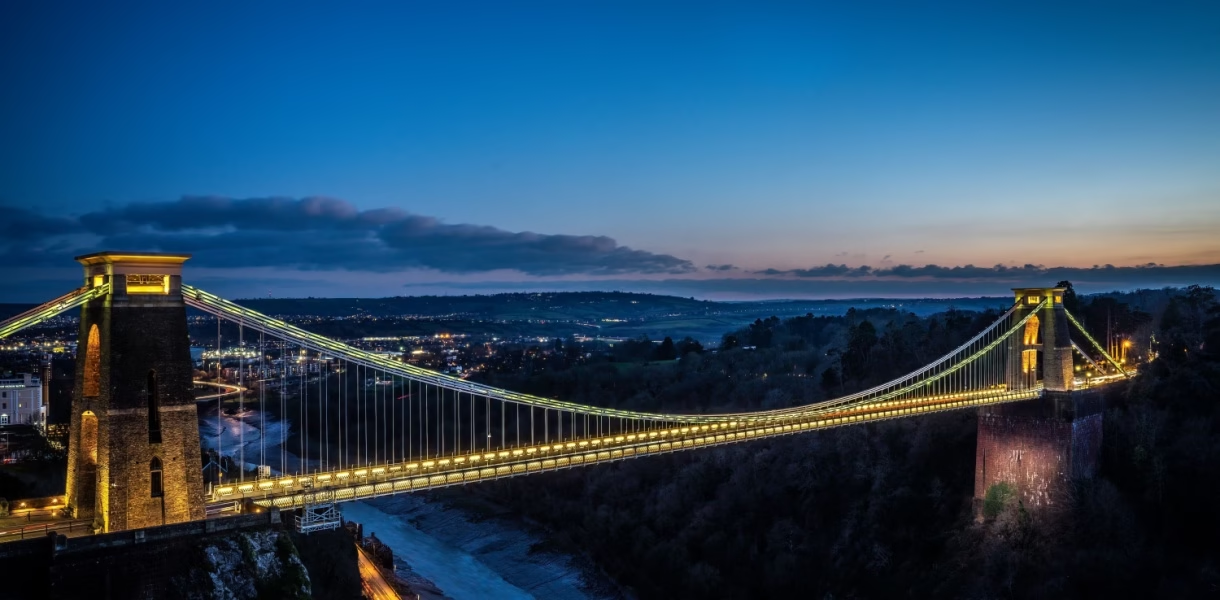
The Clifton Suspension Bridge is the headline act, stretching across the Avon Gorge with a sort of effortless elegance that makes you briefly forgive all the walking uphill to reach it. It is a bridge that feels theatrical without being silly, the kind of structure that makes you stop, stare, and take about twelve photos you do not need.
Then there is the SS Great Britain, Brunel’s pioneering ocean liner, now resting at the harbourside like it has merely popped in for a quick visit. It is part ship, part time machine. You can explore the decks, peer into cabins, and get a vivid sense of how boldly the Victorians built things, and how cramped they were willing to live while doing it.
And for a more everyday Brunel moment, there is Temple Meads Station, one of the UK’s handsomest railway stations, still delivering people into Bristol with a satisfying sense of arrival.
Pirates, explorers and a city that attracts characters
Bristol has always had a soft spot for people who live slightly sideways. Blackbeard was born here, which feels appropriate for a city that still enjoys a bit of mischief and the occasional dramatic flourish.
John Cabot set off from Bristol in 1497 aboard the Matthew and reached Newfoundland, which is the sort of voyage that sounds heroic until you see how small the ship was. You can visit a replica in the harbour today and marvel at how anyone crossed an ocean in something that looks like it could be outpaced by a determined swan.
Bristol’s recent history has also made global headlines. In 2020, the statue of Edward Colston, a merchant deeply involved in the slave trade, was pulled down by protesters and thrown into the harbour. It became a moment that forced public conversation about commemoration, memory, and what a city chooses to honour.
Harbourside Bristol and why the water still runs the show
Bristol may no longer be a major port, but it is still a city that revolves around its water. The harbourside remains the liveliest part of town, a place that has evolved from warehouses and cranes into galleries, cafes, theatres, and floating bars that gently wobble while you drink.
This is where you will find the Arnolfini for contemporary art, the Watershed for independent cinema, and M Shed for a thoughtful, human look at Bristol’s story, told through objects, voices, and the sort of details that make a city feel real.
Walk the harbour and you will pass houseboats, paddleboarders, street performers, and people eating something handheld and sugary while pretending it does not count as lunch. In warmer months, the whole area has the atmosphere of a festival that forgot to end, which is exactly how Bristol likes it.
Balloons, bright houses and the city’s slightly surreal skyline
Bristol’s relationship with hot air balloons is not casual. It is committed. Every August, the Bristol International Balloon Fiesta fills the skies with colour and novelty shapes and the kind of cheerful spectacle that makes you look up and grin like a child.
On the ground, the city’s architecture has its own flair. Clifton’s Georgian terraces curve around parks and slopes with graceful confidence, the sort of neighbourhood where even the lampposts look like they have good posture. Meanwhile, Totterdown and Redcliffe spill down hillsides in colourful rows, bright enough to make you wonder if the city once knocked over a giant box of crayons and simply decided to embrace it.
Street art, cider and stubborn Bristol independence
It is impossible to talk about Bristol without bumping into Banksy, or at least the idea of him. The city has some of his most famous early works, and an ongoing street art culture that is not a gimmick but a genuine part of local life.
Upfest in Bedminster turns streets into an open-air gallery, and across the city you will find murals, stencils, paste-ups, and entire walls that look like they have opinions. In Bristol, graffiti is not always treated as vandalism so much as a form of public conversation.
That creative confidence spills into everything else too. Bristol is full of independent businesses, experimental music, alternative culture, and neighbourhoods that feel proudly self-contained. Stokes Croft is the headline area for this energy, a mix of activism, nightlife, and street-level chaos that somehow works.
And then there is cider. Bristol takes it seriously, often serves it strong, and seems faintly suspicious of anyone who asks for something too fizzy and polite.
Why Bristol keeps pulling you back
Bristol refuses to be one simple thing. It is historic and modern, rebellious and refined, watery and walkable, full of culture but never precious about it. Whether you are here for engineering brilliance, creative energy, museums and food, or just a riverside pint with a view, Bristol makes room for you.
It is a city that asks questions, enjoys a good debate, and will happily invite you to the pub while it works out what it thinks.
Bristol visitor information
Getting here
- By train: Trains from London Paddington take around 1 hour 45 minutes.
- By road: The M4 and M5 connect Bristol with much of the UK.
- By air: Bristol Airport is around 8 miles south of the city centre, with frequent bus links.
Where to stay
- The Bristol Hotel for harbourside views and an easy central base.
- Brooks Guesthouse for boutique style and rooftop retro caravans.
- Clifton House for a leafy, quieter stay near the Suspension Bridge.
Where to eat
- Cargo at Wapping Wharf for independent eateries and harbourside atmosphere.
- St Nicholas Market for global street food in a handsome Georgian setting.
- The Ox for excellent steaks in a former bank vault.
What to do
- SS Great Britain for a deep dive into Victorian engineering and life on board.
- Clifton and the Suspension Bridge for classic Bristol views and a good leg workout.
- Street art spotting with a tour that takes in major murals and Banksy-related sites.
- Harbourside wandering with galleries, boats, and a quick hop on a ferry.
Nearby gems
- Bath around 15 minutes by train for Georgian grandeur in concentrated form.
- Cheddar Gorge for dramatic scenery and a strong chance of buying too much cheese.
- Weston-super-Mare for classic seaside kitsch and broad, breezy beach walks.
Best time to visit
- Summer for festival season, including the Balloon Fiesta and harbourside events.
- Spring and autumn for smaller crowds and easy exploring.
- Winter for cosy pubs, quieter streets, and twinkly harbourside lights.