There are seaside towns that feel like they were built to be looked at. All iron railings, bracing wind, and a faint scent of damp deckchairs. Bournemouth, on the other hand, has always seemed determined to be lived in. It is a place that behaves like a resort but thinks like a suburb, and it manages the neat trick of feeling both properly coastal and oddly domestic. You can come for the beach and stay for the gardens, the cliff walks, the surprising number of good coffees, and the sense that the town is quietly enjoying itself without asking your permission.
It sits on the Dorset coast, facing the English Channel with a kind of cheerful confidence. The sea is the headline act, obviously, but Bournemouth’s real charm is that it refuses to be just one thing. It is part Victorian wellness experiment, part university town, part summer playground, part winter dog-walking headquarters, and it wears all of this with a sort of tidy, sun-bleached ease.
A town invented for fresh air and good manners
Bournemouth did not really start as a “town” in the usual medieval sense of slowly accumulating a church, a market, a few arguments, and then a high street. It was more of a deliberate idea. In the early 19th century it began as a health resort, the kind of place you were sent when your lungs were wheezy and your spirit was fragile and someone had decided that pine trees and sea air could fix most things.
That origin story still hangs around in the layout. There is a gentle, planned quality to Bournemouth, especially compared with older Dorset towns that grew where they landed and never quite apologised for it. The cliffs give the place height and drama, the gardens add calm, and the whole thing feels like it was designed to stop people rushing, which is a very British form of luxury.
The beach, which Bournemouth takes very seriously
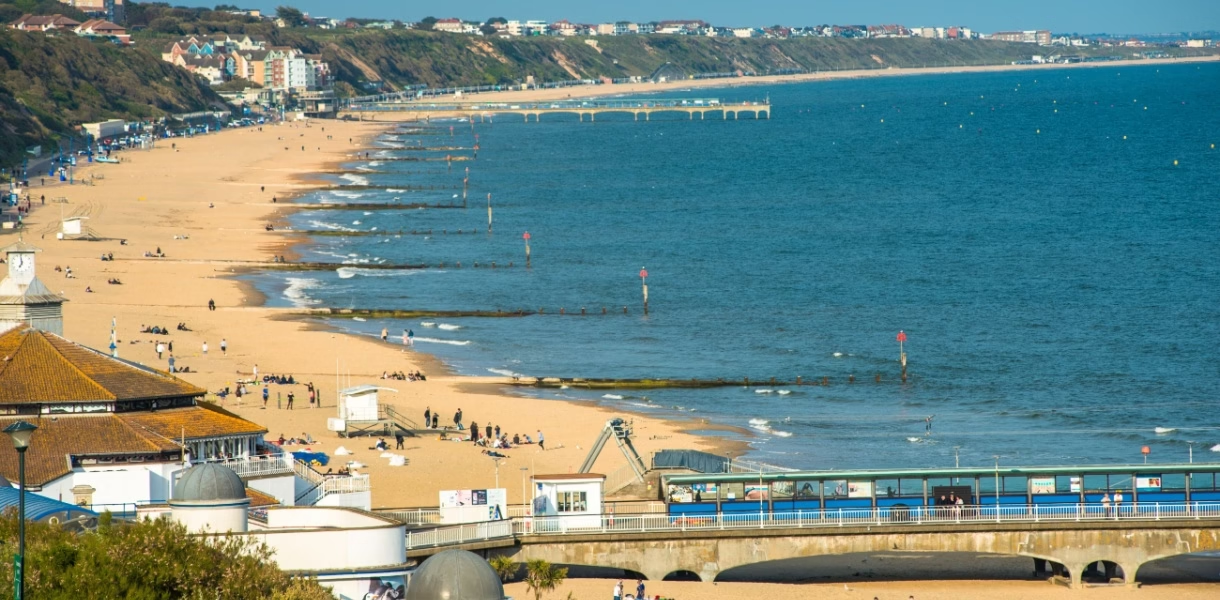
Let us deal with the obvious. Bournemouth’s beach is the reason half of Hampshire owns a folding chair. It is long, sandy, and broad enough that even in peak summer you can usually find a patch of space if you are willing to walk a little further than the nearest ice cream van.
What makes it particularly Bournemouth is how organised it feels. The sand is clean, the facilities are plentiful, and the whole seafront has a gentle hum of competence. You can hire a beach hut and pretend you are the sort of person who keeps a “seaside wardrobe”. You can swim when the water has warmed up enough to feel like it is not personally offended by you. You can do the classic British thing of packing for the tropics and then sitting under a towel because the breeze has turned sharp.
And then there is the pier. Bournemouth Pier is one of those structures that insists on being part of the experience. It gives you a place to stroll, a place to point at the horizon as if you know what you are talking about, and a gentle reminder that the Victorians liked to build things just so people could walk over water in their best shoes.
The cliffs and the slow reveal of the coast
Bournemouth’s coastline has a pleasing verticality. You are not just at the sea, you are above it, looking down from cliffs that make the town feel a little grander than it might otherwise. This creates one of Bournemouth’s best habits, which is the slow reveal.
You can follow clifftop paths and keep stumbling upon new views. The sea suddenly opens out, the beach stretches away, and you start to understand why this place became a resort in the first place. It is not dramatic in the Cornwall sense, but it is handsome and wide and properly restorative.
For an easy, satisfying walk, head along the cliffs toward Boscombe one way, or toward Branksome and Sandbanks the other. You will pass through little shifts in mood, from busy beaches to quieter stretches, from families to paddleboarders to people who look like they have already had their third iced latte of the morning.
Lower Gardens, Upper Gardens, and Bournemouth’s talent for calm
Most seaside towns have a promenade and maybe a slightly sad patch of green. Bournemouth has gardens. Proper ones. They run through the centre like a green corridor, giving the town an unexpectedly gentle heart.
The Lower Gardens are where Bournemouth shows off. In summer there are flowerbeds that look like they were designed by someone with strong opinions about colour. There is space to sit, space to wander, and the occasional sound of buskers making the air feel lively rather than noisy. The Upper Gardens feel quieter, more shaded, and slightly more local. Together they make Bournemouth feel less like a strip of shops behind a beach and more like a place with breathing room.
It is a small thing, but it changes the rhythm of the town. You can go from the beach to leafy calm in minutes, and you begin to understand why people come here for weekend breaks and then accidentally start browsing property listings.
Bournemouth town centre, which is more real than romantic
Bournemouth is not a postcard town. Its centre is practical. There are chain shops, busy roads, and the usual British town-centre bustle. Yet it has pockets of personality if you pay attention.
The area around the gardens has a pleasant flow, and there is a mixture of old and new that feels honest. Bournemouth does not pretend to be quaint, and that is part of its charm. It is a working town as well as a visitor town, and you can feel that in the weekday pace, the student presence, and the fact that people here are often heading somewhere rather than just drifting in holiday mode.
If you want a more characterful wander, head toward Westbourne. It has more independent shops, a calmer feel, and the sense of a well-organised village that has been absorbed into the city but never fully surrendered its identity.
The quieter neighbourly pull of Boscombe and the east end
Bournemouth is not just Bournemouth. It is a set of neighbourhoods stitched together by beach and road and habit. Boscombe, just to the east, has long had a slightly different energy. It has a more alternative streak, with street art, independent places to eat, and a beach scene that feels a little more surfy and local.
The Boscombe Chine Gardens are another example of Bournemouth’s green talent, a leafy route down to the beach that makes the whole descent feel like a small event. Boscombe Pier has its own character too, and the stretch of sand here often feels less polished and a little more free.
It is worth exploring because it shows you the town’s range. Bournemouth can do orderly and family-friendly, but it can also do scruffier, cooler edges, and the contrast makes both sides more interesting.
Evenings, when the resort takes off its day clothes
By day, Bournemouth is sun cream and chips. By evening, it becomes something else. There are theatres, bars, and a nightlife that is stronger than you might expect from a place that also has pensioners feeding seagulls.
The Bournemouth Pavilion is a classic option for shows and performances, sitting near the seafront like a little reminder that entertainment used to come with velvet curtains and a sense of occasion. Around town you will find everything from relaxed pubs to lively bars that fill with students and weekenders.
The best Bournemouth evenings are not necessarily the loudest ones. They are the ones where you finish dinner, wander down through the gardens, and end up on the promenade as the light fades. The sea turns darker, the air cools, and the whole place feels suddenly spacious.
Day trips and the joy of being well-placed
One of Bournemouth’s best features is that it is surrounded by places that make you want to keep moving. The Jurassic Coast begins to the west and east, offering cliffs, fossil beaches, and dramatic scenery when you want more than sand. Poole Harbour is nearby, and it has that lovely mix of boats, islands, and wide water that makes you feel like you are on a proper holiday.
Then there is the New Forest, just a short drive away, with ponies, heathland, and villages that look like they were arranged for maximum charm. Bournemouth is a base as much as it is a destination, which is why it works so well for long weekends. You can do beach one day, forest the next, and still have time for an afternoon wander in the gardens.
Why Bournemouth
Bournemouth is not the most dramatic seaside town in Britain, and it is not the most historic. It does not have a medieval core, nor does it have the wild coastal cliffs that make you gasp. What it has instead is a kind of steady, generous appeal.
It has space and light. It has a beach that behaves itself. It has gardens that soften the town and make it feel almost relaxed by design. It has enough going on that you do not run out of things to do, and enough calm that you can also do nothing and feel like that was the whole point.
You arrive expecting a simple seaside break. You leave having had something slightly more complete. A town that is happy to give you sun and sand, but also insists, gently, that you take a walk among the trees too.
Bournemouth at a glance
Getting here
- By train: Direct services run to Bournemouth station from London Waterloo, plus links from Southampton, Winchester and beyond.
- By car: Easy drive via the A338 from the M27, with routes connecting to the A31 and wider Dorset.
- By coach: National coach services run into Bournemouth Travel Interchange.
- By air: Bournemouth Airport is nearby with UK and seasonal European flights, then a short taxi or bus into town.
Getting around
- On foot: The centre, gardens, pier and beach are very walkable.
- By bus: Frequent local buses connect Bournemouth with Poole, Boscombe, Christchurch and the wider coast.
- By bike: Flat-ish seafront routes make cycling easy, especially between Bournemouth and Poole.
Where to stay
- Seafront hotels: Ideal if you want beach access and sea views.
- Town centre: Good value and handy for shops, buses and evening plans.
- Westbourne and Boscombe: Slightly calmer neighbourhood feel with independent places nearby.
- Sandbanks and Poole side: More upmarket, great if you want harbour days and coastal walks.
Where to eat and drink
- Beachfront: Fish and chips, casual grills and sunset drinks along the promenade.
- Town centre: A wide spread of chains plus independents tucked off the main streets.
- Westbourne: A strong bet for relaxed dining, cafés and smarter evening options.
- Boscombe: More eclectic choices, often with a local, artsy edge.
What to do
- Bournemouth Beach and Pier: The classic day out, done properly.
- Clifftop walks: Follow the coast toward Boscombe or Branksome and Sandbanks for big sea views.
- Lower and Upper Gardens: A surprisingly soothing green spine through town.
- Bournemouth Pavilion: Shows, comedy and entertainment near the seafront.
- Poole Harbour: Boats, big skies and easy waterside wandering a short hop away.
Nearby gems
- Sandbanks: Pale sand, fancy houses and a “is this still England?” vibe.
- Christchurch: Quieter, older, and lovely for riverside strolls and a slower pace.
- The New Forest: Ponies, heathland and pub lunches within easy reach.
- Jurassic Coast day trips: For coastal drama when you want more cliff than deckchair.
Best time to visit
- Late spring to early autumn: Best chance of beach weather and a buzzy seafront.
- September: Often warmer seas, fewer crowds, and the town feels calmer.
- Winter: Brisk clifftop walks, cosy cafés, and plenty of fresh-air bragging rights.