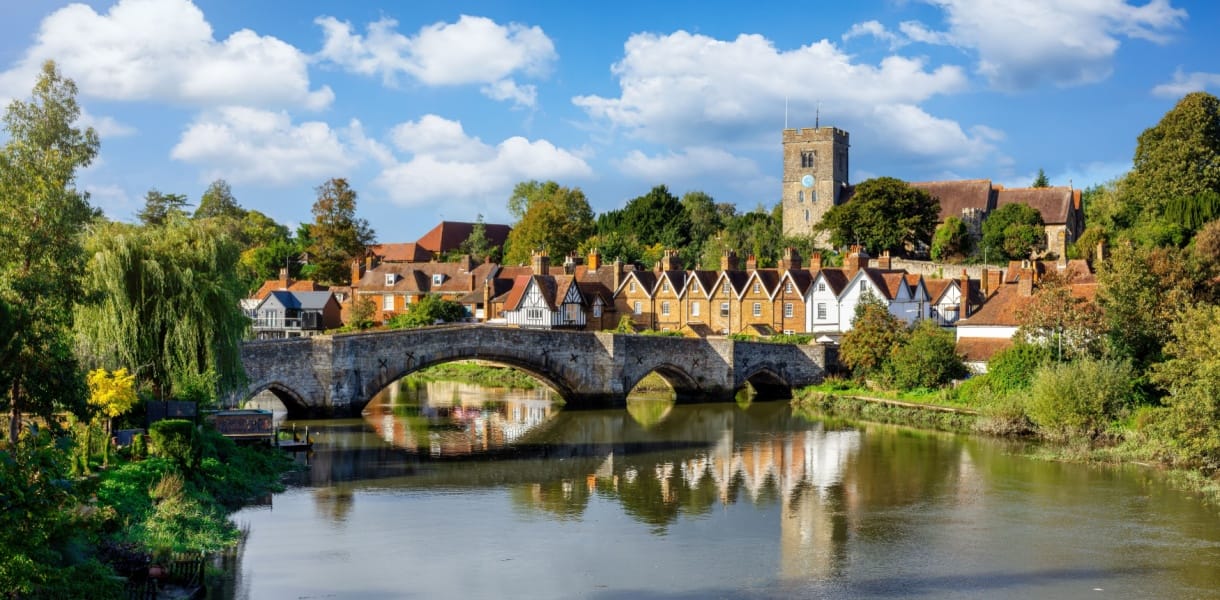
There is a tendency, when thinking about South East England, to imagine an endless swirl of Range Rovers, wisteria-clad cottages, and villages where the local shop sells nothing but chutney and outrageously priced candles. And to be fair, that’s not wildly off. But there’s much more to the South East than its well-heeled reputation might suggest. This isn’t just the land of commuter towns and clipped hedges , it’s a patchwork of chalk cliffs, ancient forests, sun-dappled meadows, bustling market towns, royal palaces, and seaside resorts that are charmingly eccentric and occasionally just plain odd.
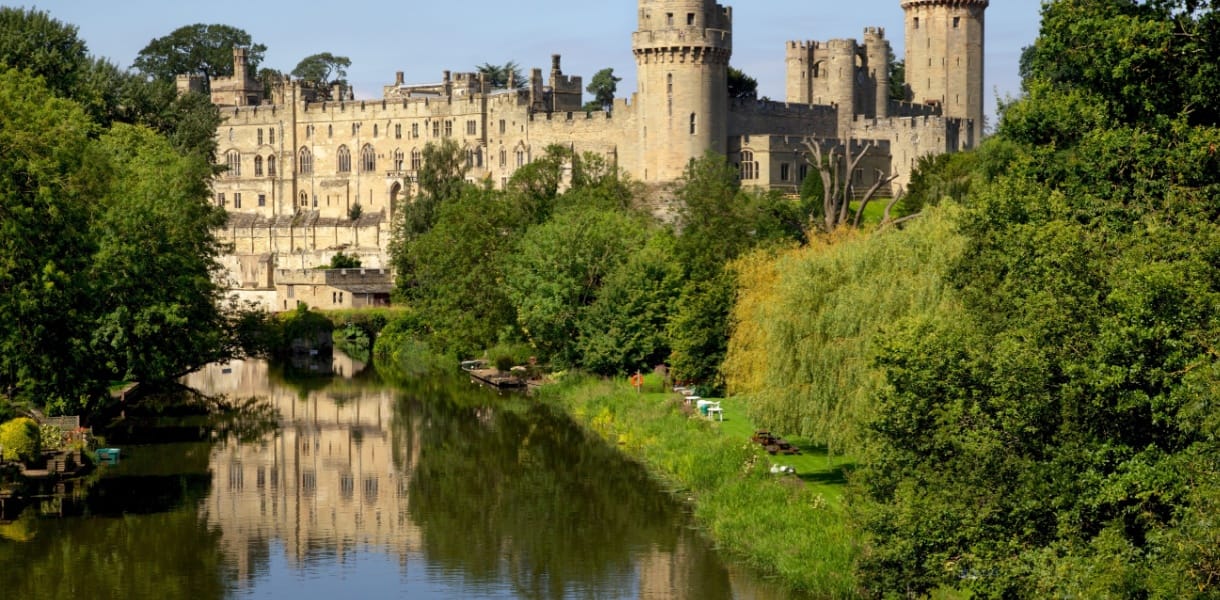
This is, after all, the bit of England where history goes to put its feet up. You’ve got Windsor, which looks like it’s been designed by someone with a deep love of flags and a very healthy budget. The castle there is still very much in use , a sort of royal pied-à-terre , and if you time it right, you might see the Changing of the Guard, which is a little like watching a very solemn parade where everyone’s overdressed and no one’s quite sure where they’re supposed to be looking.
Then there’s Oxford, which isn’t technically a museum but behaves like one. The entire city seems to be made of spires, bicycles, and people reading Latin for fun. It has that magical quality of being utterly beautiful even when it’s raining , which, helpfully, is quite often. The colleges are older than some countries, and the libraries smell reassuringly of paper and cleverness. If you squint, you can almost see CS Lewis popping out of a pub or Tolkien scribbling notes on the back of a beer mat.
If it’s coastal charms you’re after
Head south to Brighton, where the sea meets the city in a joyful, chaotic, slightly theatrical embrace. Brighton is like that cousin who turns up late to weddings, slightly hungover but always great fun. It’s home to the world’s most gloriously over-the-top Royal Pavilion – which looks, quite frankly, like the Taj Mahal got a bit carried away on a weekend in England , and one of the oldest electric railways in the world, which still trundles along the seafront with heroic optimism. There are pebbles instead of sand, sure, but it more than makes up for it in spirit, drag shows, and vegan sausage rolls.
Further along the coast you’ll find Hastings, Eastbourne, and the beguiling Seven Sisters , a series of chalk cliffs so startlingly white and sheer that they look like they’ve been Photoshopped by nature. The South Downs roll inland behind them like the folds of a giant green duvet, and if you’re lucky, you’ll find a pub tucked away in the hills serving pints that taste like they were brewed by benevolent monks with excellent taste.
But not everything is old and grand
The South East is full of smaller surprises , towns and villages where time seems to have gently dozed off. Places like Rye, which appears to be made entirely of cobbles, crooked timbers, and tearooms, or Arundel, where you half expect a knight to trot past as you browse for jam. There’s something quietly magical about these towns , a feeling that the world moves just a bit more slowly there, and everyone has agreed not to bring it up.
And then there’s the countryside
The Weald, the Chilterns, the North Downs , rolling hills, ancient woodlands, and footpaths that meander through fields of sheep, occasionally leading you into a nettle patch and out the other side into what can only be described as postcard material. It’s walking country , not the dramatic kind that makes your calves weep, but the gently lovely sort that ends with a cold drink and possibly a ploughman’s lunch.
The region also excels at gardens
Perhaps because it has just the right amount of weather. Too far north and your roses sulk; too far south and your lawns crack. But here, everything blooms with enthusiasm. Sissinghurst, Wisley, Great Dixter , these are gardens where even the weeds seem tasteful. It’s not just flowers, though. There’s a deep sense of heritage here , castles tucked into the landscape, ancient yew trees that look like they’ve seen things, and Roman villas still showing off their mosaics like it’s 200 AD and they’re trying to impress the emperor.
And yes it’s posh in parts
In some villages, you’ll find more dogs than children and more delicatessens than sense. Estate agents here speak in hushed tones about “character properties” and “coach houses” and “proximity to the station” , which is code for “someone’s going to spend far too much on this because it’s an hour from London and has a nice fireplace.” But poke around a bit and you’ll also find faded seaside grandeur, slightly crumbling high streets with excellent charity shops, and nature reserves full of birds that have come here on holiday from Africa, which frankly seems like a bold choice.
South East England is many things
It’s the cradle of kings and scholars, the Sunday-roast heartland of England, the gentle curve of coast where Victorians once took the air and teenagers now take selfies. It’s a place where past and present jostle together , often in the same tearoom , and where, if you’ve packed a raincoat, a pair of walking boots, and a sense of humour, you’ll do just fine.
Come for the castles. Stay for the cake.
10 reasons to visit South East England (excluding London)
1. The cliffs that refuse to be ignored
The White Cliffs of Dover are as unsubtle as nature gets. Bright, gleaming, and frankly a bit smug, they have greeted travellers for centuries and still manage to look impossibly fresh. Walk the coastal paths and you’ll see what all the fuss is about.
2. Castles with more history than your history teacher
Leeds Castle bills itself as “the loveliest castle in the world,” which sounds boastful until you see the swans gliding past its moat. Then there’s Dover Castle, with underground tunnels that once bristled with wartime secrets. It’s hard to turn a corner in Kent or Sussex without bumping into some battlements.
3. Seaside towns with personality
Brighton does quirky like it’s a competitive sport, complete with a palace that looks like it was airlifted from India and plonked by the sea. Further along, Hastings mixes fishing boats with contemporary art, while Whitstable specialises in oysters so fresh they practically introduce themselves.
4. The vineyards that might just surprise you
English wine used to be the punchline of jokes. Not anymore. The chalky soils of Kent and Sussex are now producing sparkling wines that make the French twitchy. Tours usually involve drinking before noon, which seems the only sensible way to do it.
5. Gentle hills with not-so-gentle views
The South Downs roll and fold like a green duvet someone forgot to smooth out. From the Seven Sisters cliffs to Devil’s Dyke, the walking is both easy and astonishing, which is a rare and lovely combination.
6. Canterbury, where time stopped politely
Canterbury Cathedral has been drawing pilgrims since Chaucer’s day and still manages to hush even the noisiest school groups. The old town’s crooked lanes, timber-framed houses, and riverside pubs make it feel as though the Middle Ages never quite got the memo about ending.
7. Gardens that make you feel inadequate
Great Dixter, Sissinghurst, Wakehurst—the names alone sound like a roll call of horticultural aristocracy. You wander through borders and lawns so perfectly kept you’ll go home and glare at your own patch of grass in despair.
8. Rye, Arundel, and other small towns with big charm
Rye looks like a postcard that’s been left out in the rain—cobbled, crooked, and altogether too pretty. Arundel, meanwhile, comes with a castle that looks as though it should have its own fanfare. Scattered across the region are dozens of such towns, each seemingly competing to be the quaintest.
9. A coastline with options
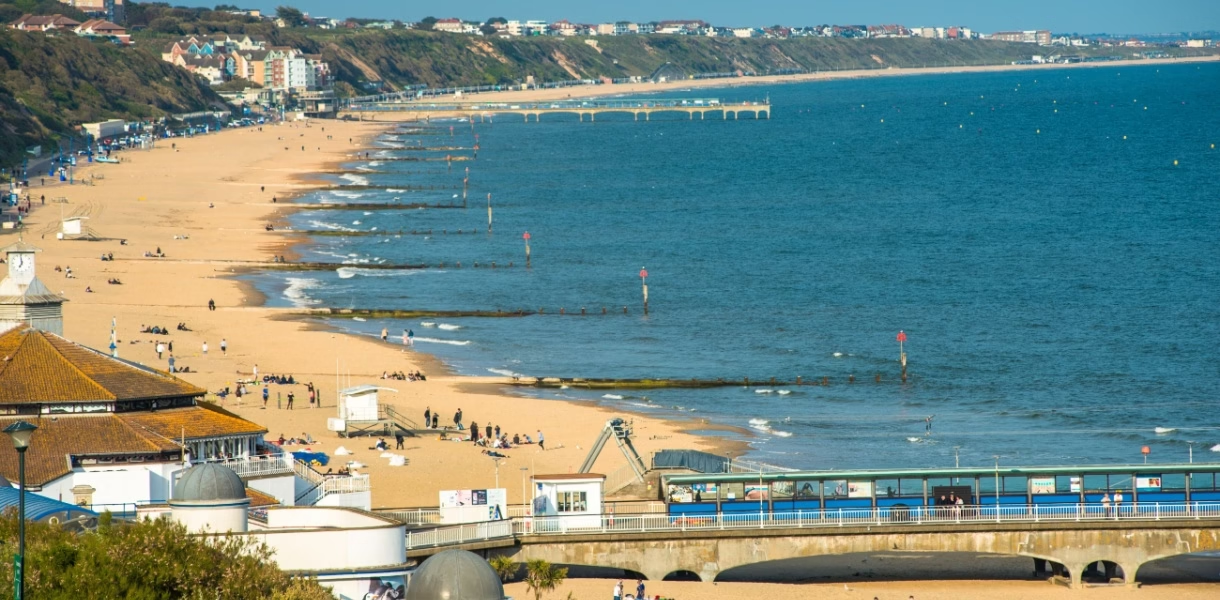
Whether you want bucket-and-spade family fun in Eastbourne, fossil hunting in Hastings, or kite surfing off Camber Sands, the South East coastline is indecisive in the best possible way.
10. Food that keeps you lingering
From Kent’s cherries to Sussex’s seafood, the South East has developed a taste for itself. Farm shops and country pubs dish up produce that’s so local you half expect the chef to introduce you to the cow before serving the steak.