Aberdeen has the kind of name that sounds faintly stern, like a headmaster who still believes in proper posture. It sits up in the northeast, facing the North Sea with a straight back and a wind that never learned manners. You arrive expecting something grey and worthy. You leave wondering why nobody mentioned the beaches, the books, the unexpected palm trees, or the way the city catches the light and quietly shows off.
It is called the Granite City, and not as a joke. The buildings really do look as if they were carved out of a single stubborn thought. On a dull day the stone can seem serious, almost moody, as though it is thinking about the cost of heating. Then the sun hits it and the whole place flashes silver, like someone has polished the city while you were looking the other way.
Aberdeen also lives with a second nickname, the Oil Capital of Europe, which sounds less romantic but has paid for a lot of lunches. The oil boom brought money, people, accents, and a sort of brisk international confidence. It also gave Aberdeen a strange double life, where you can walk from a medieval street into a sushi bar full of engineers discussing subsea valves with the intensity of poets.
And yet, for all that industry and weather, Aberdeen is not a city that shouts. It prefers a dry aside. It offers you culture, coastline, and castles with an air of “well, it’s here if you want it.” Which you do.
First impressions and the art of looking twice
If you judge Aberdeen too quickly, it will let you. The centre can feel orderly and businesslike at first, with broad streets and grand stone buildings that seem built to withstand both storms and small talk. Take ten minutes longer, though, and you start noticing the details.
Look up.
There are carved facades, stained-glass corners, and flashes of Victorian ambition wedged between modern signs.
Union Street is the city’s long spine, wide and confident, built at a scale that suggests somebody once had a lot of faith in the future. Nearby, Union Terrace Gardens sits like a green pocket folded into the city, and on a fine day it feels like Aberdeen briefly remembering it has a soft side. You can hear traffic, but you can also hear people laughing, which is always a reassuring sign in a place famous for wind.
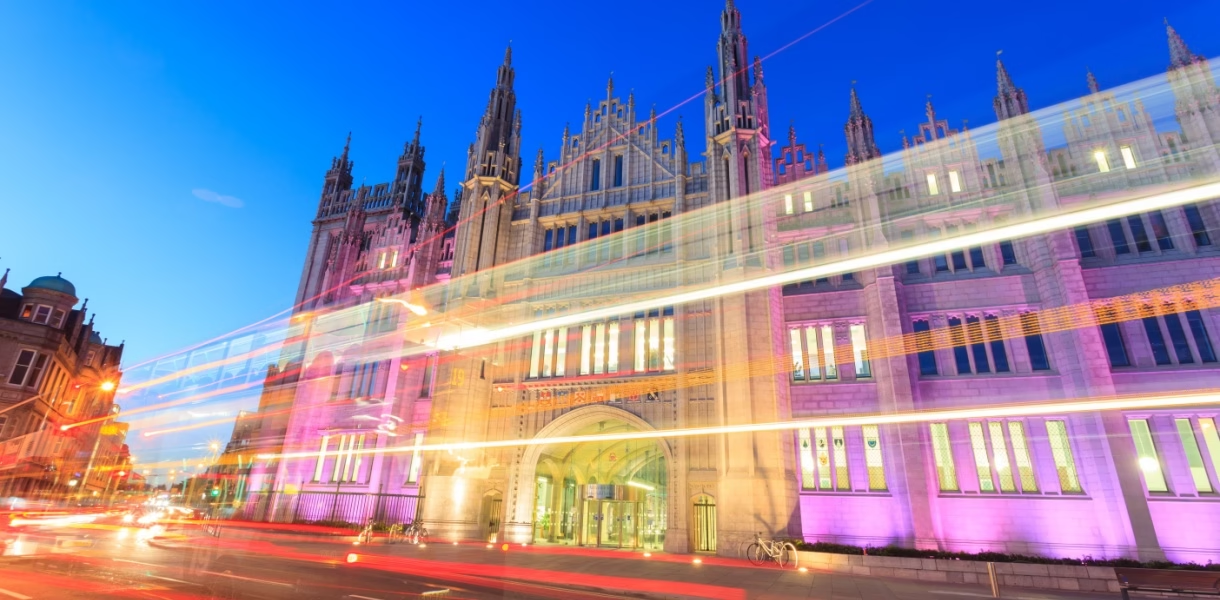
Then there is Marischal College, which is less a building and more a declaration. It rises in pale granite like a gothic daydream, all spires and sharp edges, and it has the audacity to look both severe and beautiful at the same time. Even if you know nothing about architecture, you will still stand there for a moment, because your brain needs to process the scale of it.
Old Aberdeen and the quieter kind of magic
Old Aberdeen is where the city slips into a calmer voice. The streets narrow, the pace drops, and suddenly you are among cobbles, gardens, and buildings that look as if they have been leaning into the wind for centuries. It is not a museum-piece district, either. People live here, walk dogs here, and nip into cafés as if it is perfectly normal to do errands beside a medieval cathedral.
St Machar’s Cathedral is the anchor, solid and slightly mysterious, with twin towers and a presence that makes the surrounding streets feel older by association. Inside, you get that familiar cathedral hush, the one that makes even restless people speak like they have suddenly taken up reverence as a hobby. The ceiling has a patterned heraldic look that holds your gaze longer than you expect.
King’s College, part of the University of Aberdeen, adds its own sense of academic time-travel. The crown tower is the headline act, oddly elegant, like a stone hat placed carefully on the skyline. Students hurry past with laptops and coffee, and it is hard not to admire how casually Aberdeen handles its history. It does not put it behind velvet ropes. It just uses it as scenery.
Sit on a bench for a bit.
Watch the mix of gowns, backpacks, and people who look like they have lived here forever.
The sea, the sand, and the surprise of a proper beach
Many cities claim a beach the way people claim they can cook. Aberdeen actually has one. And it is a good one.
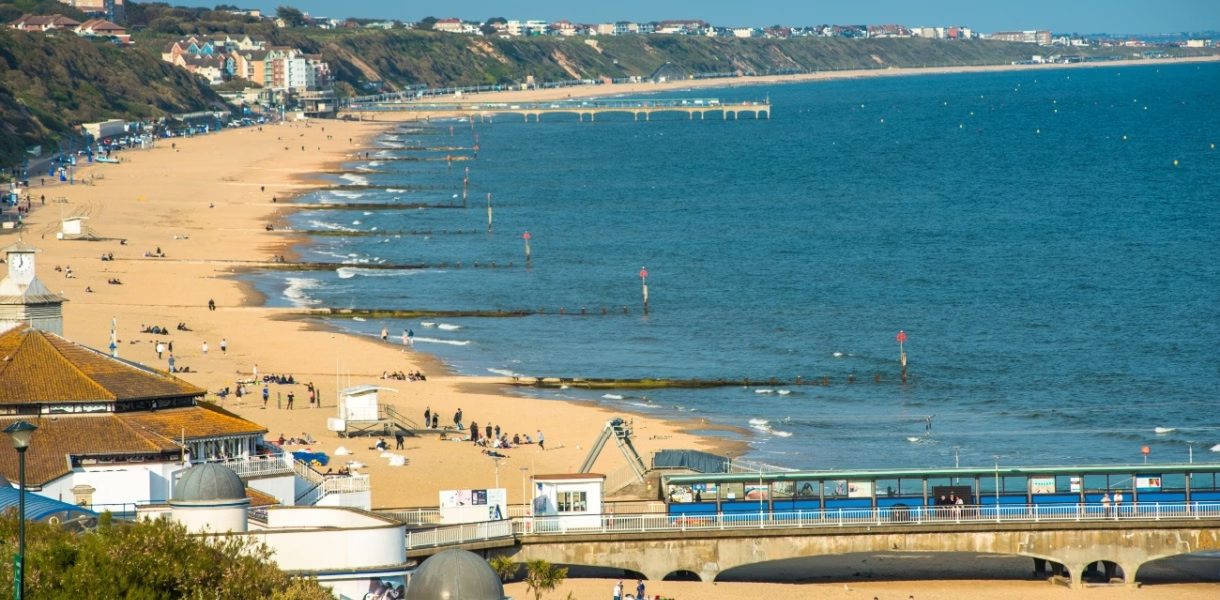
Aberdeen Beach stretches out in a long, pale curve, backed by promenades and the occasional burst of amusement-arcade cheerfulness. The wind is usually present, of course, because this is Aberdeen and it has standards to maintain, but the sea air feels clean and bracing in a way that makes you stand taller without meaning to. On a clear day, the horizon looks sharp and unapologetic.
You can walk north toward Balmedie and feel the city fall away. The dunes start to take over, the grass bends and whispers, and the North Sea does its steady, restless thing. Bring a hat. Bring patience. Bring the willingness to be slightly windswept in exchange for a coastline that feels big and real.
There is also Footdee, known locally as Fittie, tucked near the harbour like a secret the city never quite bothered to hide. It is a small fishing village pocket, with neat cottages and little gardens that have been arranged with the quiet competitive pride of people who know exactly what they are doing. It is charming without trying. The kind of place that makes you lower your voice.
Harbours, history, and the working heartbeat
Aberdeen’s harbour is not decorative. It is busy, functional, and sometimes noisy, which is part of the point. This is a city that has always been connected to the sea, whether through fishing, trade, shipbuilding, or the offshore industry that changed everything in the late twentieth century.
Walk along the harbour edges and you see the layers. Working boats, cranes, modern infrastructure, and then, not far away, streets where the old city lingers. The sea is not a backdrop here. It is a colleague.
For a deeper sense of the city’s relationship with the ocean, the Aberdeen Maritime Museum is a smart stop. It tells the story without turning it into a lecture, and it gives you a clearer picture of how offshore life shaped Aberdeen’s character, creating a place that is both pragmatic and quietly global. You do not have to be an engineering enthusiast to find it interesting. You just need a curiosity about how a city becomes itself.
Afterwards, get outside again.
Aberdeen always makes more sense in fresh air.
Culture that doesn’t fuss about being cultural
Aberdeen has galleries, theatres, music, and festivals, but it rarely makes a song and dance about it. It prefers to get on with things, which is a very Aberdeen approach to the arts.
The Aberdeen Art Gallery is a lovely place to lose an hour or two, especially if the weather has decided to perform one of its dramatic routines. The building itself feels grand without being intimidating, and inside you can drift from paintings to sculpture to modern pieces that make you tilt your head and pretend you are having profound thoughts. Even if you are mostly thinking about lunch.
His Majesty’s Theatre adds a dose of old-school glamour, the sort that makes you straighten your coat as you go in. There is something comforting about a city that still values a good night out, even when the wind is trying to lift you off the pavement.
And then there is the university influence, which gives Aberdeen an undercurrent of lectures, talks, bookish events, and clever conversations happening in perfectly normal-looking rooms. The city is full of intelligence, but it does not show off. It just gets on with the thinking.
Food, drink, and the warm glow of a good pub
A city like Aberdeen understands the importance of being indoors. That means cafés matter. Pubs matter. Cosy corners matter.
You will find plenty of places to refuel, from quick lunches to long dinners that feel earned after a day of walking against the wind. Seafood makes a lot of sense here, as does anything warm and hearty. There is also a strong café culture, helped along by students, commuters, and the simple fact that hot drinks are a sensible life choice in the northeast.
If you want something distinctly local, keep an eye out for buttery rowies, also known as Aberdeen rolls. They are salty, flaky, and unapologetically rich. One will make you happy. Two will make you question your life decisions, but in a fond way.
Pubs, meanwhile, range from classic and wood-panelled to modern and lively. The best ones feel like they have been absorbing stories for generations. Order something comforting. Sit by a window. Watch Aberdeen pass by with its brisk stride and dry humour.
Day trips that make you feel slightly smug
Aberdeen is a strong base for exploring Aberdeenshire, which is basically Scotland showing off its castle collection. You can take trips into landscapes of rolling fields, wooded estates, and cliffs that look as if they have been shaped by stubborn weather and time.
There is Stonehaven nearby, with its harbour and seafront charm, and the drama of Dunnottar Castle perched above the sea like a movie set that forgot to pack up. You have Royal Deeside inland, with forests, rivers, and a sense of Highland fringe without needing to commit to a full mountain expedition
Aberdeen need to know
Getting here
- Direct trains run from Edinburgh and Glasgow, with services also connecting via Dundee and beyond.
- Aberdeen Airport is a short distance from the city, with UK and international routes.
- Driving from central Scotland is straightforward, and the road north feels increasingly wide-skyed.
Where to stay
- City centre hotels make it easy to walk to galleries, shops, and restaurants.
- Old Aberdeen is quieter and characterful if you like cobbles and calm evenings.
- Beachfront stays suit early walkers and anyone who wants sea air on tap.
Where to eat
- Look for seafood spots and modern Scottish cooking around the centre and near the harbour.
- Cafés are plentiful, especially around the university areas and shopping streets.
- Try a rowie with coffee for a properly local start.
What to do
- Wander Old Aberdeen and visit St Machar’s Cathedral.
- Spend time at Aberdeen Beach and detour to Footdee for a quieter harbour-side stroll.
- Pop into the Aberdeen Art Gallery and the Maritime Museum for a sense of the city’s layers.
Nearby gems
- Stonehaven for seaside charm and coastal walks.
- Dunnottar Castle for maximum drama above the sea.
- Royal Deeside for forests, rivers, and castle country days.
Best time to visit
- Late spring and summer bring longer days and the best chance of bright granite sparkle.
- Autumn is atmospheric, with crisp air and good walking.
- Winter is bracing, but the city does cosy very well.