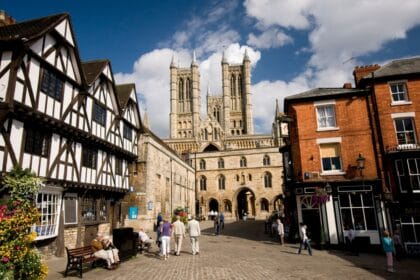
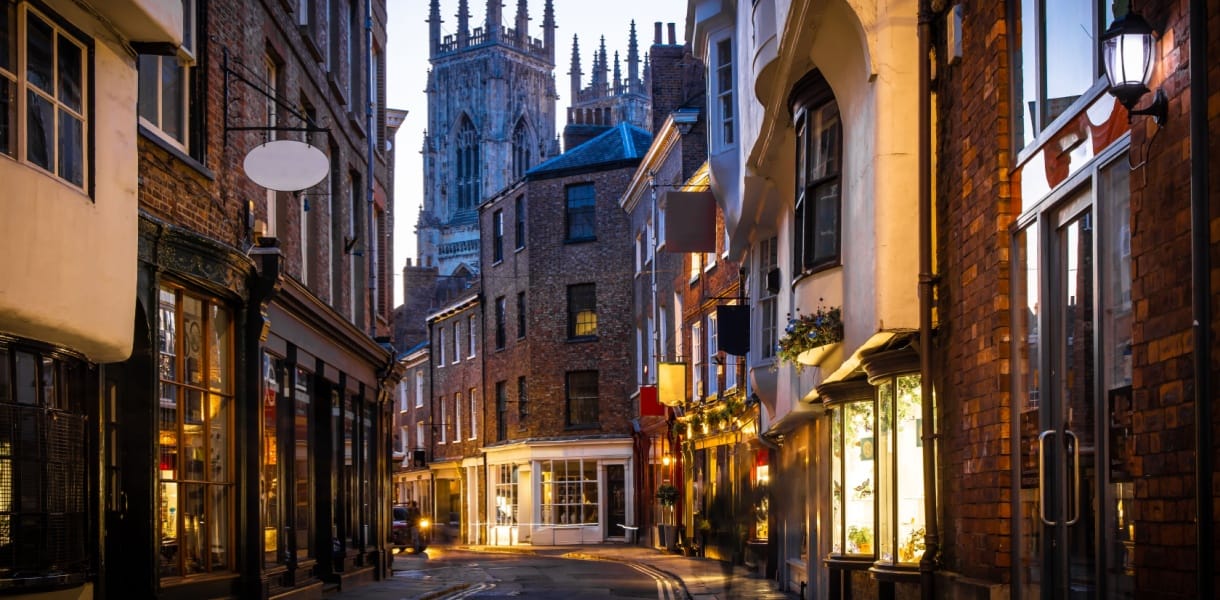
If Britain were a stage, York would be one of the few cities to keep changing costumes mid-scene. One moment you’re strolling along a Roman road, the next you’re dodging Viking battle cries or admiring medieval spires through the window of a modern tea room. It’s a city that doesn’t so much wear its history on its sleeve as parade it with a brass band and a theatrical wink.
York has been around long enough to accumulate more stories than a pub full of pensioners. It’s a city that has been conquered, crowned, besieged, sacked, revived, preserved, and given an ice cream stand by the Minster. It is, in short, one of Britain’s most atmospheric cities – and still one of the most walkable, photographable, and curious places to explore.
Digging up the Romans
Long before the tea shops and ghost tours, York was Eboracum, a Roman fortress town founded in AD 71. The Ninth Legion marched up here to deal with some rowdy locals and, in the finest Roman tradition, decided to stay.
Parts of that original settlement still peek out from the modern city. Beneath the streets lies a hidden Rome of columns, baths, and mosaics, including the Roman Bathhouse under the aptly named Roman Bath pub. The Yorkshire Museum, tucked inside the Museum Gardens, has a formidable Roman collection that includes a 1,800-year-old marble bust of Constantine the Great. He was proclaimed emperor here in 306. No big deal.
Walking through York, you can trace the Roman walls, spot the remains of Roman towers, and even stand where ancient citizens grumbled about taxes and potholes. It’s a thrill to know that under the Primark and pasty shops, there’s a whole Roman world just waiting for another rainy day excavation.
Enter the Vikings
Skip forward a few centuries and things get louder, hairier, and smellier. In 866, the Vikings sailed up the River Ouse, got off their longships, and renamed the place Jorvik. It became a thriving Norse settlement, although probably less fun for the Anglo-Saxons.
Today, the Jorvik Viking Centre plunges you nose-first into that smoky, muddy world. Built on the site of actual Viking discoveries, the museum’s signature ride takes you through a reconstruction of 10th-century Jorvik. It’s educational, yes, but it also features animatronic Vikings, replica smells, and the odd chicken clucking somewhere in the thatch. Perfect.
The real treasure, though, lies in the artefacts found during excavations in the 1970s and 80s. Shoes, combs, coins, skeletons – the day-to-day detritus of real Viking life. It’s the sort of stuff they probably wouldn’t have thought worth preserving, which makes it all the more fascinating now.
Winding through medieval marvels
If the Romans built the foundations and the Vikings stirred things up, it was the medieval period that left York with its defining look. The city walls, still walkable in a giant loop, date back to the 13th and 14th centuries. It is the most complete set of medieval walls in England and an excellent way to see York from a smug vantage point.
At the heart of all this stands York Minster, a cathedral so big it almost feels smug itself. It took 250 years to build and seems to have swallowed half the country’s stone in the process. Inside, the stained glass windows glow with biblical dramas and medieval gossip. Don’t miss the Chapter House, which looks like it was designed by a particularly romantic wizard.
York’s streets retain their medieval charm too. The Shambles, with its crooked timbered shops and overhead gables, is often accused of inspiring Diagon Alley. In truth, it just looks how we imagine the past should – all angles and atmosphere, with just enough wonk to keep it interesting. And yes, it gets crowded, but that’s part of the fun. Go early if you want a photo without half of Leeds in it.
Tea, trains, and treasure hunts
For all its ancient wonders, York does modern well too. This is a city that somehow manages to blend ancient ruins with world-class afternoon tea and a museum full of steam engines.
`Start with the National Railway Museum. Even if you don’t know a piston from a parsnip, it’s one of the best museums in the country. From Mallard to the Japanese bullet train, there’s a kind of majesty in these metal behemoths. The museum’s free and next to the station, which feels very on brand.
Back in town, Bettys Tea Room is something of a pilgrimage site for scone enthusiasts and lovers of polished silverware. It opened in 1936 and hasn’t changed much since, which is entirely the point. The cakes come in neat rows, the staff glide like polite ballet dancers, and even the teapots look like they’ve had elocution lessons.
And then there’s the York Dungeon, a theatrical, slightly silly, and secretly brilliant romp through the darker chapters of the city’s past. You’ll meet plague doctors, witches, and highwaymen – all with varying degrees of menace and Yorkshire accents. It’s touristy, yes, but also a hoot.
The museums you didn’t know you needed
York is very good at museums. Apart from the big names, you’ll find gems like the Barley Hall – a recreated medieval townhouse that lets you try on a monk’s habit and learn about Tudor hygiene – and the Yorkshire Air Museum, just outside town, which lives on a former WWII airbase and packs more punch than you’d expect.
For something a little different, the Treasurer’s House behind the Minster is a time capsule of Edwardian wealth and whimsy. It also claims one of the city’s best ghost stories – a phantom Roman legion marching through the cellar. If you like your history with a chill down the spine, this one’s for you.
Independent charm and cosy corners
Despite the draw of the big attractions, York’s real charm lies in its corners. In the bookshops where staff recommend things with the kind of passion usually reserved for religion. In the independent coffee shops down Fossgate, where you can sip something fair trade while watching the rain make art on the cobbles. In the riverside walks where joggers and ducks cohabit in polite silence.
It’s a compact city, but not a hurried one. You can cover the main sights in a day, but take two or three and you’ll start noticing things – the medieval sundial halfway up a wall, the secret alley that smells faintly of chocolate, the giggling students on ghost tours trying not to flinch.
Festivals, ghosts, and seasonal sparkle
York does a fine job of keeping its calendar busy. The York Literature Festival in spring, the Food and Drink Festival in autumn, and the magical St Nicholas Fair in winter, where the city looks like it’s auditioning for a Christmas card. Even the buskers sound more festive here.
And then there are the ghosts. York claims to be the most haunted city in England, which might just be a boast for the benefit of the walking tours, but after dark, the city does take on a theatrical eeriness. Join a ghost walk and you’ll hear tales of monks, murderers, and mischievous spirits. Whether you believe it or not, it’s a fun way to see the city from a different angle – slightly nervous and glancing behind you.
Why you’ll want to come back
There’s something about York that lingers. Maybe it’s the layered history, or the way the Minster peeks out unexpectedly between rooftops. Maybe it’s the mix of scholarly calm and pub noise, of ancient walls and modern menus. Whatever it is, most people leave York plotting a return.
It’s a place where time doesn’t so much pass as swirl – a city with ghosts and gods and railway engines, all jostling for attention in the same square mile. Come for the Vikings, stay for the scones, and don’t forget to look down the next alley. There’s probably something fascinating hiding there.
York need to know
Getting here
- Train from London in under 2 hours, frequent connections from Leeds, Manchester, and Edinburgh
- Accessible by car via the A64 or A19, but parking in the city centre is limited
- National Express and Megabus coaches stop at the city centre bus station
Where to stay
- The Grand York for luxury in a former railway headquarters
- Judges Lodging for boutique Georgian charm
- Safestay Hostel for budget travellers near the Minster
- Dozens of guesthouses and B&Bs within walking distance of the city walls
Where to eat
- Skosh for inventive small plates in a relaxed setting
- Café No.8 on Gillygate for seasonal dishes and garden seating
- Brew & Brownie for breakfast and killer brownies
- Shambles Market Food Court for street food with medieval backdrops
What to do
- Walk the city walls for panoramic views and hidden gates
- Explore York Minster and climb the tower for a lofty perspective
- Ride through Viking Jorvik or scare yourself silly in the York Dungeon
- Visit the National Railway Museum for free fun with big engines
- Pop into the smaller museums and houses for history’s quieter stories
Nearby gems
- Castle Howard for country house grandeur just 15 miles away
- Helmsley and Rievaulx Abbey for ruined beauty in the North York Moors
- Knaresborough for a riverside wander and cave-dwelling prophetess
Best time to visit
- Spring for lighter crowds and blossoming gardens
- Summer for festivals and outdoor events
- Autumn for golden riverside walks and hearty food
- December for Christmas markets and Minster services