The Natural History Museum was the UK’s most visited attraction in 2025, pulling in a record 7.1 million visitors and nudging the British Museum into second place.
Quick takeaways
- The Natural History Museum was the UK’s most visited attraction in 2025
- It welcomed 7.1 million visitors, up 13 per cent on 2024
- The British Museum came second after holding the top spot for two years
- Total visits to leading UK attractions rose to 165 million
- Visitor numbers are growing, but still remain below 2019 levels
- Outside London, Edinburgh Castle was one of the strongest performers
- The North West of England saw the biggest regional growth outside the capital
A new number one in the UK attraction rankings
The Natural History Museum in South Kensington has officially become the UK’s most visited attraction, welcoming a record 7.1 million people in 2025.
That is not just a strong year. It is the highest annual visitor total ever recorded by any museum or gallery in the UK. It also means the museum has climbed above the British Museum, which had held the number one spot for the previous two years.
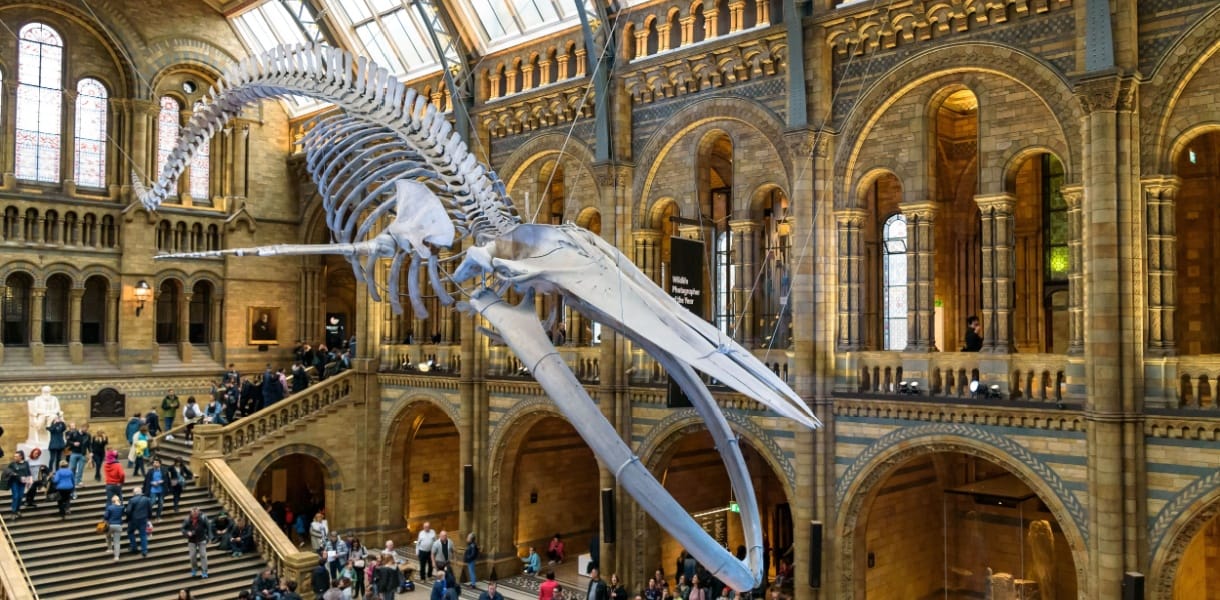
For anyone who has walked into Hintze Hall and found themselves staring up at the suspended blue whale skeleton, this may not come as a complete shock. It is one of those entrances that manages to make adults stop mid-step and children go a bit theatrical.
Why the museum did so well
Visitor numbers at the Natural History Museum were up 13 per cent compared with 2024, helped by its mix of family appeal, famous displays and major exhibitions.
The museum’s success is a reminder that people still want attractions that feel exciting from the moment they arrive. It is not enough to be worthy. You need a little drama too. A blue whale hanging overhead does tend to help in that department.
Dr Doug Gurr, director of the Natural History Museum, said the team was thrilled by the result and said the figures reflected the museum’s focus on creating a memorable day out, supported by staff and a strong exhibition programme.
He also said the numbers showed a huge public appetite for engaging with the natural world and with the UK’s wider cultural attractions.
The top five most visited attractions in 2025
According to figures released by the Association of Leading Visitor Attractions, the top five were:
- Natural History Museum
- British Museum
- Windsor Great Park
- Tate Modern
- National Gallery
The British Museum may have slipped to second place, but it may not stay there quietly. It is expected to have a particularly strong year ahead, with the Bayeux Tapestry due to go on display from September. That is the sort of exhibition likely to attract history lovers, curious tourists and anyone unable to resist a very famous piece of medieval storytelling.
The bigger picture for UK attractions
The Association of Leading Visitor Attractions, known as Alva, said visits to its 409 member sites reached 165 million in 2025.
That was a 2 per cent increase on the previous year, which is clearly encouraging, but the total is still below the 170 million visits recorded in 2019, before the pandemic disrupted travel and day trips across the country.
Alva said visitor attractions continue to hold their place in people’s spending priorities, even during a difficult economic period. That makes sense. When budgets are tight, people become more selective. They still want days out, but they want them to feel worth the effort, the train fare and the sandwich you bought because you forgot to pack one.
Other attractions with huge visitor numbers
A number of other major venues also passed the 2 million visitor mark in 2025.
These included:
- Royal Museums Greenwich
- National Museum of Scotland
- Royal Botanic Gardens, Kew
- Royal Shakespeare Company London
- Edinburgh Castle
- National Galleries Scotland
Further down the list, but still attracting very healthy crowds, were the Royal Albert Hall, Westminster Abbey, Barbican Centre and National Portrait Gallery, each of which welcomed more than 1.5 million visitors.
Outside London, Edinburgh Castle remained one of the strongest performers. It is not hard to see why. It has the advantage of dramatic views, centuries of history and the sort of skyline position that makes other castles look as if they might have been trying a bit less hard.
The attractions that saw the biggest jumps
Some venues enjoyed especially strong growth because of one-off events, refurbishments or seasonal programming.
The National Gallery benefited from the reopening of the Sainsbury Wing, while venues such as Chatsworth, Kenwood House and Blenheim Palace saw boosts linked to Halloween and Christmas events. A stately home with lights, decorations and a touch of festive theatre is now practically a separate branch of the tourism industry.
The Houses of Parliament recorded one of the biggest rises of all, with a 47 per cent increase that took visitor numbers to 823,000.
The Royal Academy of Arts also had a very strong year. Its Summer Exhibition performed particularly well, helping the venue reach 740,000 visitors, a 20 per cent increase on the previous year.
There were new names climbing into the rankings too. The V&A East Storehouse entered the chart in 107th place, drawing 416,000 visitors in less than seven months and exceeding its first-year visitor targets.
How the regions performed
Growth varied across the UK, but there were some encouraging regional figures.
In Scotland, the average attraction saw a 2.6 per cent increase in visitors.
In Wales, the rise was smaller at 0.9 per cent.
Across the English regions outside London, the North West recorded the strongest growth, up 11.3 per cent, followed by the East Midlands, which rose by 7.5 per cent.
That is good news for travellers looking beyond the capital. London may dominate the headlines, but strong regional growth suggests visitors are continuing to spread their trips more widely, whether that means city breaks, heritage days out or a castle perched on a hill looking faintly smug about its position.