There are places with history, and then there is Oxford, where the buildings look as if they have been standing in judgement since the Middle Ages and the streets seem permanently scented with old paper, damp stone, and the faint whiff of intellectual confidence. It is beautiful in a way that feels slightly unfair. Even the lampposts look like they have read more books than you have.
Oxford sits close enough to London to be a sensible day trip, yet it behaves like its own small planet. Here, it is perfectly normal to walk past a medieval chapel on your way to buy artisan fudge, or to find a queue outside a coffee shop that is longer than some countries’ political histories. Bicycles rule the roads. Bells mark the hours. And every so often, you glimpse a student in a gown moving briskly across a quad, looking like they are late for something important, possibly a tutorial, possibly a duel.
For all its cleverness, Oxford is not cold. It is busy, lived-in, occasionally chaotic, and full of small human moments that soften the grand stone into something more like a home. People laugh loudly outside pubs that are older than modern plumbing. Tourists look up until they bump into things. Local dogs stride through college gates like they own the place, which in Oxford they probably do.
How Oxford works if you are not issued a map at birth
The first thing to know is that Oxford is not a single campus. It is a patchwork of colleges stitched into the city like an old quilt, each with its own walls, traditions, dining halls, chapels, libraries, and sense of self. There are 39 colleges, and they range from impossibly grand to quietly tucked away, which means you can spend an entire day wandering and still feel like you have only seen the edges.
This is what gives Oxford its strange magic. You will turn a corner expecting a row of shops and instead find a medieval gateway leading into a courtyard that looks like it has been patiently waiting for the last 600 years. You will hear footsteps in a cloister and imagine a monk, then realise it is a student carrying a laptop and a supermarket meal deal.
Some colleges are famous for their drama and spectacle. Christ Church does scale and swagger very well, with spaces that feel designed for royal banquets and film scenes, which is convenient because they often are. Magdalen has the sort of grounds that make you want to walk more slowly, partly from appreciation and partly because you might be watched by deer. Others are smaller, more intimate, and occasionally so serene you start to whisper without meaning to.
Oxford makes you feel curious. It nudges you to look through archways, peer into courtyards, and follow the sound of singing or an organ warming up somewhere behind a thick wooden door. The city rewards people who meander.
Libraries, legends and the art of looking studious
Oxford is built on learning in the same way Venice is built on water. You feel it everywhere, even if you have not opened a book since secondary school. The Bodleian Library sits at the heart of this, a place so storied that it almost feels like a character rather than a building. Inside, there is a hush that does not just ask you to be quiet, it assumes you will be.
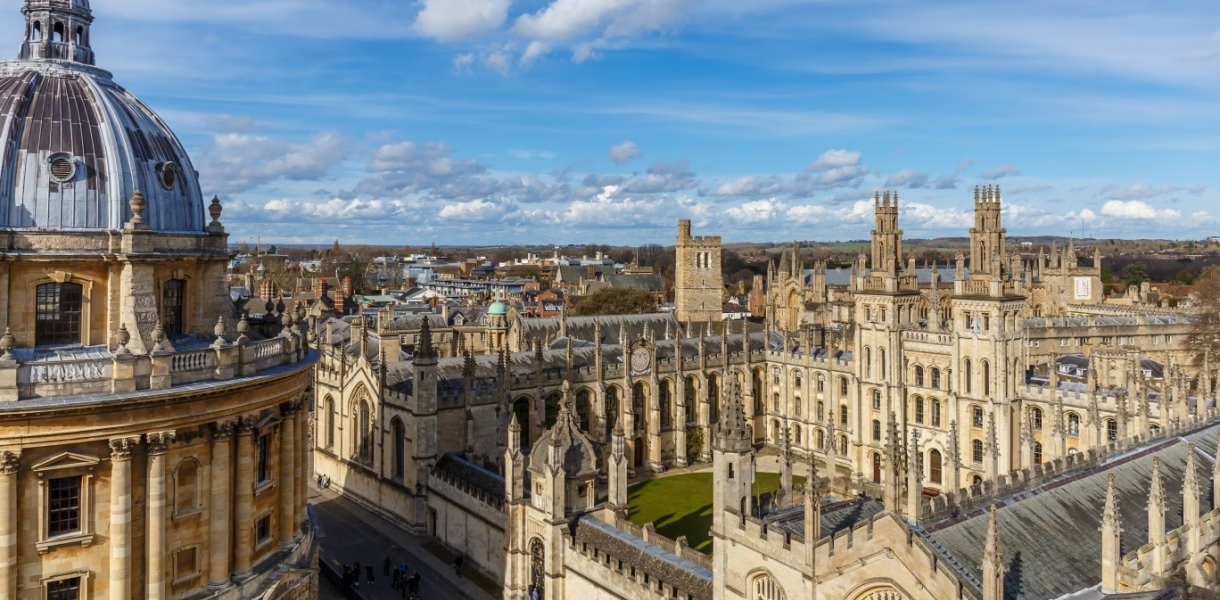
Nearby, the Radcliffe Camera rises like a magnificent round statement of intent, all stone confidence and scholarly beauty. You cannot wander in unless you are part of the university, but you can stand outside and absorb it, which is what most people do, along with taking the same photo from slightly different angles for twenty minutes.
If you want a view that makes you understand the whole Oxford obsession, climb the tower of the University Church of St Mary the Virgin. From up there, the spires and rooftops spread out in careful harmony, and you can see how the city grew as a series of ideas made solid. It is the kind of view that makes even the most cynical visitor say something like, “Well. That is rather lovely,” and then pretend they were not moved.
Pubs, punts and the gentle madness of tradition
Oxford’s traditions are not just museum pieces. They are alive, ongoing, and occasionally baffling, which is exactly how traditions should be. The city has a deep affection for doing things the same way they have always been done, even if nobody can quite explain why.
This is most visible in the pubs, because nothing preserves the past like a good pint and a low ceiling. The Eagle and Child is famous for its literary connections, the sort of place where you can sit with a drink and imagine intense conversations about mythology, faith, and the correct number of breakfasts a person should have. The Turf Tavern, hidden down a narrow passage, feels like a secret you have earned, and it has been quietly doing its job for centuries. Oxford is full of pubs like this, places where the wooden tables have heard more arguments than the House of Commons.
Then there is punting, Oxford’s favourite way to turn a peaceful river into a comedy performance. On a good day, you drift along the Cherwell with willow trees leaning in and students gliding past like they have been doing it since birth. On a realistic day, you spin in slow circles while swans watch with the silent judgement of creatures that have seen everything and are still disappointed.
Oxford also has calendar moments that feel like the city briefly turns up the volume. May Morning is one of the best known, when people gather early and something beautiful and strange happens that makes perfect sense once you are there and very little sense when you try to explain it later. Rowing season brings its own excitement, with boats, cheering, picnics, and a level of competitive intensity that suggests some rivalries are hereditary.
Museums that make you forget the time
Oxford does culture with impressive ease, mostly because it has been collecting the world for a very long time. The Ashmolean is the grand one, a museum that moves from ancient civilisations to fine art with the calm confidence of someone who knows they have excellent taste. You can spend a morning moving from Egyptian artefacts to paintings to glittering objects you cannot quite name, and it all somehow feels like a single long story about human ambition.
The Pitt Rivers Museum is the wonderfully eccentric cousin. It is dense, atmospheric, and packed with cases that feel like they were arranged by an endlessly curious Victorian with a fondness for the unusual. You wander through dim aisles of objects and labels and leave with the sense that the world is vast, strange, and very good at making things.
If you like your culture with a side of everyday life, the Covered Market is Oxford in miniature. It is a place for flowers, food, small shops, and the quiet theatre of people buying ordinary things in an extraordinary setting. The market feels local and lived-in, which is a relief after the grandeur, and is also a very good place to pick up something delicious and wander off as if you belong.
Streets that do most of the storytelling for you
Oxford is at its best when you stop trying to tick things off and just walk. The centre is a maze of lanes and views and sudden moments of beauty. One minute you are on a busy street with coaches and cafés, the next you are in a quiet lane where the light hits the stone just so and the whole place looks like a painting.
Radcliffe Square is a repeat offender for stopping people in their tracks. You will end up there more than once, usually by accident, usually at a slightly different angle, and it will still feel new. Holywell Street has a calm, old-soul mood. Merton Street feels like it has been keeping secrets for centuries. Jericho, a little further out, brings the city into a more relaxed rhythm, with independent places to eat, leafy streets, and that slightly bohemian feeling that suggests people here read books for pleasure, not grades.
Oxford has a way of making even a simple walk feel like a small adventure. You are always one turning away from a courtyard, a hidden door, or a view that makes you pause.
A quick escape when you need more sky and fewer tourists
If Oxford starts to feel a little too busy, relief is close by. Port Meadow gives you wide open space, river views, and a sense that the city is not the only thing going on. It is a simple, grounding walk where the horizon feels bigger and your thoughts get quieter.
Blenheim Palace, just outside the city, is Oxfordshire grandeur on a heroic scale, with gardens and lakes and rooms designed to impress people who are already impressed by almost everything. It is the sort of place that makes you walk a little more slowly, partly from awe and partly because you keep looking up.
Beyond that, the countryside starts to take over. The Cotswolds are not far, with villages that look as if they were designed to sell postcards, and lanes that make you want to drive carefully and stop often.
And then you return to Oxford, where the spires are waiting, the bells keep time, and the pubs will always have room for one more person who came for a day and stayed a little longer than planned.
Oxford need to know
Getting here
- Frequent trains from London Paddington and London Marylebone, usually around one hour
- Direct coach services from London and Heathrow, including the Oxford Tube
- Driving is possible but central parking is limited, so park and ride is the easiest option
Where to stay
- The Old Bank Hotel for boutique comfort right on the High Street
- The Randolph Hotel for classic luxury near the Ashmolean
- Malmaison Oxford for a memorable stay in a converted prison with surprisingly plush rooms
Where to eat
- The Handle Bar Café and Kitchen for creative dishes and a lively atmosphere
- Edamamé for a tiny Japanese spot with a devoted local following
- Gee’s for Mediterranean flavours in a Victorian greenhouse setting
What to do
- Visit one or two colleges, with Christ Church and Magdalen as strong starters
- Spend time at the Ashmolean and the Pitt Rivers Museum
- Climb the University Church tower for the best city views
- Go punting on the Cherwell if you want romance, comedy, or both
Nearby gems
- Blenheim Palace for a grand day out with gardens and history
- Port Meadow for open skies, riverside walks, and a quieter Oxford mood
- The Cotswolds for honey-stone villages and easy countryside rambles
Best time to visit
- Spring for blossoms and the gentle build-up to May Morning
- Summer for punting, picnics, and long evenings outdoors
- Autumn for golden stone, crisp air, and peak scholarly atmosphere
- Winter for candlelit chapels, cosy pubs, and the occasional snow-dusted spire