Just a short ferry ride from the mainland, the Isle of Wight feels like England with the edges softened slightly. The pace slows down, the cliffs lean gently into the sea, and the roads narrow into polite hedgerows. It is a place of beaches, old resorts, chalk cliffs, thatched villages and a kind of nostalgic seaside charm that seems cheerfully indifferent to modern fuss.
The island often feels like it has been on holiday for rather a long time, and would quite like to stay that way.
Cliffs, needles and coastal drama in miniature
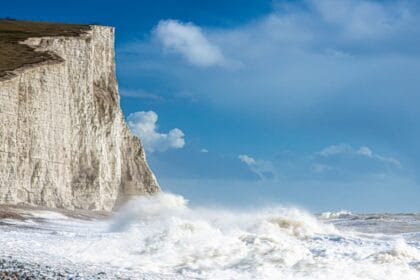
The island’s most famous landmark is The Needles, a row of jagged chalk stacks poking into the sea from the island’s western tip, accompanied by a small lighthouse that has been holding its ground for well over a century. The surrounding cliffs form part of the island’s chalk ridge, providing excellent walking and slightly alarming drops for those inclined to stray too near the edge.
The south coast offers dramatic scenery too, with Blackgang Chine once the site of grand Victorian cliff-top gardens, much of which has now disappeared into the sea due to the island’s habit of gently falling apart at the edges.
Victorian resorts and very respectable piers
The Victorians fell in love with the Isle of Wight, and their influence lingers. Ryde, Sandown, Shanklin and Ventnor all grew up as holiday resorts, complete with promenades, pleasure piers and the kind of tidy public gardens designed for genteel afternoon strolls.
Ryde offers the longest pier in the UK, while Shanklin and Sandown provide long sandy beaches and seafronts that feel pleasantly stuck in a more optimistic version of the 1950s.
Osborne House and royal holidaying
Queen Victoria loved the Isle of Wight enough to build Osborne House as her private retreat, and the house remains one of the island’s most impressive attractions. The house itself, with its Italianate towers and opulent interiors, gives a remarkably personal glimpse into the private life of the royal family.
The grounds stretch down to a private beach where Victoria herself once paddled – a rather humanising detail for someone usually seen on coins and statues.
Thatched cottages, tiny lanes and the rural side
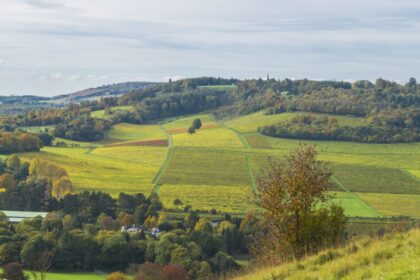
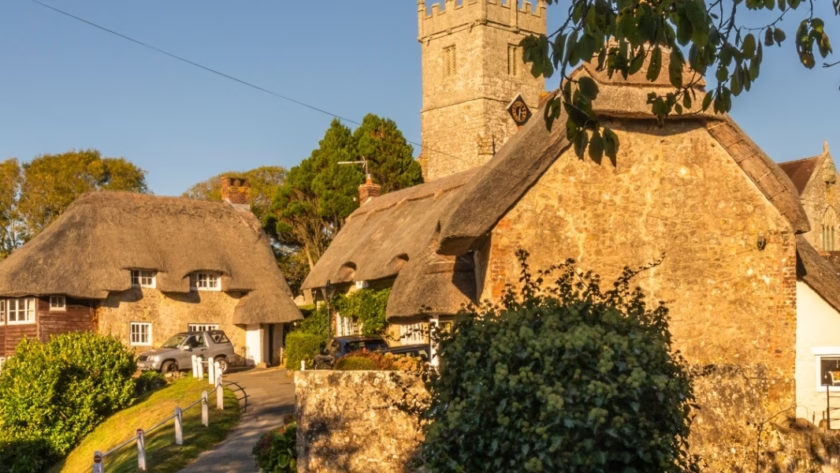
Away from the coast, the Isle of Wight offers rolling countryside, small farms, and villages that seem to have been very carefully arranged for postcard photographers. Godshill and Shorwell are particularly good examples, with chocolate-box thatched cottages, medieval churches and tea rooms serving generously portioned cream teas.
The island’s roads often narrow to single-track lanes that wind between high hedgerows, giving drivers regular opportunities to practice the delicate art of reversing politely into a passing place.
Fossils, dinosaurs and a bit of prehistoric flair
The Isle of Wight is often called the dinosaur capital of Britain, thanks to its impressive collection of fossils eroding out of the cliffs and beaches. Several beaches allow visitors to hunt for their own prehistoric souvenirs, while local museums display more complete specimens for those who prefer their dinosaurs fully assembled.
It is one of the few places in England where you can build a sandcastle within sight of actual dinosaur footprints.
Where England takes a deep breath
The Isle of Wight offers sea views, Victorian charm, quiet villages and cliff-top walks where the breeze seems permanently set to “brisk.” Life here moves at a pace that encourages long lunches, slow drives and occasional afternoon naps. After a few days, you begin to wonder why anyone would ever feel the need to rush again.
10 best reasons to visit the Isle of Wight
1) You can escape properly without going very far
The Isle of Wight is the rare place that feels like a proper getaway while still being entirely, reassuringly England. You step off the ferry and immediately find your shoulders dropping an inch. The air tastes faintly of salt and chips, the roads shrink into hedgerow corridors, and the island gets on with its day as if your deadlines have never existed.
- Getting here: Ferry from Portsmouth, Southampton or Lymington, plus hovercraft from Southsea to Ryde
- Facilities: Excellent in main towns, good in villages, limited on remote walks
- Best time to go: May to September for beach weather, spring and autumn for quieter walking
- Time needed: 2–4 days for a first visit, a week if you like pottering
- Don’t miss: Arriving by sea and immediately feeling smug about it
2) The Needles are gloriously dramatic for something so tidy
The Needles look like the island decided to show off for a moment and then remembered it had a nice cream tea booked. Three chalk stacks poke out of the sea like the teeth of a very large and slightly baffled shark, with a lighthouse clinging to the edge as if it has been there forever and intends to stay. It is coastal drama in miniature, which is the Isle of Wight’s signature trick.
- Getting here: Drive or bus to Alum Bay or The Needles Landmark Attraction, then walk for the best views
- Facilities: Toilets, cafes, parking nearby
- Best time to go: Late afternoon for softer light and fewer people
- Time needed: 2–3 hours including walks and viewpoint lingering
- Don’t miss: The cliff-top view where the sea suddenly looks very serious
3) It does Victorian seaside better than most places remember how
Ryde, Sandown, Shanklin and Ventnor still have that Victorian holiday spirit in the bones, with promenades built for strolling, gardens for sitting, and a faint sense that you should probably be wearing a hat. Everything feels pleasantly traditional without trying too hard. Even the seafronts have a kind of well-practised charm, like they have been welcoming visitors for 150 years and have got the hang of it.
- Getting here: Easy by bus between resort towns, or base yourself in one and explore
- Facilities: Plenty of cafes, shops, loos, and beach essentials
- Best time to go: June and September for warmth without peak crowds
- Time needed: Half a day per town, or a full day hopping between them
- Don’t miss: A slow promenade walk that achieves nothing and feels excellent
4) Ryde Pier is impressively long and faintly ridiculous
Ryde Pier is the second longest pier in the UK. It stretches out into the Solent with the confidence of something built in an era when engineering was meant to be admired on a stroll. Walking it feels like being gently carried away from the mainland, even when you are technically walking towards it.
- Getting here: Ryde seafront, with rail and ferry connections nearby
- Facilities: Shops and cafes in Ryde, transport links on and near the pier
- Best time to go: Early morning or sunset for fewer people and better views
- Time needed: 30–60 minutes, longer if you stop to peer at the water a lot
- Don’t miss: Looking back at the town and thinking, yes, this will do nicely
5) Osborne House is royal history with a surprisingly human side
Osborne House is where Queen Victoria came to exhale. It is grand, yes, with Italianate towers and lavish rooms, but what lingers is the sense of private life: the family routines, the holiday feel, the domestic details behind the official image. Even the beach is part of the story, and it is oddly grounding to know that monarchs also liked a paddle.
- Getting here: Near East Cowes, easy by car and bus
- Facilities: Visitor centre, cafe, toilets, shop, gardens and grounds to roam
- Best time to go: Weekdays in spring or early autumn for calmer touring
- Time needed: 3–5 hours including house and gardens
- Don’t miss: The grounds down to the beach, where history feels briefly ordinary
6) The island countryside looks like it was arranged by a postcard committee
Away from the sea, the Isle of Wight turns rural and quietly gorgeous. Rolling fields, little farms, and villages that seem to have been placed at pleasing intervals for tea breaks. Godshill is the classic, with thatched cottages and a church that has been watching over things for centuries, but the real pleasure is simply roaming and finding lanes that feel gently timeless.
- Getting here: Best with a car, but buses reach many villages
- Facilities: Tea rooms and pubs in key villages, limited in between
- Best time to go: April to June for fresh greens, October for mellow light
- Time needed: A day of village-hopping, longer if you like slow walks
- Don’t miss: A cream tea in a village that looks unreal and insists it isn’t
7) Coastal walks that keep being better than you expect
The cliffs and headlands are made for walking, with routes that swing between open views and tucked-away corners. The island’s chalk ridge gives you proper height and drama, while still keeping things manageable. It is the sort of place where you set out for “a quick stroll” and return several hours later with rosy cheeks and a new respect for wind.
- Getting here: Many routes start near towns like Ventnor, Freshwater and Shanklin
- Facilities: Variable, carry water and snacks for longer stretches
- Best time to go: Spring and early autumn for clear days and fewer crowds
- Time needed: 2–6 hours depending on route and lingering
- Don’t miss: A cliff-top pause where you briefly forget what day it is
8) It is genuinely brilliant for beaches, from sandy to secretive
Sandown and Shanklin are the crowd-pleasers with big, friendly sweeps of sand. Compton Bay has a wilder feel and a bigger horizon. Then you have smaller coves and tucked-away spots that make you feel like you have stumbled into your own private bit of the island. Even when it is busy, there is usually another beach nearby waiting patiently.
- Getting here: Easy by bus to major beaches, car helps for quieter bays
- Facilities: Strong at main beaches, lighter at Compton and smaller coves
- Best time to go: July and August for swimming, May and September for calm
- Time needed: Half a day minimum, full day if you are doing it properly
- Don’t miss: A late-day beach visit when the island suddenly feels hushed
9) Dinosaurs, fossils, and the thrill of finding something older than England
The Isle of Wight’s cliffs and beaches casually spill prehistoric treasures like it is no big deal. Fossil hunting here is part science, part treasure hunt, part excuse to stare at the ground for hours. The island’s dinosaur reputation is deserved, and there are plenty of ways to get your fix, from museums to guided walks to simply poking around with enthusiasm.
- Getting here: Best fossil beaches are on the south and west coasts, check local advice on safe access
- Facilities: Museums and attractions in key areas, beaches are naturally less equipped
- Best time to go: After storms can be productive, but always follow safety guidance
- Time needed: 2–4 hours for a fossil ramble, longer if you get hooked
- Don’t miss: The small, childish thrill of finding a piece of deep time in your hand
10) It makes doing nothing feel like a respectable plan
The Isle of Wight has a talent for making you slow down without making you feel lazy. Long lunches feel normal. Gentle drives become part of the entertainment. Even the breeze seems to encourage an afternoon nap. After a couple of days, your brain starts to un-clench, which is usually a sign you needed it.
- Getting here: Anywhere, as long as you arrive willing to downshift
- Facilities: Everything you need, plus plenty of places to sit and stare
- Best time to go: Any time you feel overstretched, which is most times
- Time needed: A weekend to reset, a week to properly recalibrate
- Don’t miss: The moment you stop checking the time and do not miss it at all