The West Midlands has always been a place of industry and invention, where things were hammered, smelted, cast and riveted with a kind of cheerful determination that made the world turn a little faster. This was the workshop of England, a clattering forge of locks, chains, glassware, engines and just about anything else that could be fashioned with smoke and sparks.
But it’s not just a land of soot and steel. Behind the clang of factories lies a region of canals, cathedrals, chocolate, culture, and green hills that somehow keep a straight face while balancing all this industry.
Birmingham, canals and a surprising amount of water
England’s second city has reinvented itself with such enthusiasm that you sometimes wonder if it might attempt to rebrand the canal as an inland sea. Birmingham does indeed have more miles of waterway than Venice, though nobody has yet thought to introduce gondoliers with stripy shirts. Instead, you get towpaths lined with cafés and pubs, and long stretches of calm that feel surprisingly rural considering you are in the thick of the city.
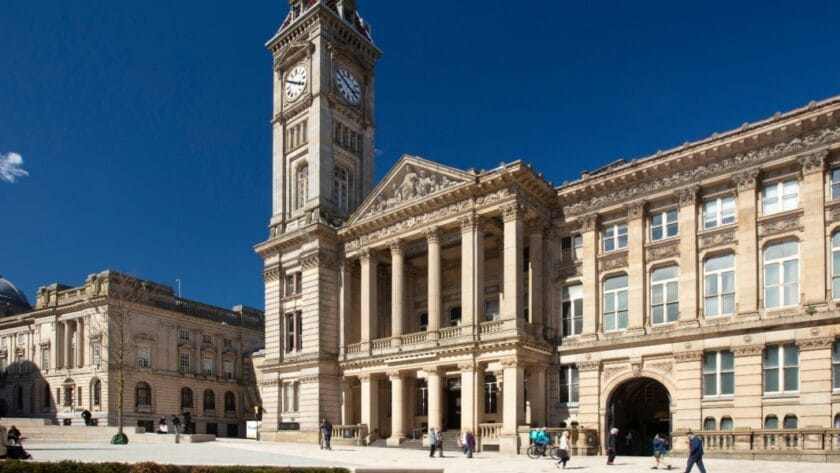
The modern city centre is a collage of shiny squares, bold libraries and one of Europe’s finest concert halls. The Bullring continues to hoover up shoppers, while Birmingham’s food scene has quietly become one of the best outside London – helped along, no doubt, by the steady supply of chocolate from nearby Bournville.
Factories, workshops and the Black Country
Just west of Birmingham, the Black Country once roared with furnaces and smoked like an overworked chimney. Locks, chains, glass and ironwork poured out of workshops with such regularity that the very air seemed to hum with industry. Today, the Black Country Living Museum captures this energy with reconstructed streets, clanging forges and nostalgic pubs that look suspiciously like something out of Peaky Blinders, which is hardly surprising, since much of it was filmed here.
Wolverhampton, Dudley, Walsall and Sandwell all carry the industrial legacy, their names once stamped on goods shipped to every corner of the world. It’s gritty, yes, but it’s also the kind of grit that built empires.
Coventry, cathedrals and quiet resilience
Few places tell a story as moving as Coventry. The shell of the old cathedral, bombed in the Second World War, still stands in solemn dignity. Right next to it, the new cathedral rises in bold 1960s brick and glass, an architectural statement of hope that somehow manages to feel both defiant and tender.
Coventry also has its car-making heritage to boast of, once the motor capital of Britain. More recently it has enjoyed a turn as UK City of Culture, proving that it has more than a few creative tricks up its sleeve.
Chocolate, jewellery and England’s sweet tooth
Birmingham may have made its name on engines and steel, but its most loved export is the humble bar of chocolate. Cadbury World in Bournville is a shrine to cocoa and sugar, where you can wander through a confectionery wonderland before emerging into a model village built on Victorian industrial idealism — workers housed in leafy surroundings with better access to Dairy Milk than most.
The Jewellery Quarter, meanwhile, remains a bustling hub of goldsmiths and silversmiths. It is said that nearly half of Britain’s wedding rings are made here, which is a lot of matrimonial sparkle for one city to handle.
Warwickshire and tales of castles and playwrights
Just beyond the urban sprawl lies Warwickshire, a county that seems to have been invented to remind you that England also does castles and culture rather well. Warwick Castle sits above the River Avon with a certain medieval swagger, complete with towers, dungeons and the odd falconry display for good measure.
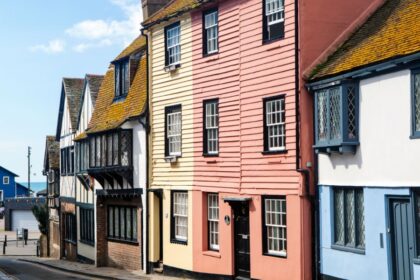
Then there is Stratford-upon-Avon, birthplace of one William Shakespeare, who did rather well for himself in the theatre business. The town has half-timbered houses, theatres that still perform his works, and a steady stream of visitors who come to pay homage to the Bard. If you want Tudor beams and a bit of literary grandeur, this is where you’ll find it.
Worcestershire and the Malvern Hills
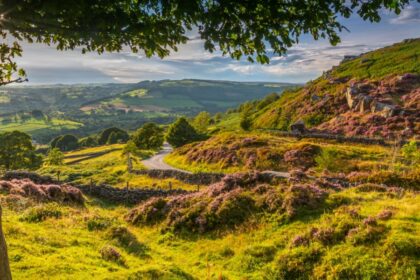
Head west and the landscape swells into the Malvern Hills, a line of ridges so neat they look as though someone placed them there deliberately. They are wonderful for walking, with views stretching over the Severn plain, and they have long been celebrated for their spring water – bottled and carted off for centuries to refresh the respectable classes.
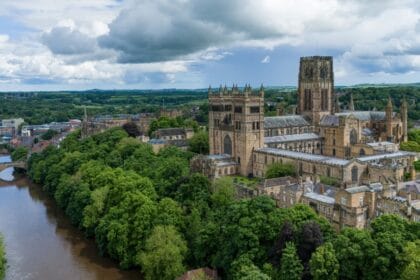
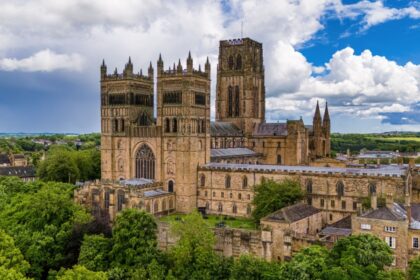
Worcester itself adds to the picture with its handsome cathedral rising over the River Severn, a building that mixes Norman roots with later Gothic flourishes. The city is also famous for Worcestershire sauce, that mysterious concoction that manages to appear in recipes from Bloody Marys to shepherd’s pie without ever fully explaining itself.
Parks, green belts and open spaces
Back in Birmingham, Sutton Park sprawls across 2,400 acres of heathland, woodland and lakes, providing ample space for walking, cycling or feeding ducks that seem suspiciously well-fed already. Cannock Chase offers forest walks and deer-spotting, while the Severn Valley Railway brings steam trains puffing through glorious countryside with a theatrical sense of nostalgia.
For a region that once smoked and clanged with industry, the amount of green space is impressive. You can move from city squares to rural ridges in less than an hour, and still be back in time for a curry in Birmingham’s famous Balti Triangle.
Where England gets on with the job
The West Midlands has never been about showing off. It built, forged, hammered and invented with cheerful practicality, and it still has that down-to-earth confidence today. From the clang of the Black Country to the quiet grace of Coventry Cathedral, from Shakespeare’s home turf to the chocolate-scented streets of Bournville, this is a region that quietly shaped the nation.
And if you want to see where England went from fields to factories, and is now moving into something rather impressive again – the West Midlands is an excellent place to start.
Top 10 reasons to visit the West Midlands
- Birmingham’s canals and city life
More miles of waterway than Venice, lined with cafés, pubs, and shiny squares that show off the city’s modern revival. - Cadbury World and Bournville
A chocolate wonderland with a model village built on Victorian idealism, proof that industry can be sweet. - The Black Country Living Museum
Step back into the smoke and grit of the Industrial Revolution, or a scene straight from Peaky Blinders. - Coventry’s two cathedrals
A ruined shell and a bold modernist masterpiece, side by side, telling a story of resilience and hope. - The Jewellery Quarter
A hub of goldsmiths and silversmiths where nearly half of Britain’s wedding rings are still made. - Warwick Castle
A medieval fortress with towers, dungeons and riverside views, keeping English history satisfyingly dramatic. - Stratford-upon-Avon
Birthplace of Shakespeare, where half-timbered houses and theatres still celebrate the Bard’s legacy. - The Malvern Hills
Sweeping ridges perfect for walking, with views over the Severn plain and springs that made the water famous. - Worcester and the River Severn
A handsome cathedral city known for its Gothic spires and a certain mysterious sauce. - Parks, nature and green escapes
From Sutton Park and Cannock Chase to the Severn Valley Railway, the region mixes city life with countryside calm.