Wales is not so much a country as it is a feeling, one that sneaks up on you the moment the road narrows, the sky widens, and the signs start looking like the cat walked across the keyboard. It’s a place where hills hum with legend, where every ruined castle has a story and most hills have a dragon associated with them (unofficially, of course, though you wouldn’t want to rule anything out).
Despite its compact size, Wales feels vast. Not in a daunting, endless way, more like a sprawling landscape that can hold centuries of history, miles of walking paths, and about four million sheep, all of whom appear completely indifferent to your presence. There’s something ancient in the air here, a sense that time lingers rather than hurries, and that nature, not people, is still very much in charge.
First things first the language
Let’s start with the language, because you’ll encounter it before anything else. Welsh isn’t just alive, it’s doing laps. This is a country where bilingual signs are the norm, and where village names contain more Ls than should strictly be allowed. Take Llanfairpwllgwyngyllgogerychwyrndrobwllllantysiliogogogoch, for instance, which, astonishingly, is real, and appears to have been named during a particularly enthusiastic game of Scrabble. And yet, once you’ve heard it pronounced by someone who knows what they’re doing, it sounds musical. Welcoming, even. Like the country itself.
North Wales mountains and mist
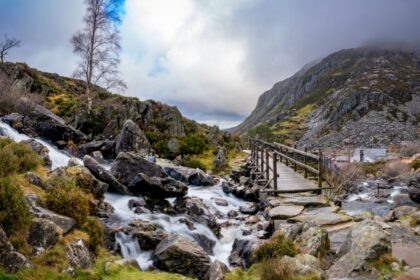
In the north, you’ll find Snowdonia, or Eryri, as it’s rightfully called in Welsh, where the mountains don’t so much rise as loom, draped in mist and majesty. Yr Wyddfa (Mount Snowdon) is the highest point in Wales and quite possibly the most politely climbed mountain in the world. You can hike it, or you can take a little train to the summit café, which is extremely Welsh in its practicality. Either way, the views are outrageous, wide, sweeping vistas that make you forget about your inbox, your phone signal, and the fact that your waterproof isn’t actually waterproof.
Nearby towns like Betws-y-Coed and Beddgelert (named after a loyal dog, because of course) offer cosy pubs, slate-roofed cottages, and the kind of scenery that makes you want to read poetry, even if you haven’t done so since school. The coast, meanwhile, is no less dramatic. Places like Harlech, with its clifftop castle, or Llandudno, with its Victorian elegance and persistent seagulls, remind you that Wales has always punched well above its weight when it comes to charm.
The beauty of mid Wales
The mid-Wales region often gets bypassed by those racing to the peaks or the beaches, which is a shame, because it’s quietly stunning. This is where the Cambrian Mountains hide, rolling, empty, hauntingly beautiful, and where market towns like Machynlleth and Llanidloes offer excellent coffee, unexpected galleries, and entire afternoons of pleasant wandering. The Elan Valley, with its reservoirs and rugged solitude, feels like a film set nobody’s gotten around to using yet.
South Wales from stadiums to silence
And then there’s the south, which is a world of contrasts in itself. You’ve got Cardiff, the capital, proud, punchy, bilingual, and buzzing with culture, rugby, and students in search of a good night out. The Millennium Stadium dominates the skyline and the social calendar, and the Bay has been transformed from dockland to destination, with museums, opera, and enough decent restaurants to make you wish you’d worn looser trousers.
But South Wales isn’t just urban buzz. Go a little inland and you hit the Brecon Beacons, or Bannau Brycheiniog, as they’re now more properly known. They’re a gentler kind of mountain, generally green and moody and dotted with waterfalls, ponies, and the occasional hiker who’s accidentally wandered off a trail and discovered a new life path. And then there’s the Valleys, steeped in mining history, community spirit, and choir rehearsals in chapels where the harmonies are strong enough to knock your socks off.
Coastal drama and calm
Don’t forget the coast, either. From the candy-coloured houses of Tenby to the wild cliffs of Pembrokeshire, the Welsh coastline is a masterclass in drama, hidden coves, crashing waves, and beaches so clean you could eat your lunch off them (though most people wisely use a picnic blanket). St Davids, Britain’s smallest city, feels more like a village with a cathedral attached, and has a quietly spiritual air that doesn’t need to shout.
A living tapestry of myth and memory
Wales, perhaps more than anywhere else in Britain, blends nature, history, and myth into everyday life. A walk in the woods might lead you to an Iron Age hillfort. A stone in a field might be a burial site from 4,000 years ago. A local pub might have a story about King Arthur that the landlord will insist is absolutely true, and to be fair, you’ll find yourself wanting to believe him.
Food stories and warm welcomes
The food? Traditionally hearty, lamb, cawl (a sort of Welsh stew), and Welsh cakes, which are small, sweet, and dangerously moreish. The beer is local, the bread is thick, and the hospitality is the kind that insists you stay for one more drink, one more story, and possibly a lift home if it’s raining (which it probably is).
The feeling of Wales
But more than anything, Wales is a place that makes you feel things, awe, calm, wonder, sometimes just a deep contented sigh. It’s not always flashy, but it is always authentic, grounded in its landscape, its people, and its proud, poetic voice.
Come for the castles. Stay for the silence between the hills. And if you leave with a few words of Welsh and a bag of Welsh cakes, you’re doing it exactly right.
Top 10 reasons to visit Wales
1. Mountains that look good in any weather
Snowdonia, or Eryri if you want to impress the locals, offers peaks so rugged they make other mountains look like molehills. Whether you climb Snowdon or just gaze up from a café in Betws-y-Coed, the scenery never fails to leave you gawping.
2. A coastline that never ends
With over 870 miles of coast path, Wales is basically one long seaside walk. You can wander past sandy bays in Pembrokeshire, cliff edges on the Gower, or spot dolphins off Cardigan Bay.
3. More castles than you’ll know what to do with
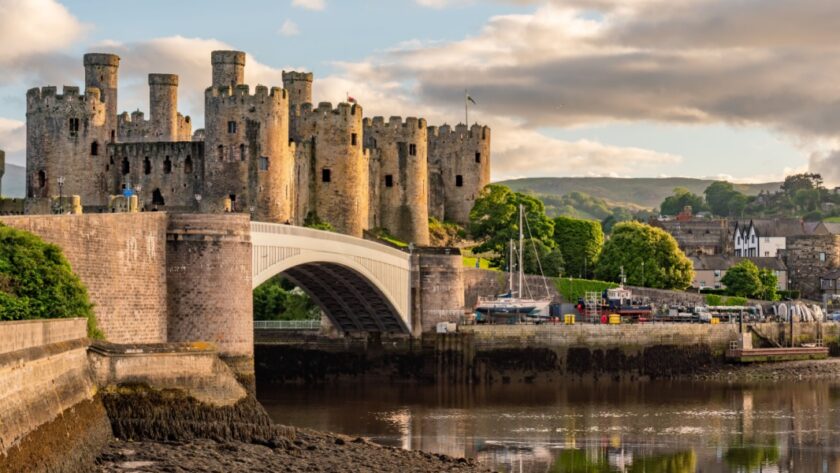
Wales has over 600 castles. Some are grand stone giants like Caernarfon and Conwy, others are half-crumbled relics where you can play at being a medieval knight without anyone watching.
4. The small but mighty language
Welsh is one of Europe’s oldest living languages. You’ll see it on road signs, hear it sung at rugby matches, and marvel at how words seem to use every consonant at once. Even if you can’t pronounce it, it’s worth the trip just to try.
5. Villages that look like postcards
From Portmeirion’s Italianate pastel dreamscape to the slate-roofed cottages of Beddgelert, Welsh villages have a knack for looking like they’ve been set-dressed for tourists—except they’re just being themselves.
6. Rugby as a national religion
On match day, the entire country vibrates with energy. Even if you don’t know a scrum from a scone, join the crowd in Cardiff and you’ll understand why rugby here is less a sport and more a mass emotional event.
7. Music that comes from the heart
From traditional male voice choirs filling chapels with harmony to Tom Jones belting out “Delilah,” Wales has always sung its soul out. Even a pub singalong here can feel like an impromptu concert.
8. National parks that actually deserve the title
Three of them: Snowdonia, the Brecon Beacons (Bannau Brycheiniog, if you’re feeling brave with the pronunciation), and Pembrokeshire Coast. Each has its own personality, and each insists you put your walking boots on.
9. Quirky attractions you’ll find nowhere else
Where else can you bounce on trampolines in an old slate cavern (Bounce Below), or ride a tiny steam train through mountain passes? Wales has a gift for making the ordinary delightfully odd.
10. The people who’ll always have time for a chat
Welsh hospitality is quietly legendary. Ask for directions and you’ll get a full guided history of the area, plus an invitation to a village fête you didn’t know existed.