Some parts of Britain seem to have understood that they were not especially large and responded by becoming unusually interesting. These are the compact regions and small landscape areas that feel far bigger in personality than they do on the map, places with strong identity, memorable atmosphere, and enough substance to shape a whole trip rather than merely pad out an afternoon.
Quick takeaways
Best for dramatic coastal character
Purbeck, Gower, Llŷn Peninsula, Ards Peninsula
Best for watery landscapes and strong atmosphere
The Broads, Suffolk Coast and Heaths, Wye Valley
Best for compact upland and borderland drama
The Black Mountains, North Pennines, Mendip Hills
Best for under-the-radar regional personality
The Wirral, Ross of Mull, the Machars
Best for a first article series shortlist
Purbeck, Gower, Wye Valley, The Broads, Llŷn Peninsula, The Black Mountains
Why Britain’s small regions can make such satisfying trips
There is something deeply pleasing about a place that knows exactly what it is. Large regions can take a while to explain themselves. Small ones often get on with it. The scenery tightens, the identity sharpens, and the whole trip starts to feel coherent in a way that bigger, blurrier destinations sometimes do not. You are not just somewhere in Britain. You are in Purbeck, or Gower, or the Wye Valley, and before long that distinction feels perfectly obvious.
That is what makes these compact regions so useful for visitors. They are easy to grasp, easy to remember, and often surprisingly rich. They might not cover a vast area, but they can contain a remarkable amount of coastline, landscape, culture, history, village character and general sense of place. In travel terms, they punch well above their weight, which is an irritating phrase in most situations but, for once, happens to be true.
Coastal pockets with outsized personality
Purbeck
Purbeck has no interest in being modest. It is one of those corners of Britain that appears to have decided a single scenic trick would not do and so piled in chalk ridges, cliffs, little coves, old stone villages, heathland, broad sea views and Corfe Castle for good measure. The result is a region that feels compact but unusually complete, the sort of place where the landscape seems to have been edited for maximum effect.
What makes Purbeck distinctive is not just the beauty, but the self-contained feeling of the whole thing. It has its own stone, its own settlement pattern, its own coastal mood and its own sense of being slightly tucked away from the rest of Dorset. It feels less like a subsection of somewhere bigger and more like a proper place in its own right.
Gower
Gower is one of the best examples in Britain of a small region with a perfectly clear identity. It has broad beaches, limestone cliffs, quiet lanes, old churches, salt marshes and enough variation to stop things ever feeling repetitive, but it all still belongs convincingly to the same story. It feels shaped rather than accidental.
Part of the pleasure of Gower is that it combines scenic beauty with a strong sense of everyday life. Some coastal places can feel as though they exist mainly to be admired from a lay-by. Gower feels lived-in as well as lovely, which gives it more depth. It is a region with genuine presence rather than just a handsome shoreline.
Llŷn Peninsula
The Llŷn Peninsula feels like a place that slowly narrows away from the ordinary world. As you head west, roads become smaller, the sea appears from surprising angles, villages feel more tucked into the land, and the whole peninsula begins to feel less like a standard holiday destination and more like a distinct cultural landscape with its own pace and temperament.
That is where its strength lies. Llŷn has scenery, certainly, but it also has a deep-rooted sense of itself. The Welsh language, the old pilgrimage associations, the small harbours, the sheep fields, the chapels and the sea all help create somewhere with genuine identity. It feels self-possessed, which is usually a very good sign.
Ards Peninsula
The Ards Peninsula has the great advantage of geography doing much of the work for it. Surrounded by sea and lough, it already feels contained before you even get to the villages, harbours and church spires that give it texture. It is a narrow, characterful place, with changing water views and a slightly off-to-one-side quality that makes it memorable.
This is not a region that depends on one headline attraction. Its appeal is cumulative. Quiet roads, small settlements, fishing heritage, shifting light and the constant presence of the water all build into somewhere with a very recognisable atmosphere. It feels like a region you can quickly get a feel for, but not quickly exhaust.
Waterside landscapes that create their own world
The Broads
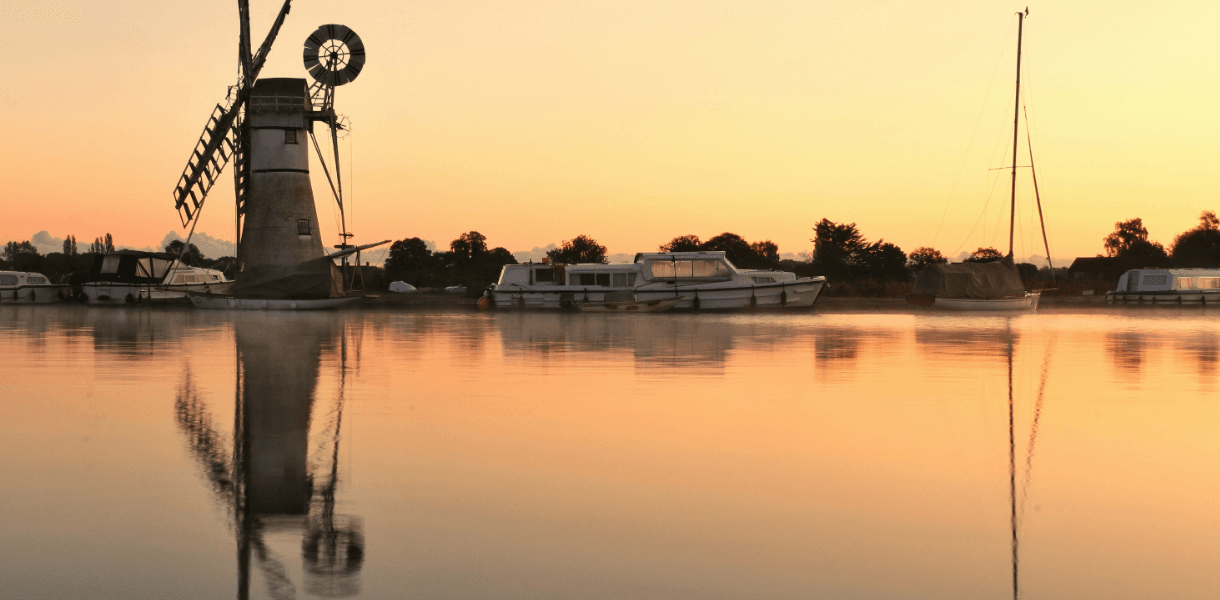
The Broads are gloriously unlike the rest of Britain. They do not rely on mountain drama or rugged grandeur. Instead they offer water, reeds, windmills, flat horizons, boats, marshes and low skies in combinations so distinctive that within minutes you know you are somewhere entirely different. It is a landscape that does not shout, but it does linger.
Their real gift is consistency of mood. The Broads feel restful, open and slightly dreamlike, with a calm that is never dull because the whole landscape is so specific. It is not just that they look different. They feel different. That is why they work so well as a region in their own right rather than merely a scenic feature on a map.
Suffolk Coast and Heaths
Some regions impress you immediately with theatrical scenery. The Suffolk Coast and Heaths does something more subtle and, in some ways, more lasting. Estuaries, shingle, heathland, little ports, quiet settlements and pale expansive skies create a landscape that seems reserved at first and then slowly becomes quite difficult to forget.
What makes it distinctive is tone. It has a recognisable emotional texture, which not every region does. It feels spacious, thoughtful, slightly austere and all the better for not trying too hard. It does not perform for the visitor. It simply remains itself, which can be more compelling.
Wye Valley
The Wye Valley is a small region with a surprising amount going on. There are wooded hillsides, sweeping river views, old abbey ruins, viewpoints, handsome towns and roads that somehow contrive to make nearly every bend feel picturesque. It is one of those places where scenery and history seem to have agreed to cooperate.
Its borderland character adds even more depth. England and Wales meet here in ways that give the valley more texture than a straightforward beauty spot. It feels layered, atmospheric and full of old associations. Some places look good. The Wye Valley looks as though people have been finding it quietly enchanting for centuries.
Small uplands and borderlands with surprising weight
The Black Mountains
The Black Mountains sound exactly as they ought to sound, slightly moody, faintly literary, and quite capable of producing weather that becomes part of the memory whether you wanted it to or not. They are magnificent in a serious, elemental way, with ridges, valleys, farms and stone buildings that give the landscape real presence.
What makes this small region so memorable is the balance between human and wild. There is enough upland drama to make it stirring, but also enough settlement and agricultural texture to keep it grounded. It feels old, shaped and deeply itself, which is a large part of the appeal.
North Pennines
The North Pennines have never seemed especially interested in self-promotion, which is perhaps why they remain less talked about than they deserve. This is a landscape of high moors, hay meadows, broad skies, old mining remains, waterfalls and dales that feel open without feeling exposed. It has scale, but it also has intimacy.
Its substance comes from the combination of scenery and human history. These are not abstract uplands. They are worked, inhabited landscapes formed by weather, labour and long local habits. That gives the region a quiet depth and helps it feel richer than its modest public profile might suggest.
Mendip Hills
The Mendips are a splendid example of a compact region cramming in far more than seems strictly necessary. Limestone ridges, caves, gorges, sudden viewpoints, odd little villages and ancient sites all contribute to a landscape with a great deal of variety and a very satisfying sense of shape. It feels properly formed.
That shape matters. Some landscapes are attractive but indistinct. The Mendips feel structured, almost sculpted, with enough rise and contour to make a short trip feel eventful without requiring mountaineering tendencies. They have a compact boldness that makes them especially rewarding for visitors.
The overlooked corners that feel like private discoveries
The Wirral
The Wirral has the misfortune of sitting near places with louder reputations, which has helped obscure the fact that it is a very convincing small region in its own right. It has coast, estuary views, villages, green spaces and that unmistakable peninsula quality that gives a place both shape and identity.
Its strength is in the way it feels separate. Not remote, exactly, but distinct. Once you stop treating it as the bit between Liverpool and Chester, it comes into focus surprisingly quickly. The Wirral has its own atmosphere and rhythm, and it rewards being approached on its own terms.
Ross of Mull
Ross of Mull feels distilled. It has that west coast Scottish quality of seeming at once open to the wider world and quietly removed from it, with rock, water, weather and small settlements combining into something compact but expansive in spirit. Even a short visit can feel like a journey with proper edges to it.
Its links with Iona add to the sense of significance, but the region would have strong character without that. It is simply one of those small landscapes that manages to feel both intimate and grand, which is a surprisingly rare trick.
The Machars
The Machars are exactly the sort of region UK Explorer ought to like. Quietly distinctive, slightly under-sung, and more memorable than their relative obscurity would suggest, they offer coast, farmland, old religious sites, little roads and a pleasing sense of being just outside the main tourist beam.
What works so well here is the coherence. This is not a place that lunges for attention. It wins more gently through mood, shape and understatement. That often makes for the most satisfying sort of discovery.
Final verdict
Britain’s most distinctive small regions are not necessarily the ones with the biggest reputations. They are the ones that feel complete. Places where scenery, mood, identity and local texture all line up so neatly that the region seems to introduce itself before anyone else has the chance.
If you wanted the strongest starting points from this list, Purbeck, Gower, Llŷn, the Wye Valley, the Broads and the Black Mountains would make an excellent first set. They are varied, memorable and properly region-like, each offering a slightly different version of the same pleasing truth, which is that some of Britain’s most rewarding places are not the largest names on the map, but the smaller ones that seem to have concentrated their character for effect.