Some parts of Britain seem to have treated food not merely as sustenance but as a matter of regional identity. A coastline here, a dairy pasture there, a few orchards, a sheep-filled hillside, some shellfish, a market town with a suspiciously good butcher, and before long you have the sort of place where lunch starts to feel like a cultural activity. These are the UK regions where food is not just a pleasant supporting detail. It is part of the atmosphere, part of the landscape, and often part of the excuse for going in the first place.
The joy of a really good food region is that it improves the whole trip. You are not simply eating well. You are understanding the place in a more enjoyable form. A harbour tastes of seafood. Orchard country tastes of fruit, cider and hedgerow abundance. Hill country leans towards lamb, cheese and things that make sense after a long walk. Britain, when approached this way, suddenly seems much more edible and much more convincing.
Quick takeaways
Best for seafood
Cornwall, Devon, East Anglia, Highlands and Islands
Best for produce-led trips
Kent, Herefordshire and the Welsh Borders, Yorkshire
Best for traditional regional specialities
Cumbria and the Lake District, Wales, Cornwall
Best for drink lovers
Kent, Herefordshire and the Welsh Borders, Highlands and Islands
Best for a first foodie trip
Cornwall, Yorkshire, Kent, Cumbria and the Lake District
Why food regions make such satisfying trips
There is something deeply pleasing about a place that can feed you properly while also showing you a good time. A strong food region gives shape to the day. You start with a bakery, wander through a market town, have an entirely justified second lunch, buy three unnecessary things in a farm shop, then end up in a pub or harbour restaurant feeling that the day has been extremely well organised, even if none of it was technically planned.
Food also tells you what sort of place you are in. It explains the sea, the fields, the climate and the old habits. It is one of the quickest ways of grasping regional character. Some places are rich and dairy-heavy. Some lean salty and coastal. Some are full of orchard fruit and local drinks. Some seem built around the comforting principle that after a long walk you should be rewarded with pastry, pudding or both. These are the regions where that connection between place and plate feels strongest.
1. Cornwall
Cornwall has the sort of food reputation that makes people arrive already half-hungry, which is sensible. This is one of Britain’s great places for eating in a way that feels gloriously tied to the setting. The coast supplies crab, fish and shellfish. The countryside contributes dairy, cheeses and all the rich supporting cast required for cream teas and ice cream. Even the humble pasty manages to feel less like a snack and more like a local institution with pastry.
What makes Cornwall so good is that the food never feels separate from the trip. It belongs to harbour towns, beach afternoons, sea-view cafés and bakery queues that move with the solemn determination of people who know something worthwhile lies ahead. You can have a very memorable food weekend here without booking anything grand at all. In fact, some of the best moments are the simplest. A pasty in the hand, a bench with a view, and the happy realisation that you may need another one later.
Quick info box
- Best for seafood, bakery stops, dairy-heavy treats
- Signature tastes Cornish pasty, crab, Cornish Yarg, cream tea
- Good bases Falmouth, Padstow, St Ives, Penzance
- Best time to go late spring to early autumn
- Don’t miss a harbour lunch followed by the sort of bakery purchase you pretend is for later
2. Yorkshire
Yorkshire approaches food with the confidence of a place that has no intention of apologising for its appetite. This is part of its charm. It has proper regional classics, strong baking traditions, excellent cheese, notable beer culture and enough variety to support several entirely different kinds of foodie trip. You can do market towns and delis, country pubs and farm shops, or city dining and old-fashioned tea rooms, often within a very manageable distance of each other.
It also has range, which matters. Some food regions are built around one big idea. Yorkshire has several. One day can involve Wensleydale, a handsome high street and a pub lunch in a stone-built village. Another can take in restaurants, breweries and bakeries with the self-assurance of a county that has been feeding people well for quite some time and sees no reason to stop now. It is hearty without being one-note, proud without being fussy, and very good at turning an ordinary weekend into a series of strategic meals.
Quick info box
- Best for varied foodie weekends, cheese, baking, pubs
- Signature tastes Yorkshire pudding, Wensleydale, parkin, local ales
- Good bases York, Harrogate, Malton, Helmsley
- Best time to go year round
- Don’t miss pairing one very good market town with one even better pub lunch
3. Kent
Kent makes a wonderfully persuasive case for the edible virtues of the English south east. Of course there are orchards. Of course there are hops. Of course there are vineyards now, because apparently the county had not already done enough. Add seafood from the coast, local cheeses, fruit, farm shops and pretty towns to the picture, and you have a region that seems to have approached the whole question of food with quiet competence and excellent timing.
For visitors, Kent works beautifully because it offers food with polish but not too much fuss. You can build a trip around oyster towns, vineyard visits, market stops and long pub lunches in villages that look as though they were designed to improve your mood. There is a lovely sense of abundance about the place. You do not so much look for something nice to eat as keep bumping into it. This is particularly dangerous in farm shops, where self-control tends to collapse somewhere between the chutneys and the local cheese counter.
Quick info box
- Best for vineyards, orchards, oysters, produce-led weekends
- Signature tastes Whitstable oysters, Kentish wines, orchard fruit, local cheeses
- Good bases Canterbury, Faversham, Whitstable, Tunbridge Wells
- Best time to go spring to autumn
- Don’t miss combining coast and countryside in one gloriously well-fed weekend
4. Wales
Wales has one of the strongest food identities in the UK because the landscape seems to remain present in the meal. Lamb feels connected to the hills. Shellfish belongs naturally to the coast. Laverbread, Welsh cakes and warming traditional dishes all seem to emerge from a place with a clear sense of itself. There is nothing flimsy or overdesigned about it. Welsh food tends to feel rooted, honest and rather sure-footed.
That grounded quality makes Wales such a good food destination. It suits people who like flavour to come with atmosphere rather than fanfare. A scenic drive through a national park, a coastal lunch, a market town stop, a really good pub dinner and perhaps something buttery from a bakery in the afternoon, and the day has arranged itself nicely. Wales is very good at this sort of thing. It feeds you well while also making the journey between meals ridiculously scenic, which feels like an unfair advantage.
Quick info box
- Best for lamb, shellfish, coastal food trips, traditional Welsh flavours
- Signature tastes laverbread, Welsh lamb, oysters, Welsh cakes
- Good bases Cardiff, Abergavenny, Tenby, Aberystwyth
- Best time to go late spring to early autumn
- Don’t miss a coast-focused trip where lunch keeps competing with the view
5. Highlands and Islands
The Highlands and Islands have the kind of food identity that feels sharpened by weather, geography and a certain regional refusal to do things by halves. Seafood is superb. Whisky obviously has a starring role. Smoked fish, shellfish, local game and seasonal produce all feel magnified by the fact that you are eating them in a landscape that appears to have been art-directed for dramatic effect.
This is one of Britain’s great regions for travellers who like a strong connection between place and plate. You can taste the sea here. You can sense the climate in the menus. You can eat in a harbour town or island café while looking out at scenery so improbable it almost distracts from the food, which is saying something. What the region does especially well is make meals feel like part of the wider atmosphere. Not an interruption to the trip, but one of the reasons it feels memorable in the first place.
Quick info box
- Best for seafood, whisky, dramatic landscape-and-food trips
- Signature tastes shellfish, smoked seafood, whisky, local game
- Good bases Oban, Inverness, Portree, Tobermory
- Best time to go late spring to early autumn
- Don’t miss combining a distillery visit with a seafood dinner somewhere near the water
6. Cumbria and the Lake District
Cumbria is one of those deeply satisfying British food regions where the specialities sound comfortingly old-fashioned and then prove completely irresistible in practice. Cumberland sausage, Grasmere gingerbread, sticky toffee pudding, Kendal mint cake and all manner of hearty local produce make this a place that seems to understand exactly what people want after a walk, a drive, a rain shower or, indeed, any minor exertion whatsoever.
The Lake District setting helps, of course. Scenery of this calibre gives everything a boost. A café stop becomes more rewarding. Tea and cake become almost medicinal. Pudding acquires the air of something wisely deserved. What makes the region especially good is that the food fits the mood of the place so well. It is warming, familiar, generous and quietly excellent. It may not always shout, but it does know how to make you happy, which in travel terms is really the main thing.
Quick info box
- Best for comforting classics, scenic weekends, walkers with good priorities
- Signature tastes Cumberland sausage, Grasmere gingerbread, sticky toffee pudding, Kendal mint cake
- Good bases Keswick, Ambleside, Cartmel, Grasmere
- Best time to go year round
- Don’t miss Cartmel if pudding is one of your core travel values
7. East Anglia
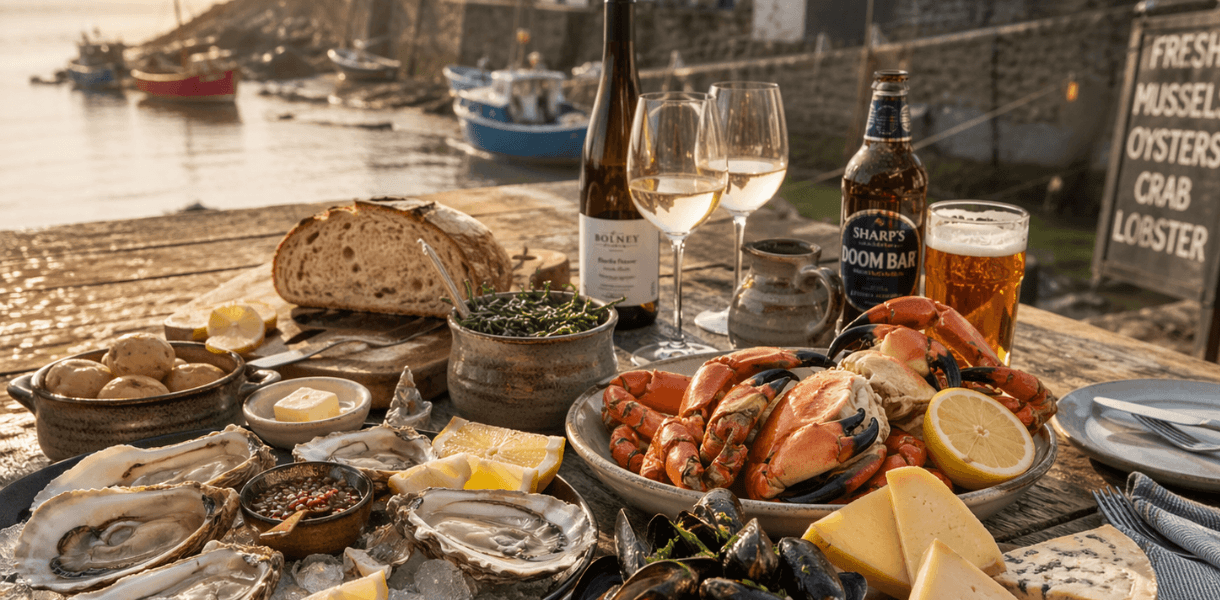
East Anglia is sometimes underestimated by people who have not yet eaten their way around it properly. This is plainly their loss. The region combines seafood, farmland produce, saltmarsh flavours and market-town ease in a way that feels generous but unshowy. Cromer crab, oysters, mussels, samphire and all manner of local produce give it a food identity that makes perfect sense once you are there.
Part of the appeal is the pace. East Anglia lends itself to the sort of trip where you wander rather than charge about. A coastal town here, a village pub there, a market day, a scenic drive through soft countryside, and before long you have had an excellent time without ever feeling hurried. The food fits that mood. It is rooted, seasonal and close to the landscape. This is a region that does not need to make a fuss to be very good indeed.
Quick info box
- Best for seafood, saltmarsh flavours, slower foodie wandering
- Signature tastes Cromer crab, oysters, mussels, samphire, local farm produce
- Good bases Holt, Aldeburgh, Southwold, Norwich
- Best time to go spring to autumn
- Don’t miss a coast-and-market-town itinerary with a really good pub as the hinge point
8. Herefordshire and the Welsh Borders
Herefordshire and the Welsh Borders have a quietly formidable food personality. This is cider country, orchard country, beef country and farm-shop country, which is a very encouraging combination of words. The region has the sort of rural abundance that makes even a modest lunch feel as though it has been assembled by people who care about what grows nearby and have a good working knowledge of cheese.
It is particularly strong for visitors who like food with a countryside backbone. Scenic drives make sense here because they lead naturally to farm shops, market towns, orchards, breweries and pubs that feel properly embedded in the landscape. Ludlow in particular gives the region a useful culinary anchor, but the pleasure is broader than any one town. It is in the whole pattern of the place. Fields, orchards, small towns and long lunches, all arranged with suspicious efficiency.
Quick info box
- Best for cider, beef, farm shops, relaxed countryside food trips
- Signature tastes Hereford beef, craft cider, asparagus, strawberries
- Good bases Hereford, Ledbury, Ludlow, Ross-on-Wye
- Best time to go late spring to autumn
- Don’t miss the deeply civilised pleasure of coming home with more from a farm shop than you can reasonably carry
9. Devon
Devon is excellent at feeding people in a way that feels generous, scenic and faintly reassuring. It has seafood, dairy, cider, cream teas, market towns, estuary views and a lot of places where lunch can drift happily towards tea. It is sometimes overshadowed by Cornwall in these conversations, which is a bit like overlooking one excellent feast because another one happens nearby. Devon more than holds its own.
What makes it work so well is its balance. You get coast and countryside in almost equal measure, which means food can be tied to harbours, fishing towns, rural inns and inland market stops rather than one single mood. It is a very good region for visitors who want a classic British break with a strong edible dimension but without feeling as though the trip has turned into a competitive dining exercise. Devon is relaxed, flavourful and very easy to like.
Quick info box
- Best for cream teas, seafood, coast-and-country weekends
- Signature tastes cream tea, crab, mussels, cider, local cheeses
- Good bases Dartmouth, Totnes, Salcombe, Exeter
- Best time to go late spring to early autumn
- Don’t miss a day that starts with a market and ends near the water with something excellent on a plate
10. Causeway Coast and Glens
The Causeway Coast and Glens is one of those regions where food and scenery seem to have sensibly agreed to work together for the visitor’s benefit. The coastline contributes seafood, the wider landscape brings strong local produce, and the whole thing is stitched together by towns and villages that make excellent stopping points on a weekend of very scenic grazing.
This is especially appealing if you like a trip to feel shaped by route as much as destination. Coastal drives, harbour lunches, distillery stops, cafés with sea views and meals that feel improved by fresh air all make particular sense here. It has enough character to feel distinct and enough quality to support a proper food-focused short break. Also, there is something undeniably satisfying about eating very well while a famous coastline carries on looking dramatic just outside the window.
Quick info box
- Best for scenic coastal food trips, seafood, artisan producers
- Signature tastes seafood, whiskey, artisan cheeses, coastal produce
- Good bases Portrush, Ballycastle, Bushmills
- Best time to go late spring to early autumn
- Don’t miss making lunch part of the coastal adventure rather than a pause in it
Final verdict
The best UK food regions are not simply the places with the fanciest restaurants or the loudest reputations. They are the ones where flavour feels inseparable from setting. Cornwall is superb for first-time foodie appeal. Yorkshire has remarkable breadth. Kent is excellent for produce and polished weekends. Wales brings strong landscape character to the table. Cumbria is ideal for comforting local specialities. The Highlands and Islands add drama almost unfairly.