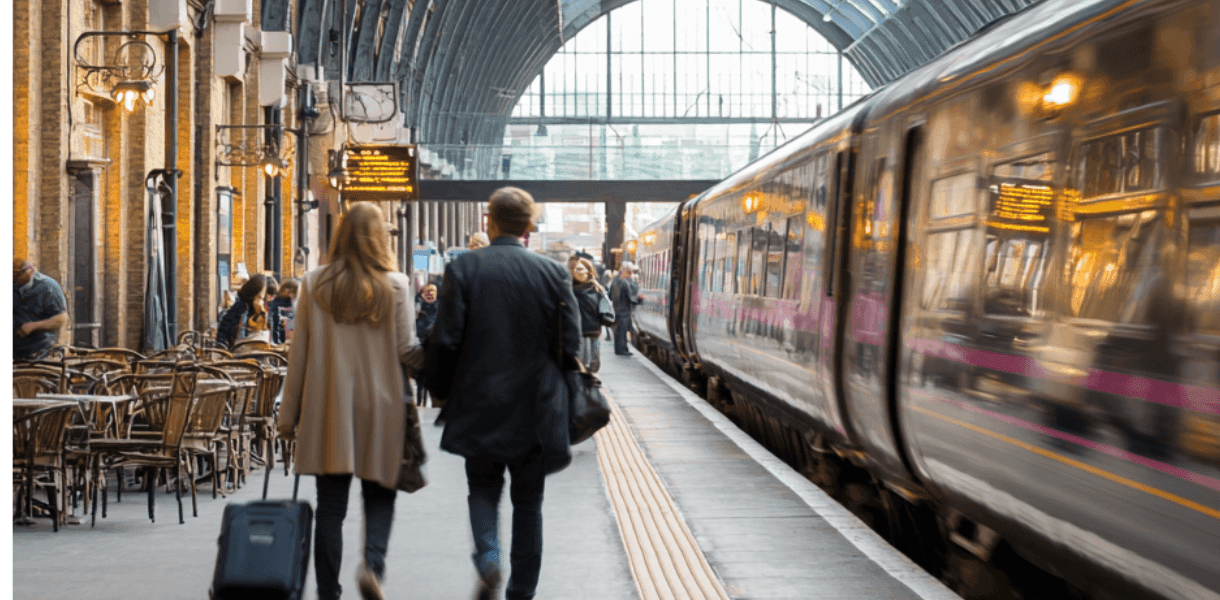
Some holidays begin beautifully with a train window, a paperback and the quiet relief of not having to find a parking space in a village built when donkeys were considered cutting-edge transport.
These are the UK regions where a no car break feels not only possible, but properly enjoyable.
Quick takeaways
Best overall no car region
Lake District
Best for easy coast
Cornwall, Isle of Wight, Yorkshire Coast
Best for walking from the train
Peak District
Best city plus countryside option
Edinburgh and the Lothians
Best for slow travel
Norfolk Broads
Best for a first no car break
Lake District, Isle of Wight or Peak District
Why no car breaks work so well
A good no car break is not just about whether a bus technically exists. That way madness lies, usually at a rural stop with no shelter, no phone signal and a timetable that seems to have been assembled during a power cut.
The best car-free regions have proper arrival points, compact geography, walkable towns, scenic rail lines, useful buses and enough depth that every day does not become a small administrative crisis. They let you travel more slowly, notice more, spend less time worrying about parking, and enjoy the faintly smug pleasure of arriving somewhere beautiful by train, boat or on foot.
1. Lake District
The Lake District is one of Britain’s best no car regions because it has learned, through long experience, that not everyone wants to wedge a hatchback into Ambleside on a Saturday afternoon.
Trains bring you close, with Windermere, Oxenholme, Penrith and Carlisle all working as useful gateways. From there, buses, boats and walking routes help stitch the lakes together. It is not car-free in the sense that you can float effortlessly between every fell, tarn and tearoom. But it is absolutely car-free in the sense that a brilliant holiday can be built around one good base.
Windermere and Bowness suit first-timers. Ambleside gives you a central, walkable base with buses heading in useful directions. Keswick is excellent for Derwentwater, Borrowdale and northern fells. Grasmere has that wonderful village-and-hills combination that makes people begin sentences with “I could live here”, usually before checking house prices and quietly changing the subject.
Best bases
- Windermere and Bowness
- Ambleside
- Keswick
- Grasmere
- Penrith
Best for
Walking, lake cruises, classic scenery, first-time car-free breaks
No car verdict
Excellent. Choose your base carefully and the car becomes not only unnecessary, but slightly absurd.
2. Peak District
The Peak District is wonderfully suited to no car travel, especially around the Hope Valley. The train line between Manchester and Sheffield slips through proper walking country, serving places such as Edale, Hope, Bamford and Hathersage.
This is one of those rare places where you can step off a train and be on a hill almost immediately. Edale gives access to Kinder Scout and the start of the Pennine Way. Hathersage has Stanage Edge nearby. Hope and Castleton offer caves, ridges, limestone scenery and enough pubs to make the return journey feel like a wise and civilised choice.
The Peak District also suits station-to-station walking. You can arrive in one village, walk over hills and fields, and leave from another, which feels pleasingly adventurous without requiring expedition-level admin.
Best bases
- Edale
- Hope
- Hathersage
- Castleton
- Buxton
- Bakewell
Best for
Walking weekends, station-to-station hikes, dramatic hills without remote logistics
No car verdict
One of the easiest national park breaks in Britain without a car.
3. Isle of Wight
The Isle of Wight feels almost purpose-built for car-free holidays. You arrive by ferry, switch into island mode, and realise that being compact is a serious advantage rather than a limitation.
Ryde is the easiest arrival base, with the sea, pier and onward connections all close at hand. Shanklin and Sandown give you classic seaside holiday territory. Cowes works well for a slightly livelier harbour-town feel. Yarmouth is quieter, prettier and well placed for the western side of the island.
The joy of the Isle of Wight is that it feels like a complete little world. Beaches, downs, chines, promenades, old villages, Osborne, Carisbrooke Castle and the Needles all sit within a manageable island rhythm. You do not need to rush. In fact, rushing here feels faintly against the rules.
Best bases
- Ryde
- Shanklin
- Sandown
- Cowes
- Yarmouth
Best for
Easy island breaks, beaches, families, short car-free escapes
No car verdict
Very strong. Compact, varied and refreshingly manageable.
4. Cornwall
Cornwall can be awkward by car in summer, which is one reason the train suddenly looks like an act of genius.
The trick with car-free Cornwall is not to try to swallow the whole county in one go. Cornwall is long, wriggly and fond of making short distances take longer than expected. Choose one good base and let the local area do the work.
St Ives is superb if you want beaches, galleries, harbour views and a train ride that feels as if it was designed by someone with a fondness for coastal drama. Falmouth is excellent for food, ferries, gardens, maritime history and relaxed exploring. Penzance gives access to Newlyn, Mousehole, Marazion and the far west. Looe works well for a smaller, more traditional harbour break.
Best bases
- St Ives
- Falmouth
- Penzance
- Truro
- Looe
Best for
Coastal scenery, art, harbour towns, beaches, scenic rail journeys
No car verdict
Excellent with the right base. Less good if you try to cover the entire county as though completing a regional endurance test.
5. North Wales and Eryri
North Wales gives you one of Britain’s best car-free combinations of coast, castles and mountains. It has proper arrival points, handsome seaside towns, dramatic medieval walls, mountain villages and enough rail and bus connections to make a varied break genuinely workable.
Llandudno is a very good base if you want a classic seaside town with easy access to the Great Orme, Conwy and the north coast. Conwy is smaller, moodier and wonderfully atmospheric, with its castle, walls and harbour. Bangor works well as a practical gateway. Betws-y-Coed and Llanberis bring you closer to the mountains.
The beauty here is the contrast. One day can be castle walls and sea air. The next can be waterfalls, forests, slate landscapes and mountain views. It has the satisfying feeling of a bigger holiday without the constant need to relocate.
Best bases
- Llandudno
- Conwy
- Bangor
- Betws-y-Coed
- Llanberis
Best for
Castles, mountains, seaside towns, mixed itineraries
No car verdict
Very good, especially if you base yourself on the coast or in one of the main mountain villages.
6. Edinburgh and the Lothians
Edinburgh is an obvious no car city, but the wider region makes it even better. You get one of Europe’s great city breaks, plus coast, hills and small towns within easy reach.
This is the sort of trip where you can spend one morning climbing Arthur’s Seat, one afternoon wandering the Old Town, another day by the sea in North Berwick, and another eating your way through Leith with the quiet seriousness of someone undertaking important cultural research.
The Lothians add breathing room. North Berwick brings beaches, sea views and Bass Rock. Dunbar gives you coast and cliff walks. Linlithgow adds a handsome town and palace ruins. The Pentland Hills sit close enough for a proper leg-stretch without needing a complicated rural escape plan.
Best bases
- Edinburgh
- Leith
- Portobello
- North Berwick
- Dunbar
Best for
City break plus coast, culture, food, easy day trips
No car verdict
Superb. One of the easiest and most rewarding car-free breaks in the UK.
7. Norfolk Broads and coast
Norfolk is a gentle, spacious, quietly brilliant no car region if you approach it at the right pace. This is not a place that rewards frantic sightseeing. It rewards drifting, cycling, boating, walking, looking at skies and making sudden emotional commitments to windmills.
Norwich is the most practical base, with its cathedral, lanes, market, riverside walks and rail links out towards the coast and Broads. Wroxham gives you easy access to the waterways. Cromer and Sheringham work well for a coastal break with cliffs, piers, beaches and fish and chips doing the honest work of civilisation.
The Broads are especially good for slow travel because the whole landscape seems to move at boat speed. Reeds, water, birds, church towers, little riverside pubs and big East Anglian skies do not need much embellishment.
Best bases
- Norwich
- Wroxham
- Cromer
- Sheringham
- Great Yarmouth
Best for
Slow travel, waterways, coast, birdwatching, relaxed breaks
No car verdict
Good, especially for slow travellers who are happy to combine trains, buses, boats and walking.
8. Yorkshire Coast
The Yorkshire Coast is a fine no car choice because much of the experience runs in a satisfying line. Scarborough, Whitby, Filey and smaller coastal stops can be linked into a break of seaside towns, cliff walks, harbour views and excellent excuses for chips.
Whitby makes a particularly atmospheric base, with its abbey, harbour, old lanes and dramatic headland setting. Scarborough is bigger, livelier and more practical. Filey has a gentler rhythm and a lovely beach. Robin Hood’s Bay is less straightforward but wonderfully rewarding, all steep lanes, red roofs and smugglers’ atmosphere.
This is a coast that feels made for travelling slowly. Walk a section, catch a bus back, sit by the harbour, repeat until life improves.
Best bases
- Whitby
- Scarborough
- Filey
- Robin Hood’s Bay
Best for
Coastal walking, seaside towns, gothic atmosphere, harbour breaks
No car verdict
Very good for a linear coastal break, especially from Whitby or Scarborough.
9. Scottish Highlands by rail
The Highlands are not universally easy without a car, and pretending otherwise is how people end up staring mournfully at a bus stop in drizzle. But selected bases and rail routes make for magnificent car-free trips.
Inverness works well for a slower Highland break, with riverside walks, nearby coast, loch trips and rail journeys in several directions. Fort William is a natural base for mountain scenery, Glen Nevis, the West Highland line and onward travel to Mallaig. Aviemore is strong for the Cairngorms, forest trails and outdoor activities. Oban works beautifully for sea air, ferries and island glimpses. Pitlochry is smaller, handsome and very manageable.
The key is restraint. Do not plan a no car Highland trip as though Scotland were a neatly gridded theme park. Pick one base, or one rail corridor, and let the landscape do its work. The Highlands are better when they are not bullied into submission.
Best bases
- Inverness
- Fort William
- Aviemore
- Oban
- Pitlochry
Best for
Big scenery, rail journeys, slow travel, walking, dramatic landscapes
No car verdict
Wonderful when planned around a specific base or route. Frustrating if you try to see too much.
10. The Cotswolds
The Cotswolds has a reputation for being car-dependent, and frankly it has earned some of it. But a no car break is entirely possible if you choose the right base and accept that you are here to slow down, not collect villages like commemorative spoons.
Moreton-in-Marsh is one of the most useful bases, with classic Cotswold country close at hand. Cheltenham gives you a larger town with good food, culture and onward links. Stroud has a more lived-in, creative feel and excellent countryside nearby. Bath sits on the edge rather than in the heart of the Cotswolds, but makes a fine no car base for a broader break.
The best approach is to walk between places, use buses selectively and keep your ambitions human-sized. One or two lovely villages properly enjoyed will beat six glimpsed through steamed-up bus windows.
Best bases
- Moreton-in-Marsh
- Cheltenham
- Stroud
- Bath
- Kingham
Best for
Villages, walking, gentle weekends, food, gardens
No car verdict
Good with careful planning. Not ideal for visitors who want to see half the Cotswolds before lunch.
How to choose the right no car region
For the easiest first trip, choose the Lake District, Peak District, Isle of Wight or Edinburgh.
For coast, choose Cornwall, the Yorkshire Coast or the Isle of Wight.
For walking straight from the train, choose the Peak District, Lake District or North Wales.
For slow travel, choose Norfolk, the Cotswolds or the Isle of Wight.
For a bigger adventure, choose a rail-based Highland trip.
Final verdict
The best no car breaks are not second-best versions of driving holidays. Done well, they are often better. You arrive more gently. You see more from the window. You walk more naturally. You avoid the ritual humiliation of rural car parks, which is not nothing.
The Lake District and Peak District are the strongest all-rounders. The Isle of Wight is the easiest island escape. Cornwall and the Yorkshire Coast are excellent for seaside breaks. Edinburgh gives you the best city-plus-countryside mix. And the Highlands, handled with patience, offer the grandest no car adventure of all.