Northern Ireland is compact enough for an easy week away, but rich enough to feel far bigger than it looks on the map. In seven days you can wander Belfast, follow the Causeway Coast, walk Derry’s walls, breathe in the Mournes and still have time for a quiet lough, a proper pub and the happy realisation that you have not spent the whole holiday in transit.
Quick takeaways
Best for
Coastal drives, city breaks, history, walking, food, scenery and a week that feels satisfyingly varied
Best bases
Belfast, Portrush or Portstewart, Derry, Newcastle, Strangford Lough
Best time to go
June to early September
Best first trip shape
Belfast, Causeway Coast, Derry, Mourne Mountains and Strangford Lough
Do not miss
Titanic Belfast, the Antrim Coast Road, Giant’s Causeway, Dunluce Castle, Derry’s walls, the Mourne Mountains
Why Northern Ireland is perfect for a summer staycation
Northern Ireland is one of those places that looks almost suspiciously convenient on a map. The distances are manageable, the scenery changes quickly, and you can move from city streets to sea cliffs to mountain paths without needing the stamina of a courier driver.
This makes it ideal for a seven day summer staycation. You get the satisfying feeling of a proper trip, but without the long haul exhaustion, airport faff or the bleak little sandwich that always seems to appear somewhere near Gate 43.
The secret is not to overpack the week. Northern Ireland rewards movement, but it rewards lingering even more. Give Belfast time to reveal its layers. Let the Causeway Coast have a full day rather than a quick photo stop. Stay in Derry long enough to walk the walls properly. Leave room for the Mournes, where the mountains and sea seem to have arranged themselves for maximum emotional effect.
Days 1 and 2
Belfast with time to look properly
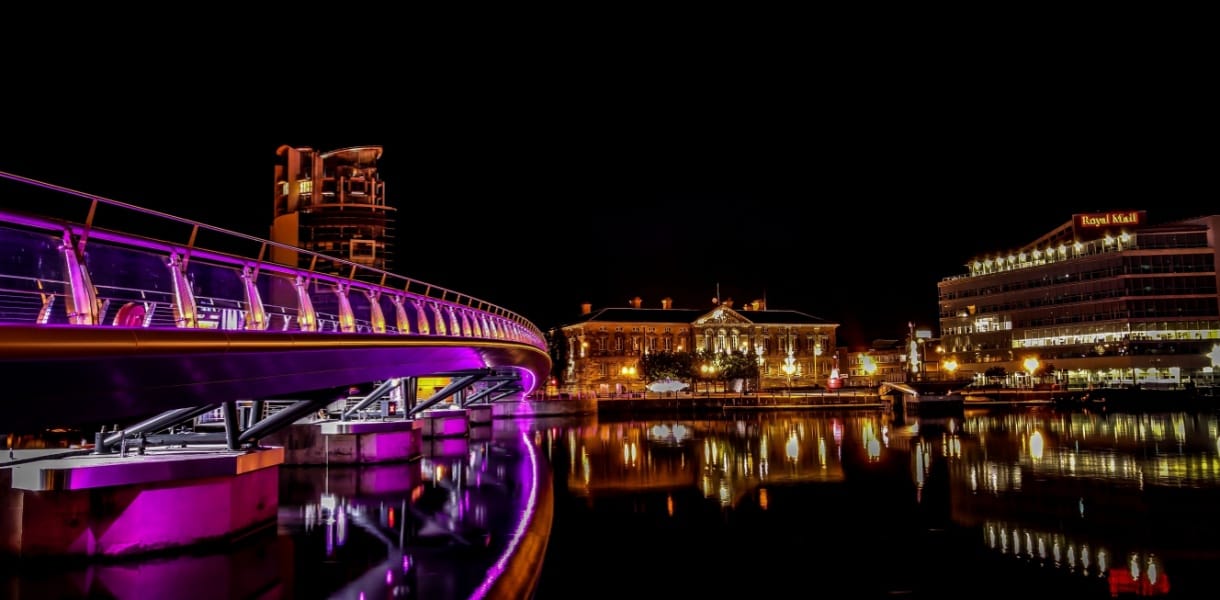
Start in Belfast. It is lively, handsome, complicated, warm and increasingly confident, but not in that tiresome way some cities develop after discovering craft beer and exposed brickwork.
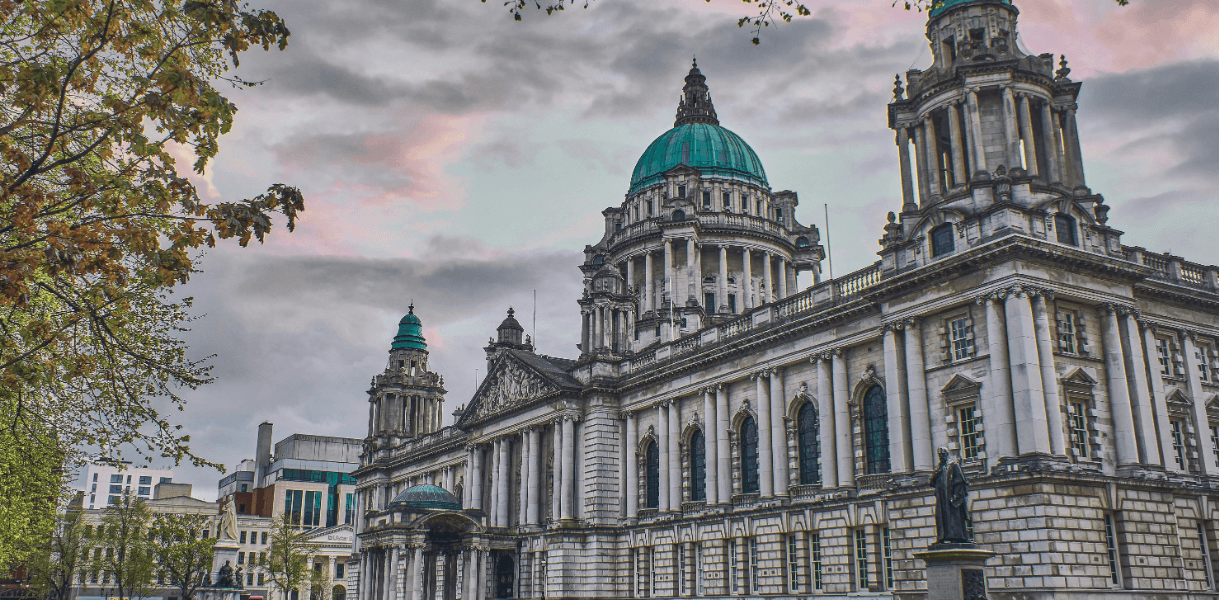
Spend your first day on foot. Begin around City Hall, wander into the Cathedral Quarter, and allow yourself to drift between street art, old pubs, independent cafés and lanes that feel as though they have more stories than they are letting on.
Titanic Belfast deserves proper time. It is not just a museum about a famous ship. It is a story about industry, ambition, pride, tragedy and a city that built something enormous and then had to live with the legend of it.
On your second day, dig a little deeper. Visit St George’s Market if it is open, take a political history tour, walk by the River Lagan, or head up towards Cave Hill for a view over the city. Belfast is best when treated as more than an arrival point.
Day 3
The Antrim Coast Road and the beginning of the drama
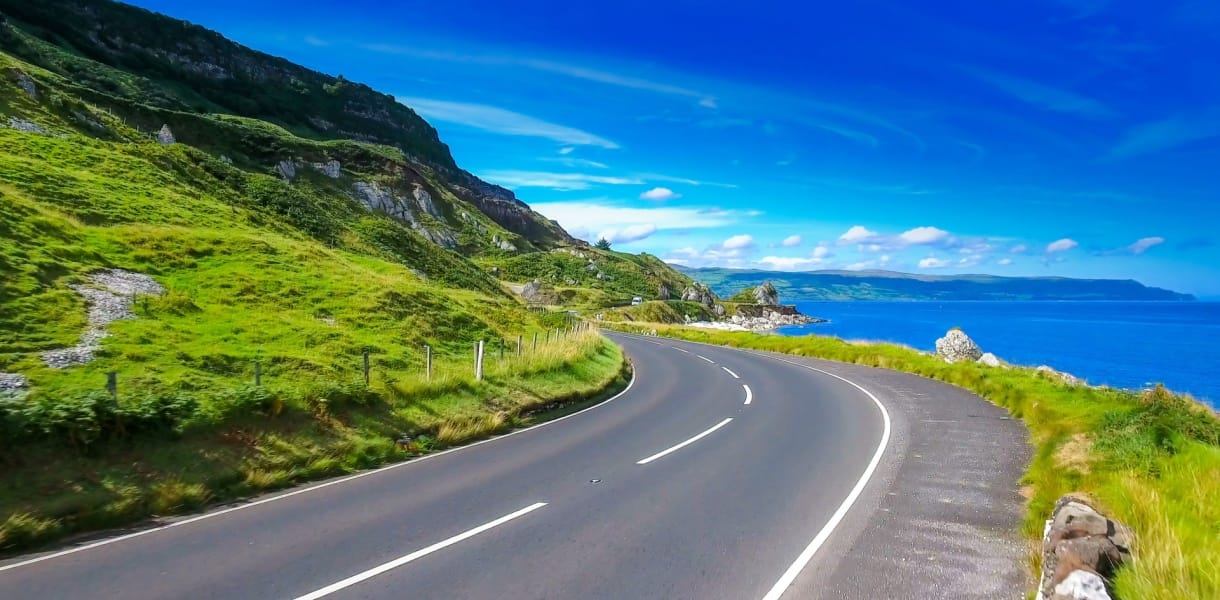
Pick up a car and head north. The Antrim Coast Road is one of the great drives in Britain and Ireland, not because it shouts about itself, but because it keeps producing views with excellent timing.
The road curls beside cliffs, passes small harbours, opens suddenly to sea and then tucks itself back into green folds of landscape. It is a route made for stopping. Frequently. Sometimes for photographs, sometimes for coffee, sometimes because everyone in the car has gone quiet in that way people do when the view has won.
Make time for Glenarm, Cushendun and Ballintoy if you can. Then continue towards Carrick-a-Rede Rope Bridge, which adds a small but memorable dose of wobbling peril to the scenery.
End the day around Portrush or Portstewart. Both work well as summer bases, with beaches, places to eat and that pleasing seaside feeling that the evening has permission to stretch out.
Day 4
Giant’s Causeway, Dunluce Castle and the north coast
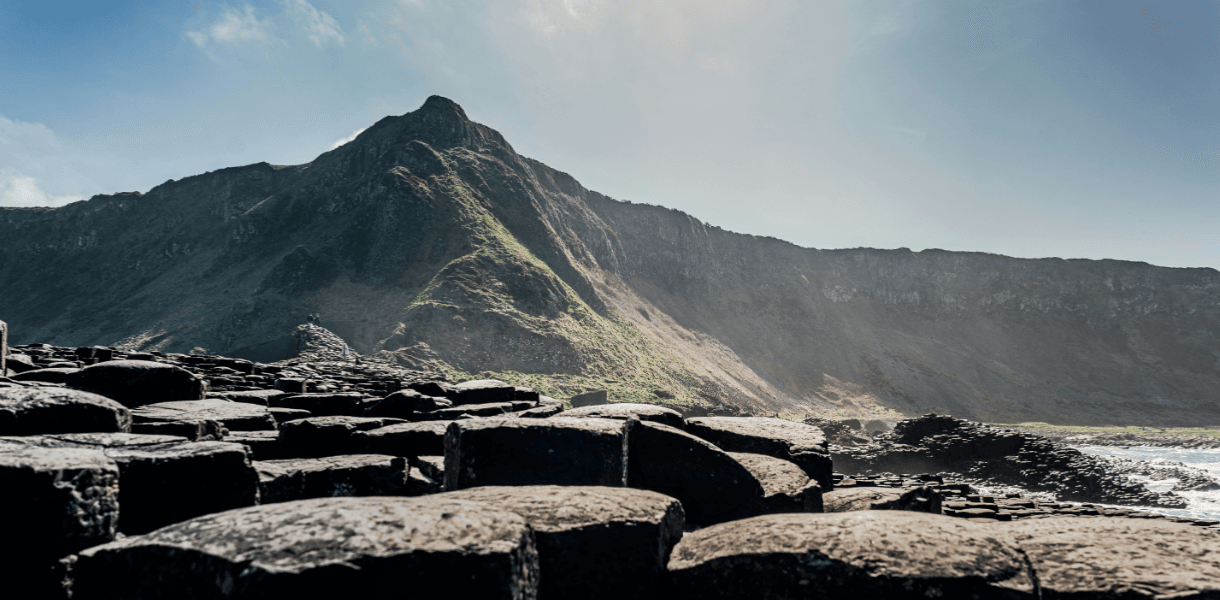
Get to Giant’s Causeway early. This is not fussy advice. It is the difference between experiencing a strange, beautiful, sea-battered landscape and joining a moving committee of waterproof jackets.
The basalt columns are famous for good reason. Even if you have seen the photographs, there is still something wonderfully odd about the place. It looks designed, but not by anyone you would entirely trust with normal furniture.
Afterwards, walk more of the coast if the weather is kind, then visit Dunluce Castle. Few ruins have a better sense of theatre. Perched on its cliff edge, it appears to be one strong gust away from becoming a maritime feature.
Keep the rest of the day loose. This stretch of coast is full of small rewards. Beaches, harbour views, cliff paths, cafés, ice cream, and the occasional sharp reminder that the Atlantic is very much in charge.
Day 5
Derry and the pleasure of a city with walls
Drive west to Derry, one of the most rewarding city stops in Northern Ireland. Its great gift to the visitor is that you can understand it by walking.
The city walls are complete, walkable and genuinely absorbing. From them you see the old city, the River Foyle, the bridges and the layers of history set out around you. It is one of those rare attractions that is both the thing to see and the best way to see everything else.
Allow time for the Bogside murals and the Museum of Free Derry if you want to understand more of the city’s recent past. Derry asks for attention, but gives plenty back.
Stay overnight if possible. The city has a different feel in the evening, softer and more relaxed, with good pubs, music, food and a sense of place that lingers.
Day 6
The Mourne Mountains and Newcastle
Head south towards County Down and the Mourne Mountains. This is a shift in mood. The north coast is all spectacle and sea air. The Mournes feel more rugged and inward, with granite peaks rising above the coast as if the landscape has decided to make one final persuasive argument.
Base yourself in Newcastle, where the mountains meet the sea in frankly showy fashion. It is a classic summer staycation base, with walks, beaches, cafés and enough scenery to make a short stroll feel rather grand.
If you are a keen walker, take on part of Slieve Donard. You do not need to reach the summit for the day to feel worthwhile. Even a lower route gives you mountain air, wide views and the useful sense that you have earned dinner.
For a gentler day, explore Tollymore Forest Park or follow the coast around Dundrum Bay. This is a good point in the week to slow the pace and stop treating the itinerary like a school timetable.
Day 7
Strangford Lough and a gentle return
For the final day, take the slower route back towards Belfast via Strangford Lough. This is a lovely way to end the trip because it lowers the volume without becoming dull.
The lough has a quieter beauty. Villages, water, small harbours, wildlife, old estates and a sense that everything is moving at a slightly more civilised speed. Visit Castle Ward, pause in Strangford or Portaferry, and give yourself time for one last unhurried lunch.
Return to Belfast later in the day. By this point, you will have seen cities, coast, cliffs, mountains and loughs, which is a strong return on one week and a fairly devastating argument against assuming you need to leave the country for a proper summer break.
Northern Ireland staycation info box
Getting here
Flights run into Belfast International and George Best Belfast City Airport. Ferries connect Northern Ireland with Scotland and England, making it practical for a car-based staycation.
Getting around
A car gives the most flexibility, especially for the Causeway Coast, Mournes and Strangford Lough. Belfast and Derry are easy to explore on foot.
Where to stay
Use Belfast for the first two nights, Portrush or Portstewart for the north coast, Derry for one night, and Newcastle or the Strangford Lough area for the final stretch.
Where to eat
Look for seafood on the coast, market food in Belfast, relaxed pub meals in smaller towns, and independent cafés in Derry and Newcastle.
What to do
Mix big sights with slower days. Titanic Belfast, Giant’s Causeway, Dunluce Castle and Derry’s walls are the anchors, but the week works best when you leave time for beaches, viewpoints and small harbour stops.
Nearby gems
Glenarm, Cushendun, Ballintoy, Mussenden Temple, Tollymore Forest Park, Castle Ward and the Ards Peninsula.
Best time to visit
June and September are especially good for lighter crowds and long days. July and August bring the fullest summer atmosphere, but book ahead in coastal areas.
How to make the week feel relaxed
The best version of this trip is not the one with the most pins on the map. It is the one where each part of Northern Ireland gets enough breathing room.
Two nights in Belfast gives the city proper weight. Two nights on the north coast lets you see the Causeway without rushing. One night in Derry gives the city its due. The final stretch in County Down softens the trip beautifully.
Try not to change accommodation every night. It looks efficient on paper and feels mildly deranged in practice. A good staycation should include at least a few mornings where nobody has to repack a bag with the grim discipline of a military exercise.
Final verdict
A seven day summer staycation in Northern Ireland gives you an astonishing amount of variety without making you work too hard for it. Belfast brings energy and depth. The Causeway Coast brings drama. Derry brings history and character. The Mournes bring mountain air and sea views. Strangford Lough brings the calm finish.
It is compact, scenic, thoughtful and full of moments that feel bigger than the map suggests. Which, really, is Northern Ireland all over.