There are places in Britain that sound as if they were named by a committee with a weakness for optimism. The English Riviera is one of them. It is a name that seems to promise palm trees, blue water, long lunches, white villas, and perhaps a passing countess in sunglasses. The surprising thing is that, on a warm summer day, it does a rather good job of living up to it.
This stretch of South Devon coast, wrapped around Torbay and anchored by Torquay, Paignton and Brixham, has always had a slightly theatrical air. It is seaside Britain with its collar loosened. There are beaches, piers, promenades, ice creams, fish and chips, boat trips, buckets, spades, and the faint background cry of gulls plotting crimes. But there is also something grander and stranger here. Red cliffs glow above blue water. Subtropical gardens tumble down hillsides. Villas peer through palm fronds. Fishing boats land their catch in Brixham. Agatha Christie’s old stamping ground lends the whole place a faint whiff of murder conducted politely over tea.
In summer, the English Riviera becomes what it has always wanted to be. Not quite the Mediterranean, obviously. Britain does not hand out that sort of certainty. But on the right day, with the sun on the bay and the light bouncing off the water, it feels as close as England gets to doing continental glamour while still keeping a weather app open.
A bay with ideas above its station
A bay made for exploring
Torbay has an unusually generous shape. Rather than a single resort facing one strip of sea, the English Riviera curves around a broad sheltered bay, with towns, beaches, coves and headlands arranged like a loose necklace. This gives the area much of its appeal. You can move from resort bustle to quiet cliff path, from harbour chatter to leafy garden, from family beach to old fishing town, without feeling you have left the story.
Torquay and the old resort glamour
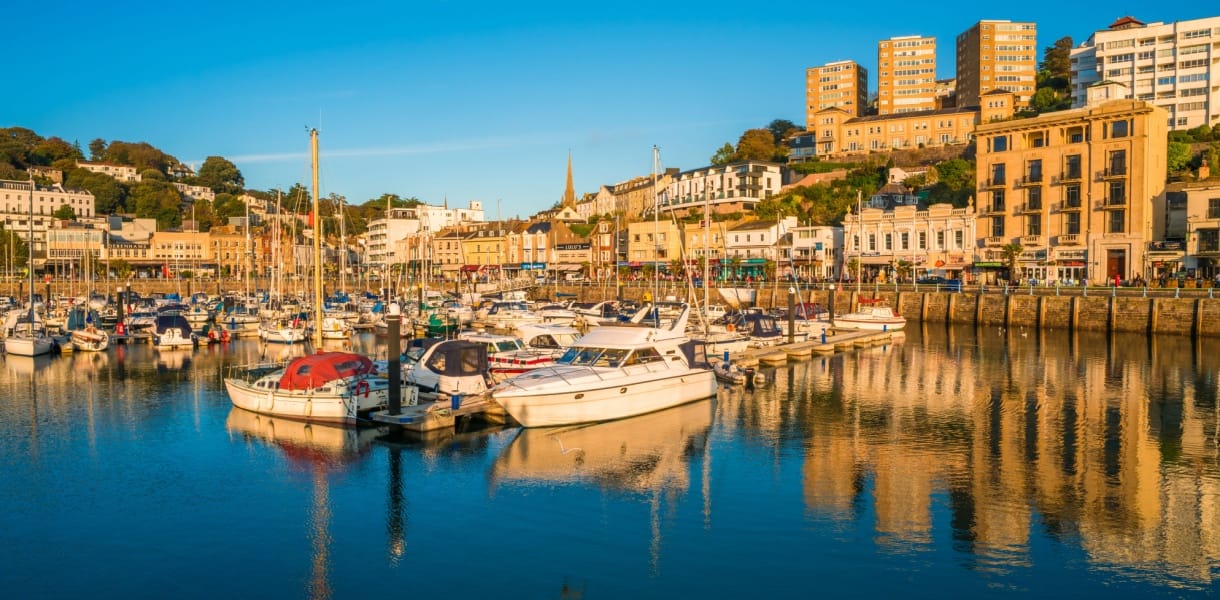
Torquay is the grande dame, though one who has occasionally mislaid her pearls. It still has the bones of a Victorian and Edwardian resort, with terraces, hotels, gardens and a harbour that knows how to pose for photographs. It was once one of the great fashionable seaside escapes, attracting visitors who wanted mild air, sea views and the feeling that life could be improved by changing into linen. The hills rising behind the waterfront give the town a layered, almost amphitheatre-like quality, with houses stacked above the bay and palms making a brave attempt at looking nonchalant.
Paignton and the cheerful seaside middle
Paignton, by contrast, is more straightforwardly seaside. It has the long sandy beach, the pier, the green, the family amusements, and the relaxed mood of a place that understands children need chips, sand and something sticky within regular intervals. It is easy-going, cheerful, unpretentious, and very good at being what people secretly want from a summer resort.
Brixham still belongs to the sea
Brixham is the working heart of the bay. It is smaller, steeper and more characterful, with pastel houses rising above a busy harbour and fishing boats that remind you this is not just a backdrop for postcards. The town has one foot in the visitor economy and the other in the sea. That gives it a pleasing bite. It smells of salt, diesel, crab sandwiches and old ropes. In summer it can be busy, but it rarely feels artificial. Brixham has not forgotten what it is.
The summer mood
The gentle art of drifting
Summer suits the English Riviera because the place is built for movement. Not frantic movement. More the pleasant drift of a day that begins with coffee somewhere sunny, wanders along a promenade, stops to look at a boat, considers a swim, then somehow ends in a harbour with a plate of something fried.
Why the best days are lightly planned
The best days here are not overplanned. You can try to impose a strict itinerary, but the coast will gently defeat you. A glimpse of blue water will pull you down a side street. A ferry will look more tempting than the car. A shaded garden will become more appealing than a crowded beach. A sudden need for a cream tea will appear, as sudden needs for cream teas often do in Devon, with the moral force of an emergency.
Torquay at summer pace
Torquay in summer is best enjoyed slowly. The harbour and marina make a natural starting point, with cafés, boats and enough holiday bustle to make you feel properly away. From there, you can walk towards Torre Abbey Sands or explore the gardens and seafront. The town has a slightly faded grandeur in places, but that is part of its charm. Perfect resorts can feel sterile. Torquay has texture. It has history, odd corners, sea air, old hotels, sunny terraces, and the confidence of somewhere that has seen generations arrive with suitcases and leave with sunburnt noses.
Paignton and the family seaside mood
Paignton is the family workhorse of the Riviera, and there is affection in that. Its beach is broad and approachable, the pier supplies the necessary seaside nonsense, and the Dartmouth Steam Railway adds a fine puff of nostalgia. Few things improve a summer holiday quite like the sight of a steam train moving beside the coast, making everyone briefly feel that modern life may have taken a wrong turn somewhere around 1963.
Brixham with a saltier edge
Brixham is where you go when you want the Riviera to feel saltier. The harbour is the main event, with boats, seafood, narrow streets and views back across the bay. Berry Head, just beyond the town, is one of the great local escapes. The headland brings cliffs, sea views, wildlife and a sense of airiness that contrasts beautifully with the packed life of the harbour below.
More than buckets and promenades
The English Riviera can be underestimated because it looks, at first glance, like a classic resort area. That is not a criticism. Classic resort areas exist because people like swimming, walking, eating, staring at the sea, and pretending they are not going to buy another ice cream. But this coast has deeper layers.
The geology is part of the story. The area sits within the English Riviera UNESCO Global Geopark, which gives the landscape an importance that goes well beyond holiday scenery. The cliffs, caves and headlands tell a long story of ancient seas, tropical environments, shifting climates and deep time. This is rather pleasing, because it means you can eat chips beside the bay while technically engaging with hundreds of millions of years of earth history. Education rarely comes so well battered.
Kents Cavern, in Torquay, adds another dimension. This prehistoric cave system connects the Riviera to some of the earliest human stories in Britain. It is a reminder that long before Victorian visitors arrived for the climate, people and animals were sheltering in these limestone caves. The Riviera has always been desirable real estate, it seems, even before estate agents found adjectives.
Then there is Agatha Christie. Born in Torquay, she remains one of the area’s most famous associations, and the coast still carries echoes of her world. Greenway, her holiday home near the River Dart, lies outside the main Torbay resorts but fits perfectly into a summer visit. The journey there, especially by boat or heritage transport, has the pleasing quality of entering one of her plots, ideally without becoming a suspect.
Beaches and coves
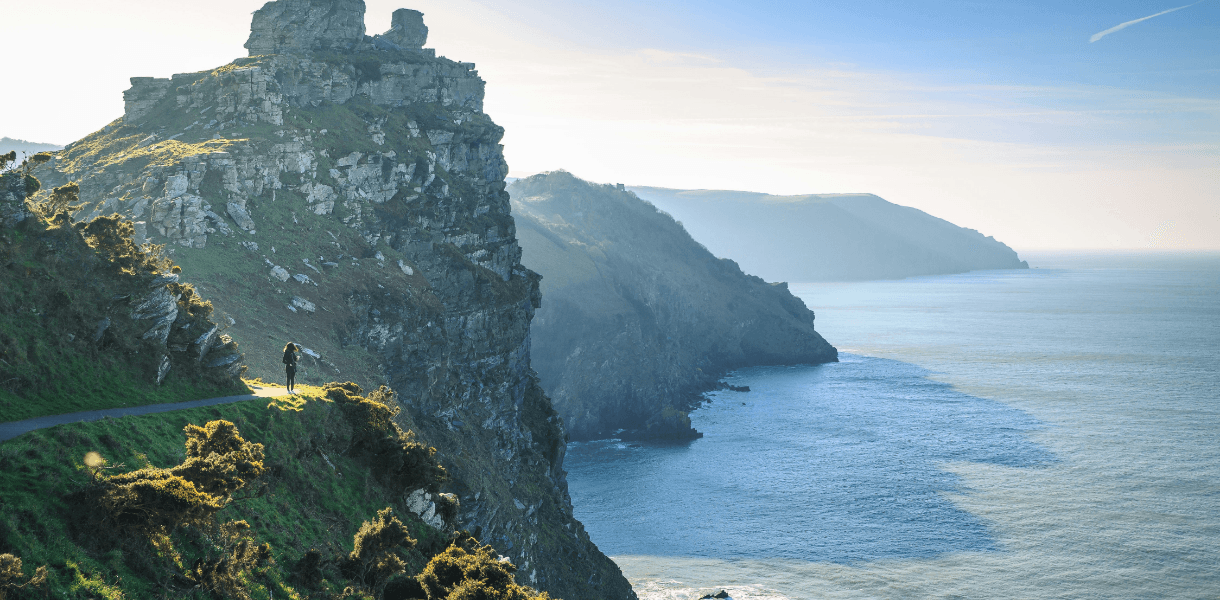
Summer on the English Riviera is naturally beach-led, but the character of the beaches varies more than you might expect.
Torre Abbey Sands is convenient, central and good for those staying in Torquay. Meadfoot Beach feels quieter and more tucked away, with lovely views and a slightly more local mood. Oddicombe Beach, reached from Babbacombe Downs, brings red cliffs and a more dramatic setting. Babbacombe itself is one of the most rewarding corners of Torquay, perched high above the sea with sweeping views and a gentler pace than the main waterfront.
Paignton Beach is the obvious family choice, wide and sandy, with attractions close at hand. Goodrington Sands, just south of Paignton, is another strong option, especially for families who want easy facilities and a proper beach day without too much logistical fuss.
Broadsands sits between Paignton and Brixham and has a softer, more spacious feel, with beach huts and green slopes behind it. It is the sort of place that seems designed for grandparents, children, folding chairs and a level of picnic organisation that borders on military.
Further around the coast, smaller coves and rocky edges add variety. The joy of the English Riviera is that you are not tied to one beach mood. You can have lively, sandy, sheltered, scenic, practical or slightly tucked away, depending on the weather, the tide and whether anyone in the party has become emotionally dependent on proximity to toilets.
Babbacombe, the quieter charmer
Babbacombe deserves special mention because it shows a different side of the Riviera. High above the water, with lawns, views and a calmer rhythm, it feels less like a resort centre and more like a seaside village that has found a particularly good balcony.
Babbacombe Downs offers some of the finest views in the area. On a clear day, the sea seems to spread out forever, which is useful if you need reminding that your inbox is not the centre of the universe. Below, Oddicombe and Babbacombe beaches sit beneath the cliffs, reached by road, footpath or cliff railway depending on energy levels and how romantic you feel about vintage engineering.
This is also a good place for visitors who want the English Riviera without quite so much summer noise. You still have access to Torquay and the wider bay, but the atmosphere is gentler. Evening here can be lovely, with the light softening over the water and the whole coast briefly behaving like it has been art-directed.
Brixham and the working coast
If Torquay provides the Riviera’s grand resort history and Paignton its family seaside energy, Brixham supplies the grit, colour and flavour. It is a handsome harbour town, but not in a polished, ornamental way. Its beauty comes from the fact that it still works.
Fishing remains central to Brixham’s identity, and the town’s seafood is one of the great pleasures of a summer visit. Crab, mussels, scallops, fish landed close by, eaten with a harbour view, makes a powerful argument for not overcomplicating lunch. The steep streets rising from the harbour add to the charm, though they also remind you that picturesque towns are often built by people with little concern for modern knees.
The replica of the Golden Hind in the harbour adds a touch of maritime theatre, while the breakwater walk gives big views back across Torbay. Berry Head is the essential extension. Walk out from town and the mood changes quickly. The bustle falls away, the cliffs open up, and the sea takes over. It is one of the best places in the English Riviera to feel the scale of the coast.
The best way to explore
The English Riviera is made for linking things together. You can drive, but in summer the better answer is often to use trains, ferries, buses and your feet where possible. The railway line through this part of Devon is part of the pleasure, especially if you are arriving from Exeter or continuing towards Paignton and beyond. The local train gives you sea glimpses, resort stops and the useful feeling that the journey is part of the holiday rather than a punishment before it.
Boat trips across Torbay are a splendid way to understand the place. From the water, the three towns make more sense. You see how Torquay, Paignton and Brixham relate to one another, how the headlands hold the bay, and why the area acquired such a confident name. Everything looks better from a boat, of course, except perhaps the person who insisted they never get seasick.
Walking is just as rewarding. The South West Coast Path runs through the area, offering short sections that can be shaped around ability and appetite. You do not need to be a heroic long-distance walker to enjoy it. A cliff-top stroll, a harbour loop, or a walk between beach and headland is enough to bring out the best of the Riviera.
When summer is at its best
High summer brings the full resort atmosphere. July and August mean busy beaches, lively promenades, families, queues, festivals, parking challenges and the particular British holiday soundscape of gulls, sandals and someone asking where the sun cream has gone.
For many visitors, that is exactly the point. The English Riviera is not a secret cove pretending to be undiscovered. It is a proper summer destination, and it wears its popularity openly. If you want the classic seaside experience, with all the cheerful clutter that entails, come in school holiday season and lean into it.
For a softer version, early summer and September are hard to beat. June often brings long light, fresh greenery and enough warmth to make the coast glow without the peak crowds. September can be glorious, with warmer seas, gentler days and the sense that the whole bay has exhaled after August. It is still summer in spirit, but with more space to hear yourself think.
Why it still works
The English Riviera works because it offers several holidays at once. It can be a family beach break, a nostalgic seaside escape, a walking base, a seafood weekend, a gentle no-car coastal trip, a history-and-gardens holiday, or a classic Devon summer with a little more glamour than expected.
It also has that rare British seaside quality of being both familiar and surprising. You know some of what you are going to get. Promenades, beaches, piers, boats, cafés, gulls with criminal tendencies. But then the landscape lifts it. The red cliffs, the palms, the sheltered bay, the old villas, the working harbour, the prehistoric caves, the wooded creeks nearby, the boat trips, the sudden blue of the water on a bright morning.
The Riviera name may sound a little grand. It may even sound faintly ridiculous when rain is blowing sideways and someone is eating chips under a plastic poncho. But names have power, and this one encourages you to look at the coast with a bit of extra expectation. On a good summer day, expectation is rewarded.
The English Riviera is not perfect. No real seaside place is. That is why we like them. It has busy roads, uneven edges, crowded beaches and the occasional building that makes you wonder whether planning permission was issued during a small local emergency. But it also has charm, history, beauty and an unusually generous sense of holiday possibility.
Come in summer and give it time. Walk the harbour. Take the boat. Ride the railway. Sit on Babbacombe Downs. Eat seafood in Brixham. Let Paignton do its cheerful seaside thing. Watch Torquay glow in the evening light. Look across the bay and try not to feel slightly pleased with yourself.
For once, the grand name is not just showing off.