Winchester is one of those cities that can make the rest of England look faintly as though it meant well but ran out of concentration halfway through. It has kings, bishops, a cathedral of almost unreasonable scale, a college of formidable age, green water meadows drifting away at the edges, and streets that seem to have been arranged for the specific purpose of making you wander about admiring things. It is grand, ancient and deeply self-assured, yet still compact enough to enjoy without needing military-level planning. For a city break with history, atmosphere and just enough countryside folded in to keep everything feeling fresh, Winchester is absurdly hard to fault.
Quick takeaways
Best for
Historic city breaks, cathedral lovers, literary interest, easy wandering, elegant old England, and visitors who like places with proper depth
Why visit Winchester
It combines ancient capital status, one of Europe’s great cathedrals, atmospheric medieval streets, important royal and ecclesiastical history, and lovely green walks all in a city that remains pleasingly manageable
Don’t miss
Winchester Cathedral, the Great Hall, Wolvesey Castle, Winchester College, the river and City Mill, and the short climb up St Catherine’s Hill
Time needed
A full day is enough for the highlights, but an overnight stay suits Winchester much better
Best bit
The way it moves so easily from solemn history to simple pleasure, from kings and bishops to coffee, riverside paths and old streets that invite you to loiter
Worth it if
You like historic cities that feel rich and layered without feeling exhausting or overblown
Winchester at a glance
Winchester sits in Hampshire and has the sort of reputation that would be unbearable in a lesser place. Former capital of Anglo-Saxon England, home to one of the country’s great cathedrals, centre of royal and ecclesiastical power for centuries, associated with Alfred the Great and Jane Austen, and still handsome enough to make a casual stroll feel mildly educational. Yet the city wears all this rather well. It is not pompous. It is simply very, very sure of itself.
Why Winchester matters
There are English cities with a great cathedral. There are English cities with Roman origins. There are English cities with royal history, medieval streets, literary connections and excellent old buildings. Winchester, annoyingly, has decided to collect the lot.
The Romans established Venta Belgarum here, giving the place an organised beginning in stone and straight lines. Later, Alfred the Great rebuilt and strengthened Winchester, helping make it one of the key centres in the making of England. Through the Middle Ages it grew into a city of immense religious and political significance, with bishops, castles, palaces, churches and institutions all busily reinforcing its importance.
The result is a city that feels foundational. Winchester is not merely old. It feels like one of the places where England practised becoming itself.
What makes Winchester special today
The clever thing about Winchester is that all this history survives in a city that remains unusually easy to enjoy. It is not sprawling. It is not chaotic. It does not require you to dash about from one side to the other in pursuit of its best bits. The centre is compact, attractive and very walkable, so the pleasures of the place unfold naturally.
You can visit a cathedral of extraordinary scale, wander past medieval and Georgian buildings, stop for lunch, stroll by the river, look at old gateways and college buildings, then climb a hill for a view over the whole arrangement. That balance is what makes Winchester more than simply impressive. It makes it satisfying.
It also helps that the city feels lived in rather than frozen. Shops, cafés and everyday life sit comfortably among the history. Winchester never feels like it has been preserved under glass for your benefit. It still behaves like a city, which gives all that heritage a little more warmth.
A city with entirely too much pedigree
Winchester’s main vice is having far too much history and not nearly enough modesty about it. It was Roman before many places had got beyond the business of being inconveniently damp. It became one of the most important cities in Anglo-Saxon England and later developed into a major centre of ecclesiastical and royal power. At several points in its history, Winchester was not just important by local standards. It was important by national ones.
And yet this weight of history does not sit heavily. That is one of the city’s best qualities. It does not force you into reverence. It merely surrounds you with old stone, old institutions and a quiet sense that things of consequence have happened here for an extremely long time.
There are traces of Roman Winchester, echoes of Saxon power, Norman grandeur, medieval ambition and later refinement all folded into the place. You are rarely far from a wall, a ruin, a gateway or a building with enough historical confidence to make modern architecture seem like an apology.
The cathedral that more or less takes over the conversation
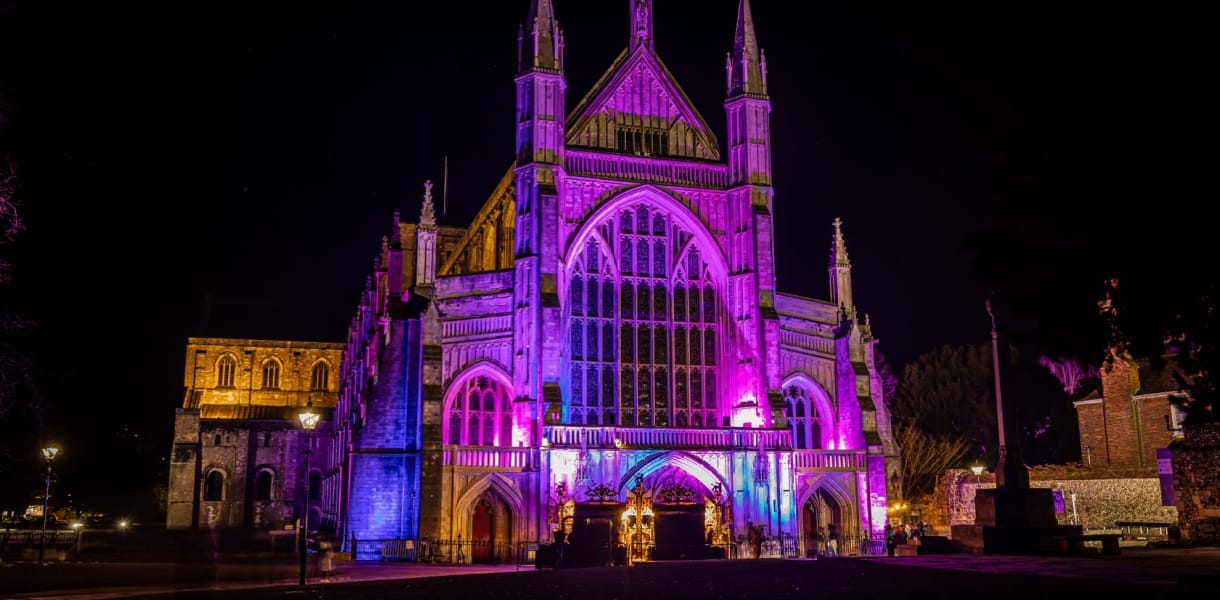
Winchester Cathedral is the building around which the city’s whole personality seems to turn. There are plenty of fine cathedrals in England, but this one has real authority. It does not simply dominate the skyline. It seems to set the tone.
Inside, the scale is magnificent without tipping into vulgarity. The long nave, the rich detail, the layered chapels and memorials, and the sheer accumulated centuries of worship and ceremony all give the building an extraordinary presence. It is the kind of place that makes even normally brisk people slow down a little.
It is also where Winchester’s layers come together most clearly. This is a place of kings, bishops, pilgrims and poets. Jane Austen is buried here, which gives the cathedral an extra thread of literary pilgrimage, and the wider building holds enough history to occupy even the most dedicated enthusiast for hours.
What makes it work especially well, though, is its setting. The cathedral is not marooned in traffic or detached from the city around it. It sits within a close and a cluster of old streets that make the whole area feel coherent and deeply rooted. You do not visit the cathedral and then move on from the city. You visit the cathedral and feel the city opening out from it.
Kings, castles and bishops behaving like princes
The Great Hall is one of Winchester’s finest survivals and exactly the sort of building Britain ought to have more of. It is all that remains of Winchester Castle, but it is enough to suggest the scale and importance of what once stood here. Vast, dignified and full of medieval confidence, it is one of the city’s essential sights.
It also contains the famous Round Table, long associated with the legend of King Arthur. Historically speaking, this is the sort of thing one approaches with a raised eyebrow and a willingness to let myth enjoy itself. As part of the visitor experience, however, it is excellent fun. Winchester understands that history and legend often make very good travelling companions.
Then there is Wolvesey Castle, the old bishop’s palace, which reminds you just how powerful the bishops of Winchester once were. These were not men content with a modest residence and a decent study. They built on a scale that reflected their wealth and influence, and the ruins still carry that suggestion of princely ambition.
Winchester is full of places like this, where power once dressed itself in stone and left enough behind for the rest of us to admire.
Scholars, cloisters and old institutional confidence
Winchester College adds another layer to the city’s personality. Founded in the 14th century and still occupying its original site, it gives Winchester that useful extra touch of scholarly gravity. The city would already be distinguished enough with cathedral and castle history alone, but the presence of such an old and prestigious institution deepens the whole atmosphere.
The college area is one of the loveliest parts of Winchester. Old buildings, enclosed spaces, stone walls and gateways all contribute to a mood of continuity and seriousness. It feels like the sort of place where generations have been taught Latin, discipline and the useful skill of looking composed in old rooms.
Even if you are not touring the college in detail, simply walking nearby is part of the pleasure. Winchester is full of places where architecture and history do much of the work for you. You do not need a packed itinerary every minute. Often it is enough simply to be there.
The pleasure of a city made for wandering
This is where Winchester becomes especially lovable. For all its grandeur, it is also simply a very pleasant city to drift around in. The centre is compact enough that walking feels natural, and the combination of medieval streets, attractive shopfronts, old brick, old stone and manageable scale gives the city an ease that many larger historic places lack.
You can browse independent shops, stop in cafés, wander towards the river, cross little bridges and find yourself moving between serious history and everyday charm almost without noticing the transition. Winchester has pedigree, but it also has grace.
The City Mill helps with this. The old watermill by the River Itchen brings a softer, greener note into the city experience. It reminds you that Winchester is not all cathedral stone and institutional gravitas. Water and greenery edge into the city in a way that makes the whole place feel lighter and more breathable.
This is one of Winchester’s real strengths. It gives you old England in abundance, but it also gives you room to enjoy it casually.
River paths, water meadows and the advantage of fresh air
Some historic cities are all centre and no exhale. Winchester is better than that. Around the old core are river walks, meadows and greener edges that stop the place feeling hemmed in by its own importance.
The Itchen and the water meadows give Winchester a calm, almost pastoral fringe. It only takes a short walk from the main streets to find the city loosening its collar a little. This shift in mood is one of the reasons Winchester works so well for an overnight break. You can do the big history properly, then spend the rest of the time walking beside water or sitting somewhere peaceful feeling rather pleased with your choices.
St Catherine’s Hill is the obvious example. The climb is short, the views are rewarding, and the sense of space at the top changes your understanding of the city below. After spending time among cathedral stones and medieval echoes, it is refreshing to step back and see Winchester as part of a wider Hampshire landscape.
That wider setting matters. Winchester feels not just like a historic city, but like a historic city with a little breathing room and a very agreeable countryside leaning against it.
Jane Austen, Alfred and the business of being famous
Winchester has another habit, which is attracting names that already carry their own cultural weight. Alfred the Great is everywhere in the city’s identity, quite rightly, because his role in shaping Anglo-Saxon England makes Winchester central to the national story. His statue stands with all the confidence of a man who knew he had earned it.
Then there is Jane Austen, whose grave in the cathedral ensures Winchester a permanent place on the literary map. This is not one of those faint literary links invented for brochure purposes. It is real, moving and quietly important.
Together, Alfred and Austen say quite a lot about Winchester. It is a place where statecraft, religion, myth, literature and architecture all seem to have agreed to gather in one tidy and highly photogenic package.
How to plan a trip to Winchester
Winchester works best as either a strong day trip or a very easy one-night break. The obvious approach is to spend the first half of the day on the cathedral, Great Hall and old centre, then slow things down with lunch, a riverside walk and either City Mill or St Catherine’s Hill later on.
If you stay overnight, Winchester becomes more relaxed and more enjoyable. You can see the main sights without rushing, have time to wander the quieter streets, and enjoy the city in the evening when the day-trippers have gone home and the whole place settles into itself a bit.
It also combines well with wider Hampshire or south of England trips. You can pair it with Southampton, the South Downs, Portsmouth, the New Forest or a longer run through elegant southern cathedral cities if that is your sort of thing, which it may very well be after half a day here.
Final verdict
Winchester is one of England’s most satisfying small cities because it gets the balance exactly right. It is deeply historic but not stuffy. Beautiful but not showy. Important but not exhausting. It has enough grandeur to feel special and enough gentleness to feel welcoming.
For first-time visitors, it offers a wonderfully concentrated version of historic England, with cathedral, college, castle remains, old streets and riverside calm all within easy reach. For returning travellers, it has the sort of atmosphere that makes a second or third visit feel entirely reasonable. You can come back for the cathedral, the seasonal mood, the water meadows, the old streets, or simply the pleasure of spending time in a city that seems to know exactly what it is.
Some places impress you. Winchester does that. But more importantly, it also makes you want to linger, which is a rarer and better achievement.
Know before you go
Getting here
- Winchester is in Hampshire, about an hour by train from London Waterloo
- The railway station is within walking distance of the historic centre
- By car, Winchester is easily reached from the M3
- The city centre is best explored on foot once you arrive
Where to stay
- Stay near the cathedral quarter or city centre for the strongest sense of old Winchester
- Choose somewhere near the river if you want a slightly calmer edge with easy walking access
- Winchester suits boutique hotels, traditional inns and comfortable central guesthouses particularly well
Where to eat
- The city is ideal for cafés, long lunches and pub dinners rather than anything hurried
- The centre has a good mix of independent cafés, bakeries and traditional pubs
- This is a place where it makes sense to stop often and treat wandering as a full day’s activity
What to do
- Visit Winchester Cathedral and see Jane Austen’s grave
- Explore the Great Hall and its famous Round Table
- See the ruins of Wolvesey Castle
- Wander around the area near Winchester College
- Walk by the river and visit Winchester City Mill
- Climb St Catherine’s Hill for the view
- Spend time simply strolling the old streets without too much agenda
Nearby gems
- The South Downs are close at hand if you want to add walking or countryside views
- Hockley Viaduct and the surrounding paths are a good option for an easy outdoor extension
- Hyde Abbey adds another thread to Winchester’s Saxon and royal story
- Southampton makes an easy contrast if you want coast and city in the same wider trip
Best time to visit
- Spring is excellent for the cathedral close, river walks and water meadows
- Early autumn suits Winchester particularly well, with mellow light and a slightly calmer atmosphere
- Winter gives the city real mood and suits the old streets and cathedral beautifully
- Summer is lively and attractive, though the city can feel busier at peak times