
Looking for the best riverside walks in London? This guide brings together scenic Thames walks, canal routes, quieter urban rivers and waterside day out ideas across the capital. From Westminster to Tower Bridge, Richmond to Hammersmith, Little Venice to Camden, the Lea Valley, the Wandle Trail and Greenwich to the Thames Barrier, these London riverside walks are ideal for easy exploring, city views, local history, parks, pubs and slow days beside the water.
London’s riverside walks show the capital at its most layered, relaxed and rewarding. From the big Thames views of Westminster, Tower Bridge and Greenwich to the quieter canals, marshes and hidden south London rivers, these walks are perfect for slow days out, easy exploring and seeing the city from its best angle.
Quick takeaways
Best classic London riverside walk
Westminster to Tower Bridge along the South Bank
Best elegant west London walk
Richmond to Hammersmith
Best canal-side London walk
Little Venice to Camden or King’s Cross
Best for urban nature and big skies
The Lea Valley Walk
Best quieter day out
The Wandle Trail
Best for maritime atmosphere
Greenwich to the Thames Barrier
Best first-time choice
Westminster to Tower Bridge
Best for a relaxed weekend wander
Richmond to Kew, Battersea to Chelsea, or Little Venice to Camden
Why riverside London is so rewarding
There are many ways to see London, but walking beside water is one of the best. The city softens at the edges. The traffic becomes a background murmur. Bridges become landmarks rather than obstacles. Warehouses, wharves, houseboats, parks and pub gardens appear with the pleasing regularity of plot twists.
London’s riverside walks are not all grand Thames views and postcard skylines, either. Some are polished and theatrical. Some are leafy and half-hidden. Some slip through old industrial corners where the city still feels busy, improvised and faintly mysterious. All of them remind you that London was shaped by water long before it was shaped by coffee chains and people walking very fast while looking cross.
The Thames is the obvious star, and quite right too. It gives London drama, width, reflection and a useful sense of direction. But the city’s smaller waterways deserve their moment as well. Regent’s Canal, the Lea and the Wandle reveal a different London, one of towpaths, locks, wildlife, mills, railway arches and neighbourhoods that feel much more local than ceremonial.
The real joy is that most of these walks can be shortened, extended, interrupted for lunch, or rescued by public transport when the weather starts behaving like London weather. You do not need a heroic plan. Start by the water, keep going, and let the city provide the entertainment.
1. Westminster Bridge to Tower Bridge
This is the London riverside walk for people who want the full production. It has landmarks, crowds, buskers, bridges, bookstalls, riverboats, skyline views and enough recognisable sights to make even the most casual visitor feel they have properly arrived.
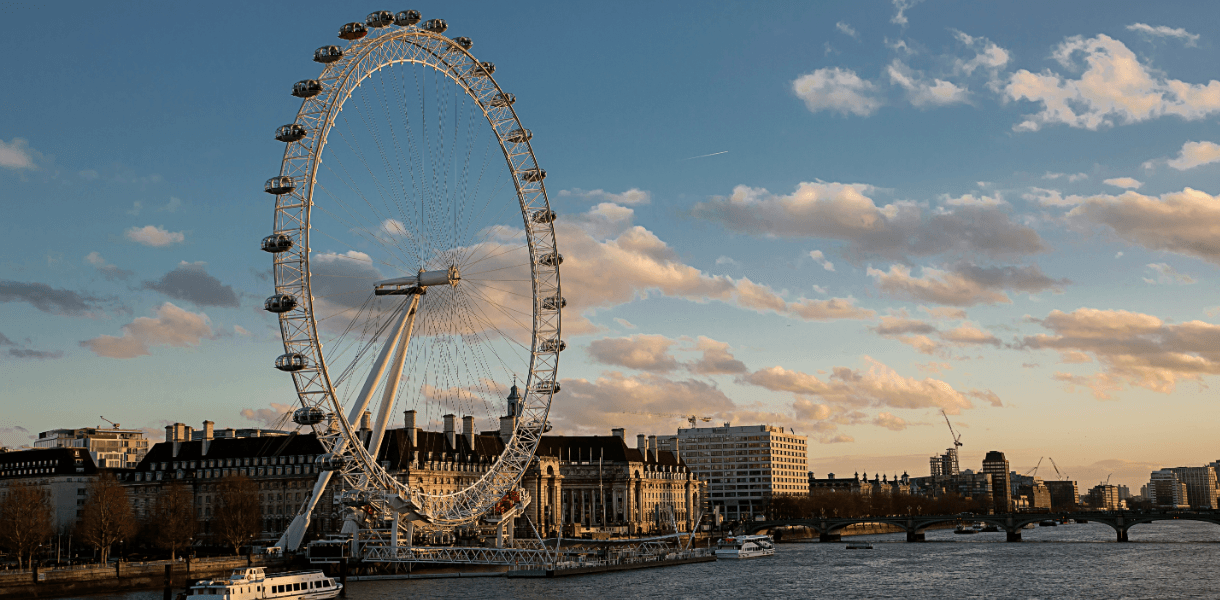
Start at Westminster Bridge and head east along the South Bank. The Houses of Parliament sit across the river looking impressively complicated. The London Eye turns with calm inevitability. From here, the route slips past the Royal Festival Hall, Gabriel’s Wharf, the National Theatre, Tate Modern and Shakespeare’s Globe before reaching the great stone drama of Tower Bridge.
It is not a secret walk. At weekends, it can feel as if half the population of Europe has had the same idea. But that is part of the atmosphere. The South Bank is London in promenade mode. There is always someone eating something from a cardboard tray, taking a photo, carrying flowers, arguing about directions, or pausing mid-conversation because the view has suddenly become too good to ignore.
For a first-time visitor, this walk is hard to beat. For Londoners, it is still worth doing when you want to be reminded that the city can put on a very good show when it chooses.
Best for
First-time visitors, landmark views, photography, an easy London day out
Start and finish
Westminster Bridge to Tower Bridge
Approximate distance
Around 3 miles
Good stops
Southbank Centre, Gabriel’s Wharf, Tate Modern, Borough Market, Tower Bridge
Route link
Thames Path route information from TfL
UK Explorer tip
Go early if you want space. Go late afternoon if you want the river catching the light and London looking briefly like it has forgiven everyone.
2. Richmond to Hammersmith
For a gentler, leafier version of riverside London, head west from Hammersmith to Richmond. This is one of the loveliest Thames walks in the capital, partly because it does not try too hard. It has handsome houses, boats, trees, riverside pubs, little islands, rowing clubs, and the slow confidence of a part of London that knows perfectly well it is attractive.
Begin at Hammersmith and follow the river west. The walk quickly slips away from the busier bridges and traffic into a calmer riverside rhythm. There are elegant terraces, quiet towpath stretches, boat clubs, waterside pubs and views across the Thames that make London feel less like a capital city and more like a string of well-dressed villages with unusually good transport links.
Chiswick makes a natural early pause, especially if you want to take things slowly and let the river do most of the work. Carry on towards Kew and the walk becomes greener and more spacious, with trees, gardens, islands and long bends in the river giving the route a wonderfully unhurried feel.
By the time you reach Richmond, the Thames has fully settled into its west London mood. The riverside opens out, the pace softens, and the town makes a very satisfying finish, with pubs, cafés, views and transport links all close at hand.
This is London at its most mellow. There is still bustle around the stations and bridges, of course, because this is not a fantasy. But by the water, with trees leaning over the river and rowers sliding past, it becomes much easier to understand why the Thames has always been more than a backdrop.
Best for
Leafy Thames views, riverside pubs, relaxed weekend walking
Start and finish
Hammersmith to Richmond Bridge
Approximate distance
Around 7 to 8 miles depending on route choices
Good stops
Hammersmith Bridge, Chiswick, Strand-on-the-Green, Kew, Richmond riverside.
Route link
View route here
UK Explorer tip
This is an excellent walk to do in sections. Richmond to Kew is a lovely shorter version if you want the pleasure without the heroic stride.
3. Little Venice to Camden or King’s Cross
Strictly speaking, this is a canal walk rather than a river walk, but it would be a shame to leave it out on a technicality. London’s canals are part of the city’s waterborne character, and the Regent’s Canal gives you a wonderfully different angle on the capital.
Start at Little Venice, where narrowboats gather beneath white stucco terraces and London appears to be pretending it is relaxed. From there, follow the towpath east. The route passes through Maida Vale and skirts Regent’s Park before reaching Camden, where calm canal-side strolling gives way to markets, food stalls, music, crowds and a general sense that someone, somewhere, is selling a hat you do not need.
You can stop at Camden or continue towards King’s Cross, where the canal slips into one of London’s best examples of urban reinvention. Around Granary Square and Coal Drops Yard, old industrial buildings have been cleaned, polished and repurposed with such confidence that you may find yourself admiring brickwork while holding an expensive coffee.
The walk works because it changes mood so neatly. Little Venice is quiet and slightly theatrical. Camden is loud, busy and gleefully overstuffed. King’s Cross is polished and clever. The canal simply carries on between them, doing its job with admirable calm.
Best for
Canal atmosphere, markets, houseboats, a different side of central London
Start and finish
Little Venice to Camden or King’s Cross
Approximate distance
Around 2.5 miles to Camden, around 4 to 5 miles to King’s Cross
Good stops
Little Venice, Regent’s Park edges, Camden Market, Coal Drops Yard, Granary Square
Route link
Little Venice to Camden walk from Canal & River Trust
UK Explorer tip
The towpath can be narrow and busy. Walk as if you are sharing it, because you are, often with cyclists, dogs, pushchairs and people who stop suddenly to photograph boats.
4. The Lea Valley Walk
The Lea Valley Walk is London with its sleeves rolled up. It follows the Lee Navigation towpath from Waltham Abbey towards Limehouse Basin, passing reservoirs, marshes, locks, Olympic Park edges and stretches of east London where nature and industry seem to have reached a working arrangement.
This is one of the capital’s best long waterside walks for anyone who enjoys big skies, birdlife, towpaths, canal boats and a less polished kind of beauty. It is not the glossy postcard version of London, which is exactly the point. It is broader, stranger and more open.
There are reservoirs and reed beds, railway lines and bridges, quiet waterside stretches and sudden glimpses of towers. The city feels looser here, as if someone has taken the pins out of the map and allowed London to spread into marsh, water, industry and sky.
The Lea Valley is especially good for walkers who like routes with variety. One section can feel almost rural. The next can feel firmly urban. Then a lock appears, or a stretch of towpath, or a sudden open view towards the skyline, and the whole thing rearranges itself again.
Best for
Urban nature, east London, canals, long-distance walking, big skies
Start and finish
Choose a section between Waltham Abbey, Tottenham Hale, Hackney Wick, Stratford, Bow and Limehouse
Approximate distance
Up to 15.6 miles for the main London route
Good stops
Tottenham Marshes, Springfield Park, Hackney Wick, Queen Elizabeth Olympic Park, Limehouse Basin
UK Explorer tip
For a shorter easily manageable day out, try Tottenham Hale to Hackney Wick or Hackney Wick to Limehouse. Both give you plenty of character without requiring a packed lunch and a speech from a mountain guide.
5. The Wandle Trail
The Wandle is one of London’s quieter revelations. It does not have the grand sweep of the Thames or the fashionable glint of Regent’s Canal, but it has something just as rewarding. It feels discovered.
The Wandle Trail follows the River Wandle from Croydon to the Thames at Wandsworth, passing through parks, old industrial landscapes, fragments of nature and neighbourhoods that many visitors never think to explore. This is not the London of major monuments. It is London at ground level, full of local detail.
The route has mills, water channels, green pockets and modest surprises. It is not always conventionally pretty, and that is part of its charm. The Wandle has worked hard over the centuries, and the trail still carries traces of that industrial past. You get a London of allotments, parks, brick, bridges, birdsong, tramlines and old water power.
For visitors who already know the obvious Thames walks, the Wandle offers something different. It feels local, practical and slightly under the radar, which in London is increasingly rare and therefore worth treasuring.
Best for
Quiet exploring, south London, industrial heritage, local parks
Start and finish
Croydon to Wandsworth, or shorter sections through Merton and Wandsworth
Approximate distance
Around 12.5 miles for the full trail
Good stops
Wandle Park, Morden Hall Park, Merton Abbey Mills, Wandsworth
Route link
Wandle Trail information from Merton Council
UK Explorer tip
This is ideal as a section walk. Morden Hall Park makes a particularly good focus if you want a gentler introduction to the Wandle without committing to the whole route.
6. Battersea to Chelsea and Westminster
This stretch gives you the Thames with a little more elegance and a little less South Bank bustle. Start around Battersea Park and follow the river east, or cross between banks depending on your mood. Battersea Power Station adds the drama, Chelsea adds the polish, and the river supplies the breathing space.
There is a pleasing contrast here. Battersea has been remade with restaurants, shops and glossy riverside development, while Chelsea Embankment keeps a more established air, with trees, gardens, houseboats and grand old buildings watching the Thames go by as if this sort of thing happens all the time.
Keep going towards Westminster and you gradually return to ceremonial London. The river widens in mood, if not in measurement. Bridges become more frequent. The city starts putting on its official face again.
This is a good walk when you want central London without quite throwing yourself into the most crowded stretches. It has enough landmarks to feel satisfying, but enough quieter moments to make it feel like an actual walk rather than a slow-moving queue with scenery.
Best for
Smart riverside London, Battersea Power Station, Chelsea, easy wandering
Start and finish
Battersea Park or Battersea Power Station to Westminster
Approximate distance
Around 3 to 4 miles depending on crossings
Good stops
Battersea Park, Battersea Power Station, Chelsea Physic Garden, Albert Bridge, Westminster
Route link
Thames Path route information from TfL
UK Explorer tip
Albert Bridge is especially lovely at dusk, when it looks less like infrastructure and more like something London has dressed up for dinner.
7. Greenwich to the Thames Barrier
For a Thames walk with maritime history, big views and a proper sense of the river heading out towards wider waters, start in Greenwich and walk east. This is London beginning to loosen its collar.
Greenwich itself gives you a fine send-off, with the Old Royal Naval College, the Cutty Sark, riverside pubs and that unmistakable feeling of a place built around ships, time, trade and imperial confidence. From there, the Thames Path leads towards the Greenwich Peninsula and on to the Thames Barrier, one of those pieces of infrastructure that manages to be both practical and oddly elegant.
This walk is especially good if you like seeing London change as you move. Historic Greenwich gives way to modern development, river industry, open water, sculptural engineering and wider skies. It is not cosy in the west London sense. It is bigger, breezier and more elemental.
By the time you reach the Thames Barrier, London feels less like a city arranged around visitor sights and more like a working river landscape. The towers are still there, but the mood has shifted. The water feels broader. The sky matters more. The city seems to be looking outwards.
Best for
Maritime London, big river views, modern architecture, a less obvious Thames walk
Start and finish
Greenwich to Thames Barrier
Approximate distance
Around 4 to 5 miles
Good stops
Old Royal Naval College, Cutty Sark, Greenwich Peninsula, The O2, Thames Barrier
Route link
Thames Path through Royal Greenwich
UK Explorer tip
This is a good one for clear days. The further east you go, the more the sky matters.
Best riverside walks in London by mood
For classic sightseeing
Choose Westminster to Tower Bridge. It is busy, famous and entirely unashamed of itself.
For a romantic wander
Try Richmond to Kew, Richmond to Hammersmith, or Battersea to Chelsea. These are good choices for riverside pubs, pretty bridges and the sort of soft London light that makes people briefly consider moving west.
For markets and food stops
Walk Little Venice to Camden, or follow the South Bank towards Borough Market. Neither route is ideal if you dislike choice, crowds or the smell of excellent things being fried.
For quieter London
The Wandle Trail is the one to pick. It has parks, local history and a pleasing sense of being away from the obvious visitor trail.
For a bigger walking day
The Lea Valley Walk gives you distance, variety and a more open kind of London. Choose a section unless you are feeling unusually committed.
For maritime atmosphere
Greenwich to the Thames Barrier is hard to beat. It gives you old London, new London and the river heading east with purpose.
How to plan a riverside walk in London
London’s waterside walks are easy to enjoy because most can be reached by public transport and shortened whenever energy, weather or lunch demands it. That last point is important. A London walk should never become a test of character unless you have willingly entered that sort of arrangement.
Check your start and finish stations before you go. Wear comfortable shoes, especially on longer towpath sections. Expect shared paths on canals and river routes, particularly where cyclists use the same space. Build in time to stop. Riverside London is at its best when you are not marching past it like someone late for a meeting in Zone 2.
The Thames is tidal through central London, and riverside routes can feel very different at different times of day. Morning brings softer light and fewer people. Late afternoon brings glow, reflections and the pleasing possibility of ending near a pub.
For a first riverside walk in London, choose the South Bank from Westminster to Tower Bridge. For something more relaxed, try Richmond to Kew. For a local-feeling route, choose the Wandle. For a more unusual London day out, head for the Lea Valley or Greenwich to the Thames Barrier.
What to take
Comfortable shoes
Even the easy walks involve hard surfaces, towpaths, steps and occasional awkward crossings.
A charged phone
Useful for maps, transport updates and finding the nearest station when enthusiasm has thinned.
A light waterproof
This is London. It may not rain, but it enjoys keeping the option open.
Water and a snack
Especially useful on the Lea Valley, Wandle and Thames Barrier routes, where cafés may not appear exactly when your stomach would prefer.
A loose plan
Know where you are starting and ending, but leave room for detours. London rewards nosiness.
Final verdict
Riverside walks show London at its most layered. The Thames gives you spectacle, history and skyline. The canals give you backdoors, boats and neighbourhood life. The Lea and the Wandle give you the city in a quieter key, where water slips past marshes, mills, parks and old industrial corners.
The best approach is not to try to complete everything. Pick a stretch, follow the water, and let London do what London does best. It will interrupt you, surprise you, feed you, confuse you slightly, and then, just when you are wondering whether to head home, produce a view that makes the whole day feel beautifully worthwhile.