Looking for the best stately homes in England? This guide rounds up 20 of the grandest, strangest, richest and most rewarding country houses to visit, from Chatsworth, Blenheim and Castle Howard to Hardwick Hall, Holkham, Petworth, Knole and Osborne. Expect gilded rooms, sweeping staircases, old family stories, Capability Brown landscapes, deer parks, art collections, excellent tea rooms and at least one moment where you quietly wonder how anyone ever found the kitchen.
Quick takeaways
Best for sheer grandeur
Chatsworth House, Blenheim Palace, Castle Howard, Burghley House
Best for gardens and parkland
Stowe House and gardens, Petworth House, Holkham Hall, Waddesdon Manor
Best for royal history
Osborne, Hatfield House, Apsley House
Best for Elizabethan drama
Hardwick Hall, Longleat House, Burghley House
Best for art and interiors
Waddesdon Manor, Petworth House, Harewood House, Wilton House
Best for atmosphere and character
Knole, Brodsworth Hall, Blickling Estate, Audley End
Why England does stately homes so well
England is unusually good at stately homes, partly because it spent several centuries allowing extremely wealthy people to compete with one another through architecture, gardens, furniture, portraiture and the installation of staircases so grand they practically need their own postcode.
The result is not just a collection of big houses. It is a map of power, taste, inheritance and reinvention. Some houses feel like palaces. Some feel like theatrical country retreats. Some are glorious museums of art and furniture. Others are more interesting because they show the machinery behind the splendour, the servants’ corridors, kitchens, laundries, stables and estate yards that made all that aristocratic leisure possible.
These 20 stately homes are among the best in England for visitors. Some are world-famous. Some are quieter. All of them make a strong case for spending a day wandering through rooms where people once worried deeply about wallpaper, dynastic marriage and whether the deer park looked sufficiently picturesque from the breakfast room.
1. Chatsworth House, Derbyshire
Chatsworth is the stately home that seems to have been designed by someone who understood both grandeur and good angles. It sits in the Derbyshire countryside with a confidence bordering on theatrical, backed by wooded hills and fronted by parkland that looks almost suspiciously composed.
Inside, Chatsworth is a feast of painted ceilings, sculpture, art, furniture and family history. The house has been shaped by generations of the Cavendish family, and the collection ranges across thousands of years. Outside, the gardens add another layer, with fountains, formal planting, modern sculpture and long views into the Peak District landscape. It is one of England’s great all-day country house visits.
- Location
Near Bakewell, Derbyshire [map] - Best for
Sheer grandeur, art, gardens and Peak District scenery - Don’t miss
The Painted Hall, State Rooms, Sculpture Gallery and garden - Good to combine with
Bakewell, Baslow, Haddon Hall or a Peak District weekend - Official website
Chatsworth House
2. Blenheim Palace, Oxfordshire
Blenheim is not shy. It is a palace in both name and temperament, built on a scale that makes most country houses look modestly underdressed. The architecture is monumental, the approach is grand, and the parkland gives the whole place a sweep that feels almost cinematic.
Best known as the birthplace of Winston Churchill, Blenheim also works as a magnificent day out for people who like architecture, gardens, family history and long walks between impressive things. The house, park and formal gardens together make it one of England’s most complete grand estate experiences.
- Location
Woodstock, Oxfordshire [map] - Best for
Palace-scale splendour, Churchill history and landscaped grounds - Don’t miss
The State Rooms, Churchill exhibition, formal gardens and lakeside views - Good to combine with
Oxford, Woodstock or the Cotswolds - Official website
Blenheim Palace
3. Castle Howard, North Yorkshire
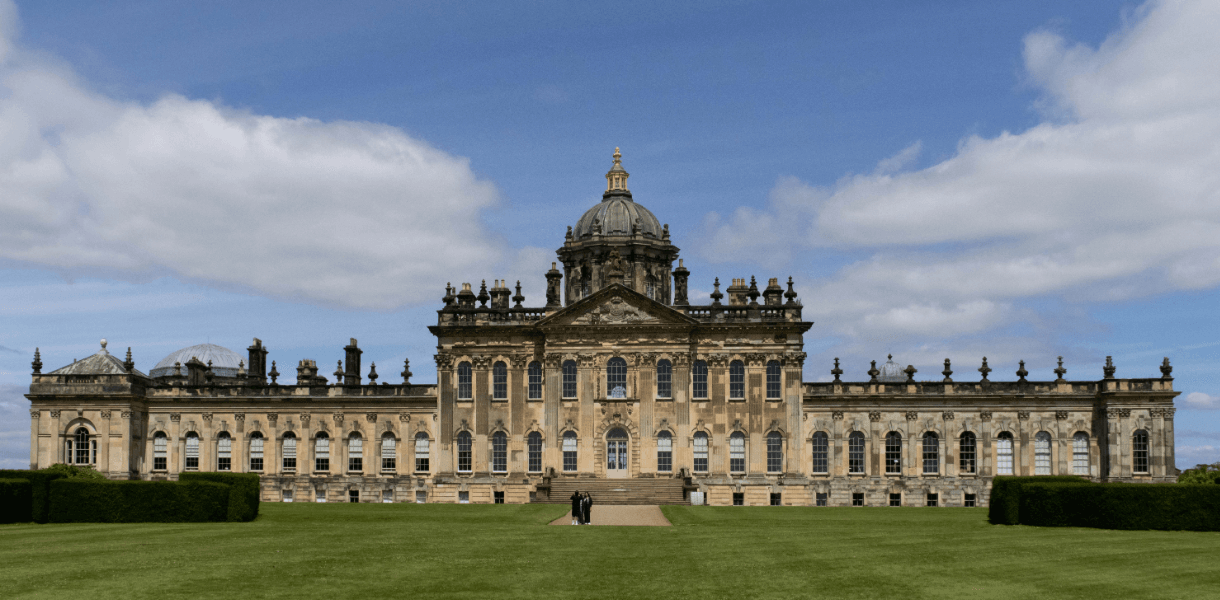
Castle Howard has the rare gift of looking dramatic before you have even reached the front door. Its dome, wings, avenues, temples and lakes create a sense of arrival that feels magnificently overproduced, in the best possible way.
This is one of England’s great Baroque houses, set in gardens and grounds that are almost as much the attraction as the building itself. It is ideal for visitors who want architecture with swagger, family history with layers, and a day out that can stretch happily from house tour to woodland walk to café stop.
- Location
Near York, North Yorkshire [map] - Best for
Baroque architecture, grand approaches and landscaped grounds - Don’t miss
The dome, Great Hall, lakeside views, temples and gardens - Good to combine with
York, the Howardian Hills or the North York Moors - Official website
Castle Howard
4. Burghley House, Lincolnshire
Burghley is Elizabethan England turned into stone, glass, symmetry and ambition. Built by William Cecil, Lord High Treasurer to Elizabeth I, it remains one of the grandest houses of the 16th century, with state rooms, collections, gardens and deer park all adding to the sense of scale.
It is also beautifully placed beside Stamford, one of England’s finest stone towns, which makes Burghley especially good for a full day out. You can have your fill of noble architecture, then wander into town and pretend you are merely browsing rather than mentally pricing up Georgian townhouses.
- Location
Stamford, Lincolnshire [map] - Best for
Elizabethan architecture, state rooms and a handsome estate setting - Don’t miss
The State Rooms, Heaven Room, Hell Staircase, gardens and deer park - Good to combine with
Stamford, Rutland Water or Peterborough Cathedral - Official website
Burghley House
5. Waddesdon Manor, Buckinghamshire
Waddesdon looks as if a French château has taken a wrong turn in the Chilterns and decided, quite sensibly, to stay. Built for Baron Ferdinand de Rothschild from the 1870s, it was made for collecting, entertaining and impressing people who were probably quite hard to impress.
The interiors are rich, detailed and full of exceptional art and decorative objects. The gardens, aviary, wine cellars and seasonal events make it one of the most polished stately home visits in England. It is grand, but not stiff. Lavish, but not dull.
- Location
Near Aylesbury, Buckinghamshire [map] - Best for
Art, interiors, gardens and Rothschild glamour - Don’t miss
The French-style architecture, formal gardens, art collections and aviary - Good to combine with
The Chilterns, Aylesbury or Oxfordshire villages - Official website
Waddesdon Manor
6. Hardwick Hall, Derbyshire
Hardwick Hall is one of the great statements of Elizabethan England. Built for Bess of Hardwick, one of the most formidable women of her age, it is famously glassy, upright and assertive. This is not a house that mutters. It announces.
The National Trust describes Hardwick as an Elizabethan country house created by Bess in the 1500s, and it remains remarkable for its architecture, textiles, tapestries and sense of personality. It is a house where ambition feels almost physical, standing in the landscape with its initials carved proudly into the skyline.
- Location
Near Chesterfield, Derbyshire [map] - Best for
Elizabethan architecture, textiles and powerful women in history - Don’t miss
The long gallery, tapestries, roofline and views across the estate - Good to combine with
Bolsover Castle, Chatsworth or the Peak District - Official website
Hardwick Hall
7. Harewood House, West Yorkshire
Harewood is one of the finest country houses in Yorkshire, with an elegant 18th-century setting, Robert Adam interiors, art, gardens and a landscape shaped by Capability Brown. It feels grand without becoming frozen in time, helped by a lively events programme and a strong sense that the house is still thinking about what a country house should be in the modern world.
It is particularly good for visitors who want the full country estate experience without drifting too far from a major city. Leeds is close by, which makes Harewood a very satisfying half-day or full-day addition to a Yorkshire city break.
- Location
Near Leeds, West Yorkshire [map] - Best for
Interiors, gardens, art and an easy Leeds day trip - Don’t miss
The State Floor, terraces, lakeside walks and gardens - Good to combine with
Leeds, Harrogate or Roundhay Park - Official website
Harewood House
8. Petworth House, West Sussex
Petworth is a dream for art lovers. The house contains one of the National Trust’s great art collections, while the surrounding deer park gives the estate a broad, painterly calm. It is fitting, really, because Turner knew the place well and painted its landscapes with the sort of affection most of us reserve for a favourite armchair.
The house is grand, but the atmosphere is more contemplative than showy. Come for the paintings, stay for the park, and leave wondering whether every country house should come with 700 acres of deer-dotted breathing space.
- Location
Petworth, West Sussex [map] - Best for
Art, Turner connections, sculpture and deer park walks - Don’t miss
The North Gallery, art collection, servants’ quarters and parkland - Good to combine with
Petworth town, the South Downs or Arundel - Official website
Petworth House and Park
9. Holkham Hall, Norfolk
Holkham is one of England’s great Palladian houses, set within a vast north Norfolk estate of parkland, farmland, woodland and coast. It feels spacious in every direction. The hall itself is grand and classical, while the wider estate adds gardens, deer, walking routes and access to one of England’s most beautiful coastal landscapes.
This is a stately home for people who like their grandeur with big skies. Visit the hall, explore the park, then drift towards Holkham Beach and Wells-next-the-Sea for the full Norfolk effect.
- Location
Near Wells-next-the-Sea, Norfolk [map] - Best for
Palladian architecture, parkland, coast and big Norfolk skies - Don’t miss
The Marble Hall, walled garden, lake and nearby Holkham Beach - Good to combine with
Wells-next-the-Sea, Burnham Market or the north Norfolk coast - Official website
Holkham Hall
10. Audley End House, Essex
Audley End is one of the best houses in England for understanding how a great estate actually worked. English Heritage presents it as a place where visitors can explore the great hall, state rooms, private apartments and service spaces, including areas that show the labour behind the luxury.
That makes it especially rewarding. You get the grand rooms, certainly, but also the below-stairs world of kitchens, coal, nurseries, stables and household systems. It is less “look at this chandelier” and more “look at the entire machine required to keep the chandelier life going”.
- Location
Near Saffron Walden, Essex [map] - Best for
Upstairs and downstairs history, family visits and estate life - Don’t miss
The service wing, gardens, stables and state rooms - Good to combine with
Saffron Walden, Cambridge or Constable Country - Official website
Audley End House and Gardens
11. Osborne, Isle of Wight
Osborne was Queen Victoria and Prince Albert’s seaside home, and it remains one of the most personal royal residences open to visitors in England. Rather than a palace of stiff ceremony, it feels like a family retreat, albeit one with sumptuous interiors, art collections, gardens, a Swiss Cottage and a private beach.
The Isle of Wight setting gives it extra charm. There is something wonderfully revealing about seeing royalty at leisure, especially when that leisure involves sea air, terraces, views across the Solent and enough decorative detail to keep several historians busy for a month.
- Location
East Cowes, Isle of Wight [map] - Best for
Royal history, seaside setting and Victorian family life - Don’t miss
The Durbar Room, Swiss Cottage, gardens and beach - Good to combine with
Cowes, Ryde, Carisbrooke Castle or an Isle of Wight weekend - Official website
Osborne
12. Highclere Castle, Hampshire
Highclere is now inseparable from Downton Abbey in the public imagination, but it is more than a screen location with good posture. It is a striking Victorian country house with a long family story, a famous silhouette and an Egyptian exhibition linked to the 5th Earl of Carnarvon and the discovery of Tutankhamun’s tomb.
For many visitors, the thrill is partly recognition. You arrive already knowing the outline. But the real pleasure is seeing how the house, rooms, grounds and history work beyond the television frame.
- Location
Near Newbury, Hampshire [map] - Best for
Downton Abbey fans, Victorian architecture and Egyptian history - Don’t miss
The State Rooms, saloon, bedrooms and Egyptian exhibition - Good to combine with
Winchester, Newbury or the North Wessex Downs - Official website
Highclere Castle
13. Longleat House, Wiltshire
Longleat is one of England’s finest Elizabethan houses, completed in 1580 after more than 20 years of construction. The house is still home to the Marquess and Marchioness of Bath, and its collections reflect centuries of family taste, acquisition and occasional eccentricity.
What makes Longleat unusual is the combination. You get a seriously important country house, ornate interiors, gardens and parkland, then the whole thing comes with a safari park attached, as if someone decided the only thing an Elizabethan mansion really needed was lions.
- Location
Near Warminster, Wiltshire [map] - Best for
Elizabethan architecture, family days out and a house-plus-safari visit - Don’t miss
The Great Hall, collections, grounds and safari park - Good to combine with
Frome, Bath, Stourhead or the Wiltshire countryside - Official website
Longleat House
14. Wilton House, Wiltshire
Wilton House has deep roots, aristocratic polish and a setting close to Salisbury that makes it easy to combine with one of England’s great cathedral cities. Built on the site of a 9th-century nunnery, it is home to the Earl and Countess of Pembroke and is known for its state rooms, art and Palladian character.
One practical note matters at the moment. Wilton House states that the house itself will be closed to visitors throughout 2026 because of internal refurbishment work to the heating system, so this is one to keep on the list but check carefully before planning a visit.
- Location
Near Salisbury, Wiltshire [map] - Best for
Palladian architecture, art and aristocratic history - Don’t miss
The state rooms and grounds when fully open - Good to combine with
Salisbury Cathedral, Stonehenge or Old Sarum - Official website
Wilton House
15. Blickling Estate, Norfolk
Blickling has one of the finest approaches of any Jacobean house in England. The red-brick mansion, ancient yew hedges, gardens and parkland come together with a storybook quality, though one with enough historical weight to stop it feeling merely pretty.
The estate is also strongly associated with Anne Boleyn, which gives it an extra historical charge. The National Trust describes Blickling as a breathtaking Jacobean mansion in the Bure Meadows, with gardens and historic parkland that make it a rewarding visit across the seasons. (National Trust)
Quick info box
- Location
Near Aylsham, Norfolk [map] - Best for
Jacobean architecture, gardens and Anne Boleyn associations - Don’t miss
The library, long gallery, gardens and estate walks - Good to combine with
Norwich, Aylsham, the Norfolk Broads or north Norfolk - Official website
Blickling Estate
16. Hatfield House, Hertfordshire
Hatfield House is a splendid Jacobean mansion with royal connections, formal gardens and the added advantage of being easy to reach from London. It stands in a landscape where Tudor and Jacobean history feel unusually close together.
The house is associated with Elizabeth I, who spent part of her childhood at Hatfield. Today, the combination of Old Palace remains, grand house, gardens and parkland makes it one of the best stately homes near London for a substantial historic day out.
Quick info box
- Location
Hatfield, Hertfordshire [map] - Best for
Tudor and Jacobean history, gardens and easy access from London - Don’t miss
The Marble Hall, Long Gallery, gardens and Old Palace setting - Good to combine with
St Albans, Hertford or a north London day trip - Official website
Hatfield House
17. Knole, Kent
Knole is vast, complicated and quietly astonishing. Part palace, part country house, part deer park, it has more the feel of a historic world than a single building. The National Trust describes it as a 600-year-old estate with courtyards, showrooms, Gatehouse Tower and acres of parkland.
It is especially good for visitors who like houses with atmosphere. Knole does not simply shine. It broods, stretches, creaks and reveals itself slowly. The Sackville family history, literary connections and sheer scale make it one of England’s most distinctive country houses.
- Location
Sevenoaks, Kent [map] - Best for
Historic atmosphere, courtyards, deer park and literary connections - Don’t miss
The showrooms, Gatehouse Tower, courtyards and parkland - Good to combine with
Sevenoaks, Ightham Mote or the Kent Downs - Official website
Knole
18. Stowe House and gardens, Buckinghamshire
Stowe is one of England’s great landscape set pieces. The gardens are famous for temples, lakes, monuments, views and carefully arranged symbolism, while Stowe House itself sits at the heart of the composition like the answer to a very expensive architectural riddle.
The National Trust cares for Stowe Gardens, while Stowe House is opened separately for tours by the Stowe House Preservation Trust. That means visitors should plan carefully, as seeing both house and gardens may involve separate arrangements.
- Location
Near Buckingham, Buckinghamshire [map] - Best for
Landscape gardens, temples, views and Georgian grandeur - Don’t miss
The garden monuments, lakeside walks and Stowe House tour - Good to combine with
Buckingham, Bletchley Park or Waddesdon Manor - Official website
Stowe House
Stowe Gardens
19. Brodsworth Hall, South Yorkshire
Brodsworth is one of the most atmospheric country house visits in England because it has not been polished into bland perfection. English Heritage describes it as a country house conserved as it was found after the death of its last owner in 1988, with restored gardens and family-friendly features.
That gives it a compelling “time stood still” quality. Rather than simply showing you how a house looked at its most glittering, Brodsworth lets you sense the long afterlife of a country estate, the fading, adapting and holding-on that happened after the high Victorian age had passed.
- Location
Near Doncaster, South Yorkshire [map] - Best for
Victorian atmosphere, preserved interiors and gardens - Don’t miss
The interiors, restored gardens and estate views - Good to combine with
Doncaster, Wentworth Woodhouse or Yorkshire Sculpture Park - Official website
Brodsworth Hall and Gardens
20. Apsley House, London
Apsley House is the odd one out here, because it is a grand London townhouse rather than a country estate. But it deserves its place because it is one of England’s great aristocratic interiors, sitting proudly at Hyde Park Corner and packed with the story of the Duke of Wellington.
English Heritage describes Apsley House as the home of the first Duke of Wellington, with dazzling interiors, treasures, art collections and the Waterloo Gallery. It is compact compared with Chatsworth or Blenheim, but historically rich and wonderfully placed for a London heritage day.
- Location
Hyde Park Corner, London [map] - Best for
Wellington history, art collections and a grand London interior - Don’t miss
The Waterloo Gallery, Dining Room and art collection - Good to combine with
Wellington Arch, Hyde Park, Buckingham Palace or Mayfair - Official website
Apsley House
How to choose the right stately home
If you want the full “great English house” experience, start with Chatsworth, Blenheim, Castle Howard or Burghley. These are the big hitters, the places where scale, landscape and architecture all arrive together wearing their best clothes.
If gardens matter most, look at Stowe, Waddesdon, Petworth, Holkham and Chatsworth. If interiors and collections are the draw, choose Waddesdon, Petworth, Harewood, Apsley House or Longleat.
For royal stories, Osborne and Hatfield House are especially strong. For atmosphere, choose Knole, Blickling, Brodsworth or Hardwick Hall. These are places where the walls seem to have kept more of the human oddness of history.
Final verdict
England’s best stately homes are not just grand buildings with nice lawns. They are places where national history becomes domestic, though domestic on a scale involving libraries, terraces, deer parks and rooms no one could possibly dust without a staffing plan.
The best approach is not to try to see them all at once. Pick one that suits the trip you actually want. Choose Chatsworth for a classic Peak District showstopper, Blenheim for palace-scale drama, Castle Howard for theatrical beauty, Waddesdon for art and polish, Hardwick for Elizabethan force, Osborne for royal intimacy, or Knole for deep, slightly mysterious atmosphere.
However you choose, leave time for the grounds. The house may have the portraits, but the parkland often has the soul.