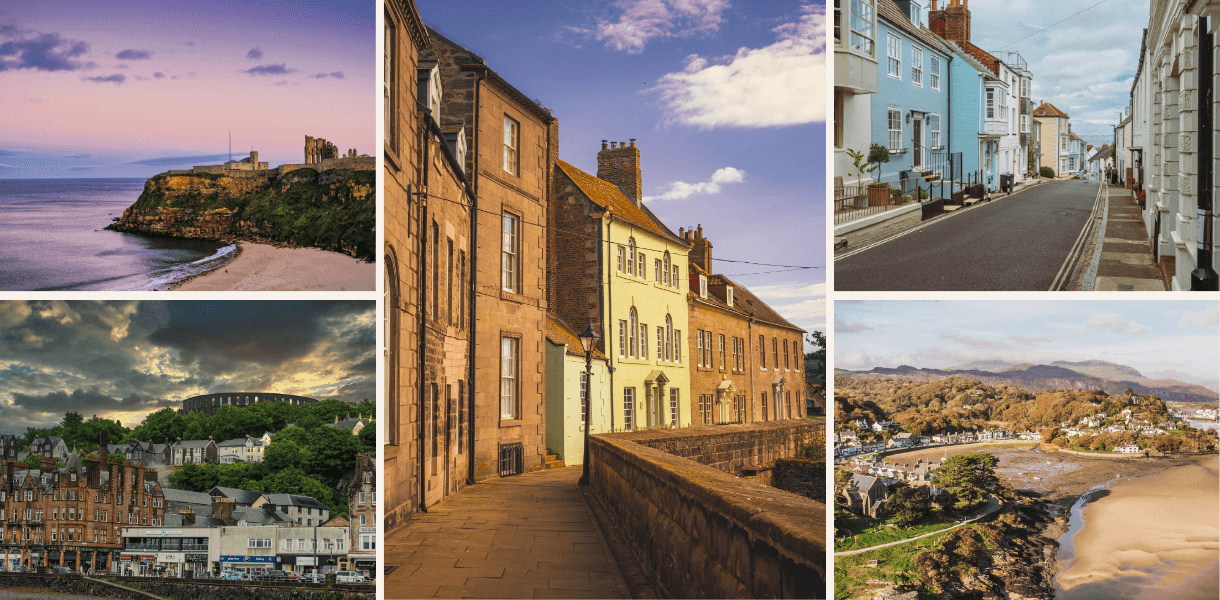

Planning a UK city break is much easier when you start with the right shape. This guide explains how to choose a city that fits your trip, pick a convenient base, plan a relaxed two-night itinerary, book the essentials and leave enough room for wandering, good food and bad-weather backup plans. Whether you are visiting York, Bath, Edinburgh, Liverpool, Cardiff, Belfast, Bristol, Newcastle or one of Britain’s smaller historic cities, these practical city break planning tips will help you build a short UK escape that feels enjoyable rather than overstuffed.
Quick takeaways
Best trip length
Two nights is ideal for most UK city breaks.
Best planning rule
Choose one main focus for the trip, then build everything around it.
Best base
Stay central or near a good transport link unless you know the city well.
Best itinerary shape
Plan one headline experience per day, plus one relaxed meal and one proper wander.
Best money saver
Travel outside peak arrival times and compare hotel prices by neighbourhood.
Best mistake to avoid
Trying to do every museum, landmark, market, restaurant, viewpoint and rooftop bar in one heroic weekend.
The big idea
Planning a UK city break should be one of life’s simpler pleasures. Pick a city, book somewhere comfortable, find a few excellent things to do, leave room for wandering, and resist the urge to treat the weekend like a military campaign involving pastries.
And yet somehow it can become oddly complicated. There are trains to compare, hotel prices doing mysterious little dances, restaurants that are either fully booked or suspiciously empty, and a list of attractions that makes every city look as though it requires the stamina of a Victorian explorer.
The good news is that a brilliant UK city break does not need to be crammed. In fact, it is usually better when it is not. The best city breaks have shape rather than weight. They give you a reason to go, a sensible base, a few memorable experiences, and enough breathing space to enjoy the place rather than simply process it.
Whether you are heading for York, Bath, Edinburgh, Liverpool, Belfast, Cardiff, Newcastle, Cambridge, Glasgow, Bristol or somewhere smaller and quietly excellent, the same rule applies. Make the trip easy first. The charm can then get on with its work.
Start with the reason for going
The easiest city breaks begin with a simple question. Why this city, and why now?
That sounds obvious, but it makes planning much easier. A city break built around a clear reason has a natural shape. You might be going to Bath for Georgian streets and spa-town elegance, Liverpool for music and waterfront energy, York for medieval lanes and Roman echoes, or Glasgow for architecture, galleries and excellent nights out.
Once you know the reason, the rest becomes less frantic. You do not have to see everything. You just have to choose the things that support the trip you actually want.
A good city break theme might be:
- A historic weekend
- A food and drink escape
- A culture-heavy break
- A romantic weekend
- A family-friendly city stay
- A no-car rail break
- A Christmas market trip
- A summer waterfront weekend
- A rainy-day museums and cafés escape
This gives the trip a centre of gravity. Without one, the itinerary starts collecting random attractions like a coat collects dog hair.
Choose the right city for the time you have
Not every city works in the same way. Some are wonderfully compact and easy to enjoy in a weekend. Others spread themselves out and reward a little more time.
For a first-time, low-stress UK city break, choose somewhere where the station, main sights, food areas and evening options sit reasonably close together. York, Bath, Cambridge, Oxford, Chester and Durham are especially good for this. You can arrive by train, walk into the centre, and feel as though the city has politely arranged itself around your weekend.
Larger cities such as London, Edinburgh, Manchester, Birmingham, Glasgow, Liverpool, Bristol, Cardiff and Belfast offer more variety, but they need a slightly firmer plan. Choose an area to stay in and try not to zigzag across the city all day. That is how you spend half your break looking at bus stops.
For a two-night break, a compact city often feels more satisfying. For a three-night break, a larger city can really open up.
Pick your base carefully
Where you stay can make or break a city break. A hotel that is cheaper but 35 minutes from everything may not be a bargain if it turns every outing into a transport exercise.
For most UK city breaks, aim for one of three types of base.
Central and walkable
Best for first-time visitors, short stays, romantic weekends and trips where you want minimum fuss.
Near the station
Best for rail breaks, late arrivals, early departures and cities where the station is close to the centre.
In a characterful neighbourhood
Best for repeat visits, food-focused breaks and larger cities where one area can give the trip a strong local feel.
The right base does not have to be the fanciest. It just needs to make the weekend easier. A simple, comfortable hotel in the right place often beats a grander one that requires taxis, buses and a small daily negotiation with Google Maps.
Keep the itinerary light
A good city break itinerary should feel planned, not packed.
A simple structure works beautifully.
Arrival day
Check in, take an easy orientation walk, have a good dinner, and do one atmospheric thing in the evening.
Full day
Start with the headline attraction or main experience, leave the afternoon flexible, then book something enjoyable for the evening.
Departure day
Have a slow breakfast, visit one smaller sight, take a final wander, and leave without feeling mugged by the timetable.
The trick is to plan around energy, not just time. A cathedral, castle, museum or gallery may only take two hours on paper, but you still need time to get there, absorb it, have lunch, get briefly lost, stare into a shop window, and sit down somewhere with coffee and a bun of regional importance.
Plan one main experience per day
One of the easiest ways to improve a city break is to choose just one main experience each day.
That might be:
- York Minster and the medieval streets
- The Roman Baths and Georgian Bath
- Edinburgh Castle and the Royal Mile
- Liverpool’s waterfront and music heritage
- Cardiff Castle and the city arcades
- Durham Cathedral and the riverside walk
- Belfast’s Titanic Quarter and Cathedral Quarter
- Oxford’s colleges and covered market
- Newcastle’s Quayside and Grainger Town
- Bristol’s harbourside and Clifton
Once that main experience is fixed, add nearby extras rather than dragging yourself across the city. This keeps the day coherent. It also gives the city a chance to work its magic in the gaps, which is often where the best bits happen.
Book the things that need booking
Some parts of a city break benefit from spontaneity. Others do not.
Book ahead for popular restaurants, major attractions with timed entry, theatre tickets, special exhibitions, tours, spa sessions and anything seasonal. This is especially important in Edinburgh, Bath, York, Oxford, London and anywhere hosting a major event.
You do not need to book every minute. That way lies clipboard tourism. But a few sensible reservations can remove the dullest uncertainty from the trip.
A good rule is to book:
- Accommodation
- Travel
- One key attraction or tour
- One special meal
- Any evening event you really care about
Then leave the rest loose.
Use meals to shape the day
Food is one of the easiest ways to give a city break rhythm. A good breakfast sets the tone. A proper lunch can rescue a rainy afternoon. A booked dinner gives the evening a pleasing sense of occasion.
Instead of treating meals as afterthoughts, use them as anchors.
Plan breakfast near your hotel or first stop. Choose lunch near the day’s main attraction. Book dinner in an area where you would like to spend the evening. This avoids the familiar city-break problem of becoming hungry in a busy street while reading 94 restaurant reviews and slowly losing faith in humanity.
Markets, food halls, old pubs, independent cafés and neighbourhood restaurants are often more memorable than the most obvious places around the main square. In many UK cities, the best meal is not necessarily the grand one. It is the one tucked down a side street where everyone seems to know exactly what they are doing.
Build in a proper wander
Every good UK city break needs at least one unstructured wander.
This is not wasted time. It is the bit where you actually meet the city. You notice doorways, river paths, old signs, courtyards, little bookshops, tiled pubs, steep lanes, quiet churches, market stalls, bridges and views that do not appear in the top ten lists.
Some of the best city-break wandering areas include:
- The Shambles and city walls in York
- The Georgian crescents and canal paths of Bath
- The Royal Mile closes and New Town streets in Edinburgh
- The arcades and waterfront in Cardiff
- The Cathedral Quarter in Belfast
- The Quayside and Ouseburn in Newcastle
- The harbourside and Clifton in Bristol
- The Lanes and seafront in Brighton
- The colleges and meadows of Cambridge
- The riverside and peninsula in Durham
A wander gives the trip texture. It also makes room for the accidental discoveries that often become the thing you remember most.
Think about weather without letting it rule the trip
British city breaks come with weather. This should not surprise anyone, although it still seems to surprise us collectively every year.
The key is to plan for flexibility. Have one good indoor option in reserve for each day, especially outside high summer. Museums, galleries, covered markets, historic houses, cathedrals, libraries, food halls and old pubs are your friends.
A rainy day in a UK city is not a failed day. It can be excellent if you have the right plan. A wet afternoon in a museum followed by a cosy pub dinner may not be the glossy-brochure version of travel, but it is often the real thing.
Pack comfortable shoes, a compact umbrella, a light waterproof and a willingness to adapt. The shoes matter most. A city break is basically a walking holiday with better coffee.
Do not ignore smaller cities
The UK’s smaller cities are often superb for easy breaks. They are usually walkable, characterful and less exhausting than the biggest destinations.
Durham, Wells, Ely, Lincoln, Chester, Winchester, Lancaster, St Albans, Hereford, Inverness and Stirling can all make rewarding short breaks. They may not have the sheer weight of attractions of London or Edinburgh, but they often deliver a clearer, calmer experience.
Smaller cities are especially good for:
- Historic weekends
- Rail-based breaks
- Slow travel
- First city breaks with children
- Couples’ weekends
- Short-notice escapes
- One or two-night stays
They also tend to make the logistics easier. Less time crossing town. More time enjoying the place. This is a deeply underrated travel equation.
Match the city to your travel style
The best UK city break is not always the most famous one. It is the one that suits the kind of trip you want.
For history lovers
York, Bath, Oxford, Cambridge, Durham, Chester, Lincoln, Edinburgh
For food and drink
Bristol, Manchester, Glasgow, Leeds, Birmingham, Cardiff, Belfast, Newcastle
For culture and galleries
London, Liverpool, Glasgow, Edinburgh, Manchester, Cardiff, Dundee
For waterside atmosphere
Liverpool, Bristol, Newcastle, Cardiff, Belfast, Dundee, Inverness
For romance
Bath, York, Edinburgh, Cambridge, Oxford, Durham, Winchester
For families
London, York, Liverpool, Cardiff, Bristol, Manchester, Newcastle
For no-car breaks
York, Bath, Edinburgh, Liverpool, Oxford, Cambridge, Durham, Cardiff, Manchester
For Christmas atmosphere
Bath, York, Edinburgh, Chester, Winchester, Lincoln, London
Choosing by mood is often more useful than choosing by fame. A city that fits the weekend will always beat a city you feel obliged to tick off.
Use public transport where it makes sense
Many UK cities are ideal for train-based breaks. Arriving by rail means no parking stress, no city-centre driving, and no grim little moment where you realise the hotel car park costs roughly the same as lunch.
For compact cities, the train is often the easiest choice. For larger cities, public transport can also work well once you are there, especially if you choose your base sensibly.
Driving can still make sense if you are combining a city with countryside, coast or nearby villages. A weekend in Norwich with the Norfolk coast, Inverness with Loch Ness, Cardiff with the Vale of Glamorgan, or Newcastle with Northumberland becomes easier with a car. But for the city itself, leave it parked and walk where possible.
Leave space for one nearby extra
A city break becomes even better when you add one nearby extra, but only one.
This might be a riverside walk, a coast trip, a castle, a garden, a viewpoint, a village, or a short train ride. The key is not to overdo it. A nearby extra should enrich the break, not turn it into a regional endurance event.
Good examples include:
- Bath with Prior Park or Bradford-on-Avon
- York with Castle Howard or the North York Moors
- Edinburgh with Leith or South Queensferry
- Cardiff with Penarth or St Fagans
- Newcastle with Tynemouth or Hadrian’s Wall
- Bristol with Clifton and Leigh Woods
- Oxford with Blenheim Palace
- Cambridge with Grantchester
- Belfast with the Causeway Coast on a longer break
- Durham with Beamish or the coast
The best add-ons feel natural. They give you a different angle on the city without stealing the weekend.
Keep evenings simple but special
Evenings are where a city break can really come alive. The mistake is to leave them completely unplanned, then end up tired, hungry and wandering around in the drizzle looking for somewhere that will take you.
You do not need a grand plan. Just choose a neighbourhood, book dinner if needed, and have one easy idea for after.
That might be a theatre show, a riverside walk, a cosy pub, live music, cocktails, a ghost walk, a cinema, a comedy club, or simply a slow stroll through the lit-up centre. Cities change after dark. Streets become softer, buildings look more dramatic, and everyone appears to be heading somewhere more interesting than you. Follow that feeling, within reason.
A simple city break planning checklist
Before booking
- Choose the city
- Decide the main purpose of the trip
- Check travel time and costs
- Compare accommodation by area, not just price
- Check whether major events affect hotel prices
Once booked
- Reserve one key attraction or tour
- Book one special meal
- Choose a loose walking route
- Save a rainy-day option
- Check opening hours for must-see places
A few days before
- Download tickets
- Check train times or parking details
- Pack comfortable shoes
- Save restaurant and café options
- Check the weather without becoming emotionally involved
A simple two-night UK city break itinerary
Friday afternoon or evening
Arrive and check in. Take a short orientation walk around the centre, waterfront or old town. Keep dinner easy, preferably somewhere close to your hotel or in a lively neighbourhood. Finish with a drink, a gentle stroll, or an early night if the journey has done its worst.
Saturday morning
Start with the city’s headline experience. This is when energy is highest and queues are usually easier to manage if you have booked ahead. Visit the cathedral, castle, museum, gallery, historic quarter or main cultural attraction.
Saturday afternoon
Slow the pace. Have lunch somewhere characterful, then wander through a different part of the city. Add a smaller sight, market, riverside walk or viewpoint. Keep the late afternoon loose.
Saturday evening
Book dinner or plan a relaxed food area. Add theatre, live music, a walk through the old centre, or a proper pub with some age and atmosphere.
Sunday morning
Have a slower start. Visit one final place that does not require too much effort. A gallery, garden, independent shopping street, city wall walk or riverside route works well.
Sunday afternoon
Leave time for lunch, a final coffee and a calm departure. The ideal city break ends with you wanting to come back, not quietly vowing never to look at another landmark again.
Common city break mistakes to avoid
The first mistake is overloading the itinerary. Three major attractions in one day may look efficient. It rarely feels enjoyable.
The second is booking accommodation too far out. Saving money is good. Spending the weekend commuting into the place you came to see is less good.
The third is ignoring opening hours. Smaller museums, historic houses, markets and restaurants may not operate every day, especially outside peak season.
The fourth is not booking dinner on a Saturday night. This is how perfectly nice people end up eating crisps in a hotel room and calling it an adventure.
The fifth is forgetting that cities are tiring. Noise, walking, crowds, stairs, weather and choice all add up. Build in pauses. Sit down. Look around. Have the cake.
City break info box
Getting here
- The train is often the easiest choice for compact cities such as York, Bath, Durham, Oxford, Cambridge and Chester.
- For larger cities, arrive by rail where possible, then use walking routes, buses, trams, underground services or local trains.
- Driving works best when your city break includes countryside, coast, villages or nearby attractions outside the centre.
- Check parking before booking accommodation, especially in historic cities with tight streets and limited hotel parking.
Where to stay
- First-time visitors should usually stay central or near the main station.
- Food-focused trips can work well in a lively neighbourhood with good evening options.
- Romantic weekends benefit from walkable locations where you can go out without transport fuss.
- Families may prefer aparthotels, larger rooms or quieter edges of the centre.
- Repeat visitors can often save money by staying slightly beyond the main visitor core, provided transport links are easy.
Where to eat
- Book one special meal in advance, especially for Saturday night.
- Use markets, food halls and independent cafés for flexible lunches.
- Choose dinner areas that also offer pubs, bars, theatres, waterfronts or evening walks nearby.
- Avoid leaving every meal to chance in peak season, during festivals or around Christmas markets.
What to do
- Choose one main experience per day.
- Add smaller nearby sights rather than crossing the city repeatedly.
- Include one relaxed wander through the old town, waterfront, arcades, lanes, riverside or neighbourhood streets.
- Keep one indoor option in reserve for bad weather.
- Build the trip around mood as much as landmarks.
Nearby gems
- Bath pairs well with Bradford-on-Avon, Prior Park or the Cotswold edge.
- York pairs well with Castle Howard, Harrogate or the North York Moors.
- Cardiff pairs well with Penarth, St Fagans or the Vale of Glamorgan.
- Newcastle pairs well with Tynemouth, Durham or Hadrian’s Wall.
- Bristol pairs well with Clifton, Leigh Woods or Bath.
- Cambridge pairs well with Grantchester, Ely or the Cambridgeshire countryside.
Best time to visit
- Spring is excellent for garden cities, riverside walks and lighter crowds.
- Summer works well for waterfront cities, outdoor dining, festivals and evening strolls.
- Autumn is ideal for historic cities, museums, cosy pubs and golden streets.
- Winter suits Christmas markets, galleries, theatre trips and atmospheric old centres.
- Midweek breaks can offer better value and a calmer feel than Friday-to-Sunday weekends.
Final verdict
Planning a UK city break is easiest when you stop trying to do everything. Choose a city that suits the mood of the trip, stay somewhere convenient, book the essentials, and give each day one clear highlight. Then leave enough space for wandering, eating, sheltering from the weather, and discovering the little details that make British cities so rewarding.
The best city breaks are not measured by how many sights you manage to tick off. They are measured by whether you come home with a sense of the place. A street you liked. A pub you would happily return to. A view from a bridge. A museum that surprised you. A breakfast that had no right to be that good.
That is the sweet spot. Planned enough to be easy. Loose enough to feel like a break.