There is something deeply satisfying about leaving the car at home and letting Britain do what it has always done rather well, which is carry you into the middle of somewhere interesting by train, ferry, tram or bus, then leave you to get on with the important business of wandering about, eating things and admiring old stones. These are 10 of the best no car trips in the UK for people who would rather look out of the window than argue with a sat nav.
Quick takeaways
- Best for classic city ease: York, Bath, Edinburgh
- Best for sea air without driving stress: St Ives, Brighton, Isle of Wight
- Best for scenery on the journey itself: St Ives, Windermere, Inverness
- Best for first-time UK visitors: Bath, York, Cambridge, Edinburgh
- Best for adding buses, boats or ferries: Isle of Wight, Windermere, Inverness and Loch Ness
Why no car trips can be some of the best trips
There is a particular sort of freedom in a no car break that is hard to appreciate until you do one properly. You are not peering at parking signs, not wondering whether the hotel really means it has parking, and not trying to enjoy a pretty village while also thinking about where you left the vehicle. You arrive, you walk out of a station or off a ferry, and the place begins at once.
The UK is especially good for this sort of thing. Not everywhere, obviously. There are still parts of Britain where public transport seems to function as a rumour rather than a service. But there are also plenty of cities, seaside towns, islands and scenic bases where travelling without a car feels not like a compromise but like the smarter choice. These are the trips where the journey can be part of the fun, the centre is close enough to walk, and the whole thing feels more holiday-like simply because you are not the one steering.
1. York
York is almost embarrassingly good at being a no car trip. You arrive by train, walk into a city that seems to have been arranged by a team of medieval set designers and bakery enthusiasts, and within minutes you are in the thick of old streets, city walls, handsome buildings and the sort of atmosphere that makes people say things like “we must come back at Christmas”.
It is one of the easiest city breaks in Britain to do without a car because the station is close to the centre and the main sights cluster together in a way that feels considerate. The Minster, the Shambles, the walls, the river and a very decent number of pubs are all within easy reach on foot. You can spend a whole weekend here drifting happily from one old thing to another with breaks for tea, cake and vaguely unnecessary purchases from independent shops.
Know before you go
How to get there
- Direct trains from London, Edinburgh, Leeds, Manchester and Newcastle
- York station is a short walk from the historic centre
Getting around without a car
- Best explored on foot
- Local buses available for outer areas and nearby attractions
- Taxis easy to find if needed
Best for
- History lovers
- First-time visitors to England
- Easy weekend breaks
Time needed
- 2 to 3 days works very well
Don’t miss
- York Minster
- Walking the city walls
- The Shambles early or late in the day
2. Bath
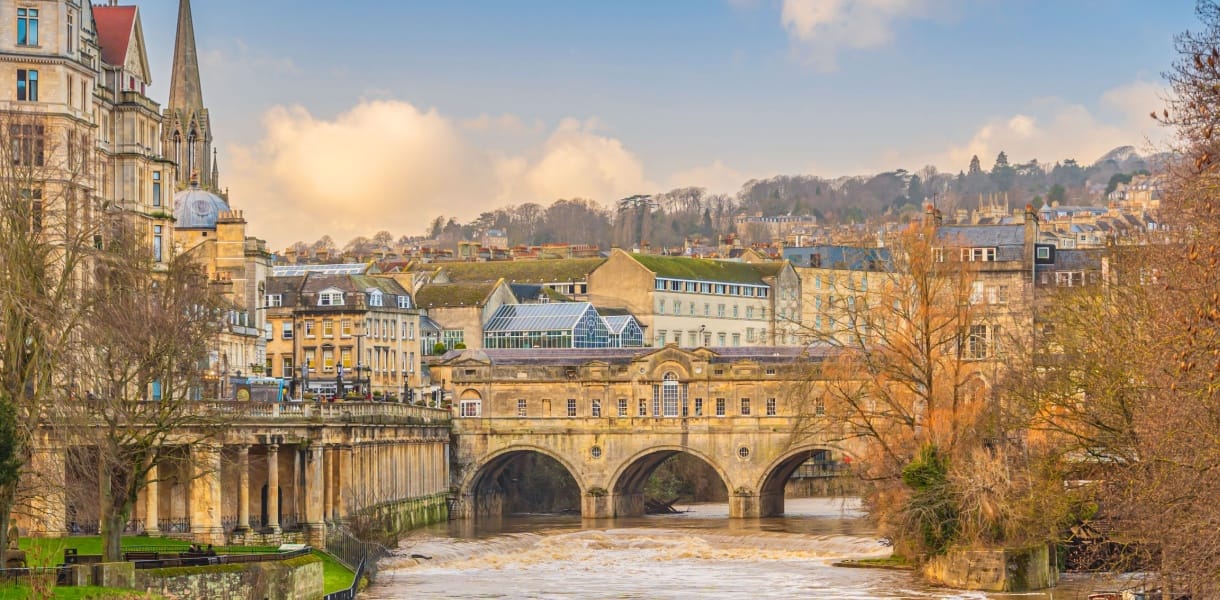
Bath manages the neat trick of feeling grand without being difficult. You arrive at Bath Spa station and almost immediately find yourself in a city of honey-coloured stone, crescents, terraces and elegant streets that appear to have been built for people who expected to be admired while walking slowly.
As a no car break, Bath is excellent because it gives you everything close together. The Roman Baths, Bath Abbey, the Royal Crescent, the Circus, the river and the city centre shops are all walkable, and the place has enough cafés, restaurants and general visual polish to keep things pleasant between major sights. It is one of those cities where simply being there feels like an activity in itself, which is always useful.
Know before you go
How to get there
- Direct trains from London Paddington, Bristol and South Wales
- Bath Spa station is right in the city centre
Getting around without a car
- Very walkable central area
- Local buses for outskirts and nearby villages
- Good for a station-to-hotel-to-sightseeing sort of trip
Best for
- Elegant city breaks
- Couples
- Overseas visitors wanting an easy classic stop
Time needed
- 2 days for the city
- 3 days if you want a slower pace
Don’t miss
- Roman Baths
- Royal Crescent
- An evening walk when the stone glows in the light and everyone looks faintly pleased with life
3. Edinburgh
Edinburgh makes arriving by train feel almost theatrical. You come into Waverley and emerge into a city that seems to have been designed by someone who found ordinary skylines a bit uninspiring. Castle above, dramatic streets around, ancient closes, grand terraces, hilltop viewpoints and enough history to fill several lifetimes of tour guiding.
It is ideal without a car because the centre is made for walking, though occasionally with a little puffing uphill. The Old Town and New Town sit close together, the main museums and galleries are accessible on foot, and buses and trams take care of the bits you do not fancy walking to. There are few better examples in Britain of a city where public transport and geography work together in your favour.
Know before you go
How to get there
- Direct trains from London, York, Newcastle, Glasgow and Aberdeen
- Edinburgh Waverley sits right in the city centre
Getting around without a car
- Walk the centre
- Use buses and trams for longer hops
- Airport easy to connect to by tram
Best for
- Big atmosphere
- History and architecture
- A car-free city break with proper drama
Time needed
- 2 to 4 days
Don’t miss
- Edinburgh Castle
- A walk down the Royal Mile
- Calton Hill or Arthur’s Seat for the big views
4. St Ives
The journey to St Ives is part of the point. The branch line into town has the kind of sea views that make people stop mid-conversation and turn into temporary window worshippers. Then you arrive in one of Cornwall’s prettiest places, where beaches, harbour views, galleries and steep little streets all compete for your attention.
Without a car, St Ives makes particular sense because driving and parking here can be a trial, while arriving by train feels positively smug. Once you are in town, most of the joy is in walking. You can potter from beach to café to gallery to harbour wall and never feel the need for anything more complicated than comfortable shoes. For a seaside no car break, it is hard to beat.
Know before you go
How to get there
- Mainline rail to St Erth, then branch line to St Ives
- Most visitors connect via Cornwall rail services
Getting around without a car
- Central St Ives is walkable
- Local buses for nearby parts of west Cornwall
- Good for short stays based mainly in town
Best for
- Seaside weekends
- Scenic train lovers
- Art, coast and slow wandering
Time needed
- 2 to 3 days
Don’t miss
- Porthminster Beach
- Tate St Ives
- The train ride in itself, which is doing a great deal of work here
5. Isle of Wight
A no car trip to the Isle of Wight has built-in charm simply because it involves a ferry. There is something pleasantly old-school about boarding as a foot passenger and feeling that the journey has properly begun. It gives the whole break a little more ceremony and a little less motorway.
Once you are there, the island is surprisingly workable without a car if you choose your base sensibly. Ryde, Shanklin and other main towns connect well, and buses can get you to beaches, coastal walks and sights across the island. The result is a break that feels distinct from the mainland and a little more leisurely by design, which is exactly what many people want from a holiday.
Know before you go
How to get there
- Train to Portsmouth, Southampton or Lymington, then ferry or hovercraft connection depending on route
- Foot passenger travel is straightforward on main crossings
Getting around without a car
- Local buses cover much of the island
- Island rail useful on the east side
- Best if you choose an accessible base town
Best for
- Seaside nostalgia
- Family breaks
- Coastal scenery and walking
Time needed
- 3 to 4 days
Don’t miss
- Ryde or Shanklin as easy bases
- Coastal views around the western side
- The ferry crossing, because it does wonders for your holiday mood
6. Windermere and Bowness
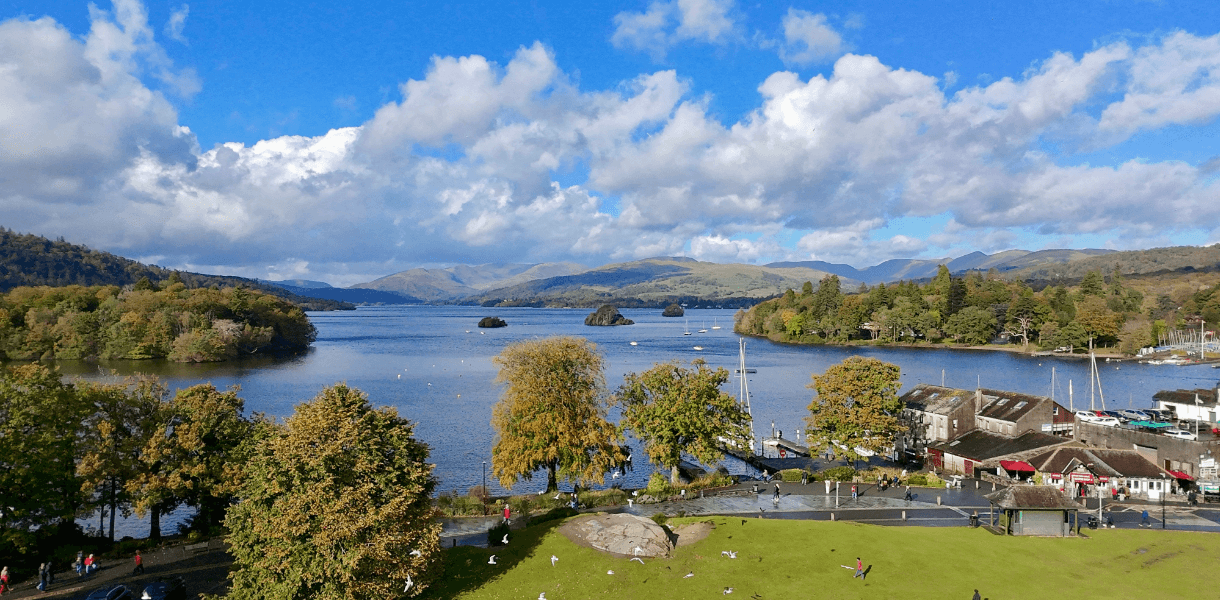
The Lake District is often spoken of as though you need a car, a boot full of waterproofs and the confidence to reverse on narrow roads while being watched by sheep. Happily, this is not entirely true. Windermere is one of the best no car bases in the country because the train gets you into the national park and buses and boats do much of the rest.
Stay around Windermere or Bowness and you have a very workable mix of lake views, local transport, easy walks and proper scenery. It is a good choice for people who want a countryside break without immediately turning it into an expedition. You can stroll by the water, take a lake cruise, use buses to reach other villages, and generally enjoy the Lake District without testing your nerves in a car park.
Know before you go
How to get there
- Rail connections via Oxenholme from the West Coast Main Line
- Windermere station links into the local area by bus and taxi
Getting around without a car
- Good local bus network in the central Lakes
- Lake cruises help connect key spots
- Walkable around Bowness and lakeside areas
Best for
- Scenic short breaks
- Soft adventure
- Lake District first-timers without a car
Time needed
- 2 to 4 days
Don’t miss
- A boat trip on Windermere
- Bowness lakeside
- Orrest Head if you want a rewarding view without heroic effort
7. Durham
Durham is a wonderfully efficient sort of place. By this I mean it gives you an immense amount of grandeur for relatively little travel fuss. You arrive by train and almost immediately see cathedral, castle and river all arranged in one of the best urban approaches in England, as if the city knows exactly what it is doing and sees no reason to be modest about it.
For a no car trip, Durham is ideal for a night or two. It is compact, handsome and full of atmosphere, with cobbled streets, historic buildings and riverside walks that make even a short break feel rich in incident. It is less showy than York and less grandly polished than Bath, perhaps, but there is a quiet confidence to it that people tend to find very winning.
Know before you go
How to get there
- Direct trains from London, Newcastle, York and Edinburgh
- Station within walking distance of the centre
Getting around without a car
- Best explored on foot
- Some hills and slopes to factor in
- Local buses for wider County Durham links
Best for
- Short heritage breaks
- Cathedral city lovers
- A compact and atmospheric getaway
Time needed
- 1 to 2 days
- 3 if pairing with nearby outings
Don’t miss
- Durham Cathedral
- River Wear walks
- The classic view back towards cathedral and castle
8. Brighton
Brighton is a seaside city with the energy of a place that has long since decided plain respectability is overrated. It is lively, colourful, slightly theatrical and very good at helping people have a nice time without overcomplicating things. Which, for a no car trip, is exactly the right sort of attitude.
The rail journey from London is easy, the station is central, and from there you can walk to the sea, the Lanes, the Pavilion and more cafés, bars and shops than any sensible person strictly needs. It works brilliantly as a no car break because the fun is in walking, browsing, people-watching and drifting between different parts of the city. You do not need a car. You might not even want a plan.
Know before you go
How to get there
- Direct trains from London, Gatwick, Bedford and the south coast
- Brighton station is a short walk from the seafront and centre
Getting around without a car
- Walkable central area
- Buses for longer stretches or nearby suburbs
- Good for station-to-seafront weekends
Best for
- Easy seaside city breaks
- Food, shopping and nightlife
- Friends’ weekends away
Time needed
- 1 to 3 days
Don’t miss
- The Royal Pavilion
- The Lanes
- A windy promenade walk that makes you feel extremely alive
9. Cambridge
Cambridge is a city that rewards unhurried movement. Much of the pleasure here lies not in racing between major sights but in wandering past college courts, slipping into museums, lingering by the river and generally pretending, at least for a few hours, that one’s life is conducted at a more thoughtful pace.
It is very easy as a no car trip because you can arrive by train and then use walking, cycling or short local connections to do the rest. The historic core is compact enough to explore slowly, and the city suits people who enjoy atmosphere as much as attractions. It is clever-looking, green in places, graceful by the river and extremely good at making a modest weekend feel cultured.
Know before you go
How to get there
- Direct trains from London, Stansted Airport, Birmingham and other major routes via connections
- Cambridge station is a little outside the historic core but easily linked by foot, bus or taxi
Getting around without a car
- Walk central Cambridge
- Hire a bike if you feel ambitious
- Local buses useful between station and centre
Best for
- Culture and gentle city wandering
- Overseas visitors
- Spring and summer breaks
Time needed
- 2 to 3 days
Don’t miss
- King’s College Chapel views
- Punting on the Cam
- The Backs, which are almost offensively picturesque
10. Inverness and Loch Ness
For people who want a no car trip with a little more scale to it, Inverness and Loch Ness make a strong case. This is a break where you can arrive by rail, base yourself in a compact Highland city, and still get a satisfying sense of big landscapes, dark water, ruined castles and weather that likes to keep its options open.
The trick here is not to try to do everything independently by remote bus timetable alone. Use Inverness as your anchor, enjoy the river and city centre on foot, then add organised trips, local buses or boat excursions for Loch Ness and surrounding sights. Done that way, it becomes a very enjoyable no car adventure rather than a transport puzzle with scenery attached.
Know before you go
How to get there
- Direct rail links from Edinburgh and other Scottish cities, with sleeper and connecting options from farther south
- Inverness is also well connected by coach
Getting around without a car
- Walk Inverness centre
- Use tours, buses and boat trips for Loch Ness area
- Best with a city base and selective outings
Best for
- Bigger landscape drama
- Highland first-timers
- Scenic escapes without driving
Time needed
- 3 to 4 days
Don’t miss
- Loch Ness boat trip
- Urquhart Castle area
- An evening by the River Ness when the light is doing the Highlands thing properly
Final thoughts
The best no car trips are not merely the ones you can do without driving. They are the ones that actually feel better for it. The places on this list all have that quality. They spare you the usual grumbles of traffic, parking and route planning, and replace them with station arrivals, ferry crossings, scenic branch lines and city centres that begin more or less at once.
There is also a psychological benefit to leaving the car behind. Travel feels more like travel. The journey has edges to it. You sit by the window, watch the country rearrange itself outside, and arrive a little less frazzled than usual. Which is really what a break ought to do.
Need to know
What makes a great no car trip
- Easy arrival by train, ferry or coach
- A walkable base or simple local transport
- Plenty to do without long, awkward transfers
- A journey that feels part of the break rather than a trial to overcome
Who these trips suit best
- Couples wanting an easy weekend away
- Overseas visitors using rail-based itineraries
- Solo travellers who want simplicity
- Anyone who likes scenery but not service stations