
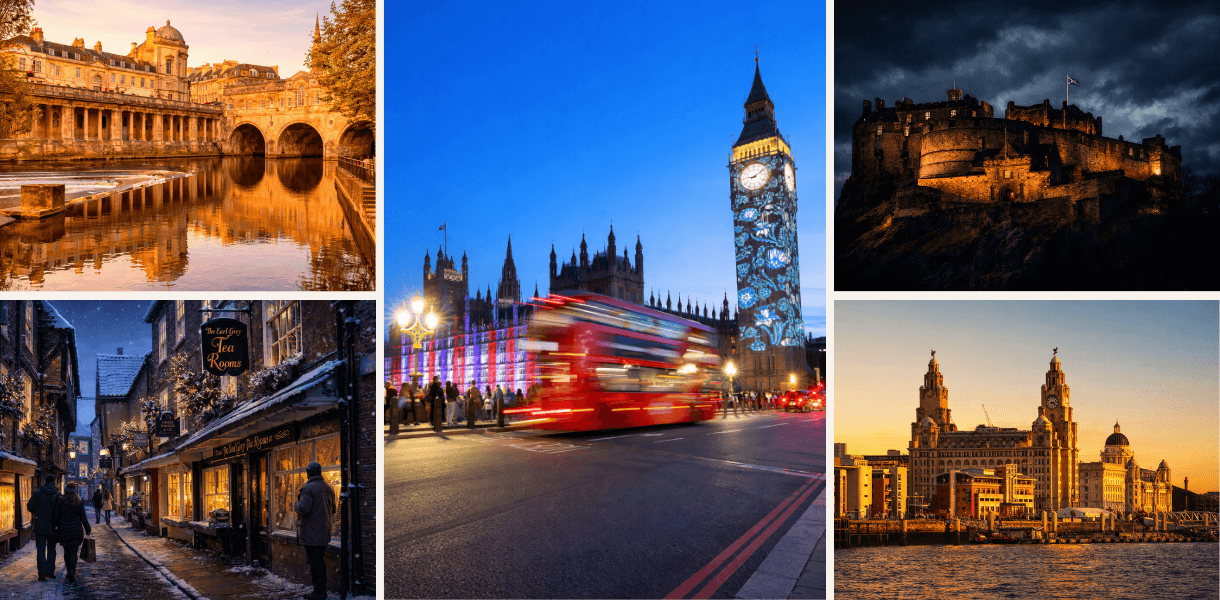
A short break in the UK can feel wonderfully restorative or faintly overstuffed, and the difference usually comes down to one thing. Shape. When you only have two, three or four nights, the clever move is not trying to squeeze a full-scale holiday into a smaller box. It is choosing the right place, the right pace and the right sequence. Official planning tools from VisitBritain, National Rail and the Met Office make it much easier to build a break around transport, timing and weather rather than hopefulness alone.
Quick takeaways
- Best approach for most people
Pick one main base and give the break a clear mood rather than trying to cover too much ground. - Best trip length
Two to four nights is usually enough to feel away, but not so long that the plan becomes fiddly. - Best planning order
Sort transport first if timings matter, then accommodation, then one or two key bookings, then leave the rest flexible. - Biggest mistake to avoid
Trying to treat a short break like a compressed grand tour. - Best backup strategy
Have one outdoor plan, one indoor plan and one low-effort wandering option in reserve.
Why short breaks need a different kind of planning
A short break is not a smaller version of a long holiday. It has its own rules. There is less time to recover from a bad hotel location, an awkward arrival, a wet-weather misfire or the classic mistake of planning three major outings in one day because it all looked perfectly reasonable while sitting at home with a cup of tea. The good news is that the UK is very well suited to short breaks because so many appealing destinations are connected by rail or coach and many of the country’s best cities and historic towns work beautifully on foot once you arrive. National Rail’s journey planner is designed specifically to compare routes, times and fares up to 12 weeks ahead.
Start with the mood, not just the map
One of the easiest ways to improve a short break is to decide what kind of break it is before choosing the destination. Restful and restorative is one thing. Food-led and atmospheric is another. Historic and culture-heavy is another again. A harbour town, a small city, a spa town, a country-house base or a walkable cathedral city can all make excellent short breaks, but they each ask for a slightly different rhythm.
This matters because short breaks are usually spoiled not by choosing a bad destination, but by choosing a good destination for the wrong kind of trip. A place that is glorious for long scenic days may be less useful if what you actually need is a smooth arrival, a few strong meals, a good wander and a proper sense of having been away without spending half the trip in transit.
Choose one strong base
For most UK short breaks, one strong base wins. That base should be easy to reach, pleasant to walk around, and rich enough in cafés, pubs, streets, views or attractions that the break still works if one of your bigger plans changes. The more nights you have, the more tempting it becomes to add a second stop, but two bases only really work when the transfer is simple and worthwhile.
Think less about how many places you can tick off and more about how much friction the break can absorb. The shorter the trip, the more valuable convenience becomes. A hotel five minutes from the station, a central guesthouse near the waterfront, or a town-centre apartment close to restaurants is often a better choice than somewhere prettier in theory but awkward in real life.
Build around one anchor plan per day
A short break becomes much easier when each day has a centre of gravity. That might be a castle, a long lunch, a coastal walk, a market town, a big gallery, a stately home or a favourite neighbourhood you want to explore properly. One anchor gives the day shape. After that, you can add smaller pleasures around it.
What tends not to work is booking the break as if every hour must justify itself. This is how people end up marching between attractions with the slightly hunted expression of those who have turned leisure into a rota. A better short break allows room for dawdling, weather changes, second coffees, one unexpected shop, one wrong turning that turns out to be the right turning, and the very British joy of deciding that a pub with a low ceiling may now count as cultural activity.
Plan transport before enthusiasm gets out of hand
If you are travelling by train, National Rail’s journey planner lets you compare routes, times and fares, and its ticket pages also explain railcards and fare options. National Rail says railcards can cut many fares by up to one third, which can make a noticeable difference even on a modest two- or three-night trip. For coach travel, National Express remains a useful option for direct intercity and airport links.
That means the practical order is usually simple. If the transport shapes the whole break, book that first. Then book the accommodation. Then reserve the one or two things that would genuinely improve the trip if fixed in advance, such as a restaurant, spa slot, theatre performance or timed-entry attraction. Everything else can often stay loose.
Keep the weather in the plan from the start
The Met Office remains the official weather service for the UK, with national, regional and local forecasts as well as longer-range outlooks. That does not mean you need to become obsessed with atmospheric charts. It just means your break will usually work better if you assume that at least one plan may need softening, shifting or swapping.
A sensible short break usually has three layers. One outdoor idea if the weather behaves. One indoor option if it does not. One low-effort fallback that still feels like a treat, such as a scenic café, covered market, bookshop district, spa session, good pub lunch or gently meandering museum. This is not pessimism. It is simply refusing to let one wet afternoon bully the whole trip.
Be selective about what deserves booking
Not every part of a short break needs to be nailed down in advance. In fact, too much fixing can make the whole thing feel airless. The trick is to identify what is truly important and book only that.
Good things to book ahead are the parts that are either time-sensitive or central to the trip’s identity. That might mean train tickets, one special meal, a museum exhibition, a theatre show, a ferry crossing or a spa treatment. Things that often do not need the same degree of commitment include general wandering, second-choice cafés, browsing districts, coastal promenades, easy park walks and the large category of pleasing things you may discover while already there.
Think in layers, not lists
A very good short break often has a layered feel. The first layer is the main reason for going. The second is the practical comfort that makes the trip easy. The third is atmosphere. That last one matters more than people think. Short breaks are often remembered less for the number of attractions visited and more for the overall feel of the place. Harbour light at dusk. A market square just before lunch. A station arrival that puts you straight into the middle of things. A classic pub that understands what rainy evenings are for.
That is why choosing a place with a strong sense of place usually pays off. The UK has no shortage of options here, whether you want old streets, sea air, hills, independent shops, big heritage or simply the pleasure of being somewhere that is not home but requires very little explanatory effort.
Take this guide with you
Prefer something you can save, print, or glance at while planning? Download the printable version here.
Final verdict
Planning a short break well is mostly an exercise in restraint, which is not always the most glamorous advice, but is often the most useful. Choose the right base. Decide the mood of the trip. Build each day around one strong idea. Keep one or two things flexible. Respect the weather. Leave a little room for appetite, accidents and atmosphere. Do that, and even a short UK break can feel properly generous rather than rushed.