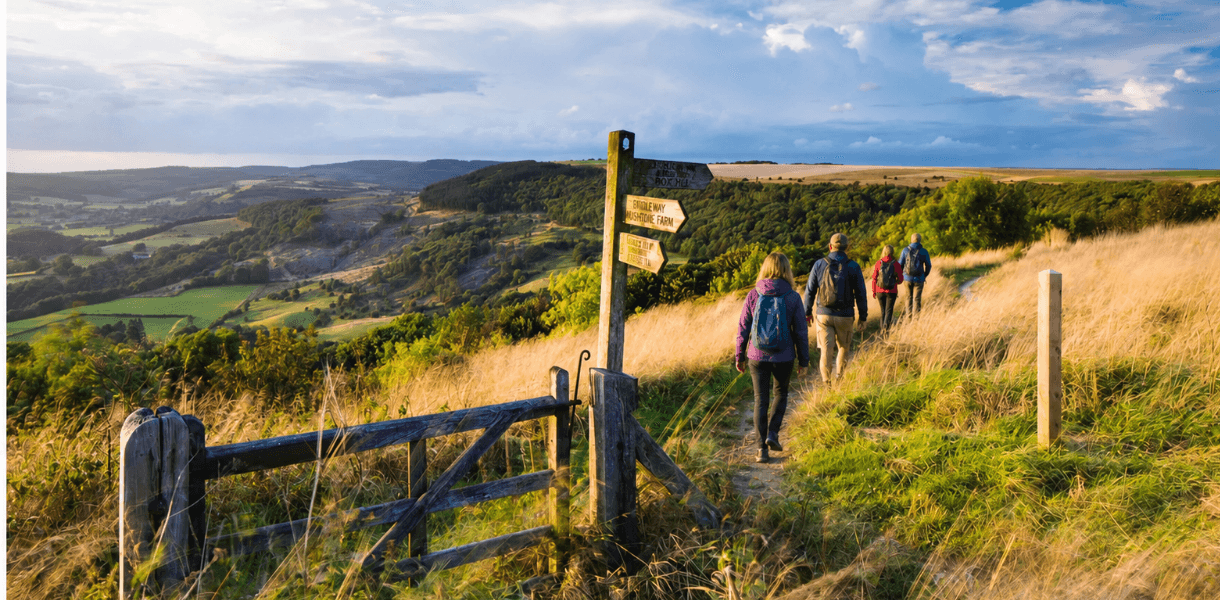
North Yorkshire is one of Britain’s great travel counties, a place of abbeys, castles, moors, dales, fishing villages, spa towns, market squares, seaside promenades and landscapes that appear to have been designed by someone with a very generous view of what one county ought to contain.
Quick takeaways
Best for
Big landscapes, historic towns, family holidays, walking, coast, castles, abbeys, food, heritage railways and slow road trips
Best first visit bases
York, Harrogate, Whitby, Scarborough, Pickering, Richmond, Malton, Helmsley
Best landscapes
Yorkshire Dales, North York Moors, Nidderdale, Howardian Hills, Yorkshire coast
Best for families
Scarborough, Whitby, York, Dalby Forest, North Yorkshire Moors Railway, Fountains Abbey, Castle Howard
Best for walkers
Malham, Swaledale, Rievaulx, Sutton Bank, Robin Hood’s Bay, Ingleborough, Goathland, Roseberry Topping
Best for history lovers
York, Richmond Castle, Fountains Abbey, Rievaulx Abbey, Whitby Abbey, Bolton Castle, Helmsley Castle
Best time to visit
Late spring to early autumn for the fullest choice of walking, coast and outdoor days out. Autumn is excellent for moors, abbeys and quieter towns.
Why North Yorkshire deserves a deeper look
North Yorkshire is the sort of place that makes tidy travel categories feel a little silly. It is not just a county of pretty villages, though it has those in abundance. It is not just a walking county, though a person could happily spend a lifetime wearing out boots here. It is not simply historic, coastal, rural, grand or family-friendly. It is all of those things at once, often within a single day, and occasionally before lunch.
This is the county where the Yorkshire Dales rise in limestone folds and green valleys, the North York Moors spread out in heather, wide sky and ancient trackways, and the coast drops into fishing villages, abbey ruins and seaside towns with all the confidence of places that have been entertaining people for generations. The county contains all or large parts of some of northern England’s most important protected landscapes, including the North York Moors, much of the Yorkshire Dales, Nidderdale and the Howardian Hills.
It also has York sitting just to one side of the county’s imagination like a cathedral-shaped exclamation mark. York is technically its own unitary authority, but for many visitors it is part of the wider North Yorkshire experience, the great historic gateway into a county that then fans out into dales, moors, coast and country-house grandeur.
North Yorkshire is rewarding because it does not ask you to choose between drama and comfort. You can walk beneath a vast moorland sky in the morning, eat something excellent in a market town at lunchtime, explore a ruined abbey in the afternoon, and be in a handsome pub by evening wondering whether it would be unreasonable to move here immediately.
It might be. But only just.
North Yorkshire at a glance
North Yorkshire sits across a large sweep of northern England, with the North Sea to the east, the Pennines and Yorkshire Dales to the west, the Vale of York running through its middle, and the North York Moors rising in the north east. It is a county of strong contrasts rather than one single landscape.
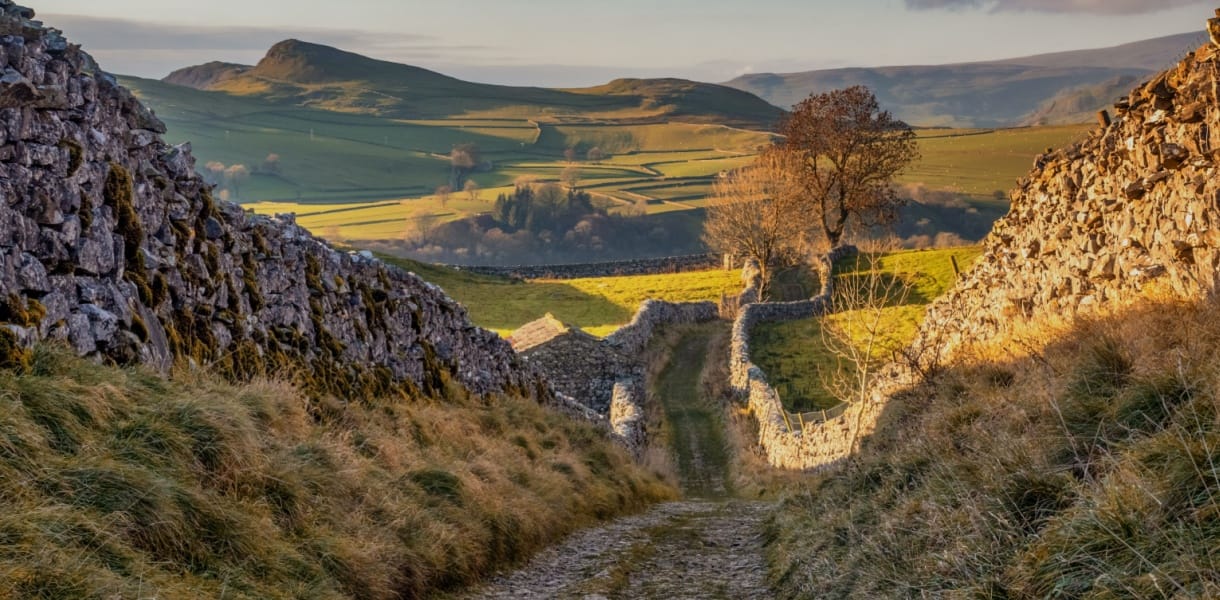
To the west, the Dales bring stone barns, limestone pavements, green valleys, waterfalls, hay meadows and villages that look as though they were assembled by someone with a very good eye for grey stone. To the east, the North York Moors feel more open, lonelier and more wind-shaped, with heather uplands, wooded valleys, ancient crosses, abbeys and sudden views towards the sea. The North York Moors National Park covers around 1,436 square kilometres between Scarborough, Thirsk and Teesside.
Between them lie market towns, estates, rivers, agricultural plains and a remarkable density of places with good tea rooms, ruined castles and suspiciously photogenic streets. Then there is the coast, where Scarborough, Whitby, Robin Hood’s Bay, Staithes and Filey each offer a different version of the seaside. Some are grand and breezy. Some are narrow-laned and salty. Some simply sit there looking magnificent while seagulls behave as if they own the freehold.
Why North Yorkshire matters
North Yorkshire matters because it gathers so many strands of British history and landscape into one place.
The Romans came through. The Vikings left their mark. Medieval monasteries rose in the valleys, then fell into ruins that now look almost too picturesque to be accidental. Castles guarded river crossings, ports and market towns. Great estates reshaped the countryside. Railways threaded through moors and valleys. Fishing, farming, textiles, tourism, pilgrimage, politics and trade all left their fingerprints.
York is central to this story, but North Yorkshire’s depth lies in the way history is spread across the county. Richmond Castle still looks over one of England’s most attractive market towns. Whitby Abbey stands above the harbour like a gothic thought that got carried away. Rievaulx and Fountains Abbey sit in their valleys with a beauty that makes even ruined masonry seem composed. Helmsley, Pickering, Middleham and Knaresborough all remind you that Yorkshire history rarely arrived quietly.
This is not museum-piece heritage. It is lived-in. Farmers still work the dales. Fishing villages still smell faintly of seaweed, salt and chips. Market towns still do proper market-town things. The abbeys may be roofless, but the pubs are not. This is one of North Yorkshire’s great strengths. It allows the past to be present without turning the whole county into a costume drama.
What makes North Yorkshire special today
The real magic of North Yorkshire is how easily it shifts mood.
Around Malham, the landscape has a clean, limestone brilliance. Around Swaledale, it becomes gentler and more folded, with stone barns scattered across fields like punctuation marks. Around Sutton Bank and Rievaulx, the North York Moors offer wooded valleys, open tops and views that feel grand without shouting. Around Whitby, the whole county seems to lean towards the sea.
Then there are the towns. Harrogate is elegant, leafy and slightly pleased with itself, not without reason. Ripon is compact and historic, with a cathedral and enough nearby attractions to fill several days. Richmond has one of the finest market-place settings in the north. Malton has built a strong food reputation. Helmsley is small but quietly excellent, especially if your idea of a good day involves castle ruins, independent shops and a walk that ends in cake.
Scarborough and Whitby give the county its classic seaside energy. Scarborough is bigger, broader and more resort-like, with beaches, cliff lifts, theatres, gardens and family-friendly bustle. Whitby is moodier and more atmospheric, with its abbey, harbour, old streets, steps, jet, boats, Dracula associations and fish and chips that inspire levels of devotion usually reserved for football clubs and small dogs.
North Yorkshire also works because it suits different kinds of trip. You can come for a family week by the coast, a walking weekend in the Dales, a food break around Malton, a romantic stay in Harrogate, a rail-and-walk trip through the moors, or a grand slow tour linking abbeys, castles and market towns. It is not one holiday. It is a whole shelf of them.
The different faces of North Yorkshire
The Yorkshire Dales
The Yorkshire Dales are the North Yorkshire of stone walls, rivers, barns, green slopes, waterfalls and villages that seem to have agreed on a very strict and handsome dress code. This is country for walkers, cyclists, photographers, pub-seekers and anyone who likes a view with a bit of height behind it.
Malham is one of the classic introductions, with Malham Cove, Gordale Scar and Janet’s Foss all close enough to make a superb day out. Ingleborough gives a sterner summit day, while Swaledale and Wensleydale offer a softer, more valley-based kind of pleasure. Richmond, Grassington, Hawes and Leyburn all make strong bases or stopping points depending on how much time you have and how ambitious you are feeling.
The Dales are not a place to rush. They are best experienced slowly, ideally with pauses for village greens, river bridges, local cheese, old churches and weather that changes its mind every twenty minutes.
The North York Moors
The North York Moors are wilder in mood. Not wilderness exactly, because this is England and a good pub is rarely as far away as the scenery suggests, but certainly more open, more exposed and more sky-filled than many visitors expect.
This is a landscape of heather moorland, deep wooded valleys, stone crosses, ruined abbeys, steam trains, villages and long views. Goathland, Grosmont, Rosedale, Hutton-le-Hole, Danby and Helmsley all offer different ways into the moors. Sutton Bank gives one of the great viewpoints, while Rievaulx Abbey below Helmsley supplies one of the county’s most quietly powerful historic scenes.
The North Yorkshire Moors Railway is one of the great pleasures of the area, especially for families or anyone with a soft spot for steam, stations and the pleasing feeling that modern life has temporarily been delayed by a signalman in a waistcoat.
The Yorkshire coast
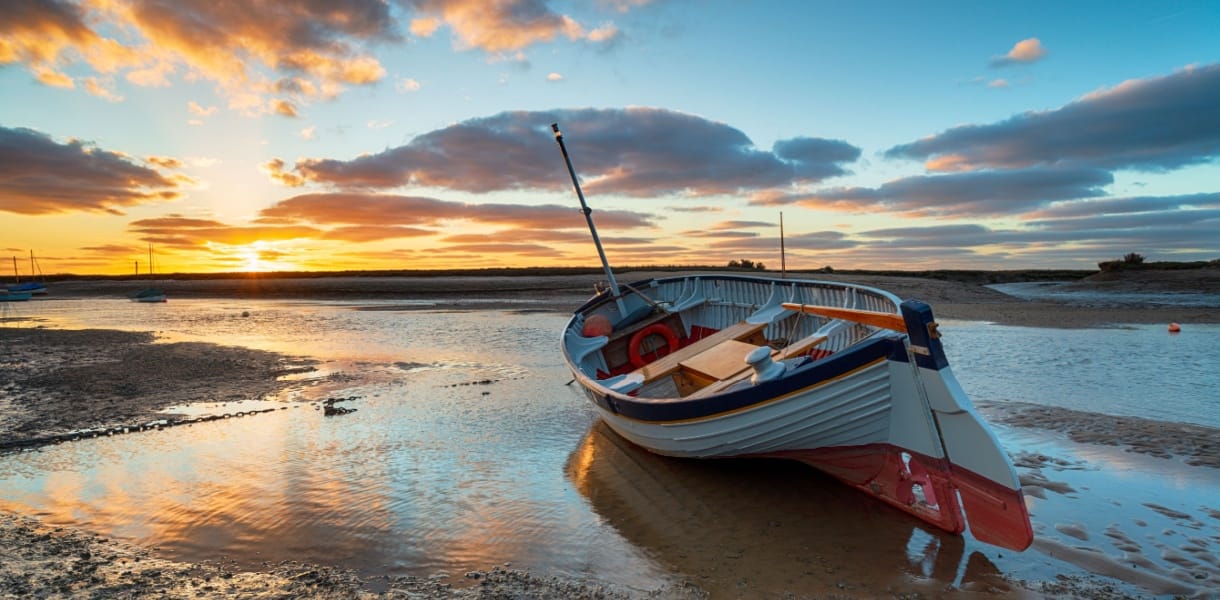
North Yorkshire’s coast is wonderfully varied. Scarborough brings the old-fashioned seaside resort in its most recognisable form, complete with bays, beach life, amusement arcades, gardens, castle headland and that peculiar British genius for enjoying the sea in almost any weather.
Whitby is different. It has more atmosphere, more drama and more gothic theatre. The abbey watches from above. The old town gathers around the harbour. The 199 steps provide both a view and a mild moral test. It is one of the most distinctive seaside towns in Britain.
Then come the smaller places. Robin Hood’s Bay tumbles steeply to the sea in a maze of lanes and cottages. Staithes has a more tucked-away fishing-village feel. Filey is gentler and more spacious, with a fine beach and an easier pace. Together, they make the coast one of North Yorkshire’s strongest reasons to visit, especially for families and first-time travellers.
The Vale of York and the great middle ground
Between dales, moors and coast lies the county’s broad middle. This is where you find farmland, rivers, country houses, abbeys, gardens, market towns and some of the best trip-shaping geography in the region.
Ripon, Thirsk, Boroughbridge, Easingwold and Malton all work as bases or stopping points. Castle Howard, Fountains Abbey, Newby Hall and the Howardian Hills bring grandeur and polish. This part of the county is especially good for visitors who want less hiking and more gentle touring, with a mixture of heritage, gardens, food, villages and scenic drives.
It is also excellent for families. There is enough space to breathe, enough attractions to prevent mutiny, and enough variety to rescue a wet day from becoming a small domestic incident.
Towns and places to know
York
York deserves its own deep dive, but it belongs in any North Yorkshire plan. It is one of Britain’s great historic cities, with Roman, Viking, medieval and Georgian layers compressed into a wonderfully walkable centre. York Minster, the city walls, the Shambles, the riverside, museums, independent shops and old streets make it an obvious first base for visitors.
It is particularly useful for overseas travellers and first-time visitors because it combines major heritage with easy rail access. You can arrive by train, stay centrally, and explore without a car. From there, day trips into North Yorkshire become straightforward.
Harrogate
Harrogate is all polished stone, gardens, tea rooms, handsome hotels and spa-town confidence. It is not wild or rugged, and would probably prefer not to be. Its pleasures are gentler, greener and more composed.
Use Harrogate for a civilised weekend, a base for visiting Fountains Abbey, Ripley Castle, Knaresborough and Nidderdale, or as a softer alternative to the coast and Dales. It is particularly good for couples, garden lovers and anyone who believes a town should ideally come with excellent cake.
Whitby
Whitby is one of the county’s great characters. It has fishing-town grit, literary drama, maritime history, a famous abbey, a busy harbour, narrow streets and some of the best seaside atmosphere in England.
It works well for families, couples, walkers and anyone building a coastal itinerary. It can be busy, but it earns the attention. The walk to Robin Hood’s Bay is one of the great coastal outings, especially if you like cliffs, sea air and the idea of finishing somewhere impossibly picturesque.
Scarborough
Scarborough is North Yorkshire’s classic seaside resort, and it remains one of the county’s best family bases. It has two bays, beaches, a castle headland, gardens, theatres, cliff lifts, promenades, amusements and enough wet-weather options to make it practical as well as nostalgic.
It is not as intimate as Whitby or as tucked-away as Filey, but that is not the point. Scarborough is big-hearted seaside Britain, with plenty going on and a strong sense of place.
Richmond
Richmond is one of the most attractive towns in northern England, with a huge cobbled marketplace, a castle, Georgian streets, riverside walks and easy access to Swaledale. It feels compact, historic and beautifully positioned.
It is a superb base for the northern Dales and a strong choice for visitors who want atmosphere without the heavier visitor crowds of the most famous honeypots.
Ripon
Ripon is small, historic and extremely useful. Its cathedral, market square and nearby attractions make it a strong base for touring the central part of the county. Fountains Abbey and Studley Royal are close by, as are Newby Hall, Ripley, Masham and Nidderdale.
It is the kind of place that rewards a slower stay. Not flashy. Not loud. Just quietly excellent.
Malton
Malton has become one of North Yorkshire’s best food-focused towns, and it makes a good base for the Howardian Hills, Castle Howard, the North York Moors and the coast. It is practical, well-positioned and full of the kind of edible temptations that make lunch expand into an event.
For a gentle touring break with good food, pretty countryside and easy access to bigger attractions, Malton is hard to ignore.
Helmsley
Helmsley is small, handsome and beautifully placed on the edge of the North York Moors. It has a castle, independent shops, good places to eat, nearby Rievaulx Abbey and access to excellent walking.
It is one of the county’s best bases for visitors who want a market-town stay with moorland, abbey ruins and scenic drives close at hand.
Major attractions in North Yorkshire
Fountains Abbey and Studley Royal
Fountains Abbey is one of the great ruined abbeys of Britain, and the surrounding Studley Royal water garden makes the whole place feel both monumental and oddly peaceful. It is a must for history lovers, garden visitors, photographers and families who need space to roam.
Whitby Abbey
Whitby Abbey is pure theatre. It stands above the town, looking out over the sea, the harbour and the red rooftops below. Its history is rich, but its impact is immediate. You see it and understand why people keep reaching for dramatic words.
Castle Howard
Castle Howard is one of the great stately homes of England, set in rolling countryside north east of York. It is a strong day out for architecture, gardens, family exploring and grand-house drama.
North Yorkshire Moors Railway
Running through the moors between Pickering and Whitby via places such as Levisham, Goathland and Grosmont, the North Yorkshire Moors Railway is both transport and attraction. It is especially good for families, rail enthusiasts and visitors who want to experience the moors without committing to a full walking day.
Rievaulx Abbey
Rievaulx Abbey sits in a valley below the moors, near Helmsley, and has one of the most beautiful settings of any monastic ruin in the country. It is quieter in feeling than Fountains, but no less memorable.
Richmond Castle
Richmond Castle dominates one of Yorkshire’s finest market towns and gives the town much of its character. Combine it with the marketplace, riverside walks and views towards the Dales.
Scarborough Castle
Scarborough Castle sits on the headland between the town’s two bays, giving wide views over the coast and a strong sense of the town’s long defensive and resort history. It is an easy attraction to combine with a classic seaside day.
Malham Cove and Gordale Scar
Malham is one of the great Dales landscapes, with limestone cliffs, waterfalls, woodland and dramatic scenery close together. It is popular for a reason, so arrive early if you prefer your natural wonders with fewer waterproof jackets in front of them.
Sutton Bank
Sutton Bank gives one of the finest views in the North York Moors, or anywhere in England to be honest, looking out over the Vale of Mowbray and beyond. It is a rewarding stop for walkers, families and anyone planning a scenic drive through the moors.
Robin Hood’s Bay
Robin Hood’s Bay is a steep, charming coastal village of lanes, cottages, rock pools and sea views. It is best explored slowly and on foot, partly because the village demands it and partly because driving through it would be a test of both patience and insurance.
How to plan a trip to North Yorkshire
North Yorkshire works best when you resist the urge to see everything at once. The county is large, varied and full of tempting detours. A good trip needs a focus.
For a first visit, choose one main base and one landscape. York plus the coast. Harrogate plus the central heritage sites. Whitby plus the North York Moors. Richmond plus the Dales. Scarborough plus family seaside days. Trying to combine the Dales, moors, coast, York, Harrogate and every abbey in a long weekend is technically possible, in the same way that eating six Yorkshire puddings before a walk is technically possible. It may not be wise.
A week gives you much more room. You could split the trip between York and the coast, or between the Dales and the North York Moors. Families may prefer Scarborough or Whitby for the coast, then add day trips inland. Walkers might choose Richmond, Grassington, Helmsley or Pickering depending on which landscape they want closest.
Without a car, York is the easiest base. Harrogate and Scarborough are also workable by train. Whitby can be reached by rail via Middlesbrough, though journey times need checking. A car gives far more freedom in the Dales, moors and smaller villages.
Best ways to experience North Yorkshire
Build a coast and moors break
Base yourself in Whitby, Scarborough, Filey, Pickering or Helmsley and combine seaside days with moorland drives, steam railway journeys, abbey ruins and short walks. This is one of the county’s strongest all-round trip shapes.
Take a Dales walking weekend
Choose Richmond, Grassington, Malham, Hawes or Leyburn and focus on classic Dales scenery. Keep the plan simple. One strong walk, one market town, one pub meal and one scenic detour is often better than a heroic itinerary that ends with everyone silently resenting the map.
Use York as the gateway
York is ideal for first-time visitors, overseas travellers and rail-based trips. Spend two days in the city, then add day trips to Castle Howard, Harrogate, Knaresborough, the coast or the moors.
Follow the abbeys and castles
North Yorkshire is superb for heritage touring. Link Fountains Abbey, Rievaulx Abbey, Whitby Abbey, Richmond Castle, Helmsley Castle, Scarborough Castle and Pickering Castle for a trip that feels grand, ruined, atmospheric and very Yorkshire.
Plan a family seaside week
Scarborough, Whitby and Filey all work well for family holidays. Scarborough has the most facilities and entertainment. Whitby has the strongest atmosphere. Filey is gentler and easier-going. Add Dalby Forest, the North Yorkshire Moors Railway, castles, beaches and short walks for variety.
Make it a food and market town escape
Malton, Harrogate, Helmsley, Richmond and Ripon all work well for a slower break built around food, shops, scenery and short outings. This is North Yorkshire at its most relaxed.
Final verdict
North Yorkshire is not merely one of Britain’s best counties for visitors. It is one of the most complete.
It has grand landscapes without losing comfort, deep history without becoming dusty, seaside towns with proper character, market towns with real life in them, and enough walking, food, heritage and family appeal to suit almost any kind of trip. It can be dramatic, gentle, rugged, elegant, salty, green, windswept and deeply civilised, sometimes within the same itinerary.
The trick is not to conquer it. North Yorkshire is too big and too varied for that. The trick is to choose a corner, settle in, and let the county do what it does best.
Which is to quietly make everywhere else look a little under-supplied.
Know before you go
Getting here
By train
York is the main rail gateway, with direct services from London, Edinburgh, Newcastle, Leeds and Manchester. Harrogate, Scarborough, Northallerton, Skipton, Malton and Thirsk also work well for different parts of the county.
By car
The A1 and A1(M) are the main north-south routes on the western side of the county. The A64 links York with Malton and Scarborough. Smaller roads through the Dales and moors are often scenic but slower than they look on a map.
By bus and local transport
Buses link many towns and villages, though rural services can be limited. Public transport works best if you base yourself in York, Harrogate, Scarborough, Whitby or Skipton and plan carefully.
Where to stay
Best for first-time visitors
York, especially if arriving by train or combining city history with day trips.
Best for the coast
Whitby for atmosphere, Scarborough for families and facilities, Filey for a gentler seaside stay.
Best for the Dales
Richmond, Grassington, Skipton, Leyburn, Hawes or Malham depending on your walking plans.
Best for the North York Moors
Helmsley, Pickering, Whitby, Goathland or Grosmont.
Best for a polished weekend
Harrogate, with easy access to Knaresborough, Ripon and Fountains Abbey.
Best for food and touring
Malton, especially for Castle Howard, the Howardian Hills, York, the moors and the coast.
Where to eat
For classic Yorkshire comfort
Look for village pubs and market-town tearooms, especially around the Dales and moors.
For seafood
Whitby, Scarborough, Robin Hood’s Bay and Filey are the obvious coastal choices.
For food-focused browsing
Malton is one of the strongest bases, with independent food shops, markets and restaurants.
For afternoon tea and polished dining
Harrogate is the natural choice, with York also offering plenty of options.
What to do
Best historic days out
Fountains Abbey, Rievaulx Abbey, Whitby Abbey, Richmond Castle, Castle Howard, York Minster.
Best family days out
Scarborough seafront, North Yorkshire Moors Railway, Dalby Forest, Castle Howard, Flamingo Land, York’s museums.
Best walks
Malham Cove and Gordale Scar, Sutton Bank, Robin Hood’s Bay to Whitby, Ingleborough, Swaledale, Rievaulx and Helmsley.
Best scenic drives
Across the North York Moors, through Swaledale and Wensleydale, around Nidderdale, and along the coast between Whitby and Scarborough.
Hidden gems
Knaresborough
A riverside town with a castle, viaduct views and a wonderfully compact sense of drama.
Staithes
A tucked-away coastal village with steep lanes, cottages and a strong fishing heritage.
Ravenscar
A windswept coastal stop above Robin Hood’s Bay, good for views and walking.
Masham
A handsome small town with breweries, nearby walks and access to Nidderdale.
Bolton Castle
A substantial Dales castle with strong scenery around it.
Ripley
A pretty estate village near Harrogate, useful for gentle browsing and a slower day out.
Best time to visit
Spring
Excellent for gardens, abbeys, lambs in the Dales, fresh walking weather and quieter towns.
Summer
Best for families, coast, long walking days and full opening hours, though popular places can be busy.
Autumn
Wonderful for moorland colour, wooded valleys, abbey ruins, market towns and softer light.
Winter
Good for York, Harrogate, cosy pubs, coastal atmosphere and quieter heritage visits, though rural walking needs more care.