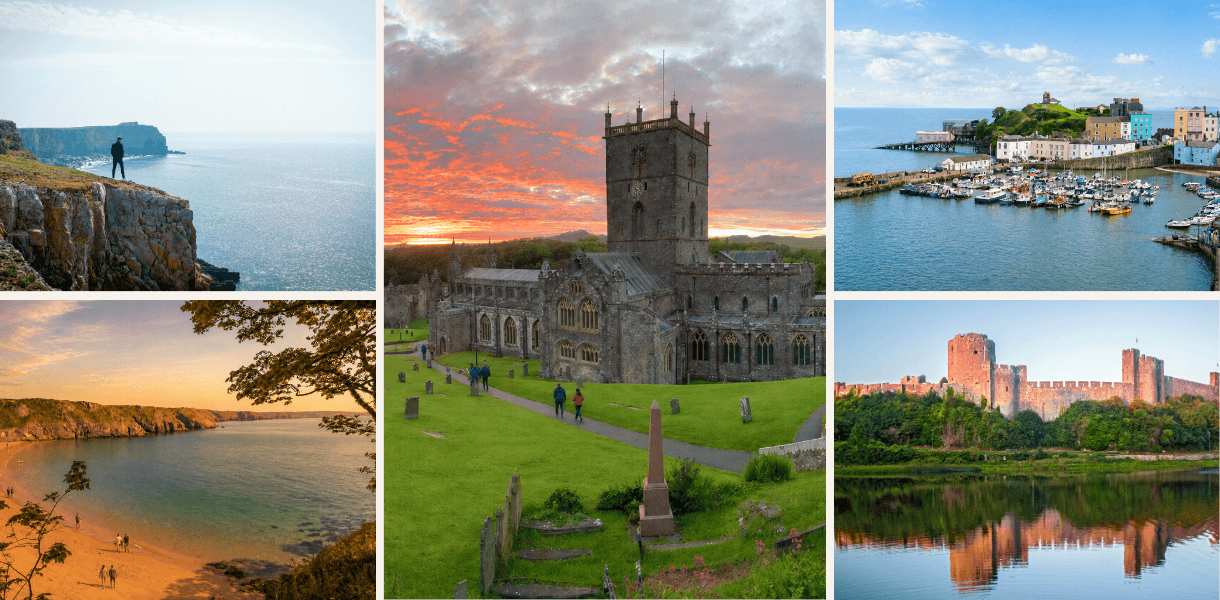
Pembrokeshire feels like a county that has been drawn by the tide rather than a ruler. It is all headlands, coves, harbours, islands, lanes, wind-bent hedges and sudden views that make conversation briefly unnecessary. This is Wales at its salt-edged best, a place where history sits beside the sea, where cathedral bells and gull cries share the same air, and where even a modest walk can end up feeling like a small expedition.
It is not a county to rush. You can try, of course. People do. They arrive with a list, a timetable, a weather app and the faintly heroic belief that they can “do Pembrokeshire” in a weekend. Pembrokeshire, being wiser than that, simply lets the tide come in and waits for them to calm down.
The Pembrokeshire Coast National Park covers almost all of the coast, the offshore islands, parts of the Daugleddau estuary, the Preseli Hills and the Gwaun Valley, giving the county one of the most varied protected landscapes in Britain.
The Pembrokeshire Coast Path runs for 186 miles, or 299 kilometres, from St Dogmaels to Amroth, which is a wonderfully long way of saying that the best way to understand this county is to put one foot in front of the other and let the coastline do the talking.
Quick takeaways
Best for
Coast, beaches, walking, wildlife, castles, family holidays, slow travel and scenic short breaks
Best bases
Tenby, St Davids, Narberth, Newport, Fishguard, Saundersfoot, Little Haven and Pembroke
Best first visit shape
Tenby and the south coast, St Davids and the western headlands, then Newport or Fishguard for the north
Do not miss
St Davids Cathedral, Pembroke Castle, Tenby harbour, Barafundle Bay, Marloes Sands, Skomer, the Preseli Hills and a section of the Coast Path
Best time to visit
May, June and September for space, light and walking. July and August for classic beach holidays and family trips
How long to stay
Three nights for a focused break, a week for a proper first visit, two weeks if you want to settle into the rhythm of the place
Pembrokeshire at a glance
Pembrokeshire sits at the far south-western edge of Wales, looking out towards Ireland with the quiet confidence of somewhere that knows it has good horizons. It is a coastal county first and foremost, but not a one-note one. The south has family beaches, resort towns, limestone cliffs and castles. The west is wilder, with St Davids, island boat trips, surf beaches and headlands that feel thrillingly exposed. The north is softer in places and more secretive in others, with Newport, Fishguard, the Gwaun Valley and the Preseli Hills giving the county a deeper inland character.
This is one of those rare UK counties where a single trip can include a cathedral city, a ruined bishop’s palace, puffin islands, medieval castles, market towns, harbour villages, moorland hills, estuary walks, sandy beaches and enough coastal path to make your boots feel personally involved.
The beauty of Pembrokeshire is not just that it has famous places. It is that the spaces between them are so rewarding. A lane to a beach. A headland walk. A half-hour in a harbour. A picnic wall above a bay. A chapel beside a field. A pub where the weather has clearly been discussed with professional seriousness for generations.
Why Pembrokeshire matters
Pembrokeshire is one of Britain’s great edge places. It has always looked both inward and outward. Its coastline faces the Irish Sea, and the county’s history has been shaped by saints, pilgrims, traders, raiders, Norman lords, fishing communities, farmers, quarrymen, sailors and holidaymakers with windbreaks.
St Davids gives the county a spiritual centre. The cathedral stands on a site associated with worship since the sixth century, rooted in the life and legacy of Dewi Sant, Saint David, the patron saint of Wales. The present cathedral was begun in the late 12th century, and it still has that astonishing Pembrokeshire quality of appearing both grand and tucked away, as if a great medieval church had wandered into a hollow near the sea and decided the position suited it.
Pembroke gives the county a more martial sort of drama. Pembroke Castle was established by the Normans in 1093, and Henry VII was born there on 28 January 1457, which is a pleasingly large historical fact for a town that can otherwise feel quite unshowy.
Then there is the coast itself. Not as backdrop, but as the county’s main organising force. It tells you where the towns grew, where the paths run, where the weather arrives from, where the wildlife gathers and where visitors inevitably end up standing with their hands in their pockets, watching waves do something repetitive and completely absorbing.
What makes Pembrokeshire special today
Pembrokeshire’s great strength is balance. It is spectacular without being exhausting. Popular without having surrendered entirely to the machinery of tourism. Remote-feeling in places, yet still manageable for a week’s holiday. It has headline beaches and quiet coves, grand history and small pleasures, proper walking and the option to do very little indeed.
Tenby is the county in holiday-postcard mode. Pastel houses, medieval walls, a working harbour, sandy beaches and boat trips to Caldey Island. It is cheerful, handsome and occasionally busy enough to remind you that half the country has also noticed it is handsome. Still, step out early or late and Tenby can be magical. The harbour settles, the light softens, and the whole place looks as though it has been carefully arranged for someone’s happy childhood memory.
St Davids offers a different Pembrokeshire. Smaller, stonier, more windswept and quietly profound. It may be a city, technically, but it behaves more like a village with a cathedral of extraordinary authority. Around it are some of the county’s best coastal experiences, including Whitesands Bay, St Non’s, Ramsey Sound and headland walks where the sea seems to be everywhere at once.
Narberth is the inland surprise. It does not have the obvious beach-town glamour, but it has colour, food, independent shops and a very useful position for exploring both north and south. It is the kind of town where a “quick look” can easily turn into lunch, browsing, coffee and a dangerous encounter with a deli counter.
Newport and Fishguard bring in the north Pembrokeshire mood. Newport has estuary light, a handsome sweep of beach, lanes of stone houses and easy access to the Preseli Hills. Fishguard has harbour character, ferry-town practicality, Lower Town charm and a sense that history has passed through carrying luggage.
The coast that shapes everything
The Pembrokeshire coast is not one continuous type of beauty. That is what keeps it interesting. Around Tenby and Saundersfoot it can be sandy, sociable and family-friendly. Around Stackpole and Barafundle it becomes elegant and almost theatrical, with clear water, cliffs, woods and beaches that look suspiciously pleased with themselves. Around Marloes and Dale it spreads into wide skies, islands and open Atlantic energy. Around St Davids it turns rugged, spiritual and sea-bitten. Around Newport it softens into estuary, sand, hill and light.
The Coast Path gives this variety a thread. You do not have to walk all 186 miles, and unless you are unusually committed to blisters, you probably should not try to squeeze too much into one visit. A single section can be enough. St Davids to Whitesands. Stackpole to Barafundle. Marloes Peninsula. Newport to Cwm yr Eglwys. Tenby to Saundersfoot. Pick a stretch and Pembrokeshire will do the rest.
This is walking as a way of seeing, not just exercising. The path rises and falls, ducks through gates, opens onto cliffs, drops towards beaches and occasionally reminds you that coastal miles are not ordinary miles. They have opinions. They go up. They go down. They make you earn your sandwich.
Beaches with personalities
Pembrokeshire’s beaches are not interchangeable strips of sand. They have temperaments.
Barafundle Bay is the show-off, although a very beautiful one. It is often spoken of in hushed tones, and for once the fuss is not entirely unreasonable. It sits between cliffs and dunes, reached on foot, which gives arrival a faint sense of reward.
Marloes Sands is broader, wilder and more dramatic, with rock formations, open sky and a feeling of space that makes everyday concerns seem slightly silly. Freshwater West has surf, scale and cinematic mood. It is not the place for a delicate paddle and a neat towel arrangement. It is a place for watching weather arrive.
Tenby’s beaches are more sociable, wrapped around the town and perfect for families who want sand, facilities and the ability to retreat for chips without organising a military operation. Saundersfoot is similarly easy, with a relaxed resort feel and a good base for gentler coastal days.
Whitesands near St Davids has a classic west coast energy, with surf, views and the looming presence of Carn Llidi behind it. Newport Sands is wide and generous, with the estuary and mountain backdrop giving it a softer, more spacious feel.
The trick is not to find the single best beach. That way madness lies. The trick is to choose the beach that matches the day.
Saints, castles and old power
Pembrokeshire’s history has a satisfyingly layered feel. It is not confined to one town or one era. It turns up in cathedral precincts, castle walls, ancient lanes, burial chambers, chapels, harbour settlements and old routes across the hills.
St Davids is the spiritual heart. The cathedral, the ruined Bishop’s Palace and the nearby coastal sites around St Non’s give this part of Pembrokeshire a rare combination of grandeur and exposure. There is something wonderfully Pembrokeshire about such an important religious place being set not in a mighty metropolis, but in a small western settlement where the sea wind still feels like the senior authority.
Pembroke Castle is the great fortress set-piece. Massive, round-towered and full of Norman confidence, it gives the south of the county a strong historical anchor. It is also one of the best family-friendly heritage visits in Wales, because even people who claim not to be “castle people” tend to soften when presented with towers, walls and a properly dramatic keep.
Carew Castle is gentler and more atmospheric, set beside a tidal mill pond, with a sense of landscape and reflection around it. It is the sort of place where history looks good in changing light. Manorbier Castle, too, has that coastal Pembrokeshire mixture of stone, village, beach and view that makes the past feel unusually well positioned.
Then there are the Preseli Hills, older and stranger in mood. These are not grand mountains, but they have presence. They carry prehistoric associations, wide views and a different rhythm from the coast. After several days of sea cliffs and beaches, the Preselis feel like Pembrokeshire turning inland and lowering its voice.
Towns and villages to know
Pembrokeshire’s towns and villages work best when understood as bases with different moods.
Tenby is best for a classic coastal break. It has beaches, harbour views, restaurants, boat trips, family appeal and enough evening atmosphere to make it a satisfying place to stay.
St Davids is best for walkers, cathedral lovers, wildlife trips and people who like their coastal breaks with a touch of weathered holiness.
Narberth is best for food, independent shops and easy county-wide exploring. It is not on the coast, which is part of the point. It gives you a different Pembrokeshire.
Newport is best for slower north coast stays, estuary walks, beach days, the Preseli Hills and a quieter kind of charm.
Fishguard is practical, characterful and underrated, especially if you like harbour history, coastal walks and using a town as a springboard rather than a showpiece.
Saundersfoot is easy and friendly, especially for families and gentler beach holidays.
Little Haven and Broad Haven work well for a quieter west coast base, with beaches, sunsets and a pleasing sense of being slightly tucked away.
Pembroke is best for castle history and access to the south coast, especially Stackpole, Bosherston and Freshwater West.
The islands and wildlife
Pembrokeshire’s islands add a sense of adventure to the county. Skomer is the best known, especially for puffins in season, but the wider island world matters too. Ramsey, Caldey, Skokholm and the smaller offshore rocks help make the coastline feel alive with movement.
Boat trips here are not just scenic extras. They change your perspective. From the water, the cliffs look bigger, the headlands sharper and the county more obviously shaped by birds, seals, tides and weather. A good wildlife trip can be one of the defining memories of a Pembrokeshire holiday, especially if the sea is kind and everyone on board manages to look rugged rather than faintly green.
Timing matters. Puffins, seabirds, seal pups and flowers all have their seasons. Spring and early summer bring energy and colour. Late summer and early autumn bring softer light and seal activity. Winter has its own drama, but it is more for walkers, storm-watchers and people who regard horizontal rain as character-building rather than unacceptable.
Food, markets and the pleasure of staying local
Pembrokeshire eats well. Not in a showy way, although there is plenty of polish if you look for it, but in the deeply sensible way of a county with coast, farms, market towns and people who understand the emotional importance of good bread.
Expect seafood, Welsh lamb, local cheeses, farm shops, cafés, pub food, ice cream, bakeries and small places doing simple things properly. Tenby and Saundersfoot have the holiday appetite covered. Narberth is excellent for food browsing and independent shops. St Davids has cafés, pubs and restaurants that suit a walking-and-wildlife crowd. Newport does relaxed, good-looking, quietly confident meals very well.
The best Pembrokeshire food experiences are often tied to the day you have just had. Fish after a beach walk. Coffee after a windy headland. A pint after the Coast Path has made an unexpectedly firm point about gradient. Something warm after a boat trip. The county has a knack for making appetite feel earned.
How to plan a first visit
For a first Pembrokeshire trip, resist the temptation to treat the county as a checklist. It looks compact, but the roads are not always quick, the coast invites lingering, and the best days often involve doing less than you planned.
A good first week could be shaped around three areas.
Start in the south around Tenby, Saundersfoot, Pembroke and Stackpole. This gives you beaches, castles, family-friendly days and some of the county’s most accessible coastal beauty.
Then move west towards St Davids, Marloes, Dale and the cathedral coast. This is the Pembrokeshire of headlands, islands, wildlife trips, surf beaches and big sea views.
Finish with the north around Newport, Fishguard, the Gwaun Valley and the Preseli Hills. This gives the trip a quieter, more varied ending, with estuary light, hill walks and a different texture from the busier south.
For a shorter break, choose one base and stay put. Tenby works beautifully for a classic first-timer weekend. St Davids is better for walkers and wilder coast. Narberth works well if you want food, shops and day trips in several directions.
Best ways to experience Pembrokeshire
Walk one proper stretch of the Coast Path
Not just a ten-minute shuffle to a viewpoint, though that has its place. Choose a section with a beginning, an end and a reward.
Spend time in St Davids
See the cathedral, walk to the coast, visit the Bishop’s Palace and give the place enough time to feel more than small and pretty.
Take a boat trip
Skomer, Ramsey or the waters around the islands can turn a good trip into a memorable one.
Base yourself well
Pembrokeshire rewards the right base. Tenby, St Davids, Narberth and Newport each create a very different holiday.
Leave room for weather
The county is better when you stop pretending you are in charge. Have wet-weather options, but do not be too quick to abandon a moody coast day. Pembrokeshire can look magnificent when brooding.
Balance beaches with history
A week of beaches is lovely, but castles, chapels, market towns and hills give the county depth.
Pembrokeshire for different kinds of visitors
For first-time visitors
Choose Tenby or St Davids, then build your trip around beaches, the Coast Path, one castle, one boat trip and one inland day.
For families
Tenby, Saundersfoot, Broad Haven and the south coast are the easiest options. Keep driving distances modest and mix beach days with castles, boat trips and short walks.
For walkers
St Davids, Newport, Fishguard and Little Haven make strong bases. The Coast Path is the obvious star, but the Preseli Hills add valuable variety.
For couples
St Davids, Newport, Tenby and Narberth all work well, depending on whether you want wild coast, soft estuary, seaside charm or food-led pottering.
For slow travellers
Choose Newport, St Davids or Narberth and stop trying to see everything. Pembrokeshire is ideal for lingering, especially outside peak summer.
For car-free visitors
Tenby and Saundersfoot are the easiest bases, with rail access and walkable holiday appeal. St Davids and the north coast can work with buses and planning, but this is a county where car-free travel needs a little realism and a forgiving attitude.
Best time to visit Pembrokeshire
May and June may be the finest months. The days are long, the coast is bright, wildlife is active and the main summer rush has not fully arrived. September is another excellent choice, with softer light, warmish seas, quieter paths and a calmer feel.
July and August are best for family beach holidays, boat trips and the full seaside mood, but you will need to book early and accept that Tenby in high summer is not exactly a secret whispered between cartographers.
April can be lovely for walking and spring colour. October is good for quieter trips, autumn light and coastal atmosphere. Winter is for hardy walkers, cosy stays and people who like their scenery with drama and fewer ice-cream queues.
Know before you go
Getting here
- By train, the main useful stations include Tenby, Saundersfoot, Pembroke Dock, Haverfordwest and Fishguard
- Tenby and Saundersfoot are the easiest rail-friendly bases for a classic coastal break
- Haverfordwest is useful as a transport hub, though less atmospheric as a holiday base
- By car, Pembrokeshire is straightforward once you arrive, but rural drives can be slower than they look on a map
- For first-time visitors, avoid overloading the itinerary with long cross-county days
Where to stay
- Tenby for beaches, harbour charm, families and first-time visits
- St Davids for walking, wildlife, cathedral history and wild western coast
- Narberth for food, independent shops and a central inland base
- Newport for slow travel, north coast atmosphere and the Preseli Hills
- Saundersfoot for easy beach holidays and family-friendly stays
- Little Haven or Broad Haven for a quieter coastal base
- Pembroke for castle history and access to the south coast
Where to eat
- Look to Tenby and Saundersfoot for seaside restaurants, cafés and family-friendly meals
- Use Narberth for delis, cafés, local produce and food browsing
- St Davids is good for post-walk meals, cafés and relaxed evening options
- Newport has a strong slow-break feel, with pubs, cafés and restaurants suited to unhurried stays
- Build in farm shops, bakeries and picnic supplies, especially for walking days
What to do
- Walk a section of the Pembrokeshire Coast Path
- Visit St Davids Cathedral and the Bishop’s Palace
- Explore Tenby harbour, beaches and old town
- Visit Pembroke Castle
- Spend time at Stackpole, Bosherston and Barafundle Bay
- Take a boat trip to Skomer, Ramsey or Caldey
- Explore Newport, Fishguard and the north coast
- Walk in the Preseli Hills
- Visit Carew Castle and tidal mill
- Plan at least one slow, unscheduled beach day
Nearby gems
- Caldey Island for a peaceful boat trip from Tenby
- The Marloes Peninsula for big coastal walks and island views
- Cwm yr Eglwys for a small, memorable north coast stop
- The Gwaun Valley for wooded inland atmosphere
- Manorbier for castle, beach and village charm
- Dale and Angle for quieter south-western coastal exploring
Best time to visit
- May and June for walking, wildlife, flowers and long days
- July and August for classic beach holidays and family trips
- September for quieter coast, softer light and still-pleasant conditions
- October to March for atmospheric walking, lower prices and fewer crowds, with weather caveats firmly attached
Final verdict
Pembrokeshire is one of Britain’s great coastal counties, but calling it simply a beach destination undersells it badly. The beaches are wonderful, yes, but the county’s real appeal lies in the way everything connects. Coast path to harbour. Cathedral to headland. Castle to beach. Island to market town. Estuary to hill.
It is a place of edges, but also of depth. A county where a first visit can be easy and cheerful, and a second visit can become slower, richer and more personal. Come for Tenby, St Davids, Barafundle and the Coast Path if you like. They are worth it. But leave room for the smaller moments too, because Pembrokeshire is especially good at those.
A lane dropping to the sea. A chapel bell. A bench above a bay. A gull making a poor life choice near someone’s chips. A path that goes on just far enough to make the view feel earned.
That is Pembrokeshire at its best. Not merely scenic, but quietly addictive.