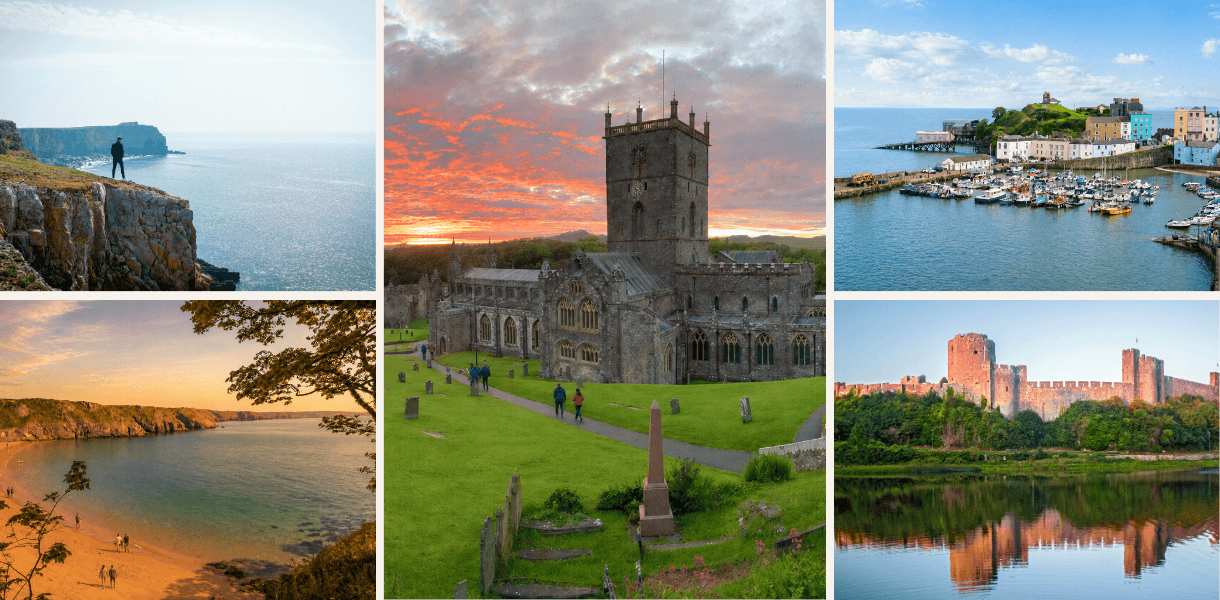
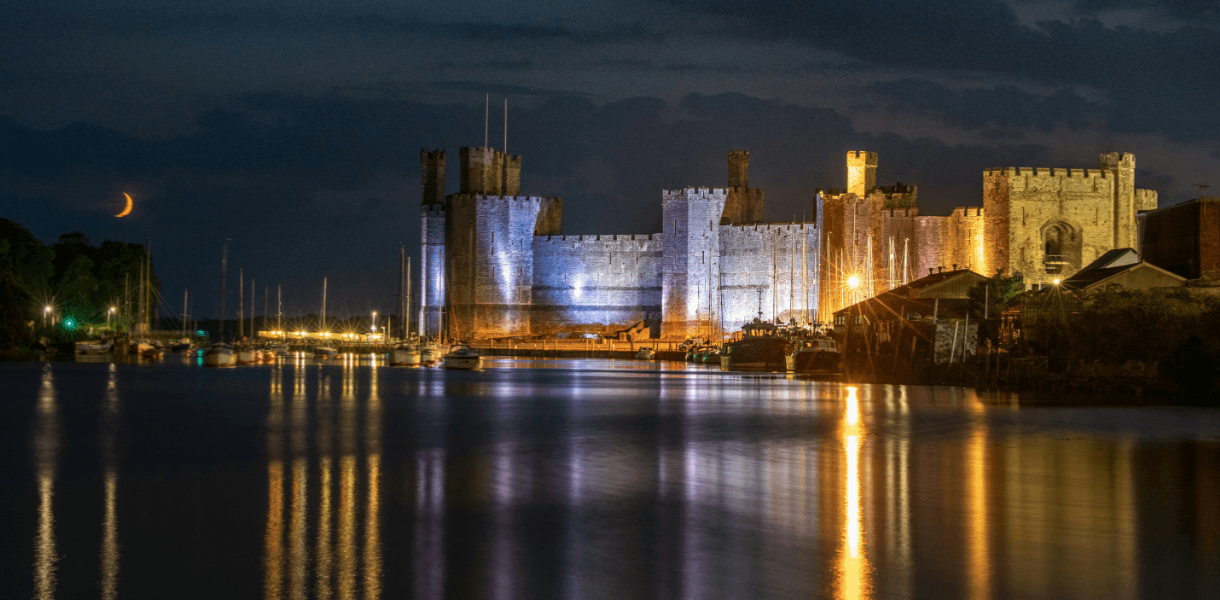
Wales does castles with an intensity that feels almost unreasonable. They rise above estuaries, sit on cliffs, brood over market towns, guard mountain passes, and appear beside roads with the casual confidence of places that have seen off eight centuries of weather, argument and school-trip sandwiches. Some are immense royal fortresses built to dominate. Some are broken Welsh strongholds clinging to hillsides. Some are romantic ruins where jackdaws now enjoy the best rooms. Together, they tell one of the most dramatic stories in Britain.
Quick takeaways
Best for first-time visitors
Conwy Castle, Caernarfon Castle, Harlech Castle, Caerphilly Castle
Best for Welsh history and native princes
Dolbadarn Castle, Castell y Bere, Dinefwr Castle, Criccieth Castle
Best for dramatic settings
Carreg Cennen Castle, Harlech Castle, Dolbadarn Castle, Kidwelly Castle
Best for sheer medieval muscle
Caerphilly Castle, Conwy Castle, Chepstow Castle, Beaumaris Castle
Best for families
Caerphilly Castle, Cardiff Castle, Pembroke Castle, Conwy Castle
Best for romantic ruins
Carreg Cennen Castle, Raglan Castle, Llansteffan Castle, Laugharne Castle
Wales at a glance
Wales is sometimes described as the castle capital of the world, and while such titles are usually the sort of thing invented by leaflet committees, this one has a ring of truth to it. For a country of its size, Wales has an extraordinary concentration of castles. They are not decorative extras. They are part of the national landscape.
What makes the Welsh castles so compelling is not just their number, but their variety. There are Norman fortresses, Marcher lordships, Welsh princely strongholds, Edwardian conquest castles, Tudor residences, romantic ruins and Victorian fantasies dressed up in medieval costume. Some are stern and military. Some are theatrical. A few look as if they were designed by someone who believed subtlety was a character flaw.
The result is a country where history rarely feels tucked away. It sits on headlands, hilltops and river bends. You do not so much visit the castles of Wales as keep bumping into them, like old acquaintances with complicated pasts.
Why Wales has so many castles
The short answer is geography, politics and a great deal of medieval tension.
Wales was never an easy place to control. Its mountains, valleys, rivers and coasts created natural strongholds and regional identities. Power here was local, contested and often fiercely defended. Welsh rulers built castles to hold territory, command movement and project authority. Norman and English lords built castles to secure conquest, control borders and manage the uneasy frontier between England and Wales.
Then came Edward I, whose campaign in north Wales after the conquest of Gwynedd in the late thirteenth century produced some of the most formidable castles in Europe. Conwy, Caernarfon, Harlech and Beaumaris were not casual building projects. They were political statements in stone, designed to make resistance look impractical and obedience seem architecturally inevitable.
This is why Welsh castles carry such emotional weight. They are beautiful, yes, but they are rarely innocent. They speak of ambition, fear, resistance, wealth, violence, identity and survival. A Welsh castle is often a view, a ruin and an argument all at once.
The great Edwardian castles of the north
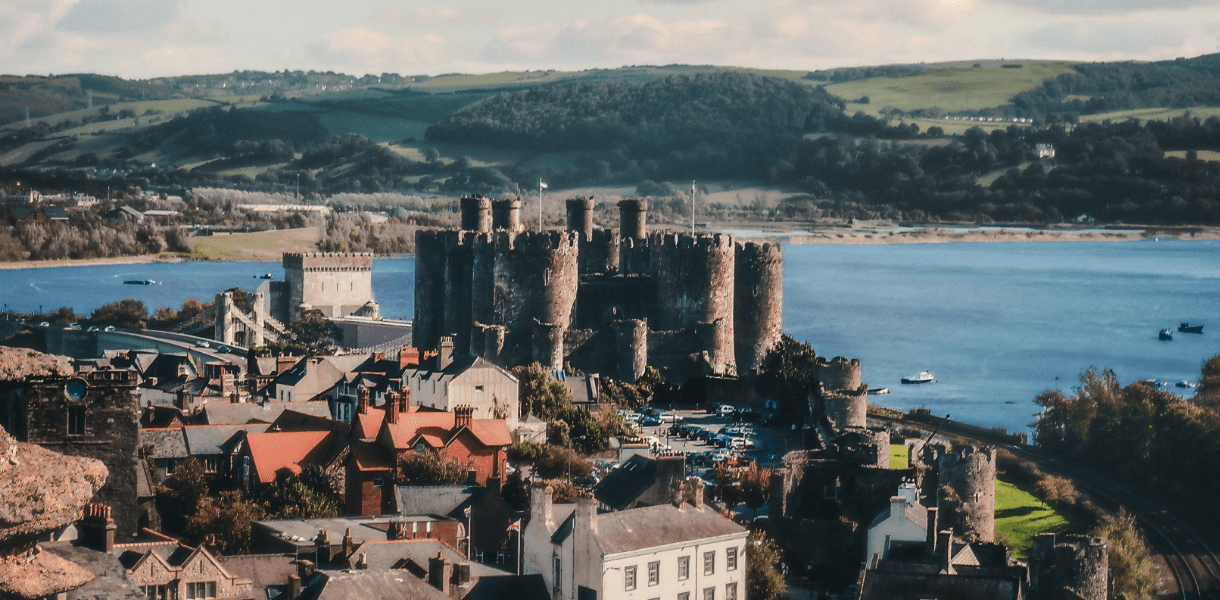
If you want to understand the castles of Wales at their most monumental, start in the north.
Conwy Castle is perhaps the most immediately astonishing. It sits beside the estuary with eight great towers and a curtain wall that still seems capable of making visitors stand up straighter. The town walls remain wonderfully intact, wrapping around Conwy like a medieval belt. Inside the castle, the roofless halls and towers give you one of the clearest impressions in Britain of how royal power was staged. It is grand, severe and oddly beautiful, like a crown that has been left out in the rain for seven hundred years.
Caernarfon Castle is different again. It was designed not merely as a fortress but as a symbol. Its polygonal towers, banded masonry and imperial ambition were meant to impress, intimidate and connect Edward’s rule with older ideas of Roman authority. It still feels ceremonial. Even today, standing in the great courtyard, you sense that this was never just a place to keep arrows out. It was theatre with murder holes.
Harlech Castle may have the finest setting of them all. It rises on a rocky outcrop with the mountains behind and the sea once much closer below. Its walls seem almost impossibly compact and confident. Harlech has the special quality of looking both exposed and unassailable, which is quite a trick. The landscape does half the work, but the architecture does the rest with brisk, muscular brilliance.
Beaumaris Castle on Anglesey is the one that makes castle enthusiasts go slightly misty-eyed. It was never completed, which feels almost rude given how perfect the plan is. Its concentric design, with rings of defences arranged in elegant symmetry, represents medieval military architecture at its most sophisticated. Beaumaris is less dramatic than Harlech, less theatrical than Caernarfon, and less town-defining than Conwy. But as a piece of design, it is magnificent. It is the castle as an idea carried almost to perfection.
The Welsh castles of resistance and identity
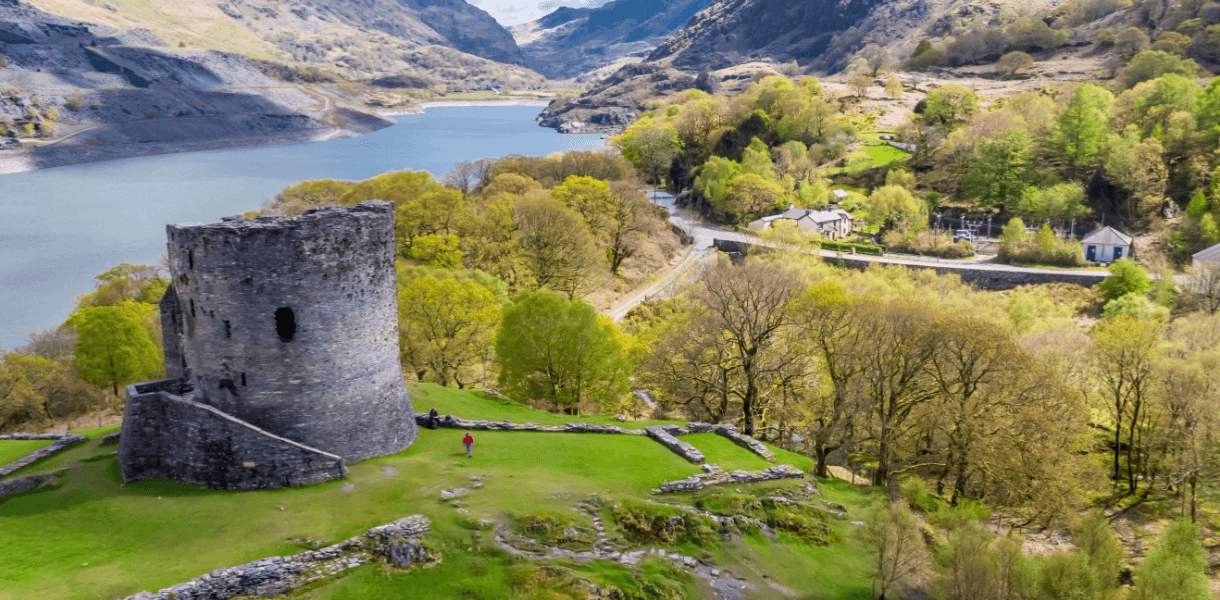
The Edwardian castles dominate many visitor itineraries, but the Welsh-built castles are just as important, and often more moving.
Dolbadarn Castle in Eryri is one of the most evocative. Its round tower stands above Llyn Padarn, surrounded by mountain scenery so extravagant that it almost feels staged. This was a stronghold associated with the princes of Gwynedd, and although much of the castle has gone, what remains has extraordinary presence. It does not overwhelm the landscape. It belongs to it.
Castell y Bere, in southern Eryri, is quieter and more remote. Built by Llywelyn the Great, it guarded a strategic route through the mountains. Today its ruins sit among green slopes and folded hills, far from the busier castle circuit. It is one of the best places to feel the difference between a conquest castle and a Welsh princely stronghold. Castell y Bere does not announce itself with imperial swagger. It watches, waits and fits the land.
Dinefwr Castle near Llandeilo tells another strand of the story. Associated with the princes of Deheubarth, it stands above the Tywi Valley in one of the loveliest inland settings in Wales. There is a softness to the surrounding landscape that makes the castle feel less like a threat and more like a memory of power. Walk through the estate, climb to the ruins, and the view explains the site at once. Whoever held this hill understood both beauty and strategy.
Criccieth Castle, on the Llŷn Peninsula, is wonderfully layered. Begun by Welsh princes and later altered by Edward I, it stands on a headland above the sea, with views that could make even a tax collector feel poetic. It is a castle of shifting ownership and mixed identity, which in Wales is hardly unusual. Its stones seem to carry both defiance and occupation.
The Marcher castles and the borderlands
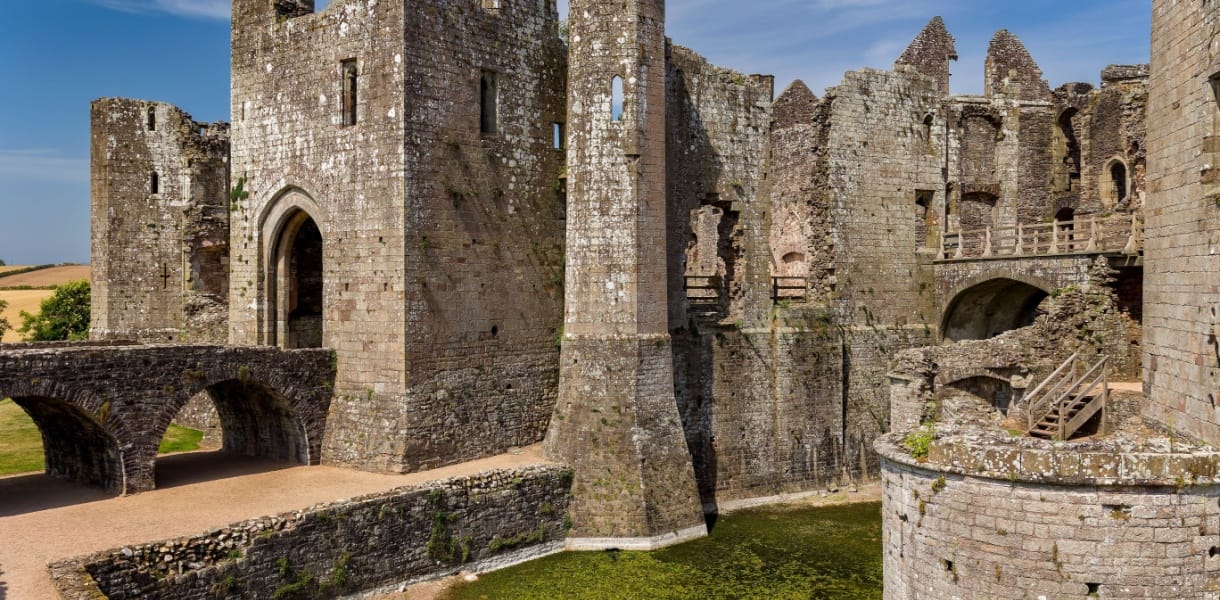
The border between England and Wales was not a line so much as a long-running medieval problem. The Marches produced some of the most powerful lordships in Britain, and the castles here are correspondingly bold.
Chepstow Castle is one of the great medieval fortresses of Britain. Perched above the River Wye, it began soon after the Norman Conquest and developed over centuries. Its long, narrow plan follows the cliff edge, making the most of a spectacular defensive site. Chepstow feels older and harder than many castles, with a seriousness that suits its position at the gateway into Wales.
Raglan Castle, by contrast, has a more graceful, late-medieval confidence. It is ruinous now, but still elegant, with its great tower, handsome stonework and hints of domestic comfort. Raglan feels less like a battlefield machine and more like a fortified statement of aristocratic taste. It is the sort of place where you imagine important people discussing inheritance, alliances and possibly the quality of the venison.
White Castle, Grosmont and Skenfrith form a superb trio in Monmouthshire. Known collectively as the Three Castles, they offer a quieter and highly rewarding way into the Marcher story. None has the celebrity of Conwy or Caerphilly, but together they show how lordship, defence and landscape worked across a contested region. They also make a fine slow day out, especially if you like your castles with lanes, fields and a pleasing absence of crowd management.
The giants of the south
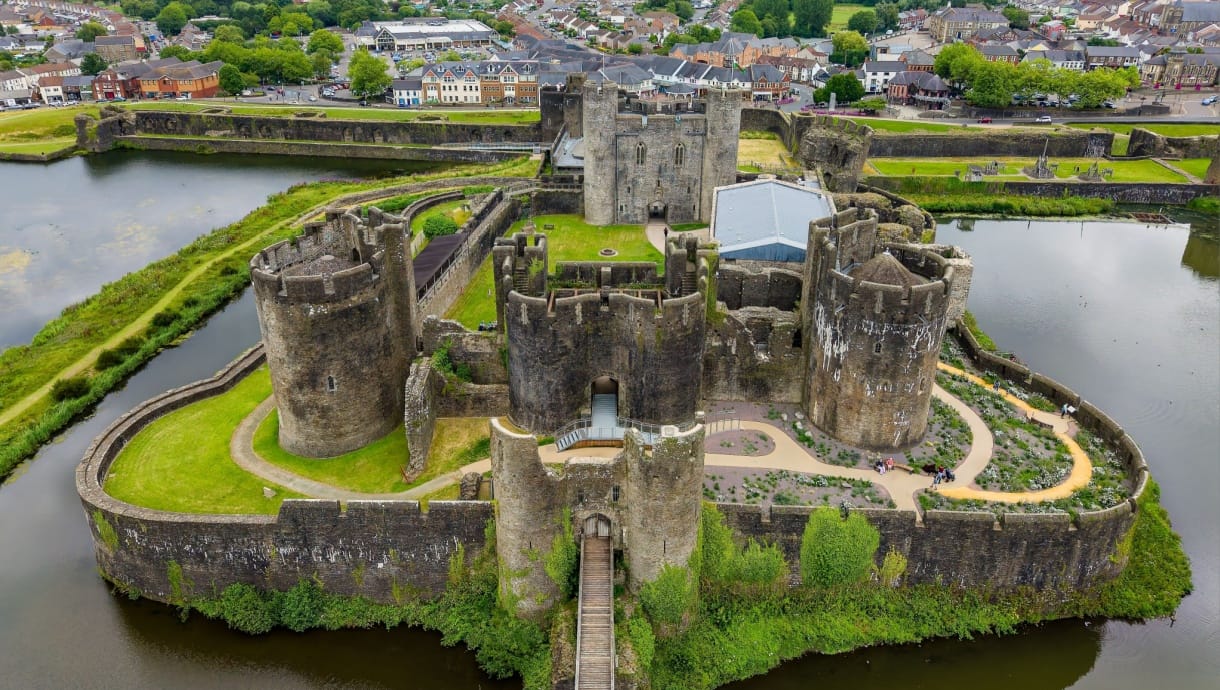
South Wales has some of the most visitor-friendly castles in the country, including two that are almost comically satisfying in their different ways.
Caerphilly Castle is enormous. It sprawls across its watery setting with towers, gatehouses, walls and enough defensive ambition to make you wonder whether the builders were expecting trouble from several directions and possibly the moon. It is the largest castle in Wales and one of the great medieval fortresses of western Europe. Its leaning tower adds a pleasingly eccentric note, as if the castle, after centuries of looking formidable, has decided to loosen up a little.
Cardiff Castle is something else entirely. At its core are Roman and Norman layers, including the motte and keep, but much of its visitor appeal comes from the astonishing nineteenth-century transformation by the Marquess of Bute and architect William Burges. The interiors are lavish, colourful and fantastical, less medieval authenticity than medieval fever dream. Cardiff Castle is not the purest castle experience in Wales, but it is one of the most entertaining. It is history with velvet, gilding and a raised eyebrow.
Pembroke Castle has a grander medieval sobriety. Birthplace of Henry Tudor, later Henry VII, it stands beside the water in a strong, commanding position. The massive round keep is one of the finest in Wales, and the castle has a satisfying completeness that makes it especially good for families and first-time visitors. It feels properly castle-like, which is not a small compliment.
Kidwelly Castle is another southern gem. Its walls and towers sit above the River Gwendraeth, creating one of the most impressive castle silhouettes in Wales. It is less famous than it deserves to be, which is often the way with Welsh castles. There are so many good ones that even excellent examples have to wait politely for attention.
Castles with atmosphere to spare
Some Welsh castles are best loved not because they are complete, but because they are ruined in exactly the right way.
Carreg Cennen Castle may be the most atmospheric of the lot. It stands on a limestone crag in Carmarthenshire, looking as though someone placed it there to win an argument with the horizon. The approach is part of the drama. The views are huge, the ruins are rugged, and there is even a cave passage beneath the castle for those who feel a normal ruin is insufficiently exciting.
Llansteffan Castle overlooks the Tywi estuary with a gentler, salt-air charm. It is the sort of place where the setting does much of the talking. There are beaches nearby, broad views, and a feeling that history has settled into the landscape rather than sitting apart from it.
Laugharne Castle, associated with Dylan Thomas, has a different mood again. It is part fortress, part ruin, part literary backdrop. The estuary setting is beautiful, and the castle feels woven into the town’s atmosphere. It is less about military drama and more about lingering, looking and letting the place work on you.
Dryslwyn Castle, above the Tywi Valley, is another site where the landscape feels essential. The ruins are fragmentary, but the hilltop position is superb. It rewards visitors who like places with room for imagination. Not every castle needs a gift shop and a full battalion of interpretation boards. Sometimes a ruined wall, a wide view and a windy hill are enough.
The romantic reinventions
Not all Welsh castles are medieval in the straightforward sense. Some are later creations, adaptations or romantic reimaginings of castle life.
Castell Coch, just outside Cardiff, is the most famous example. Rebuilt in the nineteenth century by William Burges for the Marquess of Bute, it rises from the woods like something from an illustrated fairy tale. Its turrets, painted interiors and theatrical detail make it an irresistible place, especially for visitors who enjoy the point where history and fantasy start borrowing each other’s clothes.
Penrhyn Castle near Bangor is another grand nineteenth-century creation, built in neo-Norman style on a massive scale. It is visually impressive, but also bound up with the wealth of slate, sugar and empire. Visiting Penrhyn is a reminder that castles are not only medieval objects. They can also be statements about industrial power, social hierarchy and the ways later generations used the past to decorate the present.
These romantic castles matter because they show how Wales kept being reimagined. Medieval forms were revived, embellished and repurposed. The castle became not just a defensive structure, but an aesthetic, a memory, a fantasy and sometimes a very expensive way of saying that one had done rather well.
How to plan a castle trip in Wales
The easiest mistake is trying to see too many castles in one go. Wales makes this tempting. You look at a map, spot five castles within reach, and suddenly develop the doomed confidence of a medieval campaign planner.
A better approach is to choose a region and let the castles shape the journey.
For a first castle trip, north Wales is hard to beat. Base yourself around Conwy, Caernarfon, Bangor or the Eryri coast and you can visit Conwy, Caernarfon, Harlech, Beaumaris, Criccieth and Dolbadarn without turning the trip into a logistical punishment.
For a south Wales trip, combine Cardiff Castle, Caerphilly Castle, Castell Coch and Raglan, with Chepstow added if you want a strong Marcher flavour. This gives you a wonderful mix of medieval might, Victorian fantasy and borderland history.
For west Wales, build a slower route around Pembroke, Carew, Manorbier, Kidwelly, Laugharne and Carreg Cennen. This is a particularly rewarding choice if you want castles with coast, countryside and small-town character.
The key is not to treat castles as interchangeable stone trophies. Each one works best when you give it a little context. Look at the land around it. Notice the river, the pass, the town, the sea approach, the hill. Welsh castles make far more sense when you see why they are exactly where they are.
Best ways to experience the castles of Wales
Walk the walls where you can. Welsh castles are made for movement. Climb towers, cross courtyards, peer through arrow loops and look out over the same rivers, roads and coastlines that once mattered so much.
Mix famous sites with quieter ones. Conwy and Caernarfon deserve their reputation, but a day at Castell y Bere or Dryslwyn can be just as memorable in a different key. The great castles show power. The smaller ruins often show place.
Leave time for towns. Conwy, Caernarfon, Chepstow, Laugharne, Pembroke and Harlech are not just castle stops. They are part of the experience. A castle without its town is like a sentence without a verb. Impressive perhaps, but missing some of the action.
Do not underestimate the weather. Welsh castles are magnificent in sunshine, but many are even better under cloud, mist or dramatic skies. Rain on ancient stone is not always a problem. Sometimes it is the special effect.
Final verdict
The castles of Wales are among the finest historical experiences in Britain, but they are more than impressive ruins and sturdy towers. They are the physical remains of a long and complicated story about power, identity, conquest, resistance, wealth and imagination.
What makes them so rewarding is the way they connect architecture to landscape. A castle in Wales is rarely just a castle. It is a hill, a river bend, a town, a valley, a mountain pass, an estuary, a border, a memory. It is history made visible and usually very damp around the edges.
Visit a few and you begin to understand why Wales feels so richly castle-haunted. The stones are everywhere, but they do not all say the same thing. Some boast. Some mourn. Some threaten. Some simply endure. And the best of them, which is to say a surprising number, still have the power to stop you in your tracks.
Know before you go
Getting here
North Wales is easiest by train via Chester, Llandudno Junction, Bangor and Caernarfon area bus links. South Wales works well via Cardiff, Newport and Swansea. A car gives the most flexibility, especially for rural castles such as Carreg Cennen, Castell y Bere and Dryslwyn.
Where to stay
For north Wales castles, consider Conwy, Caernarfon, Bangor, Beaumaris or Harlech. For south Wales, Cardiff, Caerphilly, Abergavenny, Chepstow and Llandeilo all work well. For west Wales, Pembroke, Tenby, Laugharne and Carmarthen make useful bases.
Where to eat
Castle towns often reward a slow lunch. Conwy, Caernarfon, Chepstow, Laugharne, Llandeilo and Pembroke all have good options for cafés, pubs and independent places to eat. In rural areas, check opening times before relying on a post-castle meal.
What to do
Combine major castles with walks, historic towns, coast paths and scenic drives. Pair Conwy with the town walls, Harlech with the beach and Eryri views, Caerphilly with Cardiff and Castell Coch, and Carreg Cennen with the western edge of Bannau Brycheiniog.
Nearby gems
Eryri National Park, the Llŷn Peninsula, Anglesey, the Wye Valley, the Tywi Valley, Pembrokeshire Coast National Park, the Gower Peninsula and Bannau Brycheiniog all combine beautifully with castle-focused trips.
Best time to visit
Spring and early autumn are ideal for softer light, manageable crowds and good walking weather. Summer brings longer days and livelier towns. Winter can be atmospheric, especially at the great stone fortresses, though opening times may be shorter.