
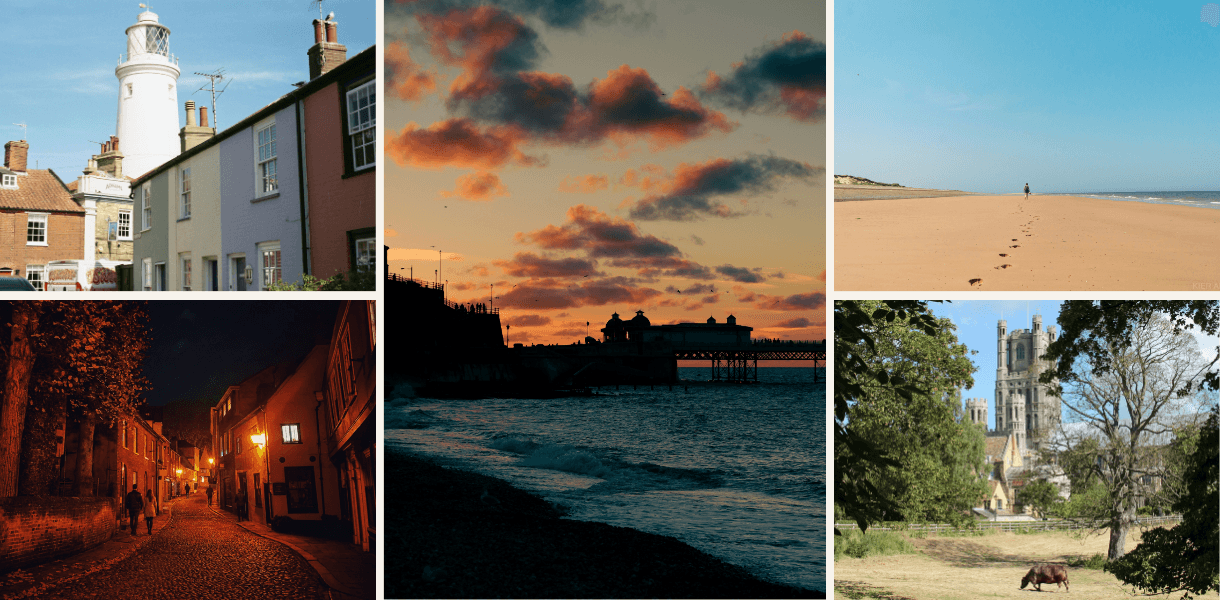
The East of England is one of those regions that can seem deceptively quiet until you start looking properly, at which point it turns out to be full of Roman towns, cathedral skylines, college courts, marshland horizons, wool towns, estuaries, seaside edges, country houses and landscapes so open they appear to have mislaid a few hills. Officially, the region includes Bedfordshire, Cambridgeshire, Essex, Hertfordshire, Norfolk and Suffolk, which is a broad cast of characters, but a surprisingly coherent one once you start travelling through it.
What makes the East of England so rewarding is that it does not usually fling itself at you. It works by accumulation. Cambridge, Ely, Norwich, Colchester and St Albans carry the historic weight. The Fens, Broads, Suffolk coast and Essex estuaries provide the spaciousness. The result is a region of big skies, old routes, lowland beauty and places that reward a slower, more observant kind of travel. It is less theatrical than some parts of England, but often richer than first impressions suggest.
Quick takeaways
- Best for
Cathedral cities, lowland landscapes, coast, country-house touring, Roman and Anglo-Saxon history, and quieter scenic breaks - Known for
Cambridge, Norwich, the Norfolk Broads, Suffolk’s coast and market towns, Colchester, the Fens and big open skies - Don’t miss
Cambridge, Norwich, Ely, the Broads, Sutton Hoo and at least one stretch of the Suffolk or north Norfolk coast - Best base ideas
Cambridge, Norwich, Bury St Edmunds, Southwold, Ely and St Albans - Ideal trip length
Four to seven days for a first trip, longer if you want cities, coast and countryside without rushing - Best time to visit
Late spring to early autumn for coast and landscape, though Cambridge, Norwich and the cathedral cities work well year round
The region at a glance
The East of England is one of England’s official top-level regions, made up of Cambridgeshire and Peterborough, Norfolk, Suffolk, Bedfordshire and Hertfordshire, and Essex. As a visitor region, though, it feels less like a neat administrative block and more like a broad lowland sweep running from the edge of London to the North Sea.
This is a region of contrasts, but quiet ones. Cambridge and its surrounding county bring university prestige, Fenland horizons and Ely’s dramatic cathedral. Norfolk offers Norwich, the Broads and one of the most distinctive coastlines in England. Suffolk mixes wool-town history, estuary country, heath and sea. Essex has Roman depth at Colchester, estuarial landscapes and more subtle beauty than lazy stereotypes tend to allow. Hertfordshire and Bedfordshire, meanwhile, give the region a southern edge of market towns, old coaching routes, country estates and easy city-and-country combinations.
For visitors, the East of England works especially well if you like a trip to unfold gradually. It can do city breaks, coastal escapes, country-house weekends, archaeology-led touring and slow scenic wandering. It is a region that rewards looking across a landscape rather than always up at one. That makes it different, and often more restful, than the parts of England that insist on immediate drama.
Why this region matters
Roman towns and the roots of urban England
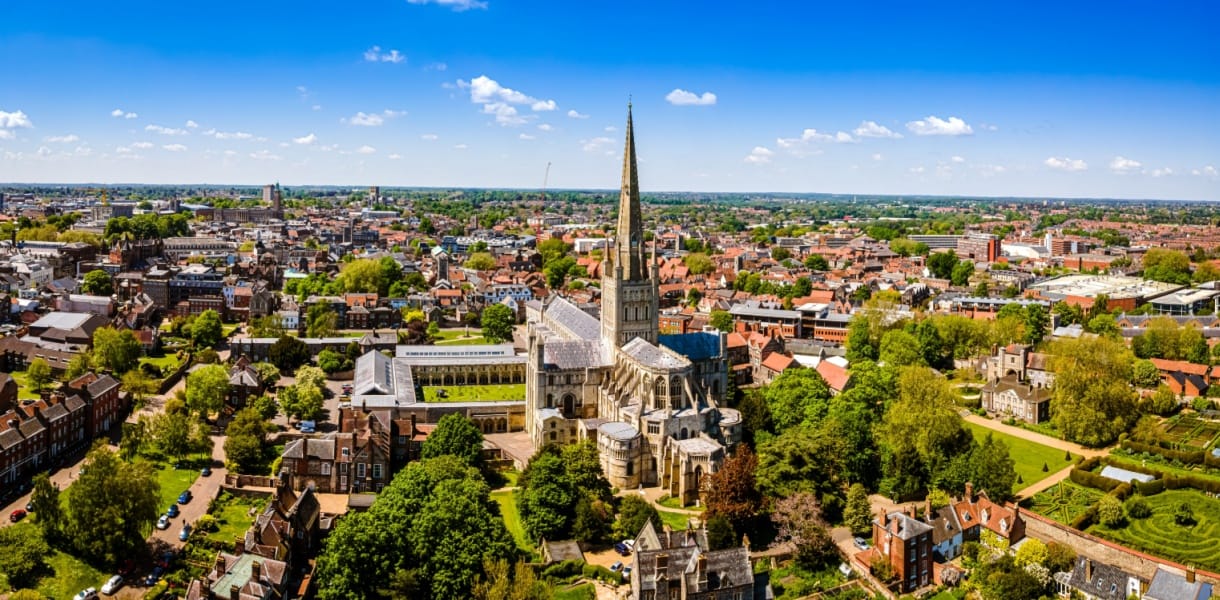
The East of England matters because it preserves some of the deepest and most revealing layers of English history in a landscape that still feels strikingly legible. Roman Britain is central to the story here. Colchester, as Camulodunum, was the capital of the pre-Roman ruler Cunobelinus and later became one of the chief towns of Roman Britain, with walls and gateways that still survive. St Albans, just to the south-western edge of the region, also stands on the site of a Roman municipality. These are not incidental old places. They are among the locations that help explain how Roman urban life took root in Britain.
Sutton Hoo and the Anglo-Saxon imagination
The region is just as important for the early medieval story. Sutton Hoo in Suffolk remains one of the most significant Anglo-Saxon archaeological sites in Europe, with the ship burial discovered there in 1939 transforming understanding of the wealth, craftsmanship and international connections of early English kings. If Roman Colchester helps explain one England, Sutton Hoo helps explain another, older-feeling and more myth-shadowed one, in which kings, burial rituals and far-reaching contacts still feel half historical and half legendary.
Cathedrals, wool towns and learned places
Religion and learning also gave the region enormous weight. Ely Cathedral and the university buildings of Cambridge are among Cambridgeshire’s defining landmarks, and Norwich developed into one of medieval England’s most important cities. Across East Anglia more broadly, wool wealth, market exchange and ecclesiastical power shaped towns, churches and urban form. You can still feel this in places such as Lavenham, Bury St Edmunds, Norwich and the cathedral cities, where prosperity arrived not with mountain drama or industrial smoke but through trade, land, learning and long-settled confidence.
Landscapes shaped by water, work and time
Then there is the landscape itself, which is not decorative background but part of the region’s history. The Fens were reclaimed marshland on a vast scale. The Broads are a unique wetland landscape in Norfolk and north Suffolk, shaped in part by centuries of human intervention and later protected with national-park status. Dedham Vale, on the Essex and Suffolk border, preserves one of England’s most cherished lowland pastoral landscapes. These are not accidental beauty spots. They are places where land use, drainage, settlement and human management shaped what visitors now experience as atmosphere.
Why the East still matters
What makes the East of England especially rewarding now is that so much of this history remains visible without being overblown. Cathedral towers rise from flat country. Roman walls appear in otherwise ordinary towns. Waterways, marshes, estuaries and drained fields still explain where people settled and how they made a living. The region matters because it tells some of England’s most important stories in a voice that is spacious, understated and unusually clear.
What makes it special today
Cities of learning, faith and quiet grandeur
The East of England has some of the country’s most rewarding smaller cities. Cambridge has global academic prestige, but it also works beautifully simply as a place to wander, with courts, bridges, greens and old lanes doing much of the work. Norwich has medieval depth and real city substance. Ely rises from the flatlands with one of the most dramatic cathedral profiles in England. Colchester brings Roman roots and longer historical depth than many better-known places. These cities do not compete by shouting. They win by having been important for an absurdly long time.
Landscapes built on space, water and light
This is one of the region’s greatest strengths. The Broads are one of the UK’s national parks and Britain’s largest protected wetland, a mosaic of lakes, rivers and lowland scenery shaped by both nature and centuries of human activity. The Fens bring a different kind of beauty, all horizon and engineering. Dedham Vale offers a more intimate lowland patchwork of rivers, meadows and ancient woodland. Together they give the East of England a very particular scenic identity, one based less on height and more on light, weather, openness and water.
Coastlines with very different moods
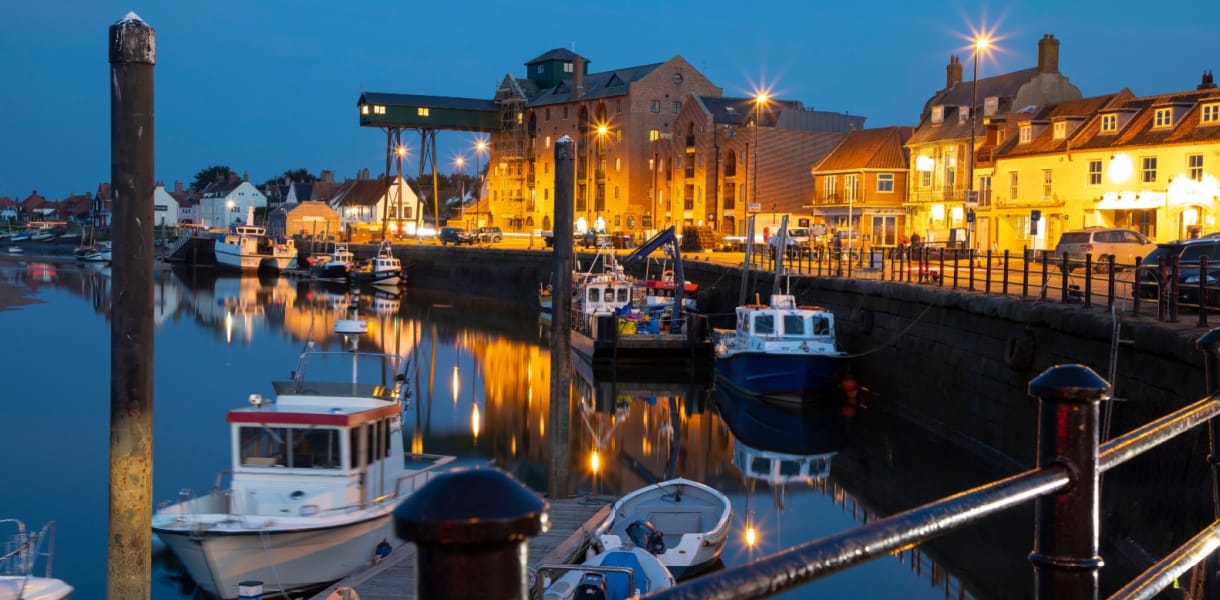
The coast here is not one seamless holiday strip. North Norfolk has salt marshes, birdlife, big beaches and a feeling of airy spaciousness. Suffolk’s coast mixes estuaries, shingle, old fishing and port towns, and a slightly more introspective sort of beauty. Essex’s estuaries and inlets give the region a flatter, wider maritime character, more about mudflats, creeks and changing light than cliff drama. It is coastal England in a quieter key, but often a more interesting one.
Archaeology and visible deep history
Few regions can move so easily from Roman Britain to Anglo-Saxon kings, then on into medieval abbeys, wool churches and university courts. Sutton Hoo, Colchester and St Albans alone give the East of England unusual historical range. Add in cathedral cities, old market towns and the surviving urban form of places such as Cambridge and Norwich, and the region becomes one of England’s strongest destinations for visitors who like their travel full of long timelines and visible continuity.
Towns and landscapes that reward slower travel
The East of England is particularly strong on the kind of places that improve if you linger. Bury St Edmunds, Southwold, Saffron Walden, Lavenham, Holt, Woodbridge and countless smaller centres all make their case gradually through streets, market squares, church towers, river edges and the quiet satisfaction of being well-formed. This is a region that suits readers, walkers, heritage enthusiasts, gardeners and anyone who enjoys the sort of trip where the best part of the afternoon may turn out to be the one you had not planned very hard.
The different faces of the region
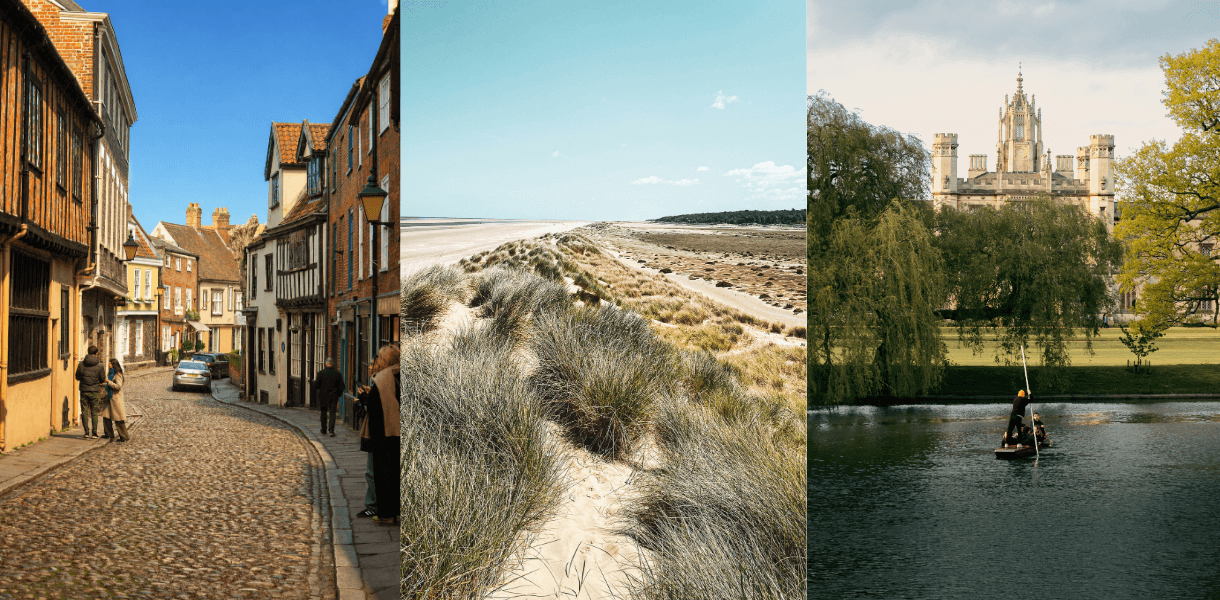
The East of England makes far more sense when you stop seeing it as one flat block and start noticing its separate moods. It is a region of cathedral cities, university towns, fenland horizons, broad skies, estuaries, beaches, market towns and overlooked countryside.
Cambridgeshire and the Fens give the region some of its most distinctive contrasts, with Cambridge, Ely, Peterborough, St Ives and Wisbech linking university life, cathedral grandeur, river towns and the strange, spacious beauty of engineered lowland.
Norfolk has one of the clearest identities in the region, shaped by Norwich, the Broads, market towns and a coastline that moves from grand emptiness to cheerful seaside bustle. Holt, Cromer, Wells-next-the-Sea, Great Yarmouth and Wroxham all show different sides of its coast, wetlands and wide-open scenery.
Suffolk feels quieter and more inward-looking, but beautifully rewarding. Bury St Edmunds, Southwold, Aldeburgh, Woodbridge, Lavenham and Ipswich bring together archaeology, wool-town history, estuary country, market-town charm and one of England’s most characterful coasts.
Essex is one of England’s most lazily misunderstood counties, which is a shame for everyone except those who actually visit it. Colchester, Saffron Walden, Maldon, Chelmsford and the Dedham Vale edge reveal Roman history, estuary landscapes, old villages, country houses and a greener, subtler county than the clichés allow.
Hertfordshire and Bedfordshire give the region its southern and south-western edge, with St Albans, Hitchin, Hertford, Bedford, Woburn and Harpenden offering historic towns, old routes, gardens, estates and easy city-and-country breaks from London.
Counties within the East of England
Cambridgeshire
Cambridgeshire has the useful advantage of containing both Cambridge and Ely, which would already be enough for many counties, then adds Fenland landscapes and a wider geography of waterways, colleges and big lowland skies.
- Key places
Cambridge, Ely, Peterborough, St Ives, Wisbech - Known for
University heritage, cathedral architecture and the Fens - Standout attractions
Cambridge colleges, Ely Cathedral, the River Cam, Fenland scenery - Best kind of visit
A city-and-landscape break with heritage and slower scenic wandering
Norfolk
Norfolk combines one of England’s best smaller cities with a national-park wetland, strong market towns and a coast full of beaches, marshes and changing weather. It feels spacious in almost every direction.
- Key places
Norwich, Holt, Cromer, Wells-next-the-Sea, King’s Lynn, Wroxham - Known for
The Broads, coast, big skies and historic Norwich - Standout attractions
The Broads, Norwich Cathedral, north Norfolk coast, Holkham area - Best kind of visit
A coastal and landscape touring trip or a slower multi-base holiday
Suffolk
Suffolk is one of England’s great counties for visitors who like atmosphere without fuss. It gives you Sutton Hoo, rich wool-town history, estuary landscapes and a coast that feels thoughtful rather than brash.
- Key places
Bury St Edmunds, Southwold, Aldeburgh, Woodbridge, Lavenham, Ipswich - Known for
Sutton Hoo, market towns, estuaries and the Suffolk coast - Standout attractions
Sutton Hoo, Southwold, Aldeburgh, Lavenham, Orford Ness - Best kind of visit
A heritage-and-coast break with plenty of time for town wandering
Essex
Essex has far more historical and landscape interest than its reputation sometimes allows. Colchester alone gives it huge Roman significance, while estuaries, creeks, country estates and good smaller towns add plenty of range.
- Key places
Colchester, Saffron Walden, Maldon, Chelmsford, Harwich - Known for
Roman history, estuaries, coastal inlets and market towns - Standout attractions
Colchester’s Roman remains, Dedham Vale edge, Maldon estuary, Audley End area - Best kind of visit
A short touring break focused on history and overlooked coast-and-country combinations
Hertfordshire
Hertfordshire is the region’s most useful short-break county, full of handsome towns, old routes and easy historic interest. It may not dominate the postcards, but it rewards close attention.
- Key places
St Albans, Hitchin, Hertford, Harpenden, Berkhamsted - Known for
Historic towns, easy countryside and proximity to London - Standout attractions
St Albans’ Roman and cathedral heritage, Hatfield House area, old market towns - Best kind of visit
A compact heritage-and-gardens short break
Bedfordshire
Bedfordshire gives the region a quieter inland note of market towns, country estates and gentler rural exploring. It is often a supporting player, but a useful one.
- Key places
Bedford, Woburn, Ampthill, Biggleswade - Known for
Country-house country, old routes and easy rural breaks - Standout attractions
Woburn area, Bedford riverside, market-town day trips - Best kind of visit
A softer inland short break or add-on to a wider regional trip
Cities and towns to know
Cities worth knowing
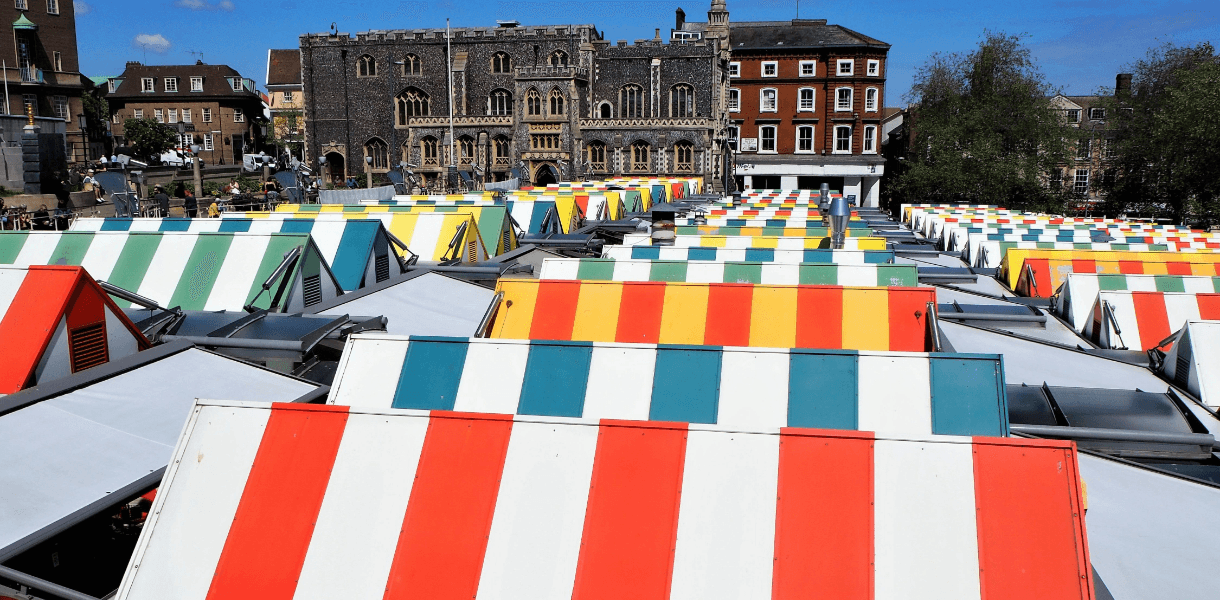
Cambridge
One of the most famous small cities in Europe, and still worth seeing even if you think you already know what to expect. It is beautiful, yes, but also lively, clever and much more than a sequence of college photographs.
Norwich
A proper city, not a token one, with medieval depth, strong architecture and enough substance to anchor a wider Norfolk trip very well.
Ely
Tiny by city standards and all the more memorable for it, Ely rises from the flat country with one of the most dramatic cathedral silhouettes in England.
Colchester
One of the most historically important towns in Roman Britain, and still one of the strongest reasons to take Essex seriously as a travel destination.
Towns with particular character
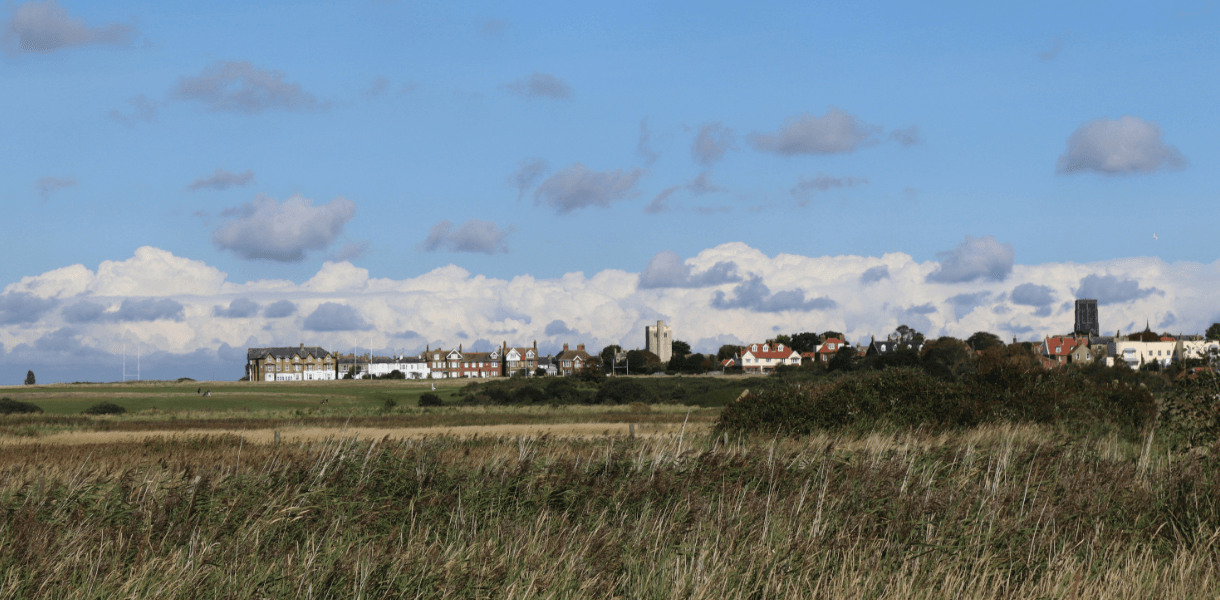
Bury St Edmunds
Handsome, well-proportioned and quietly confident, Bury St Edmunds is one of the East’s best bases for heritage-minded visitors.
Southwold
A seaside town with enough polish to know exactly what it is doing, but enough character to remain very easy to enjoy.
Aldeburgh
Aldeburgh has sea air, cultural associations and a slightly austere charm that suits the Suffolk coast perfectly.
Saffron Walden
One of Essex’s most appealing towns, full of market-town ease and a useful corrective to lazy county assumptions.
Woodbridge
A rewarding Suffolk base with good links to Sutton Hoo, estuary country and the quieter pleasures of the east coast.
Major tourist attractions
Cathedrals, abbeys and historic buildings
Ely Cathedral, Cambridgeshire
One of the defining buildings of eastern England and one of the clearest visual statements the region can make.
Cambridge colleges, Cambridge
A whole urban ensemble of courts, chapels, greens and bridges, rather than a single attraction, and all the stronger for it.
Norwich Cathedral, Norfolk
A major cathedral in one of the region’s most rewarding cities.
St Albans’ Roman and cathedral core, Hertfordshire
A powerful combination of Roman and medieval significance on the region’s south-western edge.
Archaeology and heritage
Sutton Hoo, Suffolk
One of the most important Anglo-Saxon archaeological sites in Europe, and essential for understanding early medieval England.
Roman Colchester, Essex
A major Roman site with surviving walls and deep historical importance.
Wool towns and churches of Suffolk
Not one attraction but a whole historic texture, especially in places such as Lavenham and Long Melford.
Natural landmarks and scenic highlights
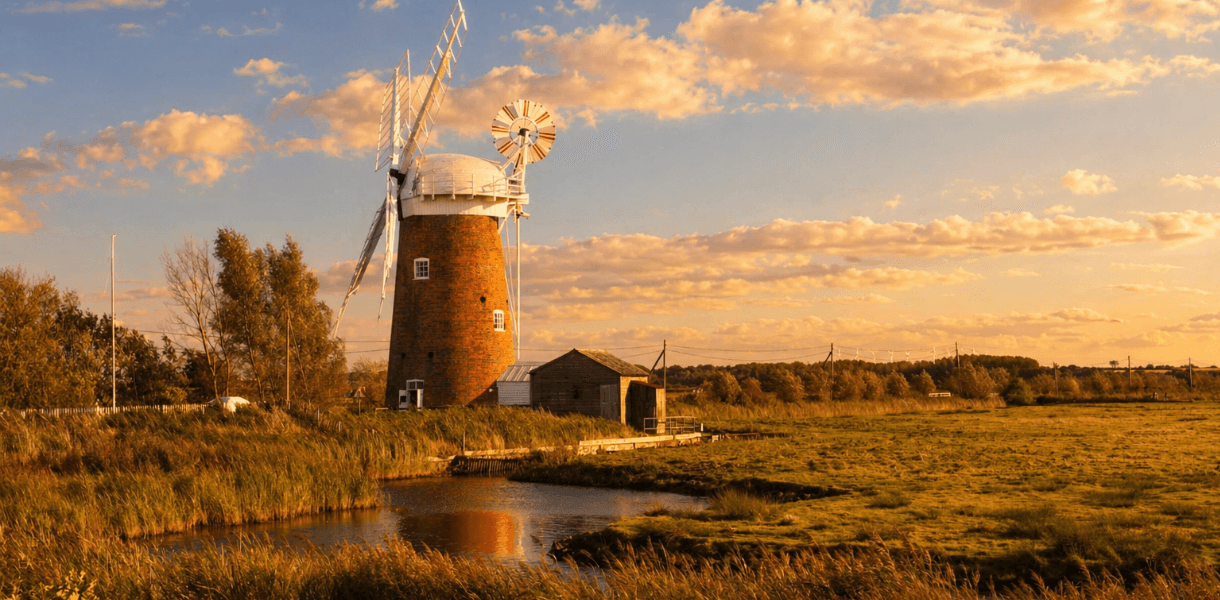
The Broads
Britain’s largest protected wetland, full of waterways, wildlife and lowland beauty with national-park status.
The Fens
A broad reclaimed marsh landscape whose scale and openness give the region much of its distinctive mood.
Dedham Vale
One of England’s best-loved lowland landscapes, with meadows, rivers, woodland and pastoral calm.
North Norfolk coast
A strong stretch of beaches, salt marsh and sky, excellent for a slower coastal trip.
Family favourites
The Broads boat-and-wildlife experience
One of the region’s most obvious family strengths, because the landscape itself does so much of the work.
Cambridge punting and riverside wandering
A classic family-friendly urban outing, particularly when the weather is being civil.
Southwold and the Suffolk coast
A strong family choice if you want seaside character without full-scale resort chaos.
How to plan a trip here
How long to stay
A long weekend works well if you focus on one strand of the region, such as Cambridge and Ely, Norwich and Norfolk, or Suffolk’s towns and coast. For a broader first trip, four to seven days is better. The East of England improves dramatically when you allow time for both the famous places and the lower-key landscapes in between.
Best bases
Cambridge is the easiest first base for many visitors. Norwich is excellent if your focus is Norfolk and the Broads. Bury St Edmunds and Woodbridge work well for Suffolk. Ely is a strong shorter-stay option if you like dramatic heritage in a compact setting. St Albans is useful for a southern edge break with Roman depth and easy access.
Car or public transport
You can do the city side of the region well by rail, especially around Cambridge, Norwich and St Albans. A car becomes more useful once you want estuaries, the Broads, smaller market towns, Fenland roads and the subtler stretches of coast. The East of England does not always look remote on the map, but many of its best bits are more enjoyable when you are not relying on perfect timetables.
Best first-time route through the region
A very strong first trip would be Cambridge, Ely and Norfolk, finishing with a few days around the Broads and coast. Another excellent route is Cambridge, Suffolk and the coast, using Bury St Edmunds or Woodbridge as a second base. If you want a more archaeology-led version, build in both Colchester and Sutton Hoo.
Best time to visit
Late spring and early autumn are especially good, when the coast is attractive, the landscapes have colour and the most popular towns feel calmer. Summer is excellent for Norfolk and Suffolk, though obvious seaside favourites are busier. Winter suits Cambridge, Norwich and the cathedral cities rather well, especially if your ideal day includes old streets, a museum and somewhere warm to sit afterwards.
Who this region suits best
It suits visitors who like depth without noise. It is especially strong for people who enjoy history, gardens, estuaries, birdlife, market towns and the sort of landscape that reveals itself gradually rather than trying to dominate the room immediately.
Best ways to experience the region
Best for a first visit
Combine Cambridge with either Norfolk or Suffolk. That gives you one of England’s best small cities and a strong taste of the region’s wider landscape.
Best for history lovers
Focus on Cambridge, Ely, Colchester, St Albans and Sutton Hoo. Few regions offer Roman, Anglo-Saxon, medieval and university history in such a legible sequence.
Best for coast and scenery
Spend most of your time between north Norfolk and the Suffolk coast, adding the Broads or Dedham Vale depending on whether you want wetlands or softer pastoral country.
Best for a long weekend
Choose Cambridge and Ely, Norwich and the Broads, or one Suffolk base with coast and town days. Trying to cover the whole region in three days is an excellent way to become emotionally overinvested in bypasses.
Best for a week-long tour
Use two bases, usually one city and one coastal or countryside base. Cambridge and Norwich, or Cambridge and Suffolk, make especially strong pairings.
Best for city and countryside balance
Cambridge and the Fens, Norwich and the Broads, or Colchester and the Essex-Suffolk borderlands all work very well.
Final verdict
The East of England has the great advantage of not needing to perform too hard. It does not generally rely on mountain drama, giant urban swagger or theatrical ruins on every horizon. Instead, it offers something subtler and in many ways more enduring. Roman depth, Anglo-Saxon mystery, cathedral cities, college courts, estuaries, wetlands, wool towns, slow rivers and coastlines made of light as much as land. It is one of the parts of England that improves the more carefully you look.
For visitors who like trips with room in them, this region is especially rewarding. Room in the landscape, room in the history, room in the day for wandering without feeling hurried from one headline sight to the next. That makes the East of England one of the country’s most quietly satisfying regional journeys, and one that deserves much more deliberate attention than it often gets.