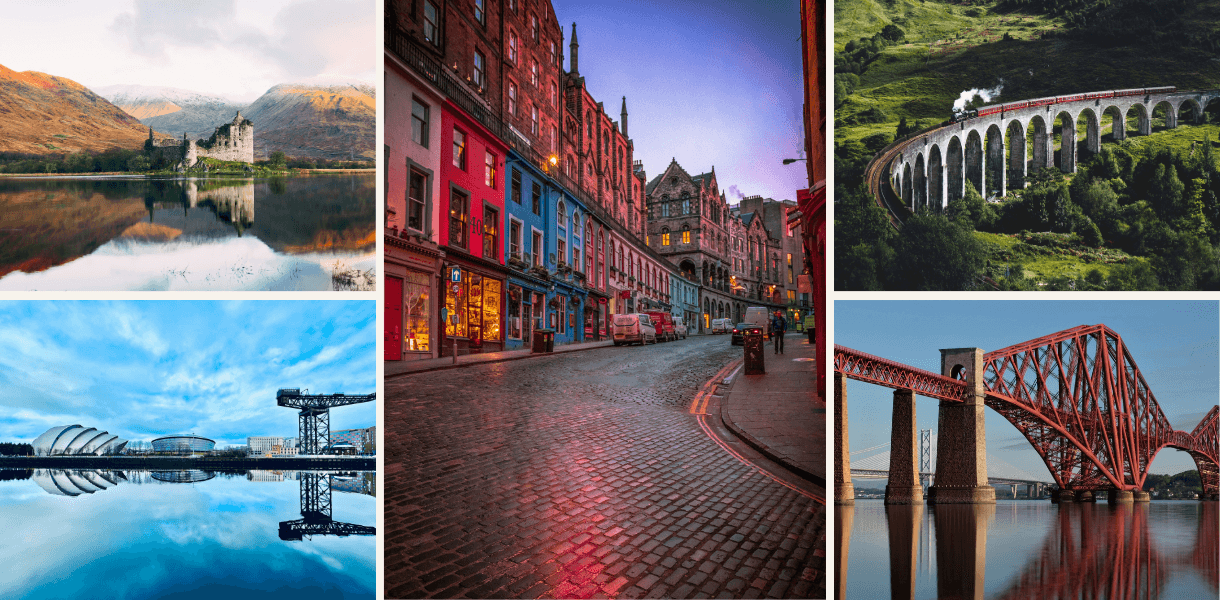
Scotland is one of those countries that can look almost absurdly dramatic from a distance and then, once you arrive, turn out to be even more complicated than it is beautiful. It has cities of philosophical swagger and industrial grit, glens and lochs that seem to have been designed by an especially moody god, fishing towns, island chains, castle ruins, great houses, long roads, languages, songs and a national talent for making weather feel like part of the point. Scotland is a country with enormous visual force, but what gives it real staying power for visitors is not just the scenery. It is the depth of character behind it.
What makes Scotland so rewarding is that it is never only one thing. It can be urbane, austere, lyrical, battered, grand, funny, stubborn, elegant and wild, often within the same day. You come for Edinburgh’s skyline, the Highlands, whisky, islands or history, perhaps, and end up discovering a country whose identity is written as much in harbour towns, old battlefields, industrial riversides, farm country and ferry terminals as it is in the famous postcard landscapes. Scotland rewards visitors who slow down, look properly and allow the different parts of the country to argue their case.
Quick takeaways
- Best for
Big scenery, historic cities, castles, islands, road trips, walking, whisky, cultural depth and longer touring holidays - Known for
Edinburgh, Glasgow, the Highlands, Loch Ness, Skye, whisky country, castles, lochs and dramatic landscapes - Don’t miss
Edinburgh, at least one Highland route, a west coast or island stretch, a historic castle or battlefield, and either Glasgow or a smaller town for contrast - Best base ideas
Edinburgh, Glasgow, Inverness, Stirling, Fort William, Oban and Pitlochry - Ideal trip length
A week for a strong first trip, longer if you want cities, Highlands and islands without treating it like a punishment march - Best time to visit
Late spring to early autumn for scenic touring and longer daylight, though cities and heritage trips work well year round
The nation at a glance
Scotland occupies the northern third of Great Britain and includes a mainland shaped by glens, mountains, river valleys, fertile eastern country and long coastlines, plus more than 790 islands, of which only some are inhabited. From a visitor’s point of view, that already tells you something important. This is not a compact nation that can be glanced at over a long weekend and declared done. It is broad, varied and internally distinct, with landscapes and settlement patterns that change markedly as you move through it.
The country tends to break down, in travel terms, into several recognisable zones. Edinburgh and the Lothians give you capital-city elegance, statehood and old urban authority. Glasgow and the west bring industry, culture and a bigger, rougher-edged energy. The Highlands stretch north and west into some of the most dramatic landscapes in Europe, while the islands add a whole other register of weather, distance, language and maritime life. The north-east has its own coastal and granite character. The Borders and southern uplands feel older, quieter and more entangled with the long story of the Anglo-Scottish frontier. Fife, Perthshire and the east-central heartland offer easier touring, historic towns, river valleys and the sense of old Scotland at work rather than on display.
For visitors, Scotland suits several kinds of trip at once. It can be a city-and-culture break, a road journey through mountains and lochs, an island-hopping adventure, a castle and battlefield tour, a walking holiday, or a long meandering exploration of regional character. The great mistake is to imagine it is one giant Highland photograph. It is a country of multiple moods, and the most rewarding trips let more than one of them in.
Why this country feels distinct
A country with its own deep story
Scotland feels distinct because it has been historically, politically and culturally distinct for centuries, and because that distinctiveness still lives in the places visitors see, the ways people speak, the landscapes they move through and the stories those landscapes carry. This is not merely a northern extension of England with better hills. It developed through different kingdoms, different alliances, different church structures, a different legal and educational tradition, and a long political history that culminated in union with England without ever erasing Scotland’s separate national identity.
Peoples, languages and older identities
The early formation of Scotland involved the convergence and contest of different peoples and societies, including Picts, Gaels, Britons, Norse settlers and the expanding kingdom that eventually came to dominate the mainland north of the Tweed. That mixture still matters. It helps explain why place names shift, why languages matter, why the west coast and islands feel culturally different from the Lowlands, and why Scottish history often resists being reduced to one tidy national narrative. Gaelic culture shaped much of the Highlands and islands. Scots and English-speaking traditions grew more strongly in the Lowlands and east. The result is a country whose internal variety is old, not fashionable.
Independence, union and the scars of change
Medieval Scotland fought repeatedly to preserve political independence, and the Wars of Independence remain central to national memory not because visitors are expected to revise for an exam, but because the struggle still clings to castles, abbeys, battlefields and townscapes. Stirling, Bannockburn, Edinburgh and the Borders all carry some part of that story. Later centuries brought monarchy, reformation, union, Jacobite conflict and profound social change. The Highlands in particular still bear the shadow of the Jacobite era and the brutal dislocations that followed, including the Highland Clearances, which reshaped communities, land use and settlement in ways visitors can still feel even without always knowing the full history.
Enlightenment, industry and the urban story
The country’s cities tell another essential part of the story. Edinburgh became one of Europe’s great intellectual capitals during the Scottish Enlightenment, a city where philosophy, medicine, economics and architecture all seemed to be proceeding at rather a serious pace. Glasgow, by contrast, rose into one of the great industrial cities of the nineteenth century, built on trade, shipbuilding, engineering and a level of civic ambition visible in its streets to this day. Dundee, Aberdeen and other cities add further strands, from jute and journalism to oil and granite. This matters because Scotland’s identity is not only rural, ancestral or romantic. It is also urban, scientific, industrial and modern.
Where landscape shapes identity
Landscape has always shaped identity here more forcefully than in many countries. The division between Highlands and Lowlands, though often simplified, remains meaningful. The mountains, sea lochs, glens and islands of the west and north fostered different economies, settlement patterns and cultural traditions from the more densely farmed, urbanised and institutionally powerful central and eastern Lowlands. Scotland’s scenery is not simply attractive. It has been historically consequential. It influenced how power was held, how people moved, how communities survived and how memory attached itself to place.
Why Scotland still feels unmistakably itself
Visitors still feel all this now. You feel it in Edinburgh’s old and new towns, where statehood and intellect remain built into the skyline. You feel it in Glasgow’s tenements and civic buildings, in island ferry ports, in abandoned settlements, in Highland roads that run through apparently empty country, in crofting landscapes, in castle ruins, in war memorials, in the persistence of Gaelic on signs, and in the way local identity can shift markedly from one part of the country to another. Scotland feels distinct because it is distinct, and because it has never entirely softened its edges for the convenience of visitors. That is one of its great strengths.
What makes it special today
Cities with real intellectual and cultural weight
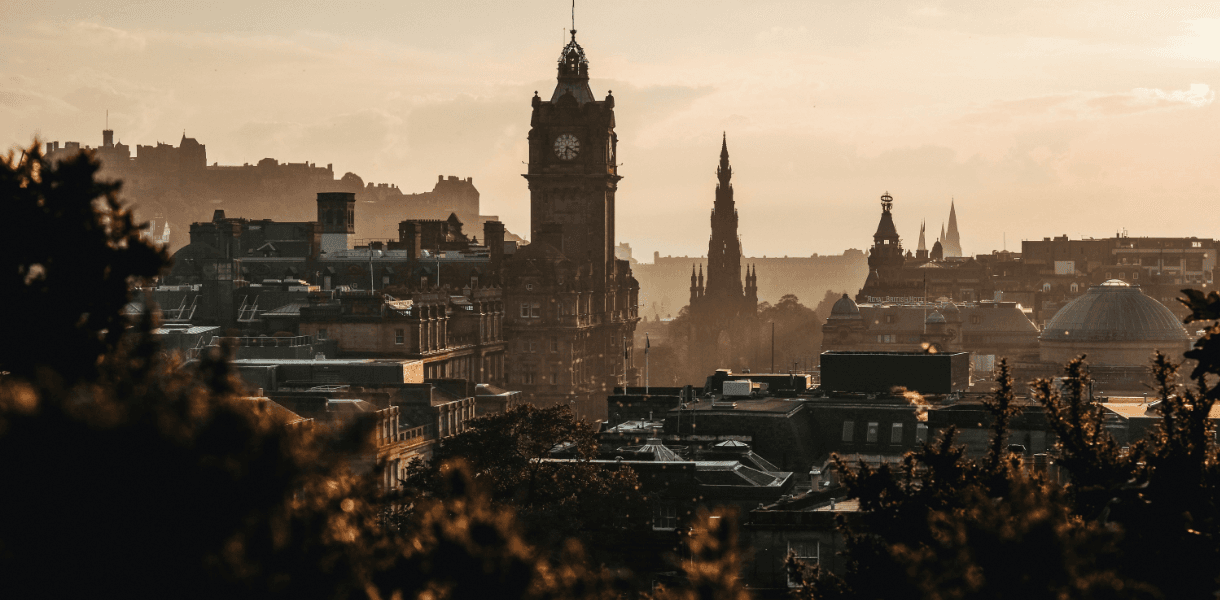
Scotland’s cities are among the strongest in Britain because they feel so completely themselves. Edinburgh is one of Europe’s great capital cities, all skyline, stone, closes, terraces and accumulated authority. Glasgow is larger, rougher, funnier and in some ways more immediately lovable, with a deep cultural life and a cityscape built by trade and industry on a grand scale. Aberdeen brings north-eastern toughness and granite formality. Dundee has reinvented itself with more flair than many expected. Even the smaller cities, such as Inverness, Stirling and Perth, add something important to the wider national picture. Scotland is not just a landscape destination with a couple of urban interruptions. Its cities are central to the whole experience.
Landscapes that genuinely deserve the fuss
There are countries where one approaches the scenic reputation with mild suspicion. Scotland is not one of them. The Highlands, islands, west coast sea lochs, Cairngorms, glens and mountain roads are as dramatic as promised, and often more varied. Yet what makes the scenery especially rewarding is that it rarely feels empty of human meaning. There are ruined townships, old military roads, crofting country, ferries, fishing villages, field systems, whisky towns and long stories in the land. The drama does not float above the history. It is full of it.
Islands and coastlines with entirely different moods
Scotland’s coastline is not one thing, and that is one of the country’s great pleasures. The east has fishing towns, cliffs and broad coastal light. The west has sea lochs, ferries, islands and a more weather-beaten grandeur. The Hebrides bring Gaelic culture, Atlantic exposure and beaches that can look implausibly beautiful while the wind tries to remove your face. Orkney and Shetland feel further removed again, with Norse inheritance and a different kind of northern presence. A traveller could spend years on Scotland’s coasts and still not feel they had finished arguing with the sea.
History that still sits in plain sight
Scotland is exceptionally good at making history visible. Castles appear in strategic, romantic and occasionally ludicrously photogenic settings. Battlefields, abbeys, old universities, tower houses, planned towns and industrial relics all survive in forms that still help explain the country. Edinburgh Castle, Stirling Castle, the great abbeys of the Borders, St Andrews, Culloden, Skara Brae, the Antonine Wall and countless smaller sites all contribute to a sense that the past here has not been discreetly filed away. It remains active in the landscape.
Local character that does not feel staged
One of the nicest things about travelling in Scotland is that the country’s sense of self generally feels lived rather than packaged. Local identity runs strong, but in different ways in different places. Island communities do not feel the same as central belt cities. The north-east does not feel like Argyll. The Borders do not feel like Skye. That variation keeps the country lively. It also means Scotland rewards repeat visits especially well. You are never simply “doing Scotland.” You are entering a particular part of it, with its own stories and rhythms.
The different parts of Scotland
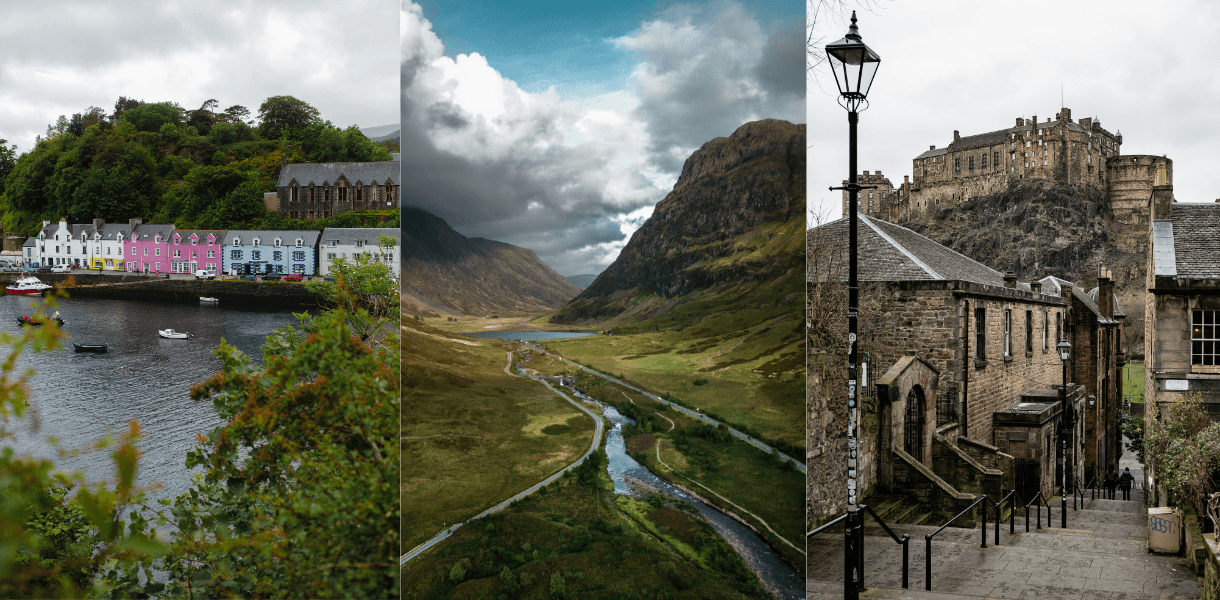
Scotland is best understood not as one grand scenic mass, but as a country of distinct regions, each with its own landscape, pace and personality.
Edinburgh and the Lothians
This is Scotland at its most ceremonially self-assured. Edinburgh gives you capital-city grandeur, old and new town drama, festivals, statehood and history on almost indecently concentrated display, while the surrounding Lothians soften things with coast and countryside.
Key places
Edinburgh, North Berwick, South Queensferry, Haddington
Best for
First visits, historic city breaks, culture, architecture and shorter trips
Glasgow and the west
The west gives you Glasgow’s urban force, the Clyde story and a region that moves quickly from industrial city to sea loch and coast. It feels bigger, looser and more muscular than the east, and often funnier too.
Key places
Glasgow, Paisley, Greenock, Helensburgh, Ayr
Best for
City breaks, music, industrial heritage, west-coast jumping-off points
The Highlands
This is the Scotland of glens, lochs, mountain passes, long roads, sparse settlement and the sense that weather may have a formal constitutional role. It is the country’s most dramatic region, but also one of its most historically layered.
Key places
Inverness, Fort William, Aviemore, Glen Coe, Ullapool
Best for
Scenic touring, walking, road trips, castles and big landscape experiences
The islands
Scotland’s islands are not one chapter but several. Skye, Mull, Islay, Harris and Lewis, Orkney and Shetland all have very different moods, histories and geographies. What links them is the sea and a strong sense of local identity.
Key places
Portree, Tobermory, Stornoway, Kirkwall, Lerwick
Best for
Coast, Gaelic culture, archaeology, ferry-based trips and longer adventures
The north-east
This is a different Scotland again, shaped by fishing, farming, whisky, granite towns and a more open eastern light. Aberdeen anchors it, but the wider region is full of coastal villages, castles and agricultural country.
Key places
Aberdeen, Stonehaven, Elgin, Banff, Fraserburgh
Best for
Castles, whisky country, coast and quieter touring
Fife, Perthshire and the east-central heartland
This part of Scotland offers some of the easiest and most rewarding touring, with historic towns, river landscapes, castles, country houses and a strong sense of old lowland Scotland at work.
Key places
St Andrews, Perth, Dunkeld, Falkland, Pitlochry
Best for
Historic towns, scenic driving, easier first trips and city-country balance
The Borders and southern Scotland
The Borders are quieter, greener and more entwined with the long Anglo-Scottish frontier than many first-time visitors expect. This is abbey, river and hill country, full of old loyalties and quieter forms of grandeur.
Key places
Melrose, Jedburgh, Kelso, Peebles, Dumfries
Best for
Abbeys, walking, slower touring and repeat visits
Cities and towns to know
Cities worth knowing
Edinburgh
One of the most visually complete cities in Europe, Edinburgh combines old power, intellectual history, architectural grandeur and a capacity for festival excess without quite losing its dignity.
Glasgow
A city of enormous cultural strength, industrial memory and urban confidence, Glasgow rewards visitors who like their cities lively, layered and less concerned with posing.
Aberdeen
Granite, sea-facing and slightly severe in the best way, Aberdeen gives you a very different Scottish city experience from either Edinburgh or Glasgow.
Inverness
Smaller and easier than the bigger cities, Inverness works well as a Highland base and has just enough city character to stop it feeling merely practical.
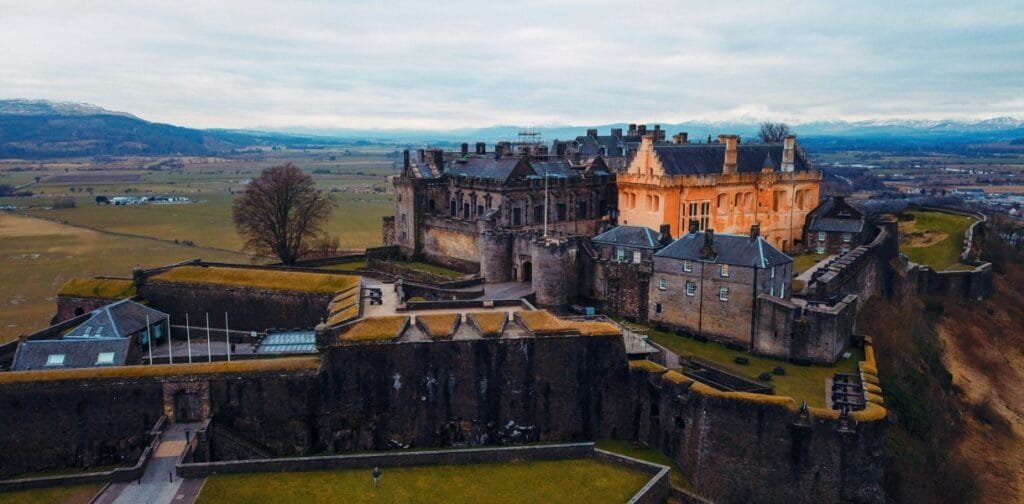
Stirling
Compact but historically enormous, Stirling is one of the strongest places in the country for feeling Scotland’s political and military past in the landscape around you.
Towns with particular character
St Andrews
Golf, ruins, university life and a coastal setting that gives the place much more than one famous fairway.
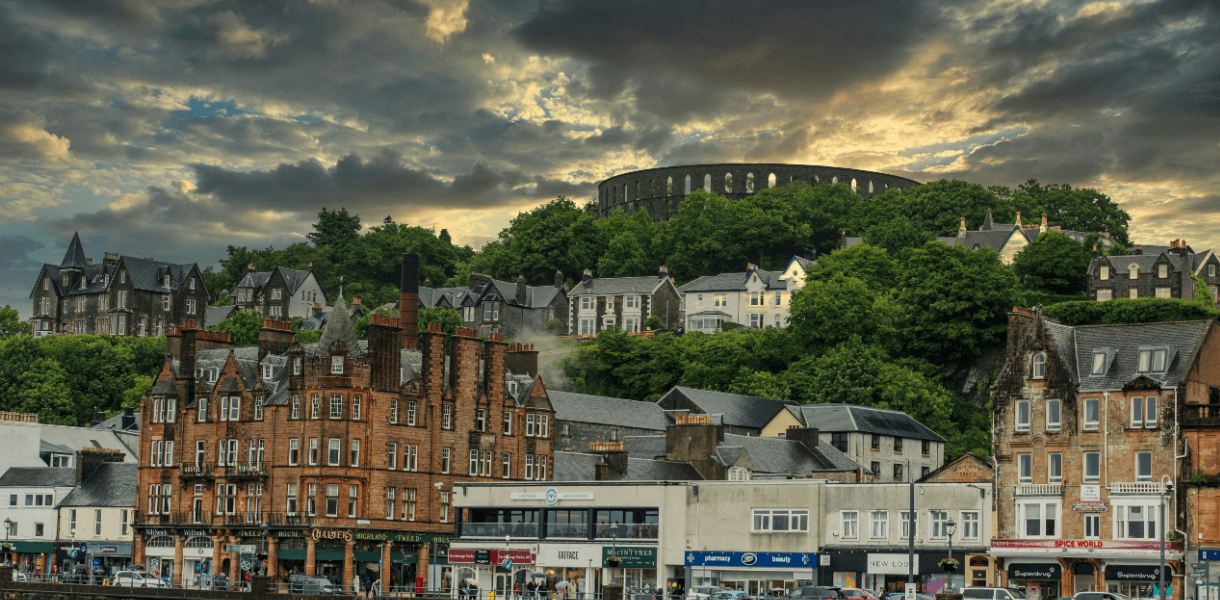
Oban
Part harbour town, part ferry hub, part west-coast gateway, and all the more enjoyable for being a place where things still seem to happen.
Pitlochry
A useful and attractive Perthshire base, well placed for visitors who want scenic comfort without too much logistical suffering.
Portree
Skye’s best-known town, colourful, busy and deeply useful, if not always in quite the calm picturesque manner its photographs imply.
Melrose
A Borders town with abbey depth, good walking country and a very satisfying sense of place.
Tobermory
One of those harbour towns that looks as though it has been mildly enhanced for storybook effect, but remains likeable enough to get away with it.
Major tourist attractions
Castles and fortresses
Edinburgh Castle, Edinburgh
The country’s most commanding urban fortress and one of the clearest symbols of Scotland’s statehood and history.
Stirling Castle, Stirling
A major national site in a town that already carries extraordinary historical weight.
Eilean Donan Castle, Highlands
Famous, yes, but with good reason. It sits in one of the most photogenic settings in the country and has become part of the visual language of Scotland itself.
Urquhart Castle, Loch Ness
A strong combination of ruin, lochside setting and historical atmosphere.
Historic buildings and heritage sites
Edinburgh Old and New Towns
A whole historic urban ensemble of exceptional quality, and one of the best cityscapes in Europe.
St Andrews Cathedral and castle ruins
A dramatic concentration of religious and academic history in one coastal town.
The great Border abbeys
Melrose, Jedburgh, Kelso and Dryburgh together tell a powerful story of medieval faith, conflict and ruin.
The Antonine Wall
A quieter Roman frontier than Hadrian’s Wall, but a significant reminder that imperial edges once ran across central Scotland.
Natural landmarks and scenic highlights
Glen Coe
One of the country’s most famous landscapes and still capable of making the fuss seem justified.
Loch Ness
More than a monster joke, this is a major Highland landscape route with real scenic force.
The Isle of Skye
A whole concentration of cliffs, mountains, coast and increasingly unignorable popularity.
Cairngorms National Park
A very different mountain landscape from the west, broader and more expansive, excellent for walking and wildlife.
Museums and cultural attractions
Kelvingrove and Glasgow’s museum quarter
A strong way into Glasgow’s cultural confidence and wider civic story.
The V and A Dundee and the waterfront area
A sign of Dundee’s reinvention and a useful modern counterweight to all the castles and battlefields.
National Museum of Scotland, Edinburgh
One of the best introductions to the country’s story in all its strange and ambitious breadth.
Family favourites
Loch and castle touring routes
Scotland is unusually good at family trips where the landscape itself does half the work.
Edinburgh’s castle and city centre
A strong family choice if your group likes history with towers attached.
Island ferry trips and wildlife cruises
A reliable way of turning travel into part of the adventure rather than merely the bit before it.
How to plan a trip here
How long to stay
A long weekend can work if you focus on one city and its surrounding area, such as Edinburgh and the Lothians, Glasgow and the west, or Inverness and a slice of the Highlands. For a proper first national trip, a week is much better. If you want cities, Highland scenery and any island element at all, longer is better still. Scotland looks manageable on a map right until you remember that glens, ferries, weather and scenic roads have their own ideas.
Best bases
Edinburgh is the easiest first base for a shorter trip. Glasgow works brilliantly if you want city energy and westward options. Inverness is the most practical Highland base for first-timers. Stirling is excellent if you want history with easy reach into several parts of the country. Oban, Fort William and Pitlochry all work well depending on whether your priority is west coast, mountains or central scenic touring.
Car or public transport
You can do Edinburgh, Glasgow, Stirling and parts of the east and central belt very well by rail. Scenic rail journeys are also part of Scotland’s appeal. But once your trip moves towards the Highlands, islands, smaller towns or flexible scenic touring, a car becomes much more useful. Ferries add another layer. Scotland is perfectly possible without driving, but the more remote and varied your ambitions, the more helpful your own wheels become.
Best first-time route through the country
A very strong first trip would be Edinburgh, Stirling and one Highland base such as Inverness or Fort William. That gives you capital-city grandeur, core national history and dramatic landscape without trying to cram the entire country into one overcaffeinated week. Another excellent first route is Edinburgh and Glasgow, followed by Perthshire or the west coast for contrast.
Best time to visit
Late spring and early autumn are especially good, when the landscapes look generous, the roads are more forgiving than at peak summer and the days are still long enough to travel well. Summer is spectacular for scenery and islands, though popular routes get crowded and the midge question becomes a matter of public policy. Winter suits Edinburgh and Glasgow very well, and parts of the Highlands can be magnificent if approached with common sense and suitable layers.
Who this country suits best
Scotland suits visitors who like strong landscapes, visible history, road journeys, old towns, big weather and trips with more than one mood. It is especially good for people who enjoy combining city depth with scenic movement, and for repeat travellers who know that islands, coasts, borders and eastern towns can be just as rewarding as the famous Highland loop.
Best ways to experience the country
Best for a first visit
Combine Edinburgh with Stirling and one Highland or Perthshire base. That gives you capital-city authority, national history and a real taste of the landscapes that make Scotland so memorable.
Best for history lovers
Focus on Edinburgh, Stirling, St Andrews, the Borders and at least one battlefield or great castle site. Scotland is exceptionally strong on visible political, religious and military history.
Best for coast and scenery
Spend most of your time on the west coast or islands, using Oban, Skye, Mull or an Inverness-to-west route as your backbone. The country’s maritime side is one of its greatest pleasures.
Best for a long weekend
Choose one of these and stay loyal to it
Edinburgh and the Lothians
Glasgow and the west
Inverness and a Highland slice
Trying to “do Scotland” in three days is an efficient way to become unusually intimate with A-roads.
Best for a week-long tour
Use two or three bases and let the country unfold in stages. City, then central history, then scenic north or west works especially well.
Best for city and countryside balance
Edinburgh and Perthshire, Glasgow and Argyll, or Inverness with surrounding Highland routes all make strong pairings.
Final verdict
Scotland has the useful quality of being exactly as memorable as people hope and quite a bit more complicated than they expect. It can give you capital-city grandeur, working-city wit, mountain roads, ferry crossings, islands, abbey ruins, battlefields, old university towns, whisky country and coastlines that seem to have been designed mainly to make weather look impressive. That would be enough. But the real strength of the country lies in the way all these things remain tied to a strong, lived identity rather than floating free as visitor scenery.
This is a country for travellers who like places with backbone. Not just views, though there are plenty. Not just history, though it is everywhere. What makes Scotland linger in the mind is the force of its own character, how different one part feels from another, and how often the land itself seems to be in conversation with the past. For that sort of visitor, Scotland is not just a beautiful country. It is one of the most rewarding journeys in Europe.