
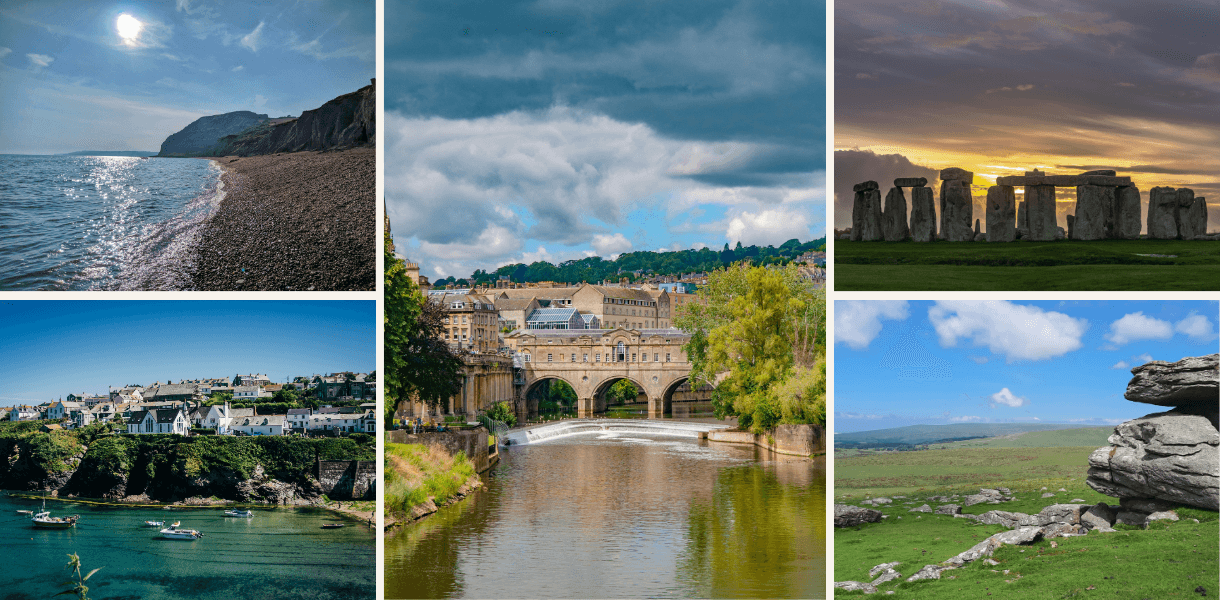
South West England is the part of the country that seems to have been given more than its fair share of the good scenery and then, not quite content with that, helped itself to ancient stone circles, cathedral cities, fishing harbours, moorland, fossil cliffs, mellow market towns and enough cream tea debate to occupy several lifetimes. It stretches from the Roman and Georgian poise of Bath to the wave-battered edge of Cornwall, taking in Dorset cliffs, Devon estuaries, Somerset hills, Wiltshire’s ancient landscapes and Bristol’s urban swagger along the way.
What makes the South West so compelling is not simply that it is beautiful, though it plainly is. It is that the region has depth. Its landscapes are full of old routes, old industries, old faith, old quarrels and old ambitions, and all of that still shapes what you see now. You come for the sea, perhaps, and find yourself unexpectedly interested in tin, wool, abbeys, engineering, Georgian terraces or prehistoric monuments. This is a region that rewards both dawdling and curiosity.
Quick takeaways
- Best for
Coastal touring, scenic short breaks, cathedral cities, prehistoric sites, market towns and long rambling holidays - Known for
Cornish and Devon coasts, Bath and Bristol, Dartmoor and Exmoor, the Jurassic Coast, Stonehenge and handsome villages - Don’t miss
Bath, St Ives or north Cornwall, Dartmoor, the Jurassic Coast, Bristol and either Salisbury or Wells - Best base ideas
Bath, Bristol, Exeter, St Ives, Falmouth, Salcombe, Salisbury and Dorchester - Ideal trip length
Four days for a focused break, a week for a strong first regional trip, longer if you want both coast and inland landscapes - Best time to visit
Late spring and early autumn for the nicest balance of scenery and breathing space, though summer is glorious if you can forgive the company
The region at a glance
South West England is one of those regions that makes more sense the moment you start travelling through it than it does when you look at it on a map. From a visitor’s point of view, it feels less like a neat administrative shape and more like a long unfolding argument between coast, country, history and weather.
The western edge has the wilder, saltier personality most people picture first. Cornwall and Devon bring coves, surf beaches, fishing towns, estuaries and moorland interiors. Dorset gives you cliffs, bays and the long geological theatre of the Jurassic Coast, while Somerset offers levels, hills, small cities and abbey history. Further north and east, Gloucestershire and Wiltshire shift the mood towards Cotswold stone, Roman remains, cathedral towns and prehistoric landscapes. Bristol adds urban intelligence and swagger. Bath, meanwhile, behaves as though elegance were a civic duty.
For visitors, this is a region that can support many different kinds of trip. It works for a seaside holiday, a scenic road trip, a historic city break, a walking holiday, a literary ramble or a week spent trying to alternate between wild headlands and good lunches. It is broad, yes, but it hangs together through a shared sense of layered landscape and a slightly windblown confidence.
Why this region matters
Ancient monuments and Roman grandeur
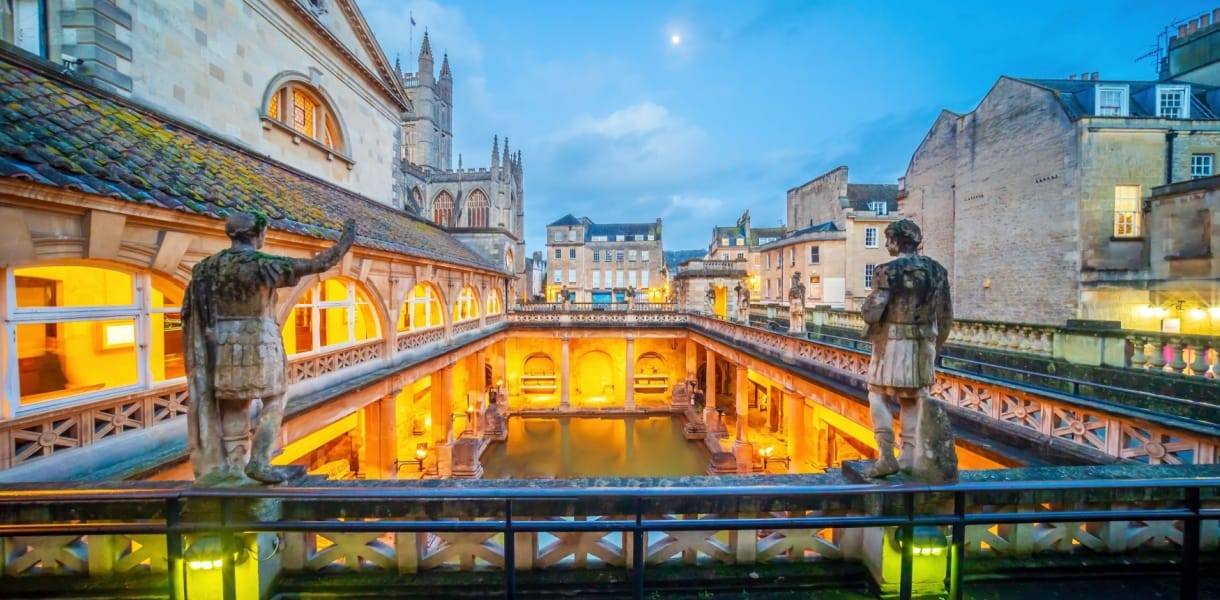
South West England matters because it contains some of the oldest and deepest visible layers of English history, but wears them with an ease that can make you forget how much has happened here. The region has prehistoric ceremonial landscapes of international importance, Roman urban grandeur, medieval ecclesiastical power, seafaring histories, mining landscapes, farming cultures, wool wealth, engineering triumphs and some of the country’s most recognisable coastal scenery. Stonehenge alone gives Wiltshire a place in the long human story that is difficult to overstate, while Roman Bath remains one of the clearest surviving statements of Roman Britain’s confidence and sophistication.
A region shaped by hard edges
Yet the South West is not simply a parade of famous monuments. It is a region shaped by geography in a particularly forceful way. Peninsulas, estuaries, moors, downs and exposed coasts have always influenced how people lived here, what they built, how they traded and what they feared. Cornwall’s old mining country and harbours tell one sort of story. Dorset’s fossil-rich cliffs and old ports tell another. Bath and Bristol speak of empire, trade, engineering and urban ambition. Exmoor and Dartmoor still feel as if they belong partly to weather and old folklore rather than to modern timetables.
Seafaring, trade and inland wealth
The sea has been one of the region’s great makers. The South West coastline has long invited fishing, smuggling, naval life, maritime trade and seaside reinvention. Cornwall and Devon, in particular, carry centuries of Atlantic-facing identity. Inland, the South West’s historic wealth came in different forms according to place and era. Wool and agriculture shaped parts of Wiltshire and Gloucestershire. Religious authority left its mark in cathedral cities and great abbey towns. Georgian Bath rose as a masterpiece of fashionable urban confidence. Bristol grew into one of Britain’s great ports, then into a city of invention, protest, culture and reinvention. The Clifton Suspension Bridge still makes its point across the Avon Gorge with a kind of calm engineering swagger.
From Roman baths to ghostly moors
What survives for visitors today is wonderfully varied. There are stone circles and hill forts, abbeys and cathedrals, medieval streets, harbours full of bobbing boats, moorland tracks, Regency crescents, old industrial remnants, cliff paths and villages that appear to have been invented mainly to test your ability to park in them. The region’s appeal is not a single thing. It is the way all these histories sit so close together. You can spend the morning in a Roman city, the afternoon in a tidal fishing village and the next day on a moor that looks as though it may still have private arrangements with ghosts.
That is what makes the South West such a rewarding region for visitors today. It is not merely scenic, and it is not merely historic. It is one of those fortunate parts of Britain where beauty and historical density keep improving each other.
What makes it special today
Coastlines that keep changing mood
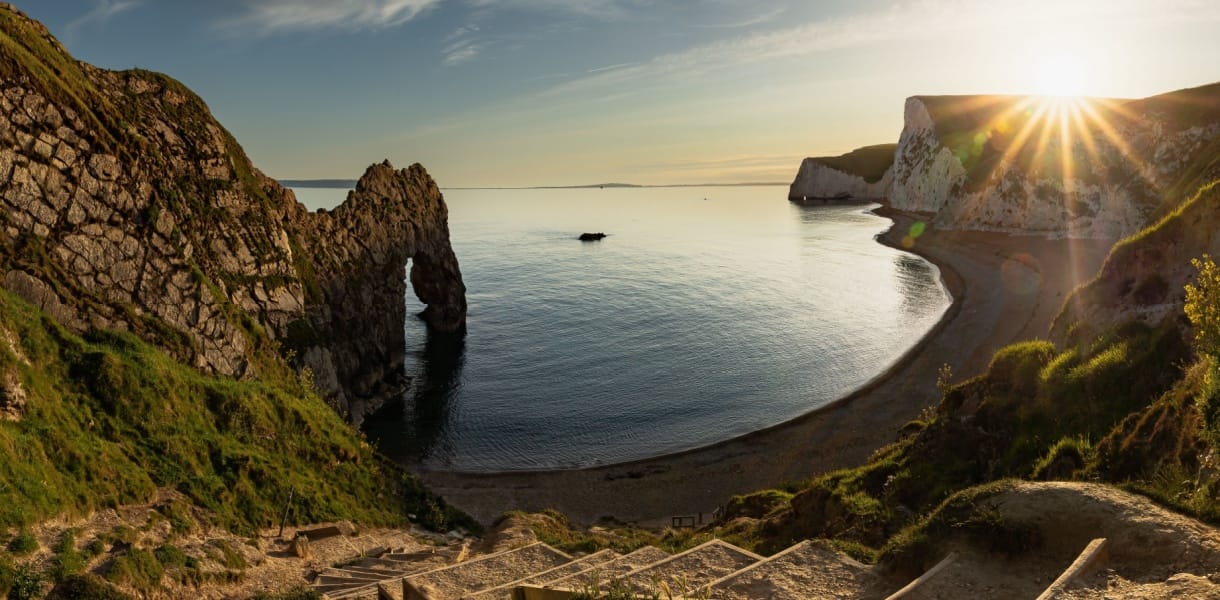
The South West coast is one of the strongest reasons people come here, and quite right too. But what makes the coast especially good is its variety. North Cornwall and north Devon feel larger, windier and more Atlantic in temperament. South Devon can seem softer and more polished. Dorset gives you long cliff drama and curving bays. The Bristol Channel coast has a sterner, stranger charm. You are not just getting the seaside here. You are getting a whole anthology of it.
Great cities and smaller urban jewels
The South West has a particularly strong urban line-up. Bath is one of the country’s great city-break destinations, Bristol one of its most characterful, and places such as Salisbury, Wells, Exeter and Gloucester add depth, architecture and atmosphere. These are cities and towns where you can happily spend a weekend doing very little beyond wandering, looking up and eating well, which is usually a promising sign.
Moorland, downs and older landscapes
The inland landscapes are just as important as the coast. Dartmoor and Exmoor give the region its wilder inland mood, while Wiltshire’s downs and prehistoric landscapes carry a different, older sort of grandeur. The Cotswold edge in Gloucestershire is gentler but no less distinctive. This is one of the region’s great strengths. It lets a trip breathe. You can step away from the obvious hotspots and find a completely different South West waiting inland.
Harbours, food and local texture
The South West is very good at places that feel lived in rather than simply admired. Fishing towns, harbour villages, old market centres and estuary settlements give the region much of its everyday charm. Some are polished, some are scruffier, some are better at seafood than at parking, but they give the region its human scale. Even the most famous parts of Cornwall and Devon work best when you remember that behind the postcard views are working landscapes and long local histories, not just holiday scenery.
A region made for layered trips
One of the nicest things about South West England is that it suits more than one kind of visitor without losing its identity. You can come for walking, archaeology, beaches, literary associations, gardens, family attractions, Georgian elegance, surfing, harbours or dramatic drives, and still feel that you are in the same broad regional world. That is a rare quality. Some regions are very good at one thing. The South West is good at many, and manages to feel all the richer for it rather than diluted.
The different faces of the region
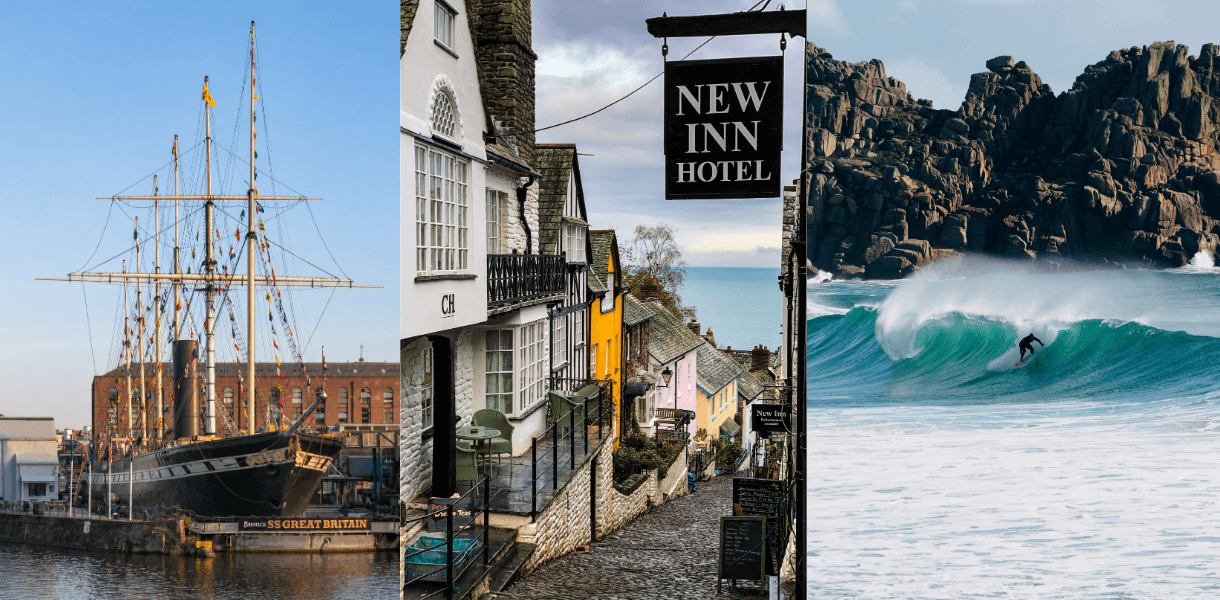
South West England works best when you stop seeing it as one long cream-coloured blur of beaches and cottages. It is a region of separate moods, from Atlantic edges and surf towns to cathedral cities, prehistoric landscapes, harbour country, moors, market towns and one of England’s most distinctive urban centres.
Cornwall and the Isles of Scilly give the region its far-western drama, with St Ives, Falmouth, Penzance, Padstow, Tintagel and the islands combining cliffs, fishing harbours, surf beaches, art, mining heritage and the enjoyable feeling of being almost out of England altogether.
Devon is one of the South West’s great all-rounders, moving easily between Exeter, Salcombe, Dartmouth, Ilfracombe, Totnes, Dartmoor and the Exmoor fringe. It offers surf coast, estuary towns, moorland, villages, family seaside breaks, walking country and the sort of road trips that make a short holiday feel ambitiously full.
Dorset and Somerset bring a gentler but richly varied western-English mood. Dorchester, Lyme Regis and Weymouth carry Dorset’s Jurassic Coast, harbour towns and hill country, while Wells, Frome and Glastonbury add Somerset’s abbey history, Levels, cider country, handsome towns and quietly absorbing weekends.
Gloucestershire and Wiltshire tilt the region towards Roman, prehistoric and cathedral England. Salisbury, Marlborough, Cirencester, Tetbury, Gloucester and Castle Combe link Stonehenge, Salisbury Plain, Cotswold stone, villages, ancient landscapes and some of the South West’s most classic inland touring.
Bristol and the West of England give the region its urban spark. Bristol, Clifton, Bath, Cheddar and Bradford on Avon combine food, culture, engineering heritage, Georgian grandeur, gorges, canals and easy multi-base trips before the road begins to pull west towards coast and moor.
Counties within South West England
Cornwall
Cornwall is the region’s great edge-of-the-map county, all surf, headlands, mining echoes, artistic detours and small harbours that look as though they have been arranging themselves photogenically for centuries.
- Key places
St Ives, Falmouth, Padstow, Penzance, Tintagel - Known for
Atlantic coast, beaches, harbour towns, tin-mining heritage and strong local identity - Standout attractions
Tintagel Castle, St Michael’s Mount, Minack Theatre, Tate St Ives, the Eden Project - Best kind of visit
A coastal touring trip, a scenic week, or a slower harbour-hopping holiday
Devon
Devon is the all-rounder. It has two coasts, a city worth using as a base, moorland for mood, estuaries for elegance and enough variety to support almost any kind of break.
- Key places
Exeter, Dartmouth, Salcombe, Ilfracombe, Totnes, Dartmoor - Known for
Seaside breaks, estuaries, moorland, walking and family holidays - Standout attractions
Dartmoor National Park, Exeter Cathedral, Burgh Island, Clovelly, the English Riviera - Best kind of visit
A longer mixed trip with coast, towns and inland landscape
Dorset
Dorset gives the South West one of its most iconic stretches of coast and some wonderfully satisfying inland scenery besides. It feels scenic without being showy about it.
- Key places
Dorchester, Lyme Regis, Weymouth, Bridport, Swanage - Known for
The Jurassic Coast, fossil beaches, harbour towns and soft rolling countryside - Standout attractions
Durdle Door, Lulworth Cove, Corfe Castle, Lyme Regis, Chesil Beach - Best kind of visit
A coast-focused short break or a geology-and-landscape touring trip
Somerset
Somerset has a lovely ability to feel quietly various. It can give you small cities, abbey history, myth-heavy hills, cider country and open wetlands all in one county.
- Key places
Wells, Glastonbury, Frome, Taunton, Minehead - Known for
Wells Cathedral, Glastonbury, the Levels, Exmoor access and market towns - Standout attractions
Wells Cathedral, Glastonbury Tor, Cheddar Gorge, Montacute House - Best kind of visit
A mixed heritage-and-countryside break
Gloucestershire
Gloucestershire brings Cotswold stone, Roman traces, cathedral-city substance and some of the gentlest beautiful countryside in the region.
- Key places
Gloucester, Cirencester, Tetbury, Stow-on-the-Wold, Tewkesbury - Known for
Cotswold villages, Roman history, market towns and attractive inland touring - Standout attractions
Gloucester Cathedral, Cirencester’s Roman heritage, Sudeley Castle, Cotswold villages - Best kind of visit
A village-and-town touring trip or a relaxed inland short break
Wiltshire
Wiltshire is one of the region’s oldest-feeling counties. It is a place of chalk landscapes, prehistoric monuments, cathedral grandeur and long roads through old country.
- Key places
Salisbury, Marlborough, Devizes, Bradford on Avon, Avebury - Known for
Stonehenge, Avebury, Salisbury Cathedral and expansive downland scenery - Standout attractions
Stonehenge, Avebury, Salisbury Cathedral, Lacock, Longleat - Best kind of visit
A history-led trip with prehistoric and cathedral highlights
Cities and towns to know
Cities worth knowing
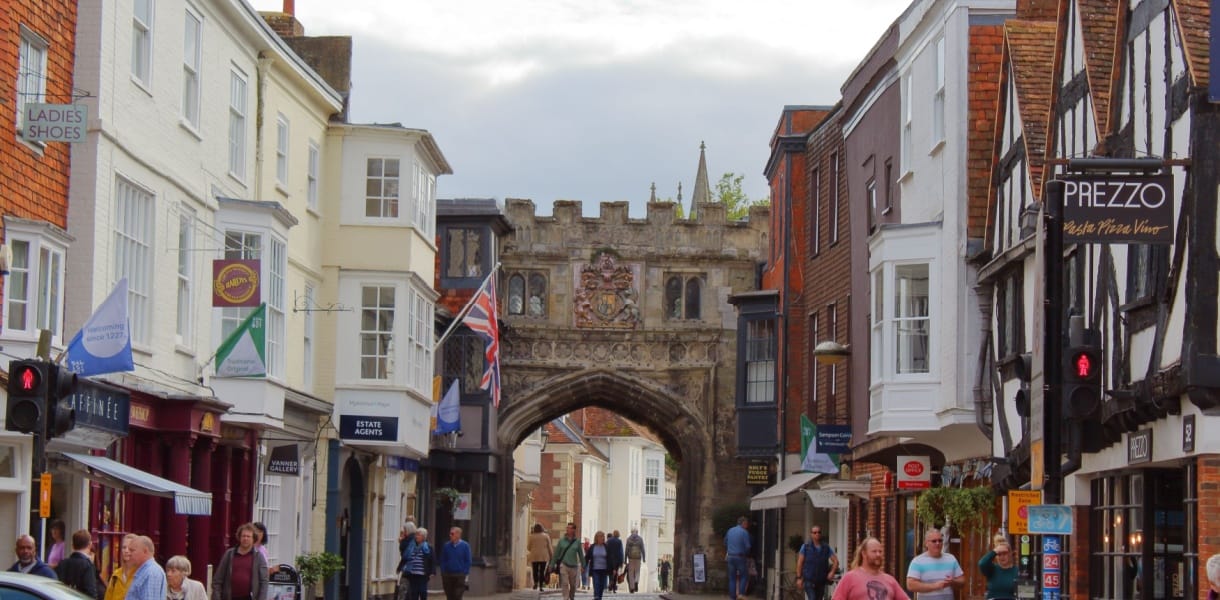
Bath
One of Britain’s great small cities, Bath is all Roman inheritance and Georgian poise. It is ideal for visitors who like architecture, history and the sort of urban elegance that makes even an ordinary coffee stop feel faintly improved.
Bristol
Bristol brings the South West modern energy, engineering pride and a satisfying amount of independent-mindedness. It is a superb city-break base and a very good reminder that this region is not only coast and countryside.
Exeter
A compact and appealing city with a strong cathedral, useful location and easy reach of both coast and moor. Exeter is one of the region’s most practical and underrated bases.
Salisbury
Smaller and quieter than Bath, but full of dignity. Salisbury works beautifully for visitors who want cathedral grandeur and quick access to some of England’s oldest landscapes.
Wells
Tiny by city standards and all the more enjoyable for it, Wells has one of the finest cathedral settings in the country and the sort of scale that invites lingering.
Towns with particular character
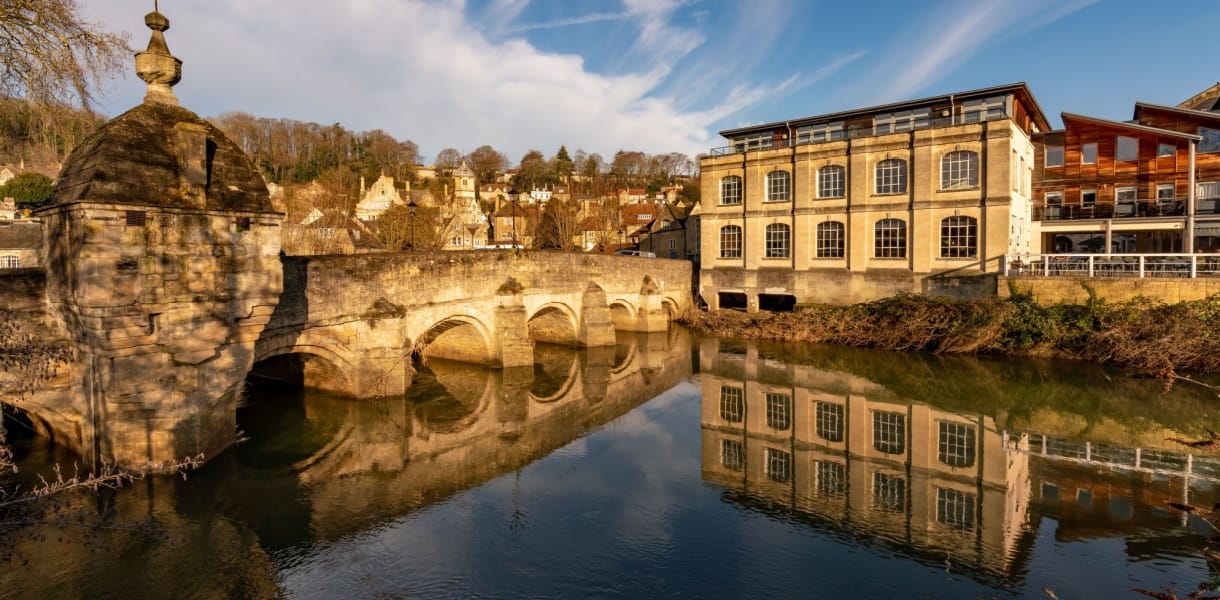
St Ives
Artistic, photogenic and rather too aware of it, though with good reason. St Ives remains one of Cornwall’s most distinctive towns.
Falmouth
A harbour town with depth, maritime character and a more grounded feel than some of the region’s glossier seaside names.
Lyme Regis
One of Dorset’s most charming coastal towns, full of fossils, sea air and good reasons to dawdle.
Totnes
A market town with character to spare, and the sort of place that makes an ordinary afternoon seem an acceptable occasion for browsing and lunching.
Frome
Stylish but not yet unbearable, Frome has become one of Somerset’s most appealing smaller-town bases.
Bradford on Avon
A handsome and atmospheric place that gives you Wiltshire stone, waterside charm and easy reach of Bath without requiring you to sleep in Bath prices.
Major tourist attractions
Castles and great houses
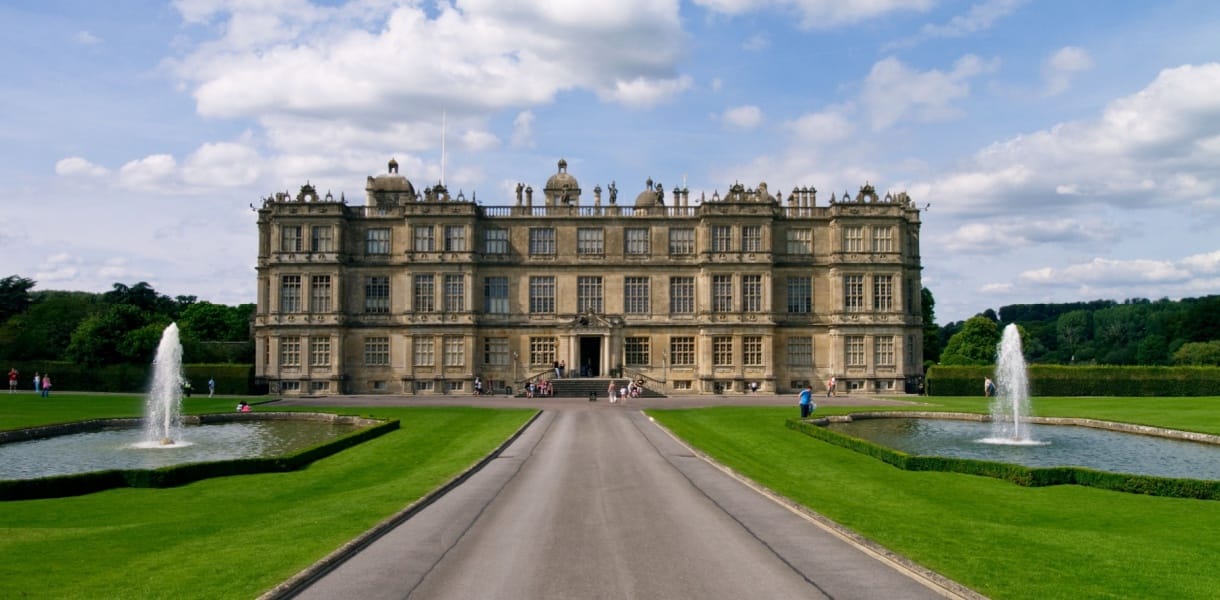
Tintagel Castle, Cornwall
Half ruined fortress, half myth delivery system, Tintagel remains one of the region’s most atmospheric historic sites.
St Michael’s Mount, Cornwall
A tidal island with the sort of profile that makes it seem almost too neatly designed, yet there it is.
Corfe Castle, Dorset
One of England’s great ruined castles, dramatically placed and wonderfully effective at stirring the historical imagination.
Longleat, Wiltshire
A stately home that combines architecture, landscape and family appeal with unusual confidence.
Cathedrals, abbeys and historic buildings
Bath’s Roman and Georgian core
One of the most complete and satisfying historic urban ensembles in Britain, with Roman Bath at its heart.
Salisbury Cathedral, Wiltshire
A magnificent cathedral in a city that still feels properly shaped by it.
Wells Cathedral, Somerset
One of the most beautiful cathedrals in England, and all the more enjoyable for appearing in so compact a city.
Gloucester Cathedral, Gloucestershire
A cathedral with great scale and atmosphere, and one that anchors Gloucester’s historic presence very effectively.
Museums and heritage attractions
The Roman Baths, Bath
Still one of England’s strongest heritage experiences, because the place retains its strangeness as well as its fame.
SS Great Britain, Bristol
A major attraction that helps explain Bristol’s engineering and maritime story.
The Eden Project, Cornwall
Not ancient, but unquestionably one of the region’s major visitor draws and a good family counterweight to all the abbeys and tors.
Fleet Air Arm Museum, Somerset
A substantial heritage attraction that broadens the region’s historical picture.
Natural landmarks and scenic highlights
The Jurassic Coast, Dorset and East Devon
One of the great scenic stretches in England, full of cliffs, bays, fossils and dramatic sea-worn shapes.
Dartmoor National Park, Devon
Moorland, tors, weather and a huge sense of oldness. Dartmoor is one of the region’s defining inland landscapes.
Exmoor
Smaller and often quieter than Dartmoor, but full of atmosphere and excellent for walkers and scenic drives.
Stonehenge and Avebury, Wiltshire
A prehistoric pairing that gives the region some of its deepest historical roots and strongest sense of mystery.
Family favourites
The Eden Project, Cornwall
One of the region’s big modern family draws, and a useful rainy-day trump card.
Longleat, Wiltshire
A major all-round attraction if your group wants somewhere that can occupy wildly different attention spans.
Cheddar Gorge, Somerset
Geology, scenery and a bit of drama, which is not a bad combination for a family day out.
How to plan a trip here
How long to stay
A long weekend works very well if you focus on one slice of the region, such as Bath and Bristol, south Devon, north Cornwall, or Dorset and Somerset. For a fuller first trip, a week is much better. The South West looks manageable on a map right up until you start allowing for coastal roads, scenic detours and the fact that you will keep stopping.
Best bases
Bath and Bristol are the easiest urban bases, especially for shorter trips. Exeter is excellent if you want access to both city comforts and Devon landscapes. Falmouth, St Ives and Salcombe suit coast-heavy trips. Salisbury works well for Wiltshire and the eastern side of the region. For longer holidays, the South West often rewards a two-base plan rather than one heroic attempt to do everything from a single postcode.
Car or public transport
You can absolutely do city-focused South West trips by rail, especially around Bath, Bristol, Salisbury and Exeter. For deeper coastal and rural exploring, though, a car is usually the better option. The region’s variety is one of its great strengths, but it is not always arranged for your convenience.
Best first-time route through the region
A very strong first trip would be Bath and Bristol followed by either north Cornwall and Devon or Dorset and Somerset, depending on whether you want a wilder Atlantic mood or a softer southern coastal one. Another excellent first route is Bath, Salisbury and Wiltshire’s historic landscapes, then westward into Devon or Cornwall if time allows.
Best time to visit
Late spring and early autumn are probably the sweet spots. The scenery looks excellent, the weather can be kind, and the famous places are usually more enjoyable than they are at the height of summer. Summer is glorious for the coast, obviously, but it is also summer, which means other people have had the same idea.
Who this region suits best
It suits visitors who like variety, scenery and visible history. It is especially strong for people who want coastal beauty without giving up cities and heritage, and for repeat visitors who enjoy mixing famous highlights with smaller towns and inland landscapes.
Best ways to experience the region
Best for a first visit
Combine Bath or Bristol with one scenic coastal base. That gives you architecture, city life and a proper taste of the region’s wider landscape.
Best for history lovers
Focus on Bath, Salisbury, Stonehenge, Avebury and one or two cathedral or castle sites. The region is exceptionally strong on long historical range.
Best for coast and scenery
Spend most of your time in Cornwall, Devon or Dorset and let the trip breathe. The South West is often best when you stop trying to tick it off and just let one stretch of coast sink in properly.
Best for a long weekend
Choose Bath and Bristol, or pick one county and stay loyal to it. The South West punishes over-ambition mainly by making you spend too much time in the car while attractive things slip past the windows.
Best for a week-long tour
Use two bases. One urban, one coastal or rural. That is usually the nicest way to understand the region’s balance.
Best for city and countryside balance
Bath and Wiltshire, Bristol and Somerset, or Exeter and Devon are all excellent pairings. Each gives you architecture and landscape in sensible proportions.
Final verdict
South West England has a slight unfair advantage as a travel region because it can be dazzling on first acquaintance and still grow more interesting the longer you stay. It has coastlines people remember for years, cities of real distinction, prehistoric landscapes, moorland, abbeys, bridges, harbours and enough beautiful towns to make restraint feel like a personal failing. But the real strength of the region is not just that it is pretty. It is that it has depth almost everywhere you look.
This is a region for people who like holidays with layers. Places where the view is excellent, but so is the history behind it. Places where a walk, a harbour lunch, a cathedral close and an old road across the downs can all belong to the same trip without seeming remotely forced. For that sort of visitor, the South West is not just one of England’s most attractive regions. It is one of its richest.