Durham Cathedral is not just a building. It’s a time machine, a miracle of medieval engineering, and a place so beautiful it has made actual grown-ups cry. Built to house the bones of a wandering saint and standing proud above a loop of the River Wear, it’s a structure that demands attention, and deserves it.
Here are 10 thoroughly excellent things you should know about Durham Cathedral before you visit. Or even if you don’t.
1. It was built to house a very travelled saint
St Cuthbert, who died in 687, spent more time travelling after his death than most of us do while alive. When Viking raids forced the monks of Lindisfarne to evacuate in the 9th century, they took Cuthbert’s coffin with them and wandered the north for over 100 years. He finally came to rest in Durham in 995. And by “rest,” we mean he was reburied multiple times. Medieval Britain was weird like that.
2. It was a feat of engineering before engineers were a thing
Construction began in 1093, under the direction of Bishop William of St Calais (whose name sounds like a ferry route but was actually a Norman bigwig). The cathedral was built astonishingly quickly, most of it completed within 40 years. Its rib-vaulted ceilings were an architectural leap forward and directly inspired the design of later Gothic cathedrals across Europe. In short, Durham did it first.
3. The stone columns are the size of tree trunks (and then some)
Step inside and the first thing that hits you is the scale. The columns are vast, fat enough to hide behind, should you be fleeing Norman tax collectors or overzealous tour guides. They’re decorated with chevrons and zigzags, presumably to stop medieval worshippers from dozing off during evensong.
4. It has a tower with a view worth 325 steps
Yes, it’s a climb. And yes, you’ll regret your life choices somewhere around step 240. But the view from the top is jaw-dropping, a full panorama of Durham city, the river curling below like a lazy dragon, and on clear days, the Pennines brooding in the distance. Totally worth the wheeze.
5. It was the final stop on a medieval pilgrimage trail
Durham became a major pilgrimage site in the Middle Ages, thanks to its sacred relics, Cuthbert’s remains, a few of his belongings, and later, the bones of the Venerable Bede (the patron saint of scholarly overachievers). Medieval pilgrims came from all over Britain to visit. Many arrived footsore. Some arrived barefoot. A few probably arrived slightly annoyed to discover they were late for vespers.
6. It’s both a fortress and a place of worship
The cathedral isn’t just a religious site, it was also part of a defensive complex. The Prince Bishops of Durham had the kind of power that would make most monarchs nervous. They could raise armies, mint coins, and enforce laws. Essentially, they ran their own private kingdom north of the Tees. The cathedral, with its thick walls and commanding view, was both sanctuary and stronghold.
7. It’s been used in the movies (but not always the way you think)
Yes, Harry Potter fans, scenes from the first two films were shot here, Harry releases Hedwig in one scene filmed in the cloisters. But don’t tell the monks. Durham also played a Jedi Temple in Star Wars spin-offs and once featured in a 1970s TV show in which it was, memorably, disguised as a Russian military base. Somehow.
8. The library is over a thousand years old (give or take a century)
Durham Cathedral’s library is one of the oldest in Britain, with over 75,000 printed books, 2,000 manuscripts, and the general smell of ancient parchment. It contains, among other things, some of the earliest copies of the Gospels and a letter written by Henry VIII. If you like your books dusty and full of secrets, this is your place.
9. It has survived fire, reformation, and some very bad 1970s repairs
Over the centuries, the cathedral has weathered Viking invasions, Henry VIII’s Dissolution of the Monasteries, Cromwell’s soldiers, and a few enthusiastic Victorians with restoration hammers. It even spent time as a prison for Scottish soldiers in the 1600s. Today, it’s UNESCO-listed and mercifully free of graffiti.
10. It’s best seen at dusk, preferably with a warm drink in hand
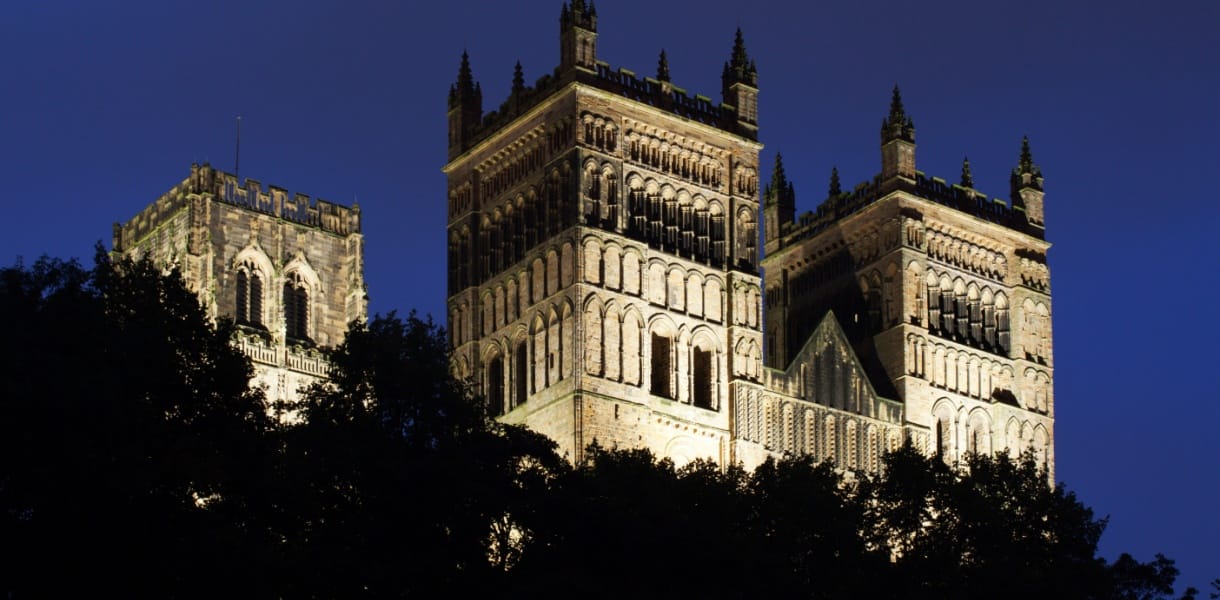
There’s something almost otherworldly about the way Durham Cathedral glows in the evening light. The sandstone turns golden, the river reflects it like a mirror, and the whole city feels like it’s holding its breath. If you’re lucky enough to visit, stay till twilight. It’s a moment worth waiting for.
In short
Durham Cathedral is a marvel. It’s a building that reminds you what humans are capable of when they’re armed with vision, devotion, and a great many scaffolding planks. Go see it. Climb the tower. Whisper in the nave. And raise a quiet toast to St Cuthbert, whose restless bones started it all.
Know before you go
Getting here
- By train Durham station is around 15 minutes on foot from the cathedral, though it is an uphill walk and the final stretch is not especially forgiving on the calves.
- By car Durham is easy to reach from the A1(M), but parking in the city centre is limited. Park and Ride is often the least stressful option.
- On foot The cathedral sits high above the River Wear in the historic centre, so it is easy to combine with a wider walk around Durham city.
Where to stay
- City centre hotels Staying in central Durham lets you explore the cathedral, castle, riverbanks, and old streets without needing the car again.
- Boutique guesthouses There are some lovely smaller places to stay in and around the historic core with plenty of character.
- Nearby countryside stays If you want a quieter base, the surrounding County Durham countryside has inns and rural hotels within easy reach.
Where to eat
- Cathedral café options Good for a coffee, light lunch, or restorative cake after admiring a thousand years of stonework.
- Historic pubs in Durham The city has plenty of characterful pubs where you can reward yourself for climbing hills, towers, or both.
- Independent cafés and restaurants The streets around the centre offer everything from quick lunches to proper evening meals.
What to do
- Explore the cathedral interior Take time to admire the soaring nave, vast Norman columns, and extraordinary rib vaulting.
- Climb the tower The 325-step ascent is a workout, but the views across Durham and the surrounding landscape are well worth the effort.
- Visit the cloisters Famous from film appearances, but impressive enough on their own terms without any wizard-related assistance.
- See St Cuthbert’s Shrine and Bede’s tomb Two of the cathedral’s most important historic and spiritual sites.
- Browse the museum and treasures A good way to understand the cathedral’s long story beyond the stone and stained glass.
Nearby gems
- Durham Castle Right next door and part of the same dramatic skyline, with centuries of history packed into one formidable site.
- River Wear walks The riverside paths offer some of the best views of the cathedral, particularly from Prebends Bridge.
- Crook Hall Gardens A peaceful nearby spot for gardens, old walls, and a quieter pause away from the main visitor flow.
- The Durham Museum and Heritage Centre A useful extra stop if you want more context on the city’s history.
Best time to visit
- Spring and early autumn Often the best balance of decent weather, softer light, and manageable crowds.
- Summer Good for longer opening hours, events, and bright views from the tower, though the city can be busier.
- Late afternoon into dusk The cathedral is especially atmospheric as the light turns golden and the city begins to quieten down.