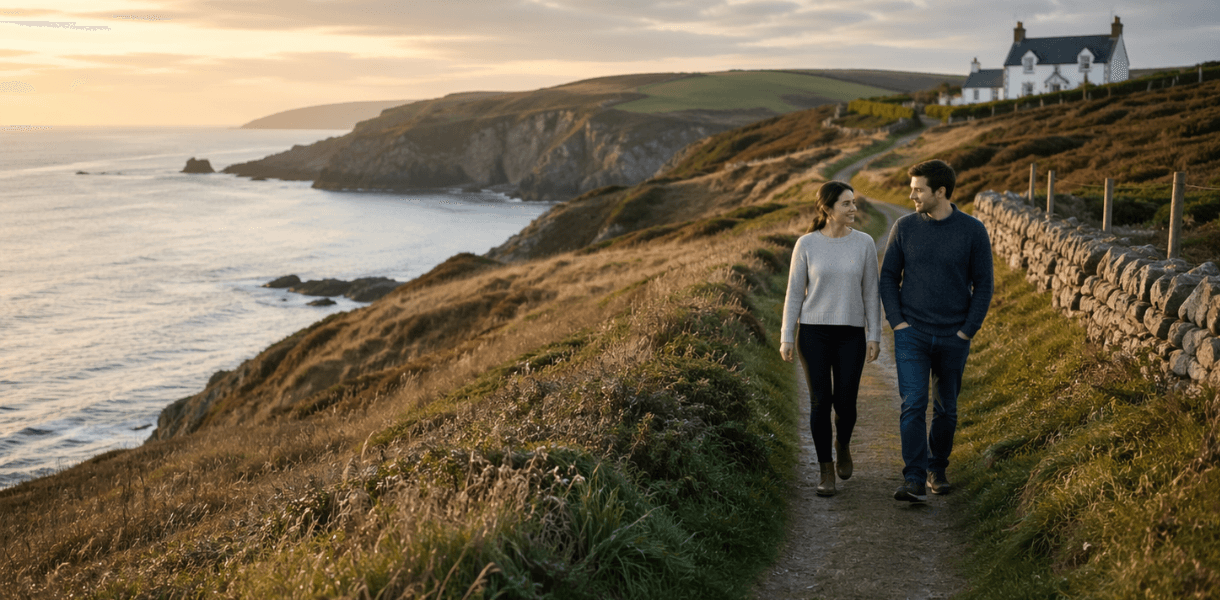
Some parts of Britain seem to have understood that a holiday does not need to be treated like a challenge. You do not need to race around them collecting sights like raffle prizes. You do not need a heroic spreadsheet. You just need a good base, enough time to notice things properly, and the willingness to let a place unfold at its own pace.
These are the regions that suit slow travel especially well. Places where the distances are manageable, the scenery keeps changing without demanding constant movement, and the pleasures tend to be small but cumulative. A harbour in the morning. A walk before lunch. A market town that somehow absorbs two hours. A pub garden. A second beach. A road you take because it looks promising rather than because it is efficient.
Slow travel is not really about moving as little as possible. It is about choosing places where doing less somehow gives you more.
Quick takeaways
Best for coastal slow travel
Pembrokeshire, the Isle of Wight, Northumberland
Best for village-and-countryside slow travel
Yorkshire Dales, Cotswolds, Herefordshire and the Welsh Borders
Best for water-based slow travel
The Broads
Best for remote, spacious slow travel
The Scottish Highlands and islands
Best for a first slow-travel trip
The Isle of Wight, South Downs, Cotswolds
Why some regions suit slow travel better than others
The best slow-travel regions tend to have a certain temperament. They are not always the most dramatic or the most famous. More often, they are the ones that remain interesting when you stop hurrying. They have strong bases, satisfying short distances, and enough atmosphere that an ordinary afternoon does not feel like wasted time.
A place is good for slow travel when the journey between things is enjoyable in itself. When walking into town feels like part of the trip. When staying put for a second or third night starts to feel like wisdom rather than laziness. Britain, when approached like this, turns out to be rather good at it.
1. The Isle of Wight
If you wanted to invent a British region specifically designed to help people calm down, you might end up with something very like the Isle of Wight. It has that useful island quality of making everyday life feel slightly more distant the moment you arrive. Not in a dramatic, castaway sort of way. Just enough to make your shoulders drop.
It is compact, varied, and easy to understand. That matters. You can stay in one place and still have the satisfying sense of being on a proper trip. Ventnor has that slightly tucked-away, sun-facing charm. Yarmouth is small and quietly lovely. Cowes has bustle and boats. Shanklin still leans cheerfully into old seaside habits. None of this requires frantic movement.
The joy of the island is that it makes modest plans feel entirely sufficient. A coast path in the morning, a seafront lunch, a village stop, perhaps another short walk later on, and the day is full without ever becoming tiring. It is one of the easiest places in Britain to travel slowly because the whole place seems in on the idea.
What makes it slow-travel friendly
Compact scale, easy day-shaping, and a lovely balance of walks, towns, and coast
Best bases
Ventnor, Yarmouth, Cowes, Shanklin
Best experiences
Coastal walks, village wandering, seafront pottering, a car-light island break
How long to stay
3 to 5 days
Best time to visit
Late spring to early autumn
2. Yorkshire Dales
The Yorkshire Dales are wonderfully good at making a small radius feel more than enough. You do not come here to hurtle from attraction to attraction. You come for the accumulated pleasure of stone villages, green valleys, sheep-dotted hillsides, riverside paths, and market towns that seem to have perfected the art of being quietly self-assured.
This is the sort of place where one good base can carry a whole trip. Hawes, Grassington, Reeth, Leyburn, all work beautifully. You head out for a walk, stop somewhere for lunch, drive a little, stop again because the view has become unreasonable, and before you know it the day has achieved exactly what it needed to.
The Dales suit slow travel because they have rhythm. Nothing feels forced. The landscape is lovely without needing to perform. The villages are beautiful without becoming precious. Even the weather, when it is behaving in its usual slightly indecisive way, somehow feels part of the experience rather than a disruption to it.
What makes it slow-travel friendly
Excellent bases, scenic short ranges, and a landscape that rewards wandering rather than rushing
Best bases
Hawes, Grassington, Reeth, Leyburn
Best experiences
Short scenic walks, market-town wandering, pub lunches, waterfall-and-village days
How long to stay
3 to 4 days
Best time to visit
Spring to autumn, with quieter pleasures outside high summer
3. Pembrokeshire
Pembrokeshire is for people who like their slow travel with salt in the air and a strong chance of becoming distracted by the view every twenty minutes. It has the sort of coastline that makes you feel you should stop and stare for a bit, and the good news is that stopping and staring is very much part of the correct approach.
The region works beautifully when taken in sections. A harbour town here, a beach there, a stretch of coast path before lunch, a boat trip if the mood takes you, and then back to your base for the evening. St Davids, Newport, Solva, Tenby, all make fine starting points depending on the kind of coast you want around you.
What makes Pembrokeshire especially good for slow travel is that it never really feels improved by rushing. It is too full of small moods and shifting light for that. The weather changes, the sea changes, the colour of the cliffs changes, and suddenly you realise the region is giving you a different version of itself every few hours.
What makes it slow-travel friendly
Wonderful bases, manageable exploring, and a landscape that is best taken in pleasingly unhurried portions
Best bases
St Davids, Newport, Tenby, Solva
Best experiences
Coastal path sections, harbour evenings, boat trips, beach-and-village days
How long to stay
4 to 6 days
Best time to visit
Late spring to early autumn
4. Northumberland
Northumberland is one of the best slow-travel regions in Britain because it understands the value of space. The beaches are big, the skies are bigger, and the castles often seem to have been placed for maximum dramatic effect with minimum fuss. It has room in it, which is surprisingly relaxing.
This is a region that suits people who do not need constant stimulation to feel they are having a good time. A walk on a vast beach. A castle in the distance. A long lunch somewhere friendly. A wander round Alnwick or Hexham. An evening under dark skies. That is more than enough, and Northumberland knows it.
There is also something wonderfully unshowy about it. For all its beauty, it does not insist on itself. It lets you discover things at your own pace, which is exactly what a slow-travel region should do.
What makes it slow-travel friendly
Uncrowded landscapes, strong small-town bases, and days that feel full without needing much structure
Best bases
Alnwick, Bamburgh area, Seahouses, Hexham
Best experiences
Beach walks, castle visits in small doses, stargazing, market-town afternoons
How long to stay
3 to 5 days
Best time to visit
Spring to autumn, with lovely dark-sky appeal in colder months too
5. The Broads
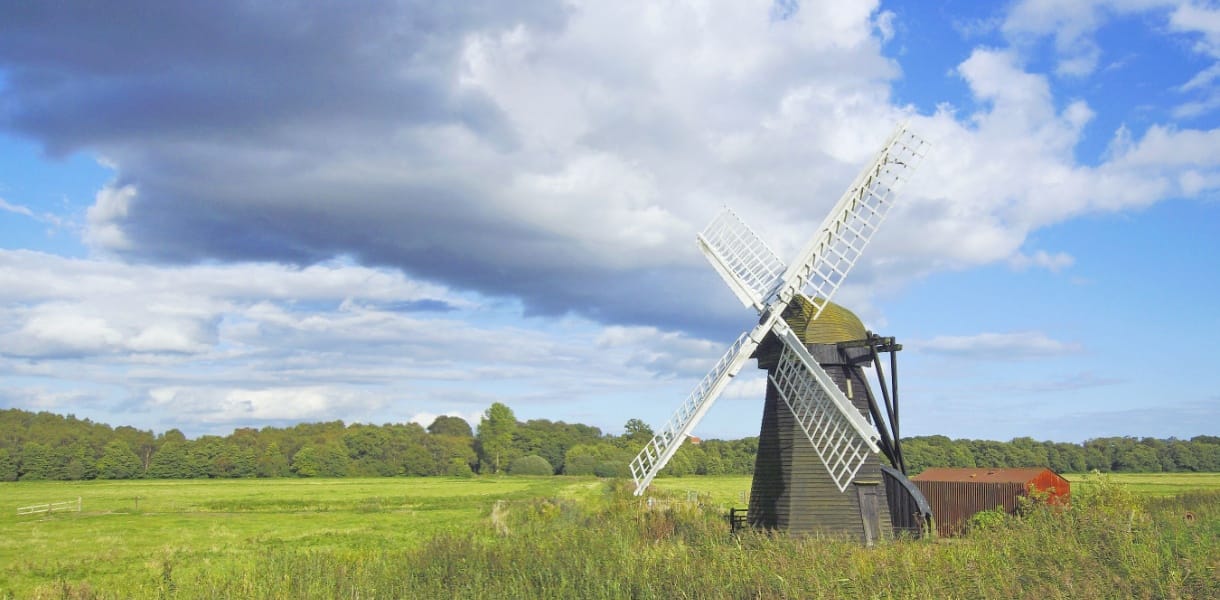
The Broads make one of the strongest arguments in Britain for moving more slowly simply because the whole landscape improves once you do. This is a watery world of reedbeds, riverbanks, low skies, birdlife, and boats that seem to have no interest in getting anywhere in a hurry. Quite right too.
There is something wonderfully corrective about a place where progress is measured in moorings, waterside pubs, and the gradual appearance of another church tower above the trees. It resets your sense of what a day is meant to look like. You do not cover ground so much as drift through it.
For the right sort of traveller, this is bliss. It is not about high drama. It is about calm, atmosphere, and the deeply underrated pleasure of letting the landscape come to you.
What makes it slow-travel friendly
Boat-based exploring, gentle landscapes, and a natural invitation to slow right down
Best bases
Wroxham, Horning, Ludham, Beccles area
Best experiences
Day boats, waterside walks, canoeing, birdwatching, riverside pub stops
How long to stay
3 to 4 days
Best time to visit
Late spring to early autumn
6. The Scottish Highlands and islands
This is slow travel in a grander key. The Highlands and islands are not always easy in the neat, convenient sense, but that is partly why they work. They resist being skimmed. They ask for time. Ferries, weather, long views, changing light, tiny settlements, and the sheer shape of the land all encourage a more patient kind of trip.
This is not a place to bully into efficiency. It is a place to let happen. Stay longer than you think you need. Build in space. Accept that some of the pleasure lies in the journey itself, whether that means a train threading through the landscape, a ferry crossing, or a single-track road that seems to be taking its own sweet time to get anywhere.
Done badly, the Highlands can become a frantic exercise in too much driving and too many viewpoints. Done well, they are one of the most memorable slow-travel regions in Britain. The difference is almost entirely about pace.
What makes it slow-travel friendly
It rewards longer stays, modest ambitions, and travellers willing to let the journey be part of the experience
Best bases
Fort William and Lochaber, Inverness-shire bases, island stays in the Outer Hebrides, longer stays on Skye
Best experiences
Rail and ferry journeys, island stays, long reflective walks, scenic drives taken in small doses
How long to stay
5 to 8 days
Best time to visit
Late spring to early autumn
7. The Cotswolds
The Cotswolds are sometimes treated as though being very obviously pretty is a fault, which seems a bit harsh. For slow travel, they make excellent sense. The villages are lovely, the market towns are full of useful charm, and the countryside lends itself to exactly the kind of easy wandering that turns a weekend into something restorative.
This is not a region that demands grand plans. It works best when you drift between places, stop for lunch somewhere old and slightly creaky, take a walk, admire some honey-coloured stone, and allow the day to proceed without much pressure. There is something deeply civilised about it all.
The Cotswolds are perhaps the gentler version of slow travel. They suit people who want beauty, ease, and the feeling of having been properly away without necessarily scaling anything or enduring ferry timetables.
What makes it slow-travel friendly
Short scenic distances, attractive bases, and a landscape built for meandering
Best bases
Burford, Tetbury, Broadway, Cirencester
Best experiences
Village hopping, easy walks, garden visits, tearoom stops, market-town afternoons
How long to stay
3 to 4 days
Best time to visit
Spring and early autumn
8. The South Downs
The South Downs are ideal for people who like the idea of slowing down but do not especially want the logistics to become part of the adventure. The landscape rolls rather than looms. The villages are attractive. The walking is satisfying without always needing to become strenuous. There is wine country here too, which is hardly a disadvantage.
What makes the South Downs so appealing is the softness of the whole experience. You can have long walks, scenic lunches, easy train-linked outings, and a real sense of countryside without needing to disappear into somewhere truly remote. It feels accessible in the best sense of the word.
This is slow travel for people who want calm, beauty, and a trip that leaves them refreshed rather than mildly defeated.
What makes it slow-travel friendly
Gentle landscapes, manageable days out, and a naturally restorative pace
Best bases
Lewes, Midhurst, Petersfield, Winchester edge stays
Best experiences
Downland walks, vineyard visits, village lunches, car-light weekends
How long to stay
2 to 4 days
Best time to visit
Late spring to early autumn
9. Herefordshire and the Welsh Borders
Some regions are made for slow travel because they are spectacular. Others are made for it because they are quietly, deeply pleasing. Herefordshire and the Welsh Borders belong in the second group. Orchard country, old market towns, black-and-white villages, quiet lanes, low hills, and a distinct lack of showing off all make this a wonderfully easy place to settle into.
The pleasure here is cumulative. A town square. A hill view. A long lunch. A church that has been quietly standing there for centuries. A road bordered by hedges and fields and absolutely no urgency whatsoever. It is the sort of region that gets under your skin gently.
This is a very good choice for travellers who want atmosphere, food, and countryside without needing their trip to involve famous names or major set pieces.
What makes it slow-travel friendly
Short scenic ranges, restful bases, and pleasures that are best savoured rather than collected
Best bases
Ledbury, Hay-on-Wye edge stays, Hereford countryside, Ross-on-Wye
Best experiences
Market-town wandering, short hill walks, orchard-country drives, long pub lunches
How long to stay
3 to 4 days
Best time to visit
Spring to autumn, especially harvest season
10. Suffolk and the east coast hinterland
Suffolk is one of those regions that reminds you how satisfying understatement can be. It is not trying to overwhelm you. It simply offers estuaries, broad skies, mellow little towns, gentle coast, heathland, and a slightly windswept atmosphere that makes everything feel quietly more vivid.
This is a place for pottering in the highest form. You set out to do one thing and end up doing three small, pleasing others without quite meaning to. You wander through a town, end up by the water, have lunch somewhere good, and realise the day has passed in a very agreeable blur of modest pleasures.
Slow travel suits Suffolk because the region itself feels unhurried. It does not need to dazzle. It only needs a little time.
What makes it slow-travel friendly
Manageable distances, a strong sense of atmosphere, and a lovely balance of coast, town, and countryside
Best bases
Southwold, Aldeburgh, Woodbridge, Framlingham area
Best experiences
Town wandering, estuary walks, birdwatching, coast-and-country day loops
How long to stay
3 to 4 days
Best time to visit
Late spring to early autumn
The best regions overall
If I had to narrow it down to the three strongest choices overall, I would go with these.
Best all-rounder
The Isle of Wight
Compact, easy, varied, and one of the simplest places in Britain to get into a genuinely unhurried rhythm.
Best for coast
Pembrokeshire
A region where the sea, the towns, and the pace all seem to agree with each other.
Best for countryside bases
Yorkshire Dales
One of the most satisfying places in Britain for staying put and letting villages, scenery, and short outings carry the trip.
Final verdict
The best UK regions for slow travel are not always the flashiest ones. They are the ones that keep giving once you reduce the speed. The Isle of Wight does it through island ease. Pembrokeshire does it through sea air and harbour towns. The Yorkshire Dales do it through village rhythm and green, folded scenery. The Broads make an art form of drifting. Northumberland brings big skies and space. The Highlands and islands bring scale and depth. Suffolk and Herefordshire quietly prove that you do not need spectacle to have a memorable trip.
Britain, in other words, is very good at slow travel once you stop trying to get through it so quickly.