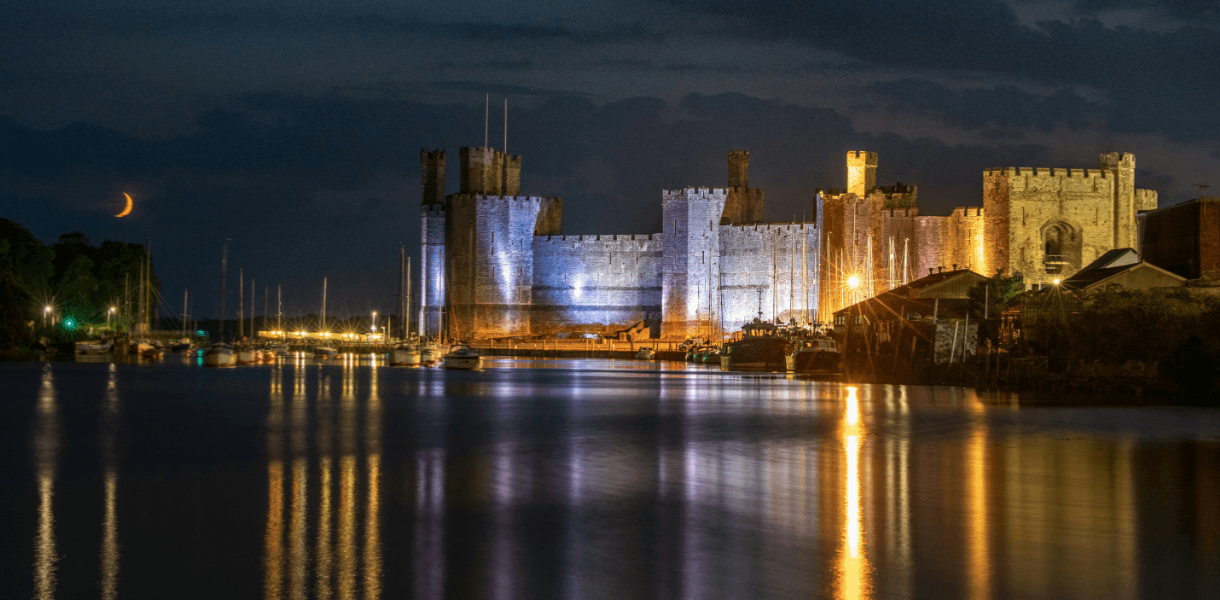
Britain’s medieval past is not tucked neatly away in museums. It is still there in castle walls, abbey ruins, cathedral closes, market squares and old lanes that appear to have been laid out by someone with a mule and no patience for straight lines. These are the UK regions where medieval history feels closest to the surface.
Quick takeaways
Best for castles
North Wales, Northumberland and the Scottish Borders
Best for medieval towns
East Anglia, Yorkshire, Kent and Sussex
Best for abbey ruins
Yorkshire, the Welsh Marches, Northumberland and the Scottish Borders
Best first trip
Yorkshire or North Wales
Best for atmosphere
The Welsh Marches
Why medieval Britain still works so well for visitors
Some parts of Britain seem to have mislaid the Middle Ages rather carelessly and then never quite tidied them away. A castle sits above a river. An abbey turns up in a valley. A cathedral close still feels faintly capable of producing a monk with urgent business. Then, just when you think you have the measure of the place, a town gate, a market square or a ruined priory appears and reminds you that medieval Britain was not a distant backdrop. It was busy, ambitious, violent, devout, wealthy, muddy and often extremely good at building things that still make modern life look temporary.
The best regions for medieval history are not just places with famous monuments. They are places where the whole setting helps the story along. A ruined abbey feels different when it sits in a quiet valley. A castle feels sharper when it faces another castle across a border. A cathedral feels more powerful when the old streets around it still lean inward as though listening.
1. North Wales
North Wales is medieval history with mountains behind it and salt in the air. It is one of the most dramatic places in Britain to understand the sheer physical presence of power in the Middle Ages. The castles here do not merely sit in the landscape. They announce themselves to it.
Conwy, Caernarfon, Harlech and Beaumaris are the obvious giants, and rightly so. They are the sort of castles that make even people who claim they are “not really castle people” suddenly develop strong opinions about curtain walls. Conwy still feels like a walled medieval town that has somehow carried on with daily life around the edges. Caernarfon has the swagger of royal theatre. Harlech looks out from its rocky perch with the air of a place that has seen several centuries of trouble and found most of it mildly inconvenient.
But North Wales is not only about English royal castles. It is also the land of Welsh princes, mountain strongholds, abbeys, pilgrimage routes and border tensions. The scenery gives the history scale. Roads curve beneath ridges. Estuaries open suddenly. Stone towers appear against huge skies. It is history with weather, which is often the best kind.
Good bases
Conwy, Caernarfon, Bangor, Betws-y-Coed, Llandudno
Don’t miss
Conwy Castle, Caernarfon Castle, Harlech Castle, Beaumaris Castle, Valle Crucis Abbey
Best for
Castle lovers, first-time medieval trips, dramatic landscapes, Welsh history
Time needed
3 to 5 days
Best time to go
Spring, early summer or September
2. Yorkshire
Yorkshire is almost unfairly well supplied with medieval history. It has a great medieval city, abbey ruins of astonishing beauty, castles, priories, market towns, old streets, stone villages and enough church towers to keep a determined enthusiast occupied for a lifetime.
York is the natural starting point. Its walls, Minster, snickelways, guildhall traces and timbered streets make it one of the strongest medieval cities in Britain. It is polished in places, certainly, but step away from the busiest lanes and the older city still has a wonderful habit of revealing itself in fragments. A doorway here. A view of the Minster there. A lane that feels as if it has narrowed itself deliberately.
Then there are the abbeys. Fountains Abbey and Rievaulx Abbey are two of the great ruined monastic sites in Britain, both helped enormously by their settings. Fountains has grandeur and scale. Rievaulx has intimacy and melancholy, tucked into its valley like a memory that refuses to fade. Add Richmond Castle, Skipton Castle, Helmsley, Pickering, Beverley, Ripon and the old market towns of the Dales and North York Moors, and Yorkshire becomes less a region than a medieval buffet.
Good bases
York, Ripon, Richmond, Helmsley, Pickering, Skipton
Don’t miss
York Minster, York city walls, Fountains Abbey, Rievaulx Abbey, Richmond Castle, Skipton Castle
Best for
A broad medieval trip, abbey ruins, historic towns, cathedral cities
Time needed
4 to 7 days
Best time to go
April to June or September to October
3. The Welsh Marches
The Welsh Marches may be the most atmospheric medieval region in Britain. It is not always as neat or obvious as some places, which is part of the appeal. This is border country, and border country tends to have complicated manners. Here, history feels layered, contested and slightly watchful.
The Marches run through places where England and Wales pressed against each other for centuries, producing castles, fortified towns, abbeys, churches and old trading centres with more character than seems strictly necessary. Ludlow is the great showpiece, one of the finest historic towns in England, with its castle, old streets and food-loving modern life sitting together very happily. Shrewsbury brings timber-framed streets, river loops and a townscape that seems to have grown by negotiation rather than planning.
Further south, Hereford, Goodrich, Chepstow and the Wye Valley add another strand. Castles guard river crossings. Abbeys sit in quiet ruins. The landscape softens, then rises, then narrows again. The pleasure of the Marches is that medieval history here rarely feels isolated. It belongs to the hills, rivers and towns around it.
Good bases
Ludlow, Shrewsbury, Hereford, Hay-on-Wye, Monmouth
Don’t miss
Ludlow Castle, Shrewsbury, Hereford Cathedral, Goodrich Castle, Chepstow Castle, Tintern Abbey
Best for
Border history, atmospheric towns, castles, abbeys, slow travel
Time needed
3 to 5 days
Best time to go
May, June, September or October
4. Kent and Sussex
Kent and Sussex give you medieval history with a southern sharpness. This is the land of invasion routes, cathedral power, Norman castles, old ports, abbeys and hilltop strongholds. It feels less remote than North Wales or the Marches, but no less rich.
Canterbury is the great medieval centre here, a city shaped by pilgrimage, ecclesiastical power and one of the most famous cathedrals in Europe. Its lanes still carry some of that older mood, even with the modern bustle around them. Rochester has a mighty castle keep and cathedral close, while Dover Castle sits above the Channel with the air of a place that has spent most of its life expecting someone troublesome to appear on the horizon.
Sussex adds a different flavour. Battle Abbey pulls you back to 1066, which is about as good a starting pistol for medieval England as you could ask for. Bodiam Castle looks almost too perfect, as though drawn by someone asked to explain “castle” to a child and deciding to overachieve. Rye, meanwhile, offers cobbled lanes, old inns, smuggling tales and the sort of historic atmosphere that makes you slow down without being told.
Good bases
Canterbury, Rochester, Rye, Lewes, Hastings, Sandwich
Don’t miss
Canterbury Cathedral, Rochester Castle, Dover Castle, Battle Abbey, Bodiam Castle, Rye
Best for
Norman history, cathedral cities, castles, old ports, easy short breaks
Time needed
3 to 5 days
Best time to go
Spring, early summer or autumn
5. East Anglia
East Anglia is the region to choose if you want medieval history with wool money, churches, merchants, guildhalls and towns that seem to have aged with unusual elegance. It is less about mountain castles and border warfare, and more about wealth, trade, piety and civic pride. In other words, fewer dramatic sieges, more astonishing churches.
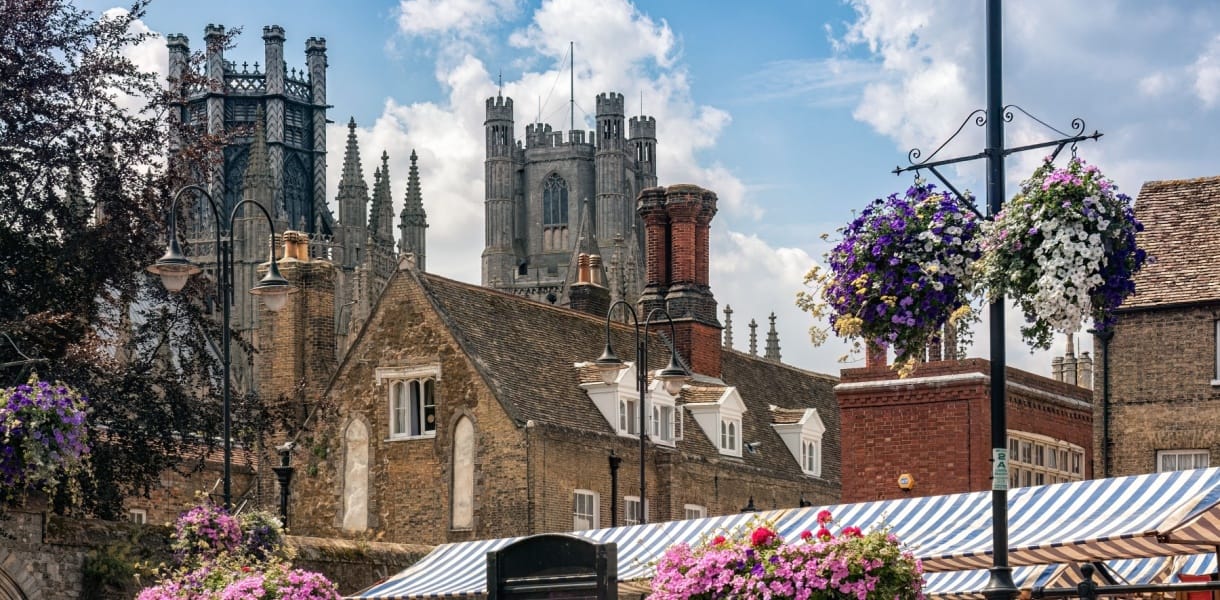
Norwich is one of Britain’s great medieval cities, with its cathedral, castle, lanes, churches and old merchant quarters. It has depth without shouting about it. Bury St Edmunds carries the remains of one of medieval England’s most powerful abbeys, wrapped into a town that still feels handsome and walkable. Ely rises from the flatlands with its cathedral visible for miles, which is exactly the sort of thing medieval builders clearly enjoyed doing.
Then come the wool towns. Lavenham, Long Melford, Clare and others are filled with timber-framed houses, grand churches and market-place confidence. They are beautiful, but not in a flimsy way. Their charm comes from the fact that they once mattered enormously, and built accordingly.
Good bases
Norwich, Bury St Edmunds, Ely, Lavenham, King’s Lynn
Don’t miss
Norwich Cathedral, Norwich Castle, Ely Cathedral, Bury St Edmunds, Lavenham, Long Melford
Best for
Medieval towns, churches, wool wealth, gentle exploring, historic architecture
Time needed
3 to 6 days
Best time to go
Late spring, summer or early autumn
6. Northumberland and the Scottish Borders
Northumberland and the Scottish Borders are medieval history with wind in its hair. This is castle country, abbey country and frontier country, where the landscape often feels as important as the buildings themselves. History here has a harder edge. It belongs to raids, fortresses, religious houses, border families and long views over open ground.
Northumberland’s coast alone would earn its place. Bamburgh rises above the sea with tremendous confidence. Dunstanburgh is all ruin and drama, best approached on foot with the weather doing something interesting. Warkworth, Alnwick and Norham add more layers of defensive power, noble ambition and borderland tension.
Across the border, the great abbeys of Melrose, Jedburgh, Dryburgh and Kelso bring a different mood. They are not simply ruins. They are reminders that medieval life here was not only military. It was spiritual, artistic, agricultural and deeply connected to the rhythms of land and river. Together, Northumberland and the Borders make a superb trip for anyone who likes their history spacious, atmospheric and slightly brooding.
Good bases
Alnwick, Berwick-upon-Tweed, Kelso, Melrose, Jedburgh
Don’t miss
Bamburgh Castle, Dunstanburgh Castle, Alnwick Castle, Warkworth Castle, Melrose Abbey, Jedburgh Abbey
Best for
Castle landscapes, border history, abbey ruins, coastal drama
Time needed
4 to 7 days
Best time to go
May to September, or October for moodier ruins and quieter roads
Best region for a first medieval history trip
For a first trip, Yorkshire is hard to beat. It gives you a major medieval city, world-class abbey ruins, castles, market towns and excellent variety within a manageable area. You can base yourself in York for the city experience, then branch out to Ripon, Fountains Abbey, Rievaulx, Helmsley or Richmond.
If castles are the priority, choose North Wales. It delivers medieval drama with remarkable clarity and grandeur.
For atmosphere, choose the Welsh Marches. It is less obvious, but wonderfully rewarding.
Final verdict
The best medieval regions in the UK are the ones where the past still feels stitched into the landscape. North Wales gives you castles with mountains at their backs. Yorkshire gives you the fullest spread. The Welsh Marches gives you borderland mood and old-town character. Kent and Sussex bring conquest, pilgrimage and Channel-facing drama. East Anglia shows the wealth and confidence of medieval towns. Northumberland and the Scottish Borders give you ruins, rivers, coast and frontier tension.
Together, they prove that medieval Britain is not something you simply go and look at. In the right places, you walk through it, eat lunch beside it, climb its walls, stand in its ruined naves, and then find it waiting again around the next corner.