
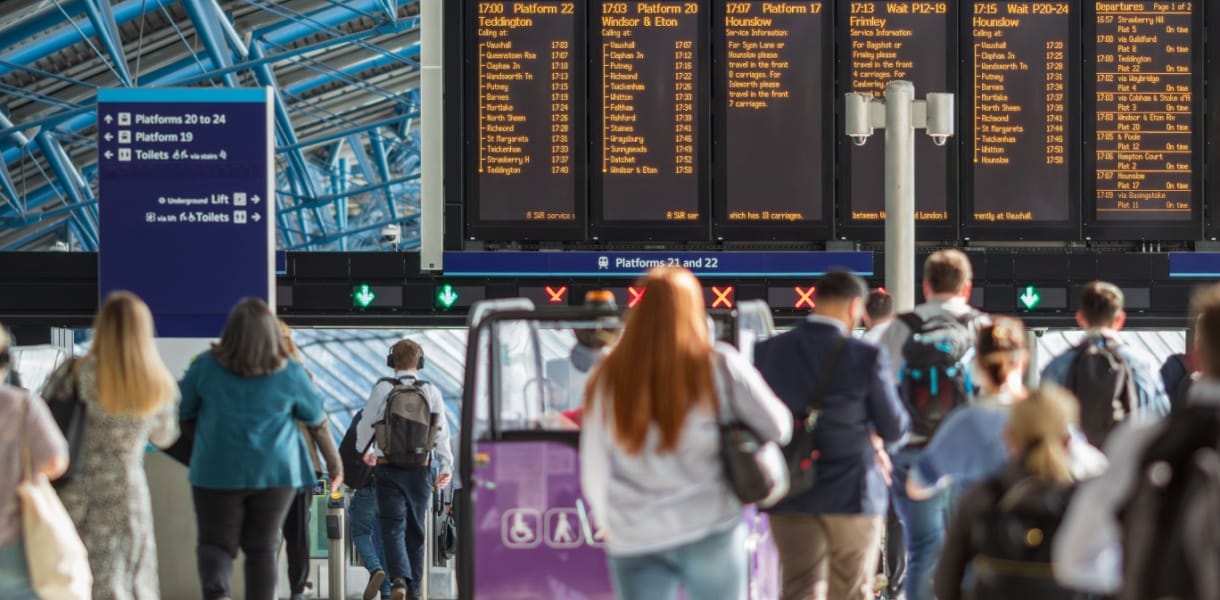
For overseas visitors, getting to the UK can look easy right up until the moment you start comparing airports, onward rail routes, domestic connections, car hire plans and the slightly important question of whether your chosen arrival point is anywhere near the trip you actually want to take. This guide is for travellers trying to work out the smartest way to arrive, move around and shape the journey so the holiday begins smoothly and stays that way.
Quick takeaways
- Best first planning rule
Choose the trip first, then choose the arrival gateway - Best for classic first-time UK trips
Fly into London, stay a few nights, then add one or two rail-friendly destinations - Best for Scotland-focused holidays
Compare direct arrivals into Edinburgh or Glasgow rather than automatically routing through London - Best for scenic regional trips
Arrive in the nearest useful city, then switch to a hire car for the countryside or coast - Best for city-to-city travel
Trains are often the easiest and least stressful option - Best for rural and coastal flexibility
A car is often most useful once you reach the scenic part of the trip - Best low-stress arrival-day rule
Keep the first onward move short and simple - Best mindset
Make the transport serve the holiday, not the other way round
Why getting there matters more than people expect
Many people think of getting to the UK as a practical prelude to the real trip. Flights, trains, perhaps a hire car, and then the holiday begins. In practice, those early transport decisions shape the entire feel of the journey. The arrival airport affects the rhythm of day one. The first transfer affects how tired, calm or faintly regretful you feel after landing. The choice between rail and car affects not only how you move, but what kind of trip becomes realistic.
A smart journey plan can make the holiday feel smooth before it has properly started. A badly shaped one can turn the first day into a test of patience, luggage management and airport sandwiches.
The aim is not simply to get to Britain. It is to get to the right part of Britain in the right way for the trip you actually want.
Start with the trip shape, not the flight deal
It is very tempting to begin with whichever airfare looks cheapest and build the holiday around that. Sometimes that works perfectly well. Quite often, though, it sends you to an airport that looks like a bargain until you begin adding train tickets, extra transfers, an overnight stop you had not planned for and several hours of journey time that could have been avoided.
A better approach is to begin with the shape of the trip.
Are you planning a classic London and southern England first visit.
A Scotland-focused journey with Edinburgh and the Highlands.
A Yorkshire and Northumberland holiday.
A Wales trip built around castles, coast and mountains.
A mixed city-and-countryside route with one urban stop and one scenic region.
Once you know that, choosing the best way in becomes much easier. The right gateway is the one that supports the route, not just the one with the loudest discount.
Choose the arrival gateway that suits the route
For many overseas visitors, London is the most natural arrival point. It has the broadest range of international flights, strong onward rail links and more than enough to justify a few nights at the start of the trip. For classic first visits, it is often the obvious answer.
But it is not automatically the right one.
If your real focus is Scotland, flying straight into Edinburgh or Glasgow may make far more sense. If your trip centres on northern England, Manchester can be a much more practical start. If you are heading into South Wales or the southwest, Bristol may be worth considering. For Northern Ireland, Belfast is the straightforward choice.
The point is not that London is wrong. It is that it should earn its place in the route. If your whole holiday is built around Scotland, spending a day crossing Britain simply because the long-haul flight landed in London is not always the most elegant opening move.
Think in trip clusters, not isolated destinations
The UK tends to work best in combinations. London and Bath make sense. Edinburgh and the Highlands make sense. York and North Yorkshire make sense. Manchester and the Peak District make sense. These are coherent clusters. The transport flows naturally, and the holiday feels as though it belongs to itself.
What works less well is an itinerary made up of individually appealing places with no regard for how they connect. A cheap arrival airport here, a famous destination there, a scenic region somewhere else, and suddenly the trip begins to resemble a determined argument with geography.
Thinking in clusters makes arrival planning easier because it answers the most important question early. Not just where am I flying to, but what route actually makes sense once I land.
Make the first day easier than you think it needs to be
This is one of the most useful rules for overseas visitors.
Do not make the arrival day heroic.
After a long-haul flight, passport control, baggage reclaim, transfers, unfamiliar systems and jet lag, even seasoned travellers are often happier with a plan that asks a little less of them. This usually means one of three things.
Stay the first night in the arrival city.
Take only a short and simple onward train.
Delay collecting the hire car until the following morning.
This is not wasted time. It is what allows the rest of the trip to begin well. A calm first evening, a proper meal and a decent night’s sleep often do more for a holiday than squeezing in one extra ambitious transfer while exhausted.
The UK is full of wonderful places. They tend to remain wonderful when approached the next morning as well.
Understand when trains are the smartest option
For many overseas visitors, trains are one of the easiest ways to travel between UK cities and larger towns. They let you avoid city driving, parking costs, unfamiliar road layouts and the curious talent some urban junctions have for causing immediate self-doubt.
Rail is especially strong when your route centres on places like London, York, Bath, Oxford, Cambridge, Edinburgh, Durham, Chester and many other city-to-city or city-to-town journeys. City-centre to city-centre travel is often much simpler by train than by car, and in many cases far more pleasant.
Trains are at their best when they are doing what they do well. Connecting major places efficiently, comfortably and without much fuss.
They become less useful when the trip moves into scenic regions with scattered attractions, small villages, headland castles, tucked-away beaches or national park routes that do not naturally orbit a station.
Know when a car genuinely improves the trip
A hire car is not always necessary in the UK, but in the right areas it transforms the holiday.
If your trip includes Northumberland, Cornwall, Devon, Pembrokeshire, the Cotswolds, the Scottish Highlands or much of rural Wales, a car can make life markedly easier. It gives you freedom to explore smaller places, stop at viewpoints, change plans around the weather and avoid relying on bus services that may exist more in principle than in generous frequency.
A car is often less useful in the biggest cities, where traffic, parking and one-way systems can make it feel like a burden you have paid to inherit.
That is why many visitors do best with a mixed plan. Use trains for the city part of the trip. Then pick up a hire car once you leave the urban leg and head into the countryside or coast. It is often the most sensible of both worlds.
Do not assume domestic flights save time
Sometimes they do. But often the time saved in the air disappears in airport transfers, check-in, security, waiting around and the journey from the airport into the place you actually want to be.
For some UK routes, especially where one end is London and the other is Scotland, internal flights may still make sense. But for many city pairs, the train is more competitive than first-time visitors expect, particularly when you look at the full door-to-door journey rather than just the flight duration on the booking screen.
A one-hour flight is never really a one-hour journey. The same is true in most countries, of course, but it is worth remembering in the UK, where rail can be more practical than the instinctive assumption that flying must be faster.
Build the itinerary around sensible distances
Britain is smaller than many overseas visitors are used to. That does not mean it should be treated like a board game in which you can hop cheerfully from one corner to another with no consequences.
Real journeys still take time. Roads slow. Trains need connections. Airports are not right next to the places you want to visit. And every change of base consumes more of a day than itinerary planners tend to admit.
As a rule, the most enjoyable UK trips are not the ones that cover the most ground. They are the ones that move with a bit of logic and restraint.
For a week, one or two bases is often enough.
For ten days, two or three stops usually works well.
For two weeks, three or four can work if the route is sensible.
Beyond that, it is less about what is technically possible and more about what still feels like a holiday.
Match the transport plan to your travel style
Some travellers love train journeys, station cafés and arriving straight into the centre of town. Others like the freedom of the road, the ability to stop for lunch where they please and the comfort of having their things in the boot rather than on a luggage rack.
Neither preference is more correct. What matters is whether the transport style suits the trip.
If you like city breaks, easy walking and minimal friction, rail may be the obvious fit.
If you want villages, coast roads, castles, scenic loops and flexible days, a car may serve you much better.
If you want both, then use both.
The UK is often at its easiest when travellers stop insisting on one transport mode for the whole journey and instead use the one that best suits each leg.
Think about luggage, weather and energy
Transport decisions are often made while imagining the most orderly version of travel. In reality, they happen after overnight flights, while carrying luggage, in uncertain weather, in unfamiliar stations or airports, occasionally with less sleep than one would choose for any activity involving tickets and platforms.
That is why the most elegant-looking plan is not always the best one.
A direct train may be better than a cheaper complicated route.
A central arrival hotel may be better than pushing on for another three hours.
An airport with stronger onward links may be better than the one with the bargain fare.
A simple first day may be better than a memorable one for all the wrong reasons.
Ease is often underrated in trip planning. In practice, it can be one of the main things that makes a holiday feel well judged.
Good arrival strategies for different kinds of visitor
For first-time overseas visitors
A London arrival with one or two additional rail-friendly stops is often the easiest and most satisfying formula. It gives you a strong first impression, simple logistics and plenty of flexibility.
For scenery-first travellers
Arrive in the nearest sensible city, then switch to a car for the scenic region. This often works better than trying to force a rail-only plan into a trip built around coast, countryside or national parks.
For Scotland-focused trips
Compare direct arrivals into Edinburgh or Glasgow before defaulting to London. A Scotland-first trip usually benefits from beginning in Scotland.
For repeat visitors
Choose the nearest gateway to the region you genuinely want to explore. The UK is full of excellent second-trip and third-trip destinations that do not need to be approached through London every time.
For low-stress planners
Stay the first night in the arrival city, use fewer bases and keep the first major onward journey for the next day.
Common mistakes overseas visitors make
One common mistake is planning too much travel immediately after landing. Another is assuming the cheapest flight will produce the cheapest or easiest overall journey. Others include hiring a car too early, relying on rail for a region that works much better by road, planning too many bases, and treating domestic flights as automatically faster than trains without checking the true door-to-door comparison.
There is also the classic temptation to build a route from famous names rather than from a coherent map. The UK is very good at rewarding the second approach.
Take this guide with you
Prefer something you can save, print, or glance at while planning? Download the printable version here.
Final verdict
Getting there in the UK is not just a transport detail. It is part of the holiday design. The arrival airport, the first stop, the timing of the first transfer and the choice between rail, road or a mixture of both all shape how the trip feels from the outset.
The best approach is usually the calmest sensible one. Choose the trip first. Pick the arrival point that genuinely suits it. Make the first day easy. Use trains where they shine. Use a car where it truly improves the experience. Resist unnecessary zigzags. And remember that a transport plan should help the holiday along, not try to audition as a challenge in its own right.
Need to know
Best first planning rule
- Choose the trip first, then the gateway
Best first-day habit
- Keep the arrival day short, simple and forgiving
Best option for city-heavy itineraries
- Rail between major cities and towns
Best option for scenic regional holidays
- Car hire for the countryside or coast leg
Best way to avoid travel fatigue
- Use fewer bases and cut out awkward cross-country leaps
Best overall mindset
- Let transport support the trip rather than dictate it