Some stately homes are really about gardens. Some are about family history. Some are about the distinctly British habit of building something enormous simply because one can. For architecture lovers, though, the real stars are the houses where the building itself is the reason to go. These are the places where facades, domes, towers, galleries, staircases and sheer design ambition do most of the talking.
Quick takeaways
Best for sheer grandeur
Blenheim Palace, Castle Howard, Chatsworth House
Best for architectural drama and oddity
Sezincote House, Inveraray Castle, Harlaxton Manor
Best for classical elegance
Holkham Hall, Kedleston Hall
Best for interiors as well as exteriors
Chatsworth House, Burghley House, Boughton House
Best for a first stately home architecture pilgrimage
Chatsworth House, Blenheim Palace, Castle Howard
Why some stately homes matter more to architecture lovers
A great stately home is not just large. Britain has no shortage of large houses. What makes one memorable is the sense that somebody, at some point, had a very clear architectural idea and enough money to impose it magnificently on the landscape.
That is what architecture lovers are really after. Not simply a handsome room with a portrait in it, but a building with conviction. A house that makes a statement before you have even crossed the forecourt. A staircase designed to overawe guests before they have properly gathered themselves. A facade that says, in stone, that moderation was discussed and decisively ignored.
The best stately homes also offer variety. Palladian calm. Baroque swagger. Gothic romance. Neo-classical polish. Eccentric one-offs that look as though they were designed after someone came back from a life-changing trip and immediately commissioned something wonderfully unreasonable. This list leans into houses where the architecture is not merely part of the appeal, but the main excuse for going.
1. Chatsworth House, Derbyshire
Chatsworth is the sort of house that makes lesser mansions look as though they lost confidence halfway through. It sits in the Derbyshire landscape with the poise of something that knows perfectly well it is one of the great houses of Europe and sees no need to play that down.
For architecture lovers, the appeal is immediate. The long honey-coloured frontage is beautifully judged, and the house manages the useful trick of being huge without seeming lumpish. Inside, the scale continues with painted halls, grand staircases and rooms that appear to have been arranged by people for whom the phrase “that will do” simply did not exist.
What makes Chatsworth especially satisfying is that it feels complete. The house, the setting, the proportions, the interiors, the relationship with the surrounding landscape, all of it hangs together with remarkable confidence. It is not just impressive. It is architecturally convincing, which is a more demanding compliment.
Know before you go
Getting here
- Best by car
- Easy to combine with a Peak District day out or short break
Facilities
- Visitor facilities
- Cafés and restaurants
- Shop
- Gardens
- Parking
What to do
- Admire the grand exterior from multiple angles
- Explore the principal rooms and staircase
- Take in how the house sits in the wider landscape
- Combine your visit with the gardens and estate walks
Points of special interest
- One of England’s great country house facades
- Fine Baroque and later architectural layers
- Interiors with grand spatial planning
Website
Best time to visit
- Year round
- Spring and autumn are especially good for a balanced house-and-grounds visit
2. Blenheim Palace, Oxfordshire
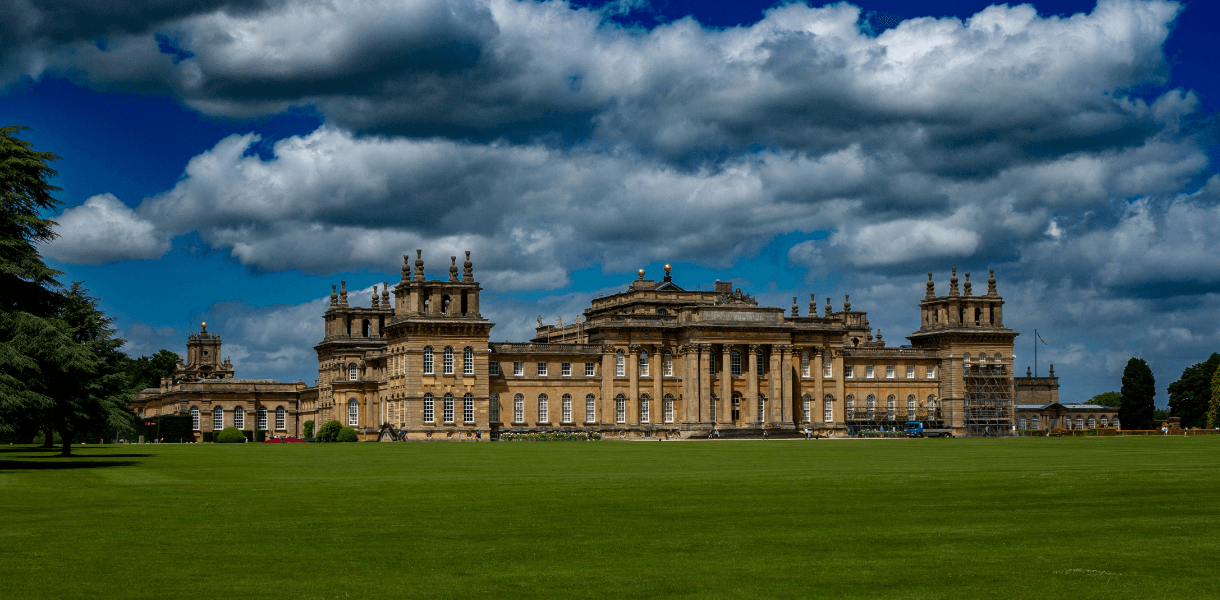
Blenheim is not so much a stately home as a declaration of intent in stone. Everything about it is oversized, theatrical and determined to remind you that this was built as a monument as much as a residence. Modest it is not. Successful it absolutely is.
Architecturally, this is English Baroque at full volume. The massing is dramatic, the entrance sequence suitably grand, and the whole place has the sort of muscular magnificence that makes you wonder whether quieter styles ever really stood much of a chance. The interiors continue the theme with ceremonial spaces and a level of grandeur that borders on operatic.
For architecture lovers, Blenheim is fascinating not just because it is vast, but because it is so unapologetically itself. It has no interest in pretending to be restrained. It is architecture with its chest out.
Know before you go
Getting here
- Easy by car
- Possible as a day trip from Oxford and parts of the South East
Facilities
- Extensive visitor facilities
- Cafés
- Shops
- Grounds
- Parking
What to do
- Take in the palace from the forecourt and parkland
- Study the Baroque facade and monumental scale
- Explore the great interiors and ceremonial rooms
- Walk the grounds for wider architectural views
Points of special interest
- Monumental English Baroque
- Strong axial planning and dramatic massing
- One of Britain’s most powerful great-house exteriors
Website
Best time to visit
- Year round
- Best on bright days when the stonework and landscape can really show off
3. Castle Howard, North Yorkshire
Castle Howard is one of those houses that seems almost absurdly elegant at first sight, as though it was designed not merely to be lived in but to appear in the dreams of architecture students. With its great dome, sweeping wings and theatrical setting, it is one of Britain’s most distinctive country houses and one of the easiest to recognise from a considerable distance, which is usually a sign that something has gone very right.
For architecture lovers, the joy is in the silhouette as much as the detail. That dome gives the whole composition a sense of central drama, while the long facades and carefully staged approach build anticipation beautifully. Inside, there is grandeur and ornament aplenty, but the real pleasure lies in the way the house reads as one complete composition in the landscape.
It is stately architecture with flair, confidence and just enough extravagance to make you forgive everyone involved.
Know before you go
Getting here
- Best by car
- Easy to pair with York or a North Yorkshire trip
Facilities
- Cafés
- Visitor centre
- Grounds
- Shop
- Parking
What to do
- View the house from the approach and gardens
- Study the dome and long facade composition
- Explore the interiors and decorative spaces
- Enjoy the designed landscape as part of the architecture
Points of special interest
- Iconic dome-centred composition
- Baroque drama combined with landscape theatre
- One of the UK’s most recognisable country houses
Website
Best time to visit
- Spring to autumn
- Also excellent in winter for its stark architectural drama
4. Kedleston Hall, Derbyshire
Kedleston Hall is one of the great triumphs of neo-classical certainty. It does not lark about. It does not flirt with whimsy. It simply arrives, perfectly composed, and reminds you that symmetry, proportion and severe good taste can be every bit as dramatic as a turret or a tower.
The exterior is a masterclass in controlled grandeur, but for architecture lovers the interiors are where things become especially rewarding. Robert Adam’s design work turns the house into a sequence of rooms that feels thought through at every level, from decoration to procession to spatial effect. There is a kind of intellectual clarity here that makes wandering through it unusually satisfying.
Kedleston is ideal for anyone who likes architecture that looks effortless while being anything but.
Know before you go
Getting here
- Best by car
- Easy from Derby and the East Midlands
Facilities
- Café
- Shop
- Grounds
- Parking
- Visitor services
What to do
- Study the exterior composition and approach
- Explore the Adam interiors in detail
- Look at how rooms flow and relate to one another
- Walk the grounds for wider views of the house
Points of special interest
- Major neo-classical country house
- Outstanding Robert Adam interiors
- Strong relationship between exterior restraint and interior richness
Website
Best time to visit
- Year round
- Particularly good in spring and autumn
5. Burghley House, Lincolnshire
Burghley is gloriously, unapologetically Elizabethan, which means it has more chimneys, pinnacles, turrets and decorative enthusiasm than any sensible person could object to. It looks exactly as a grand Tudor prodigy house ought to look, which is to say faintly overexcited and all the better for it.
For architecture lovers, Burghley is irresistible because it offers a very different sort of grandeur from the classical houses on this list. Here the pleasure lies in the roofline, the silhouette, the ornament and the building’s evident delight in its own complexity. It is less about calm proportion and more about architectural exuberance with the volume turned up.
Inside, the rooms continue to impress, but the exterior is what really wins you over. Burghley is a house to circle slowly while looking up a great deal.
Know before you go
Getting here
- Best by car
- Easy to combine with Stamford for a very good day out
Facilities
- Gardens
- Cafés
- Shop
- Parking
- Visitor facilities
What to do
- Walk around the house to appreciate its skyline
- Explore the state rooms
- Compare Elizabethan exuberance with later styles elsewhere
- Enjoy the parkland setting and long views
Points of special interest
- Magnificent Elizabethan exterior
- Rich roofline and ornamental silhouette
- One of England’s finest prodigy houses
Website
Best time to visit
- Spring through autumn
- Very rewarding on clear days with strong light on the stone
6. Holkham Hall, Norfolk
Holkham is the great argument for Palladian architecture in Britain. It is restrained, balanced, immense and so coolly assured that it makes many other houses seem slightly flustered. This is not a building that needs flourishes. It already knows the power of proportion.
For architecture lovers, Holkham is deeply pleasing because the design is so disciplined. The main block, the balanced wings, the austere exterior and then the astonishing interiors all create a building of unusual confidence. The Marble Hall alone is enough to justify the journey, with its Roman grandeur turned into something both scholarly and theatrical.
It is one of the finest houses in the country for people who like architecture to be intelligent as well as impressive.
Know before you go
Getting here
- Best by car
- Strong option as part of a Norfolk coast short break
Facilities
- Visitor facilities
- Café
- Grounds
- Shop
- Parking
What to do
- Admire the Palladian exterior and symmetry
- Spend time in the Marble Hall
- Explore how the interiors heighten the architectural drama
- Take in the estate setting
Points of special interest
- One of Britain’s greatest Palladian houses
- Monumental yet restrained design
- Marble Hall of exceptional architectural interest
Website
Best time to visit
- Spring to autumn
- Particularly good as part of a wider Norfolk architectural trip
7. Sezincote House, Gloucestershire
Sezincote is what happens when the British country house tradition decides to go travelling and comes back with stories, confidence and an entirely new wardrobe. With its onion dome, curved orangery, verandas and extraordinary Indo-Islamic influence, it is one of the most unusual country houses in Britain and one of the most delightful.
For architecture lovers, this is the joy of the unexpected. Sezincote is not simply eccentric for the sake of it. It is carefully designed, visually coherent and genuinely beautiful. The forms, details and setting all work together to create something unlike the usual run of classical country houses. It feels imaginative in the proper sense of the word, which is rarer than it ought to be.
If your taste runs to the unusual, Sezincote is almost unfairly enjoyable.
Know before you go
Getting here
- Best by car
- Easy to combine with a Cotswolds day out
Facilities
- Limited and more selective opening than major estates
- Check access arrangements before visiting
What to do
- Study the exterior from multiple viewpoints
- Enjoy one of Britain’s most unusual country house designs
- Compare its style with more familiar stately home traditions
- Take in the garden setting as part of the architectural effect
Points of special interest
- Rare Indo-Islamic country house design
- Onion dome and exotic silhouette
- A true architectural one-off in the English landscape
Website
Best time to visit
- Late spring to early autumn
- Best when house and grounds can be appreciated together
8. Inveraray Castle, Argyll and Bute
Inveraray Castle looks as though a classical palace and a fairy-tale fortress reached a very successful compromise. Its corner towers, turrets and pale stone facade give it an unmistakable Gothic Revival romance, but there is enough order and elegance in the composition to stop it descending into mere fantasy.
For architecture lovers, Inveraray is fascinating because it sits in that sweet spot between castle imagery and country house planning. It delivers drama, but with control. The exterior is especially strong in its lochside setting, backed by hills and surrounded by scenery that seems to understand the assignment perfectly.
It is an excellent choice for anyone who likes architecture with a bit more atmosphere and rather less restraint.
Know before you go
Getting here
- Best by car
- Excellent addition to a west of Scotland trip
Facilities
- Visitor facilities
- Café
- Grounds
- Parking
What to do
- Admire the castle from the approach and grounds
- Explore the interiors
- Study the Gothic Revival exterior and setting
- Combine with the wider town of Inveraray
Points of special interest
- Romantic Gothic Revival composition
- Fine lochside setting
- Strong interplay between picturesque design and aristocratic scale
Website
Best time to visit
- Spring to autumn
- Particularly atmospheric on bright or slightly dramatic Scottish days
9. Boughton House, Northamptonshire
Boughton House has the useful nickname of the English Versailles, which gives you a fair idea of the mood. It is long, formal and magnificently self-possessed, with the sort of frontage that seems designed for controlled arrivals and deeply expensive conversations.
Architecturally, Boughton is fascinating because it brings a strong continental flavour into the English country house world. The exterior has a formal grandeur that feels slightly different from the more familiar English modes, and that alone makes it rewarding to visit. There is a ceremonial quality to it, as though the house believes perfectly reasonably that architecture should be a branch of diplomacy.
It is less famous than some of the headline names, but for architecture lovers that is part of the appeal. It feels like a connoisseur’s choice.
Know before you go
Getting here
- Best by car
- Works well as part of a Midlands heritage day
Facilities
- Opening is more limited than the biggest houses
- Check house and garden access before travelling
What to do
- Appreciate the long formal facade
- Explore the interiors when open
- Take in the house as an example of continental influence in England
- Combine with the surrounding estate landscape
Points of special interest
- Formal French-influenced grandeur
- Exceptionally long and imposing frontage
- Less obvious but architecturally rich choice
Website
Best time to visit
- Spring to autumn
- Best when both house and grounds are open
10. Harlaxton Manor, Lincolnshire
Harlaxton Manor is gloriously excessive. It is one of those houses that appears to have invited several architectural styles to a party and then, in the excitement of the evening, allowed them all to stay. The result is a great Victorian fantasy of towers, gables, chimneys, carved stonework and frankly heroic enthusiasm.
For architecture lovers, it is enormous fun. Harlaxton is not about purity or restraint. It is about spectacle, silhouette and detail. The exterior is packed with interest, and the interiors continue the feeling that somebody, somewhere, thought “more” was a sound guiding principle. In this case, they were absolutely right.
It is a house for people who enjoy architecture with theatrical flair and no fear of ornament whatsoever.
Know before you go
Getting here
- Best by car
- Strong option for an architecture-focused day trip in the East Midlands
Facilities
- Access can be limited and event-dependent
- Check visiting arrangements carefully before planning a trip
What to do
- Study the wildly elaborate exterior
- Enjoy the skyline and decorative richness
- Explore interiors if access is available
- Compare it with more restrained classical houses
Points of special interest
- Highly elaborate Victorian Jacobethan design
- Extraordinary roofline and decorative detail
- One of Britain’s most exuberant great houses
Website
- harlaxton.co.uk
Best time to visit
- Depends heavily on opening arrangements
- Best planned in advance around available access
Final verdict
The best stately homes for architecture lovers are not simply the largest or the most famous. They are the houses with a point of view. The ones that know what they are trying to do and do it magnificently, whether that means Baroque bravado, Palladian poise, Elizabethan exuberance, Gothic romance or gloriously imported eccentricity.
Chatsworth, Blenheim, Castle Howard, Kedleston, Burghley, Holkham, Sezincote, Inveraray, Boughton and Harlaxton all offer that in different ways. These are houses to admire, to circle, to look up at, and to leave with a renewed and mildly dangerous interest in facades, domes, staircases and ceilings grand enough to make your own home seem as though it rather gave up.